
Translated material
Keep "digital defense"
Interview with the chief lawyer of Roskomsvoboda on the eve of the rally for free Internet
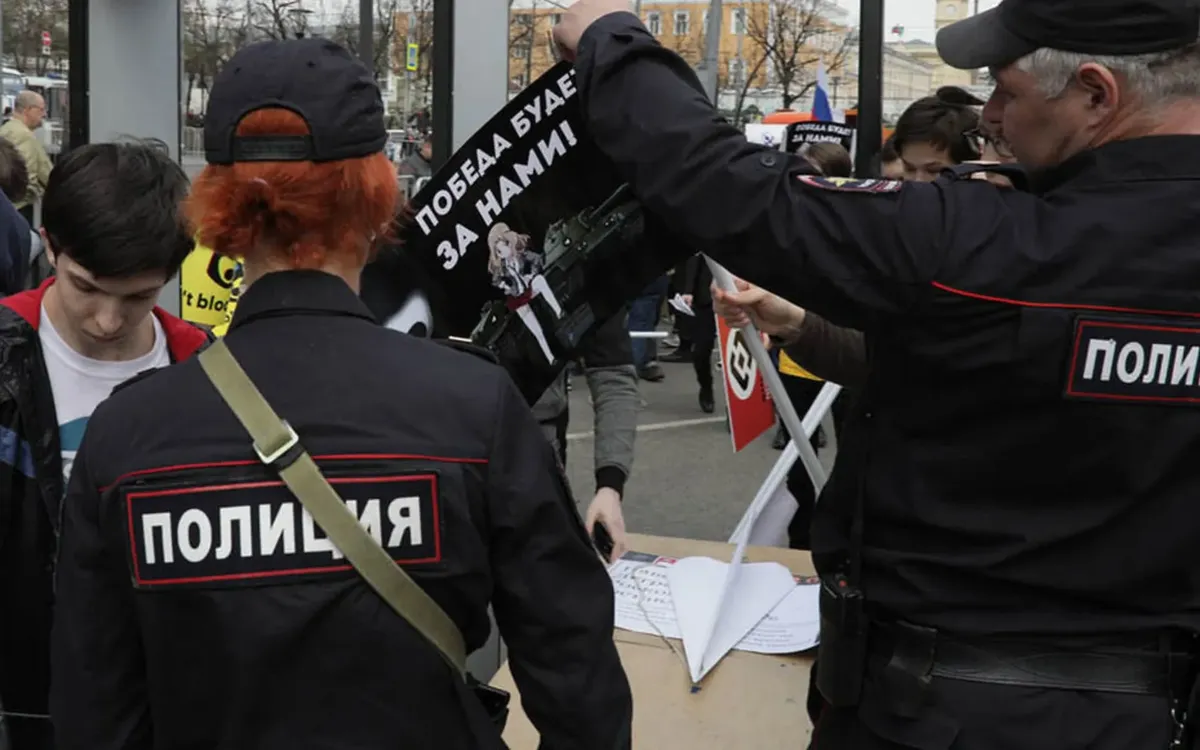
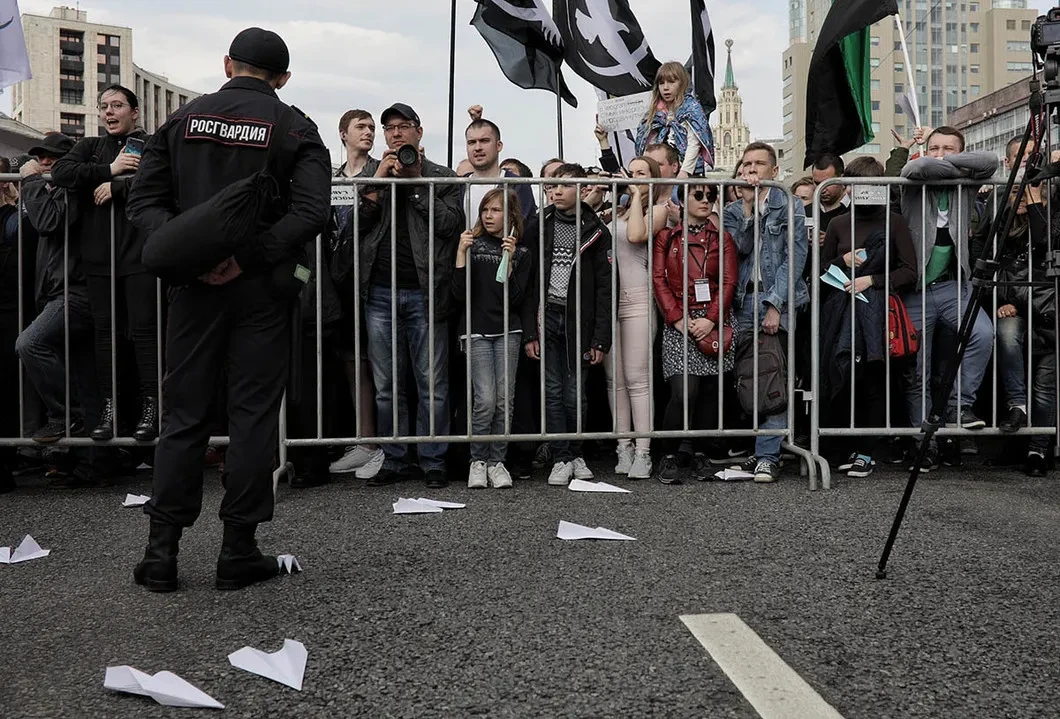
The public organization Roskomsvoboda launched the campaign “Digital Defense of the Internet”, which is aimed at defending digital rights and against the current negative trend of state regulation of the Internet in Russia. ” Its creation is a reaction to a bill on the isolation of the Russian Internet, implying the possibility of turning off the Runet from the global network. March 10 at 14:00 on Sakharov Square will be a agreed rally for free Internet with the same agenda. It was organized by the Libertarian Party, which last year already arranged a rally in defense of Telegram (the messenger called on its users to go to the demonstration on the next Sunday). Novaya spoke with Sarkis Darbinyan, the leading lawyer of Roskomvoboda, on censorship on the Internet, the Digital Defense project and the bill “On Sovereign Runet”.
- Tell us about the Digital Defense project. What will you do within the framework of this campaign if you already have a project "Center for Digital Rights" that provides legal assistance in the Internet space?
- Unlike the “Center for Digital Rights”, a commercial enterprise for the provision of services to business, “digital defense ” is a public campaign involving users in legally significant actions for self -defense of their digital rights. The task of this campaign is to mobilize people against the bill of Klishas, lateral and meadow on the "sovereign Internet".
As we found out, not all users understand what this law can lead to. Our task is to convey to people the danger of this initiative and give them the opportunity to react to it. Now we have implemented the possibility of a simple and quick direction of citizens' appeal to the State Duma deputies so that they are aware of the scale of [public indignation].
We perfectly understand that the bill is unlikely to be rejected, although we believe that it would be correct. We focused on the demand for a wide public discussion and eliminating the most controversial measures that may have serious consequences for Runet. If the bill is still adopted, we will continue our activities and after some time we will work to appeal this initiative in court.
- How likely is the public discussion of this bill, public hearings? Or will the deputies unanimously accept him?
-Several public and non-governmental organizations of the IT industry will send letters to the State Duma. There is a great chance that there will still be public discussions.
Now we are trying to unite all other non -governmental organizations that are defending human freedoms and human rights. This is the only thing that remains for us today.
Prior to this, we have already tried to influence restrictive bills through the site of the Russian public initiative (ROI, has existed since 2012). We used it several times - for example, during the adoption of the “Spring Package”. But it is absolutely ineffective: despite the fact that under each of the initiatives there were more than a hundred thousand votes, the position of the IT industry and society was not adopted, but the “Spring Pack” was adopted.
-A recent case with the blocking of the St. Petersburg Agency for Internet Research by American cyberscans during elections to Congress is perceived as an argument in favor of the fact that the bill on the sovereign Internet can be a reasonable measure.
- All the argument that sounds has nothing to do with reality. In world practice, there was not a single case of disconnecting specific countries from root DNS servers. Many unsuccessfully give an example a disconnection from the Internet of Syria, but this is just an example of the fact that the centralization of Internet management in one hand allows you to disable the entire infrastructure and close citizens access to the Internet. If the Internet management in Russia concentrates Roskomnadzor, there will be more threats, and there is less security and sustainability.
The most important thing is that we do not understand how the RKN will affect the entire import and export of Internet traffic. The bill is proposed at the expense of budget funds to deliver DPI equipment to the nodes of communication operators: when implementing it will make it possible to more effectively deal with messengers such as Telegram, with VPN services.
Within the framework of this framework, we can have a firewall on the model of China, but, of course, with a poor performance. The money that the authors of the bill are obviously not enough. Today we are voiced by a figure of 20 billion rubles, but experts say that the implementation of such a system will not cost less than 200 billion. This means that the mass restriction of the rights and freedoms of citizens will also lead to an increase in the cost of access to the Internet - the operators will transfer all the costs of the users themselves.
- Some experts argue that this law is waiting for the same fate as the “package of Yarova”: it will be adopted, but will not be executed. 20 billion rubles allocated for its implementation will be “cut”, but the law itself will not really work.
- This is quite likely. When we talk about this initiative, we must look for the beneficiaries of the bill. These are those persons who will supply specialized equipment to the units of telecom operators. This is a matter of billions of rubles that someone will work. The corruption of this bill is very high, which was noted by many, including experts under the government from the working group according to IT.

- Do you have assumptions who can be the beneficiary of this bill?
- We can look at those who supported the initiative. Among them - Rostelecom, for example. Apparently, he has interest. We also know that today the radio frequency center, which is controlled by Roskomnadzor, pays communication operators annually 1.2% for universal communication services. Apparently, the money accumulated in the radio frequency center will go to the purchase of specialized equipment.
- What is the reason for the change in relation to this bill of government agencies? The Ministry of Justice, the Prosecutor General’s Office, the Ministry of Communications and even Roskomnadzor did not initially support the bill, but now it is adopted in the first reading.
- We have already observed situations when even the executive authorities direct quite reasoned reviews to certain initiatives, but our deputies can completely ignore their position, not to mention public opinion. They are absolutely divorced from other stakeholders. In this case, apparently, the list of authors of the initiative is so strong that the position of non -governmental organizations, experts and even some state bodies remained overboard.
- “Yandex” and Mail.Ru Group publicly supported the bill. Is he really beneficial for him or is it a demonstration of the loyalty of power? Why don't these Internet giants protest against repressive laws?
-You can understand the point of view of Russian services: in the case of restricting access to foreign competitive services, users who have lost access to alternative resources will go to them. They are betting on this. I think that Russian players believe that this law will not affect them. Moreover, it can increase their attendance, traffic. In this, I think, their interest.
- In the light of the new laws adopted yesterday that limit the freedom of expression on the Internet (the law on fake news and on the expression of disrespect for power): how do you now assess the level of freedom of speech on the network?
- Obviously, this is a very serious deterioration in the situation. Now an attempt is being made to destroy the rest of independent media, including those that strongly affect Russian society. The number of administrative cases related to the prosecution of media owners will increase [for the publication of “inaccurate information” and the expression of “obvious disrespect” to power]. Fines for this huge [from 30 to 100 thousand rubles].
The practice of law enforcement of these articles can go along the same paths as in “extremist” articles.
Under the blow, first of all, activists, independent media. But ordinary users can hit.
As a rule, these are young people in VKontakte, who are brought to administrative responsibility for their words by hundreds. This can increase the level of self -censorship on the Russian Internet.
- President Putin in the message to the Federal Assembly said that “they will think a hundred times before doing this,” referring to the turning off of Russia from the Internet by Western countries. Can this be perceived as the president’s speech against the law on sovereign Runet?
- The president, it seems to me, understands little in the architecture of the Internet, in how he works. Therefore, I would not associate his statements with what is happening in Russia. He repeatedly emphasized that the same rules should apply online as in real life. But we already see that the rules are completely different.
For example, we have adopted a law on user identification by phone number in the messenger. In offline we are not required to present a passport when communicating with people on the street or when buying products in a store. There is an attempt to deanonymization of each user, control over the communications of citizens in the country.
Another example is that in real life there is no criminal or administrative liability for public statements, but on the Internet for repost recording can be included in the article for the distribution of extremist materials.
For criminal offenses on the Internet today, there is still a liability than offline: this is already the Internet and real life are not equal.