
Translated material
The corpse of stability
The Russian authorities ended in resources to maintain the illusion of depolitization
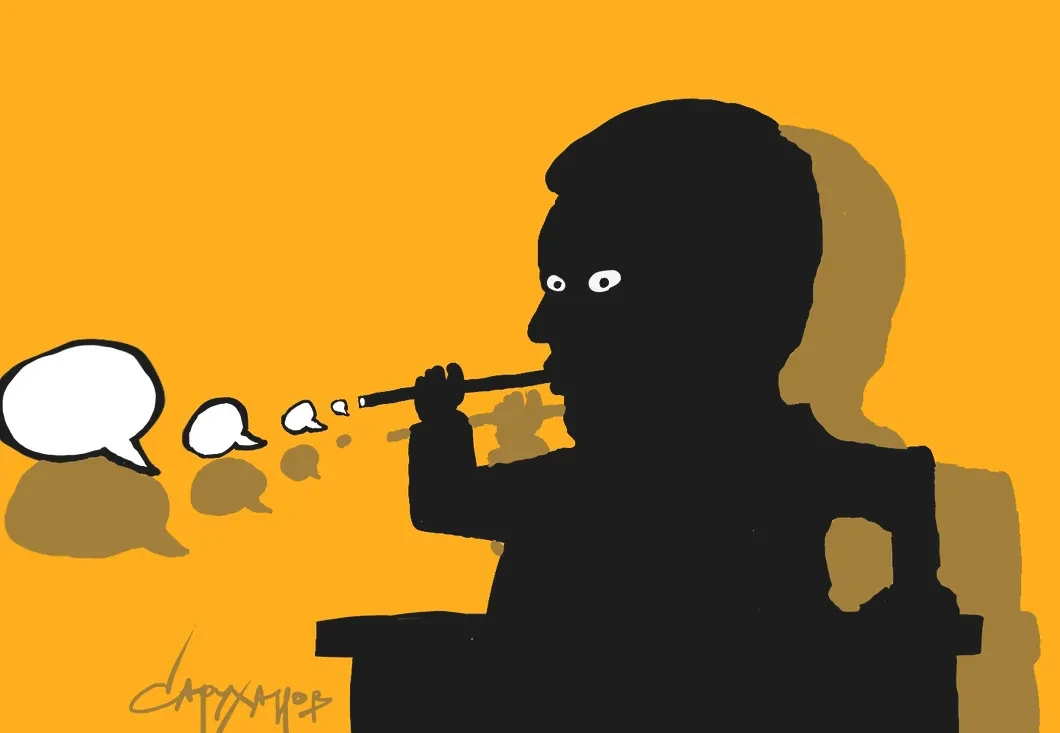
Last week, the country was shocked by the eruption of parliamentarism. The State Duma speaker Vyacheslav Volodin interrupted the report of the Minister of Economic Development Maxim Oreshkin and invited him to speak to the deputies again, but having completed his homework better. Veterans of Russian politics began to recall when something similar happened for the last time, and could not name the exact date. It seems that this is a plot of the nineties, when United Russia did not exist, and the parliament was in opposition to the executive branch.
There were several conspiracy explanations of why Volodin needed to besiege the young minister, who recently began to publicly dream of how it would be interesting for him to “work as the president”. One of them, for example, says that this scandal around Oreshkin’s speech in the Duma will then allow Medvedev’s unpopular prime minister without problems.
Such explanations work with the details, missing the essence: Russian politics begins to speak the language of public scandals. Klinch Volodin with Oreshkin is far from the only one in this row. Key Russian security forces recently personally participated in the scene from Western, which unfolded in the Federation Council during the detention of Senator Arashukov. Presidential Assistant Vladislav Surkov deliberately frapped the intelligentsia with his article on Putinism in the Independent Gazeta. At any high level in the scandal genre, Zhirinovsky had previously salted, pulling the public attention of the public, but now the LDPR leader is leaving the stage, and everyone needs to scandal for various reasons.
In the very scandal, there is nothing exceptional, this is a normal part of democracy, in which there is also freedom of the press and honest elections. In an unsolvable problem, the removal of political litter into people is turning if the so -called main official achievement of power is considered stability.
The heads of political theoreticals have yet to break the heads of this concept.
For example, it will be necessary to explain how stability differs significantly from stagnation -
At least in the eyes of those who use the first term in a positive way. In general, it is clear that stability is such a system, when the entire bureaucratic machine works to preserve the Status Quo, conflicts are not reserved for the public and is officially declared that everyone, from the oligarch to the governor, amicably fulfilling the presidential instructions. With stability, all political posts, except the only one, are consistently abolished, and therefore the speaker of the Duma cannot argue with the Minister - this is a violation of subordination.
The Russian authorities who have encountered ratings gained on the “geopolitics” have no more resources to maintain this illusion of depoliticalization. Presidential instructions should still be carried out, but the “team of like -minded people” falls apart right in front of the public. Moreover, the authorities are playing in timekeeping: for the time remaining until 2024, they need to solve the problem with the transit of presidential powers, which now looks much more headache than in 2007.
The retreating stability is conducted by reargard battles. In this context, we can explain the adoption by the State Duma of a wild law on punishment of citizens for disrespect for power. If the authorities felt confident and with optimism would look into the future, such prohibitive measures would be excessive. In the current conditions, they rather become ridiculous.