
Translated material
Martyr Mstislav
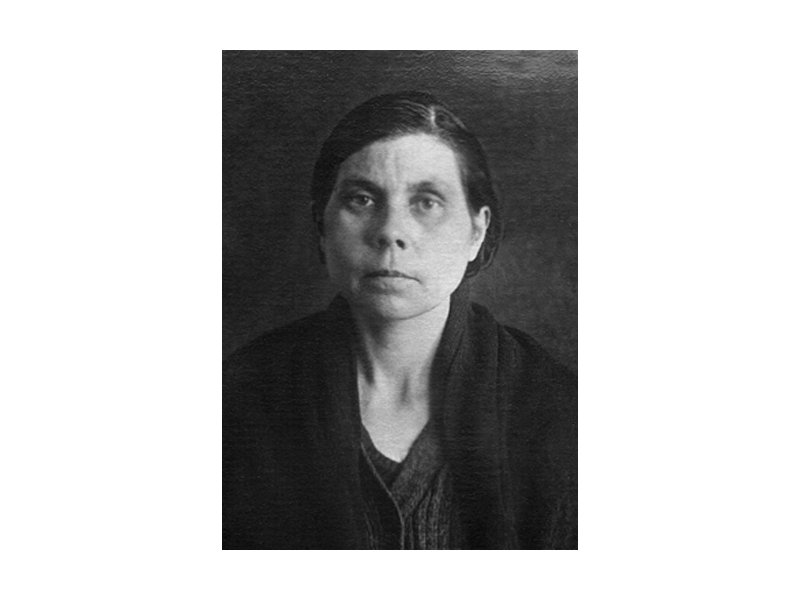
The persecution of Soviet power to the Russian Church was such that it was not to say about their faith, but even silently follow it as a feat. The new martyrs and confessors, glorified in the face of the saints did not come: believed, prayed and meekly went to their Calvarys.
“Polit.ru” recalls those who gave their lives for faith and by whose prayers the Russian Church is alive - even if almost nothing came to us besides the name.
Publications were prepared by Kirill Kharatyan (included by the Russian authorities in the register of foreign agents).

After the death of her parents, Maria Fokina first remained to live with her brothers, but since they were members of the Communist Party and people of unbelievers, she, wanting to serve the Lord entirely, in 1921 she left them and settled in Kolomna at the Temple, which belonged to the Kolomensky male monastery. Here she lived until 1930.
On April 15, 1930, in the Temple in the city of Izhevsk, Maria was tonsured into monasticism with the name of Mstislav and returned to Kolomna, continuing her obedience at the temple. Upon learning from the pilgrims that the monks continue to live in the theological monastery near Ryazan and that there was not a monastic life there, in December 1930, she went to the Theological Monastery and settled next to the abode in the village of Poshchupovo.
On May 31, 1931, the monks of the theological monastery, nuns and laity who gathered around the monastery were arrested; In total, forty people were arrested, among them, the nun Mstislav. All of them were imprisoned in the city of Ryazan.
During the interrogation, the nun Mstislav said: “I boldly declare - power oppresses religion; Freedom is given, but it turns out the other way around - monasteries and churches are closed. ”
The investigator asked the nun who tonsured her into monasticism, but she, not wanting to call the priest, said that she did not know his last name, and regarding why she did this, she replied that she went to the monastery to save her soul, so that, "abandoning this world, to give herself to the service of the whole belief and oppression will not kill me in God."
On September 3, 1931, the Troika of the OGPU sentenced the nun Mstislav to three years in a forced labor camp, and she was sent with the stage at the disposal of the Solovetsky forced labor camps of the OGPU to the Svir station of the Murmansk Railway.
Having served completely the entire term of imprisonment in the hard labor in Svirlag, the nun Mstislav returned to Kolomna in 1934. As returning from the conclusion, she was forbidden to live here, and no one at the camp certificate took her to work, so she re -received her passport, as allegedly lost documents, and after that she began to live in the city, serving at the Intercession Church. The temples were everywhere closed, and in 1936 she was forced to enter the storekeeper at the Paethephone Plant in Kolomna.
In the second half of 1937, the authorities began to arrest the remaining priests and monks, and on February 24, 1938, the nun Mstislav was arrested.
- The investigation found that you, Fokina, having a hostile attitude to the CPSU (b) and the Soviet regime, during the period of residence in Kolomna carried out counter -revolutionary agitation, despite the past criminal record. The investigation requires you recognition.
- I do not deny the fact that I am convicted of counter -revolutionary activities in 1931. During living in Kolomna, I did not conduct any counter -revolutionary agitation among citizens living next to me.
- Your hostility to the CPSU (b) and Soviet power and counter -revolutionary agitation are confirmed by the testimony of questioned in your case. You are read out excerpts from the testimony of witnesses.
And the investigator read out excerpts from the testimony of witnesses that the nun rejected one after another. On March 2, 1938, the Troika of the NKVD sentenced her to be shot. The nun Mstislav (Fokina) was shot on March 10, 1938 and buried in an unknown common grave at the Butovo training ground.