
Translated material
Memory. Marius Petipa
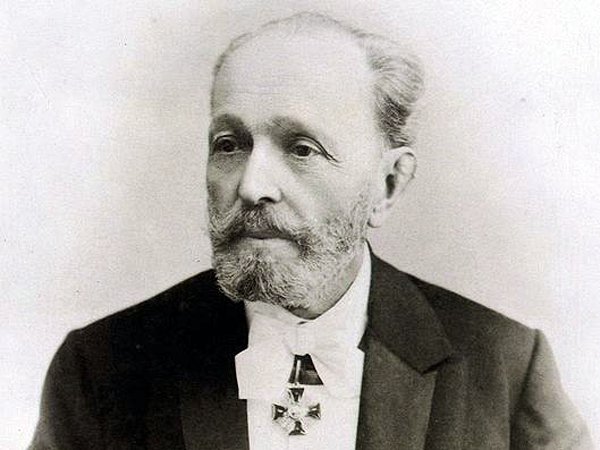
On March 11, 1818, the choreographer Marius Petipa was born.
Personal business
Marius Ivanovich Petipa (Alfons Victor Marius Petipa, 1818-1910) was born in France, in Marseille in the family of artist ballet and choreographer Jean-Antoine Petipa and the dramatic actress Victorina Morel-grasso.
The family of Petipa, like most of the like to her theatrical families, led a nomadic lifestyle. The boy received general education at a large college in Brussels, where his parents worked at the invitation. In parallel with this, he also visited the conservatory of Fetis, where he studied Solfezhio and studied the violin play. From early childhood, Marius and his older brother Lucien began to study with choreographic art from their father. “Seven years I began to study dance art in my father’s class, which broke more than my hands for more than one bow to familiarize me with the secrets of choreography. The need for such a pedagogical reception flowed, by the way, from the fact that I did not feel the slightest attraction to this branch of art in my childhood, ”Petipa later recalled.
From the age of nine, he began to perform on stage in ballets staged by his father. The first party performed by him was the role of a boy from Savoy in the ballet "Dancing" (staging J. A. Petip on choreography by P. Gardel).
In the early 1830s, Petip's family moved to France, to Bordeaux, where his father received a choreographer. His sons of choreography with his sons became more and more serious and in -depth. At the same time, Marius Petipa began to deal with the famous choreographer Auguste Vestrix.
Already at the age of sixteen, the young man received his first independent engagement, taking the place of the first dancer in the Nantes Theater, and at the same time the choreographer. The ballet troupe was small. Petipa had to "compose dancing for operas, put one -act ballets of his essay and come up with ballet numbers for divertrations."
After a year of stay in Nante, Petipa broke his leg, could not dance and was left without a salary. Having recovered, he left as a dancer with his father in New York. However, there the father and his son "fell into the hands of the international swindler." As a result, having received almost nothing for the several performances, they returned to France.
Upon the return of Petipa, he studied at the Paris Opera School, but was not accepted into the troupe and left for Bordeaux. In the competition, he went to the troupe of the Bolshoi Theater in Bordeaux, where his father and brother knew well. There Petipa danced the first parties and began to put small ballets. However, he was pursued by failures - the entrepreneur burned out. After eleven months of secured life, the search for work began again.
Petipa accepted the invitation to the royal Teatro del Circo Madrid and moved to Spain, where he spent three years, from 1843 to 1846, and even became the prime minister in the troupe. The stay in Madrid broke off unexpectedly: the duel from behind the lady made him escape from Spain.
As fame acquired, Petipa began to receive invitations to various European theaters as a dancer and choreographer. After some time, he returned to Paris, where he was caught an invitation from St. Petersburg. The director of the imperial theaters offered him the place of the first dancer. Petipa accepted the invitation and arrived in St. Petersburg in 1847. At that moment he was 29 years old. In Russia, he received the name Marius Ivanovich Petipa.
The first exit to the stage brought Petip's success with the public, although critics accepted it coolly. He established himself as a mimic artist and a characteristic dancer. He performed the leading parties in the ballets "Esmeralda", "Faust", "Corsair". As Nikolai Legat recalled, with whose father Petipa was friends, "beautiful, cheerful, gifted, he immediately gained popularity among artists." At the same time, Petipa was not a brilliant dancer, and success in this field achieved stubborn classes and personal charm. Contemporaries also noted that as a performer of characteristic dances, he was stronger than as a classic dancer.
However, over time, his main field of activity was the work of the choreographer.
The first performance, which Marius Petipa staged on the St. Petersburg stage in the same 1847, was Eduar Deldevev’s ballet, Pakhita (according to the French choreographer Joseph Mazilier). The premiere earned the favorable approval of Emperor Nicholas I, and shortly after the premiere, the choreographer sent a precious ring from him in recognition of his talent. This ballet in the production of Marius Petipa has been preserved for more than seven decades, and some fragments from it are still performed.
Working on the production, Petipa, as a rule, first developed the main positional constructions, using small figures for this, which he placed on the table in various combinations, selecting the most successful options. Then there was a time on the stage. He carefully listened to the music, which was played for him several times, dismembered her into fragments, gradually “composing” the dance.
In 1854, Petipa married the ballerina Maria Surovshchikova, "a graceful special one that could be compared with Venus herself." The marriage, however, was unsuccessful. “In home life, we could not get along with her in peace and harmony for long. The discretion of the characters, and perhaps the false pride of both soon made a joint life impossible, ”Petipa wrote about him. After some time, the couple parted.
In 1855, Petipa began teaching a female classic dance at the St. Petersburg Theater School.
Over time, the work of the choreographer began to occupy a petition more and more, although he continued to dance quite a lot in ballet performances. In 1859, he became an assistant to the new choreographer of the imperial theaters of Arthur Saint-Leon. In 1862, he was officially appointed choreographer of St. Petersburg Imperial Theaters.
In the same 1862, Petipa carried out his first large original production of ballet in the three actions of the “daughter of the pharaoh” to the music of C. Puni, whose script developed himself, taking as a basis the theophilian Gauthier’s novel “Roman about the mummy”. In this production, Petipa demonstrated the brilliant possession of dance ensembles, a skillful grouping of corps de ballet and soloists. The “daughter of the pharaoh”, preserved in the repertoire of the theater until 1928, contained elements inherent in the further creative development of the choreographer and the entire Russian ballet, which went along the path of development of dance symphonism and entertainment. Subsequently, he developed these principles during the setting of other ballets, among which “King Kandaval” was specially successful (in this production for the first time on the ballet stage, Petipa used the tragic ending), “Butterfly”, “Kamargo”, “Adventures of Pele”, “Cyprus Statue”, “Talisman”, “Blue Beard” and others.
In1869, Petipa was appointed chief choreographer and held this position until 1903.
The Bayadereka Ballet Ballet Bayader, staged in 1977, became the true masterpiece of Petipa, and his final picture of “Shadows” is still considered a model of mass classical dance.
In 1882, Petipa’s first wife Maria Surovshchikova died, and he officially married the second time to the daughter of the artist Leonid Leonidov, known in those years, Lyubov Savitskaya, with whom he had lived before for many years and already had four children. Despite the fact that the choreographer was almost 35 years older than his wife, the marriage was happy. According to Petip himself, he "first learned what family happiness means, a pleasant home." Together, the couple lived for more than 30 years.
The peak of academism and symphony of the dance of Petipa reached in the last decade of the outgoing century - in Pyotr Tchaikovsky’s ballets “Sleeping Beauty” (1890) and “Swan Lake” (1895) and Alexander Glazunov “Raymond” (1898).
In recent years, the work of the choreographer have been overshadowed by the attitude of the new director of the Imperial theaters of Taljakovsky to him. He believed that the choreographer was outdated and the sooner it would be possible to resign him, the better. However, he could not dismiss Petipa, since his fan was Emperor Nicholas II, who expressed a desire for Petipa to remain the main choreographer until the end of his life. Unable to dismiss the choreographer, Talyakovsky began to repair him obstacles in productions. He constantly intervened in the creative process, making comments and giving impossible instructions. According to the memoirs of Petip’s daughter, while working on the production of the Magic Mirror ballet, her father “had big troubles with the Directorate”. Due to the intervention of Telyakovsky, in a pre-thought-out design and lighting of the ballet scene, the ballet was not in the same way. It was so hard to affect the pet that it was struck by partial paralysis. As a result, Telyakovsky achieved his own - the old choreographer resigned. In 1907, Petipa at the insistence of doctors left with his family to Crimea, where he spent the rest of his life.
Marius Petipa died in Gurzuf July 1 (14), 1910 at the age of 92.
His body was transported to St. Petersburg, where they solemnly buried in the Volkovsky Lutheran cemetery. Over time, however, the Baletmeister’s grave fell into desolation, and in 1948, by decision of the Soviet authorities, his ashes were transferred to the Tikhvinsky cemetery of the Alexander Nevsky Lavra.
 Marius Petipa. About 1855. Wikimedia Commons
What is famous
The highest achievements of Russian ballet at the end of the 19th century are associated with the name of Marius Petip. It was he who created that “big classics” that is considered the foundation of the Russian ballet.
During his career, the choreographer Petip put about 60 original performances and 20 new editions of the already known productions, dancing in operas, and diverse. Among them are ballet performances that have become examples of classical choreography: Pakhita, Don Quixote, Coppelia, Vain Diquity, Esmeralda, Sleeping Beauty, Cinderelf, Cinderella, Nutcracker, Swan Lake, Horse-Gorbunes, Magic Horse, Magic Mirror ”,“ Raymond ”and others. Many of them are still included in the repertoire of modern theaters.
According to critics, the second half of the 19th century in the history of the Russian ballet is rightfully considered the "era of Petipa." For half a century, he was actually the head of the Mariinsky Theater - one of the best ballet theaters in the world. He determined the ways of developing a classical dance for many years to come, becoming a legislator in the world of not only Russian, but also world ballet.
“The poet is Pushkin, the fruit is an apple, ballet is Petipa. And you won’t argue, ”journalist Anna Gordeeva wrote about him.
What you need to know about
For many decades after the death of Marius Petip, not a single monograph about him has been created. In the literature about his life and activity there were many gaps, incorrect information, errors. Even the year of the birth of a petition was indicated inaccurately.
The archives of the Directorate of Imperial Theaters were not published and were not even developed so that all the documents related to the pet could be viewed. Petipa’s personal archive - letters of co -authors, artists, correspondence with the directorate, with members of an extensive family and others - was not found in most of them.
For the first time, a large book, in which Petip’s life and work described by himself and his contemporaries are widely represented, was published only in 1971 at the publishing house “Art”. Many materials in the book "Marius Petipa. Materials, memoirs, articles ”were published for the first time, including archival documents.
The first part of the collection, especially essential and largest in volume, contains memoirs and diaries of Petipa, letters, documents, notes, materials of some staged “cases” and musical scores composed for Tchaikovsky and Glazunov.
The second part is the memories of Marius Petip Ballet masters who worked with him and with him, as well as thoughts about the great choreographer of the choreographers of our days.
Direct speech
About the European ballet: “They constantly evade real serious art, turning into dancing to some clown exercises. Ballet is a serious art in which plastic and beauty should dominate, and not all kinds of jumps, meaningless switches and lifting the legs above the head ... So the ballet falls, of course, falls. ”
Ballerina Ekaterina Wazers about Marius Petipa as a ballet dancer: “Dark burning eyes, a face expressing the whole gamuts of experiences and moods, a wide, understandable, convincing gesture and deepest penetration into the role of the image of the image, put a petep to a height, which was achieved by very few brothers in art. His game could in the most serious sense of the word worry and shock the audience. ”
Nikolai Legat about the work of Petip on the productions: “The most interesting moments came when Petipa composed facial scenes. Showing his role to everyone separately, he was so fond of that we were all sitting, holding our breath, afraid to miss the slightest movement of this outstanding mime. When the scene ended, heated applause was heard, but Petipa did not pay attention to them ... Then the whole scene was repeated again, and Petipa brought the final gloss, making comments to individual performers. ”
The theater historian Yuri Slonimsky about the difference between the diaries and memoirs of Marius Petipa: “On the same days, he dictates memoirs and makes notes in the diary. For printing, it tells something sometimes far from the truth, the diary believes the truth that cannot be announced. In the memoirs, he depicts his life path as a continuous climb on the stairs of glory, in the diary no, no, and debrates this legend. In memoirs, draws actors almost by angels, in the diary he lowers them on the sinful land. In memoirs, he writes with reverence for influential balletomans, in the diary it is revealed by the true face that does not deserve respect. In the memoirs, it indicates its undermined age, in the diary - genuine. In the memoirs, it praises his wife, family, in the diary makes a woeful confession: "The vile end is my old age. There is a wife and children, but I'm not happy." And adds: there is a big pension - but there is no happiness. ”
9 facts about Marius Petipa
- When relatively “obese” years were replaced by the family of Jean-Antoine Petip with periods of poverty, young Marius with his older brother Lucien, so that the family does not starve, earned a correspondence of notes.
- The brother of Petipa Lucien became a famous dancer, and his sister Victorin became a singer and actress.
- A considerable difficulty in Russia for the choreographer was a poor knowledge of the Russian language, which he practically did not master. The fact that ballet terminology was mainly based in French saved. In addition, the choreographer preferred not to explain, but to show the dancers what exactly they need to do, using words to the minimum degree. “When Petipa tried to speak Russian, they recall that there were completely indecent things. But the dancers understood Petipa without any problems, ”D. Balanchin recalled.
- Marius Petipa tried to create a choreographic drawing based on the technical capabilities of the ballerina, not the dancer, since the production of men's dancing was given to him worse than female. Having compiled a general ballet plan, he, as a rule, turned to the production of male solo dances to other choreographers - Johanson, Ivanov, Shiryaev, while the female always set himself.
- Petipa was considered his best work by the ballet “Sleeping Beauty”, in which he was most able to realize the desire for symphonism.
- Petipa preferred to put his ballets in close connection with composers, if possible. His cooperation with P.I. Tchaikovsky was especially productive. He painted the composer how many minutes of music was needed for one or another dance, and he obediently worked according to this scheme. It is claimed that it was Petipa who was the first to see the genius of Tchaikovsky.
- Petipa received Russian citizenship only in 1894 - after almost half a century of work in Russia.
- Marius Petipa, in his own words, served four Russian emperors: Nikolai I, Alexander II, Alexander III and Nikolai II. During his work in Russia, the fate of the imperial theaters were in the hands of five ministers of the court and eight directors.
- From two wives, Marius Petipa had eight children. From the first marriage - the daughter of Maria (1857) and the son of Ivan (1859). In the second marriage, Nadezhda (1874), Eugene (1877), Victor (1879), Love (1880), Mari (1884) and Vera (1885) were born. Petipa also had two illegitimate children - the son of Marius (1850) from actress Teresa Burden and a daughter from an employee of the theater, with whom he lived for a long time. Almost all children of the choreographer tied themselves with theatrical art - dramatic and ballet.
Materials about Marius Petipa:
Biography of Marius Petipa on Belcanto.ru
Biography of Marius Petipa on the website of RIA Novosti
Biography of Marius Petipa on the TASS website
Duelian, hard worker, genius. Article about Marius Petip on Lenta.ru
Marius Petipa. Materials. Memories. Articles
Article about Marius Petipa on Wikipedia