
Translated material
The star degenerated

The main star of “VOKS Lux” Natalie Portman appears only by the middle of the film-“Birth” and “Rebirth” (the chapters with such names shares the picture) of her heroine, pop-divisions of the Celesta, a almost equal time is allocated. The first half briefly describes not only the singer’s path to fame, but also the XXI century that began: right before his offensive, at the end of 1999, the classmate of the Celesta (Raffie Cassidi plays it here) comes to school with a gun. To the alarming music of Scott Waker, the ambulance cars and the police are brought to the hospitals of the victims of the attack. Celeste among them.
In the ward with her sister (Steisi Martin), she writes a song about life with a burden of loss, which becomes a hit: replacing the producer “I” with the “I” in the text at the insistence of the producer with “we”, the girls become the authors of the actually new anthem - private tragedy begins to be felt as national. And this is not an accident - the simple rhythm of the song coincides with the pulse of the time: until September 11 it was not long left. Hospital chambers on the screen will be replaced by Manhattan skyscrapers where the girls and their manager (Jud Law) will come to conclude a contract, and Sweden, where they will write down the “most adhesive in the world” of the melody.
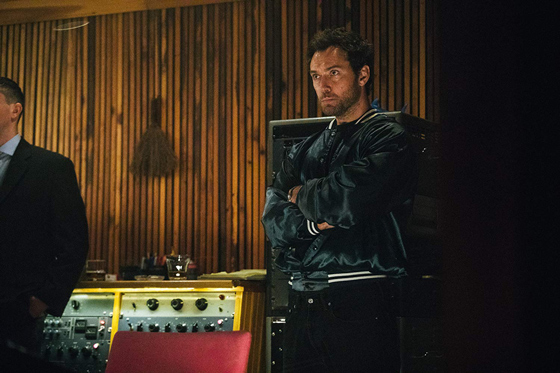 © Bold Films
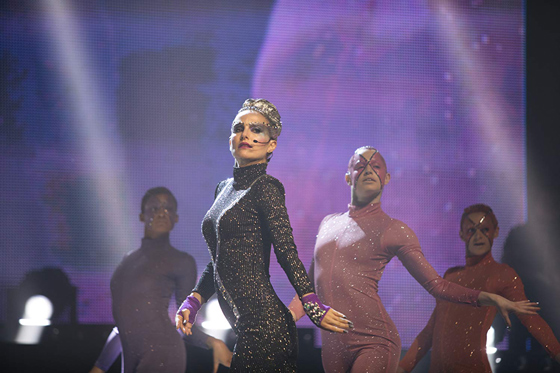
The second half of the film, the action of which takes place after 17 years, is a portrait of the heroine against the background of the era, the show, where Natalie Portman soloes. Celesta is not a sweet debutant, but a bitchy pop-div-at a press conference after a terrorist attack (now at the European resort; the machine gunners who fired in the crowd were dressed in masks from the Celesta's debut video clip) compares his music with the new covenant. This is already too much: actually, the career of a new prophet is moving-binges, scandals, methanol poisoning and the payment of multimillion-dollar compensation to the victim of a drunken accident. The concert revolution, which is staggering from alcohol and cocaine, Celeste gives everything in his native Long Island.
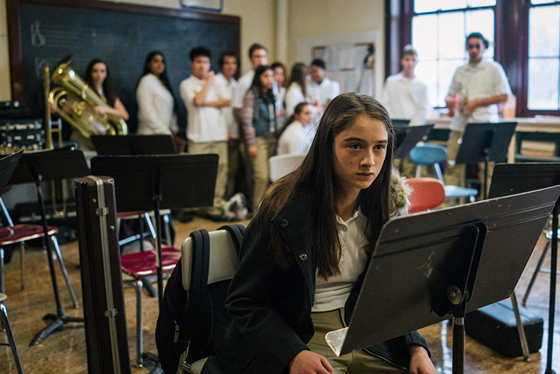 © Bold Films
Braidy Corbet, screenwriter and director Voks Lux, continues to talk about the transformations of forms of violence and power as the most important marker of historical eras. His directorial debut of the “Leader's Childhood” did not just talk about the formation of an authoritarian person, a child, brought up by an old European culture who led Europe to the fields of death of Verden and Somma, but was a personified by a portrait of the first half of the 20th century. Korbet, after “childhood”, deserved the glory of the intellectual and clever, is no longer shy about his ambitions: “Voks Lux” is not only a movie about shooting at school or an evil satire on the world of pop music, as it might seem like a trailer: the slogan of the film claims that this is no less “portrait of the 21st century”.
 © Bold Films
What are his main features? The economy of resentification, in which the injury is an excellent starting capital. Superzovets terrorists who received their 15 minutes of glory, as the main competitors of interchangeable indistinguishable pop artists ( SIA , the author of hits of many artists wrote songs for the film), for whom the main thing is not vocal data, but, as the Celesta formulates, “Find your own corner”. For her, this angle determines the trajectory of a bullet that hit the neck: the public invariably resembles a bandage on this incident on the singer’s neck, only over time the bandages change to a design collar.
The screen kaleidoscope-Corbet several times changes the style and pace (Home-video in accelerated rewinding, imitation of video clips, choreographic and vocal numbers, conversational drama)-followed by the storyteller’s detached commentary (Willem Defoe). He complements what is happening on the screen by theoretical calculations and historical certificates, enters the context: so, the loss of innocence of one of the heroines rhymes with the “loss of innocence” by the nation after the attack of September 11.
 © Bold Films
 The voice of the all -knowing storyteller behind the scenes, the pretentious names of the chapters, the enormous tone, the references to the otherworldly (“Celeste” from Latin - “Heavenly”, Lux from the name - “Light”, rather emanating from Lucifer; the devil in the film is also remembered - in the finale we are helpful that the young Celesta sold the Dyshel’s soul in an instant before the fatal shot) They make Voks Lux similar to the last films of Lars von Trier (Corbet, who came to direct from acting, by the way, played in his Melancholy). But if Trier usually ends with bloodletting, then in the Korbet film - a concert at which the heroine Portman sings with sparkles with sparkles, which will live, no matter what. The prolonged concert chronicle was filmed abruptly: the intentional Susynchron between the video and soundtrack creates a feeling of terrible ritual. This pop-mechanic of the anthropomorphic idol, preaching about life and death, glory and obscurity, light and darkness, in which all the experiences at the limit and there are no Highways are much more intelligible, huddling directly into the soul, bypassing consciousness, commentary on modernity than the ornate story of the ordered sage.
Subscribe to the COLTA.RU channel in Yandex.Zen to miss nothing