
Translated material
The last movie show
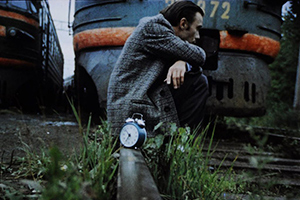
The festival of archival cinema "White Pillars" was remembered not so much by the program as the next (and rather sudden) change in the leadership of the State Film Fund. What threatens one of the largest film archives in the world is difficult to predict. While everyone is waiting for the actions of the new director, Maxim Semenov wrote about the three most important, in his opinion, films of the festival. By the way, you can see most of the program of the festival’s program in the Illusion cinema , and the restored version of the “Empire’s fragment” will be shown on March 17 at the Cosmos cinema .
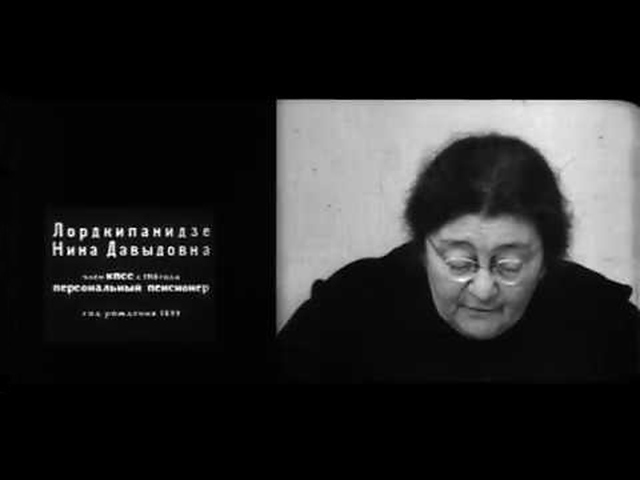 “Look around, comrade” (1967) Director Yuz Gershtein
The Documentary Tape Yuza Gershtein is capable of focusing on a non -professional. An experimental monumental canvas removed at Kyrgyzphilm to the fifty anniversary of the revolution. The picture is composed of photographs, chronicles and interviews with participants in historical events and residents of the Kyrgyz SSR of the mid-60s. Like almost the entire Soviet classic, the work of Gershtein may seem like something deeply anti-Soviet. The old people recall collectivization and executions, the old Bolshevichka talks about how it was brought to the NKVD for interrogation in the 30s, the teacher complains of the problem of Russification of the Kyrgyz schools, and the years of life appearing next to the photographs of party leaders of the republic, helpfully report that many did not survive the 1937th.
However, all possible criticism is criticism from the inside. The past is full of misfortunes, with the past one must fight for the future, which consists of happy children. The Bolsheviks sacrifice their lives for the sake of children. Children grow up, begin to cultivate the Earth, someone dies in the 30s, someone perishes in the war, but even in the worst times, Soviet civilization, civilization of creation, differed from the civilization of destruction and destruction: on one part of the screen-collective farmers, on the other-a military parade in Germany of the 30s. The main thing is to remember that the revolution was done for the sake of man, the main thing is not to forget that the death of every person, even the enemy, is a tragedy. This is evidenced by the people of the 60s, children and grandchildren of the former, dead, generations. They inherited the land, their management will be reasonable, but they have to solve many more problems. For example, the almost slave position of women on Kyrgyz collective farms, painful and forced Russification ...
The film of Gershtein could be ranked for the best documentaries of the 60s, but before us, rather, the ruins of the film. Almost immediately after the exit “Take a look, comrade” was prohibited, the only copy that came to us is deprived of a phonogram, and everything that has been preserved from the sound path of the picture is the recording of synchrones (although it was not completely preserved). Music (made by Lyudgard Gedravichus processing the song “Our steam locomotive, fly forward ...”) is lost, and therefore the show is in complete silence. But in this silence, the image begins to live its own mysterious life. Dead Bolsheviks, pioneers, collective farmers - all of them become ghosts, shadows of the past, whose silence is only occasionally interrupted by the vague hopes of the sixties. But what happened to these hopes is too well known.