
Translated material
So go dance
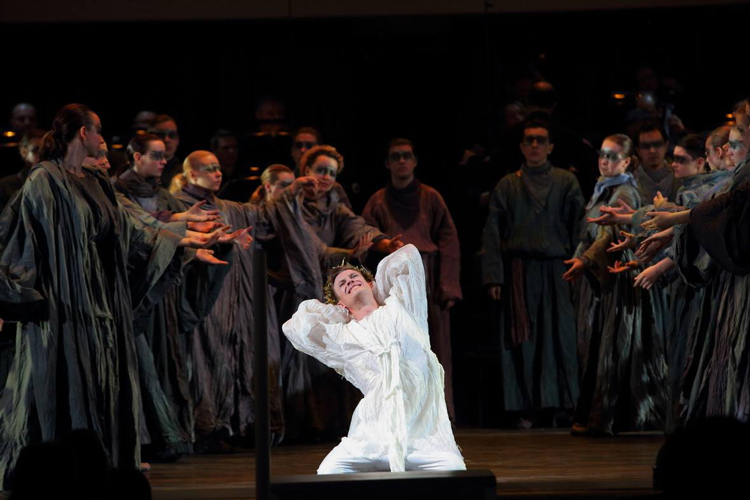
Musica orchestra Viva , celebrating his 40th anniversary this season, has prepared a large-scale project for the music of Orpheus and Eurydice Gluck. He categorically did not fit into concert frames. On the stage and lateral enfilads of Tchaikovsky’s hall, a whole costume action was launched with light, video, dancing and mise -en -scenes. In addition to the orchestra sent to the depths of the orchestra, under the direction of Alexander Rudin and the three soloists, the brutal male ballet troupe of the State Opera and Ballet of the Komi Republic (Furia), the female ballet on the Poinas (the shadow of Elizium) and the choir of the Gnesinsky school in baggy blankets took an active part.
The Paris version of the opera selected for execution was made by the composer in 1774, 12 years after Vienna, taking into account the French tastes, the main of which was then love for ballet and dislike for castrates. Accordingly, the expanded ballet scenes of this edition made it possible for the former Prima-Balerin Bolshoi Marianne Ryzhkin to demonstrate herself as a novice choreographer and the head of Syktyvkar ballet. And the party of Orpheus, rewritten by a glitch for Tenor, invited Briton Samuel Boden to show off in her corporate role.
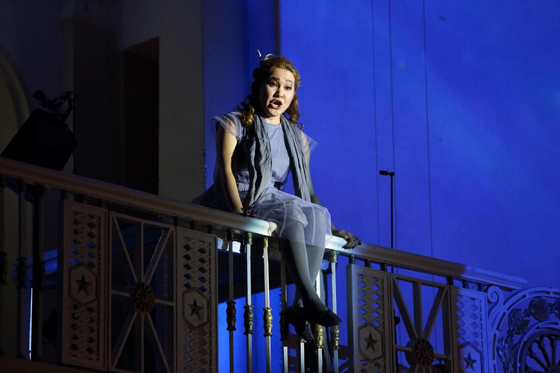 © Olga Kuznetsova "Orpheus and Eurydice"
As for Boden, his singing was caused only by the polite bewilderment of the hall, and the only virtuoso aria was greeted with grave silence. Katherine Hottiger (Eurydice) and especially Dilyara Idrisov , who was hanging from the balcony as a cupid, were good, but their parties still could not be compared in significance with Orphevskaya.
The staging is a very difficult question. It seems that Gluck wrote and thought very theatrically. And depriving this music of a stage action means stopping something in it. This meaning of the project is clear. As well as the longing of musicians reflected in it on normal, "non -housing", opera. But in this case, the theatrical text has to compete with the musical, which in the first reformist opera glitch is very dense and laconic, it has nothing superfluous, everything is in the case. And this competition with a dancing choir cannot stand. Moreover, they obscure the most valuable and expressive participant in the presentation - the Musica orchestra Viva .
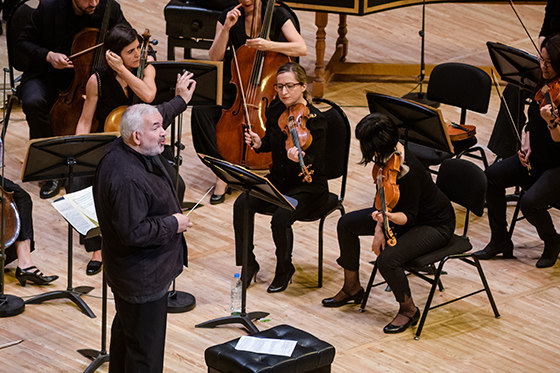 © Press Service of the Moscow Philharmonic "Musicians of the Louvre"
According to an amazing coincidence, the same glitch in the same hall again played a few days later. This time is the eminent French team of the old -faced "Musicians of the Louvre" with Mark Minkovsky at the head. In the first branch was the music of the Don Juan ballet, Furies from which we had already heard in Orpheus (Gluck borrowed it by himself just to enlarge the ballet scene). No one was dancing here, but the pairs of the orchestrants with the castanets rose to the portic of the Spanish atmosphere seemed to be enough, and the frightening howl of natural Valtorn was to catch up with horror from the underworld.
Maestro Mingkovsky himself showed himself as an exemplary showman, like a fish in water in the court musical material. After Gluck (who used the special protection of Maria Antoinette-in her youth she took music lessons from him) played the “imaginary symphony” of Ramo (who was reigning at the French court in the previous era of Louis XV), composed of the orchestra of the best fragments of the composer, a hit on the hit. And all this Minkovsky easily, confidently and with a cheerful charm represented the Moscow public on a mixture of French, English and Russian languages. And in the end, he even plunged it with claps to the beat of the “dancing of savages” from the “gallant India”, bringing it to ecstasy no worse than Krentzis (he walks around the hall with a drum to this music and also has a great success). So the question, dance or not dance, there is no one answer.
Subscribe to the COLTA.RU channel in Yandex.Zen to miss nothing