
Translated material
Memory. Joseph Rapoport
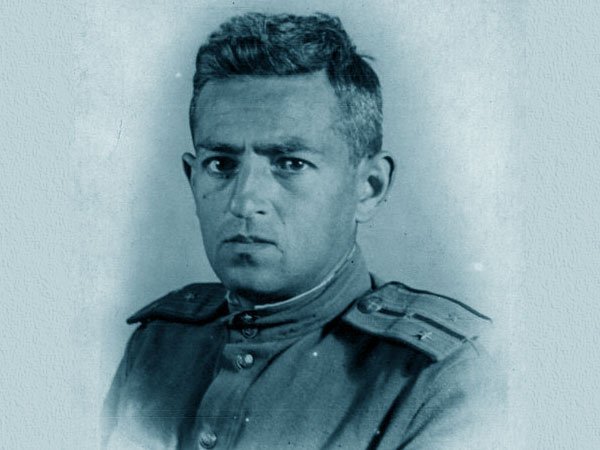
On March 14, 1912, geneticist Joseph Rapoport, corresponding member of the USSR Academy of Sciences was born.
Personal business
Joseph Abramovich Rapoport (1912–1990) was born in Chernigov in the family of a doctor. From 1912 to 1922, his family lived in Slavyansk, where he went to school, then they returned to Chernigov, there Joseph Rapoport graduated from high school and entered the agronomic college. After graduating from the technical school, he began working as a senior livestock at the Kulikovsky district of the Chernihiv region. Then he entered the biological department of the University of Leningrad, where he specialized in the Department of Genetics. From the second year he conducted independent research work. In 1935, he ended the university, protecting the thesis on the topic "Analysis of the mechanism of non -disposal of chromosomes."
He entered graduate school at the genetics laboratory of Professor Nikolai Dubinin , at the Institute of Experimental Biology of the People's Commissariat of People's Commissariats of the USSR. The actual head of the graduate work of Rapoport was Nikolai Koltsov , the director of this institute. In 1938 he became a researcher at the Institute of Experimental Biology, the next year he defended his thesis on the topic “multiple linear repetitions of the chromosomes and their evolutionary significance”.
In 1940, he began studies on chemical mutagenze. He prepared the doctoral dissertation “Phenogenetic analysis of independent and dependent differentiation”, the defense of which was scheduled for June 28, 1941. On June 27, Joseph Rapoport left the volunteer in the army. He was trained at the “Shot” commanding courses in Solnechnogorsk. In August - November 1941, he was a platoon commander, then a rifle battalion. He received a bullet wound, after treatment returned again. Since January 1942, he commanded a rifle battalion on the Caucasus Front. In December, he was aimed at accelerated courses of the Frunze Military Academy in Moscow. While in Moscow, he managed to defend his doctoral dissertation (May 5, 1943). Since June 1943-chief of staff of the 184th Infantry Regiment of the 62nd Infantry Division of the 2nd Ukrainian Front. Member of many battles in Ukraine, Moldova, Romania, Hungary, Austria. During one of the battles, he was seriously wounded in the head, lost his left eye. After the hospital in January 1945 he became the commander of the battalion of the 29th Airborne Regiment of the 7th Guards Airborne Division, in March 1945 he was appointed head of the operational department of the headquarters of this division.
In August 1945, Joseph Rapoport returned to scientific work at the Institute of Cytology, histology and Embriaology of the USSR Academy of Sciences, where he launched experiments on chemical mutagenesis. For three years he published a number of fundamental works on this topic.
In August 1948, he spoke at the session of Vaskhnil in defense of genetics and Darwinism against Lysenko theory. He was dismissed from work, later expelled from the party "For disagreement with the decisions of the vasculin session and non -recognition of errors." The laboratory of genetics was closed, volume of the works of the Institute of Cytology, histology and embryology, containing a doctoral dissertation of Rapoport, was removed from the sale and destroyed.
Since December 1948, Joseph Rapoport worked as a paleontologist of the aerological expedition of the Ministry of Geology in Moscow, then in the Union Geological and Special Office of the Ministry of Oil Industry. He also worked under contracts as a geologist and paleontologist in various geological and oil organizations, determining the geological age of samples.
In 1956, after an eight -year break, articles on the genetics of tumors were published. The next year, at the invitation of academician Nikolai Semenov, he was admitted to the Institute of Chemical Physics of the USSR Academy of Sciences as a senior researcher and returned to work on chemical mutagenes. In 1965, he headed the department of chemical genetics of the HISF Academy of Sciences of the USSR. He held the first all -Union meeting on a chemical mutagenze, which later became annual a meeting of breeders and researchers working in the field of chemical mutagenesis, meetings of meetings were published in the series “Chemical Mutagenesis”. Since 1971 - Professor. In 1979 he was elected a corresponding member of the USSR Academy of Sciences. On December 26, 1990, he received severe injuries, being shot down by a truck. He died on December 31, 1990 in Moscow.
What is famous
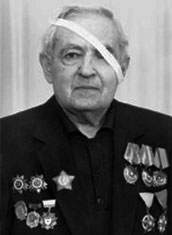 Joseph Abramovich Rapoport
The main works of Joseph Rapoport were dedicated to the chemical mutage. He discovered many strong mutagenes and did a lot of work on their use in the selection of agricultural plants. He also engaged in the influence of mutagenes on viruses, microorganisms and antibiotic producers. He also conducted studies of the mutagenic effect of industrial poisons and other toxic substances.
By the end of 1991, 383 mutant varieties of agricultural crops were created by the end of 1991, 116 of them were regionalized, including 26 wheat varieties, 14 varieties of corn, 14 varieties of corn crops, 8 grain -fiber grains, 28 varieties of feed, 11 varieties of technical, 4 varieties of vegetables, 1 varieties of vegetables, 1 varieties, 1 varieties, 1 Variety of medicinal and 1 variety of berry crops.
What you need to know about
In 1968, Joseph Rapoport participated in the round table of the Komsomolskaya Pravda newspaper on the problem of “nature-chemistry-man”, where he first raised the danger of uncontrolled chemicalization of agriculture for the human gene pool. In 1971, he was elected vice-president of the 1st annual conference of the European Society for the external environment, as the first scientist who attracted attention to the genetic danger of uncontrolled use of chemical compounds in the biosphere.
Direct speech
From the speech of I. A. Rapoport at the August session, Vaskhil: “ The gene is a material unit with a huge molecular weight of about hundred thousand and even millions of units. Genes are available in the core of the cell at absolutely defined points, which are called chromosomes. These units became known to us as a result of persistent and laborious experiments. We were convinced that it is possible to artificially move units from one chromosomal system to another. We were convinced that these hereditary units - genes - are not unchanged, but, on the contrary, are able to give mutations. Mutations are a huge conquest of Soviet science and in the sense of opening the powerful action of external physical factors and in the sense of the action of agrochemical factors. In the work that the Academician of Perov here said so dismissively, great difficulties have been overcome and there are certain achievements. These achievements are that we, Soviet geneticists, found chemical agents that allow us to arbitrarily receive hereditary changes many thousand times more often than before. <...> Lamarkism in the form in which it is refuted by Darwin and T.D. Lysenko, is a concept that leads to errors. In tens of thousands of exact experiments, we were convinced that the alteration of animals and plants as a result of only our desire cannot be achieved. We must know the mechanisms that are based on certain morphological and physiological properties "
From the memoirs of Alexander Malinovsky about the August session of the 1948 Vaskhnil: “ Among other things, the presented present referred to some foreigner who wrote something against Mendelism. Yuzik shouted to the present: "He is the same adventurer like you!" Someone from the audience: "Where is this bully ramport?" Yuzik in response: "From the 7th Airborne Division." Someone insisted that he be taken out. The present, knowing that the victory was provided to him, said: “No need,” and Yuzik said: “So I taught you ...”. Yuzik instantly from the place: "I am ashamed of this!"
From the speech of the professor of the Kyiv Medical Institute K.Yu. Kostryukova at the August session, Vaskhil: “ Yesterday Comrade was performed from this rostrum. Rapoport. He acted like a real morganist. He was captured by hostile theory. <...> The gene was dressed in new, fashionable clothes, biochemical clothes. <...> But you have to be honest, Comrade. Rapoport! The gene is a pure fiction, no matter how you assure you, Comrade. Rapoport that this is a material particle. An electronic microscope will not save you. You can see any smallest particles in an electron microscope, but these will be the chromosomes, and you will not see the gene because it is not. <...> The science of the genus is a false theory that delays the development of science. ”
7 facts about Joseph Rapoport
- Already in the first year of the university, Joseph Rapoport participated in the compilation of the “Actomativity on Evolutionary Learning”, published in 1934, where he was the author of the section “Genetics and Evolution” and an translator of articles from German and English.
- On May 8, 1945, Joseph Rapoport at the head of the advanced detachment carried out a breakthrough through the retreating army of the Germans. His detachment connected with the advanced detachment of the reconnaissance division of the 11th Armored Division of the US Army.
- For the fighting merits of Joseph Rapoport, he was awarded two orders of the Red Banner (1943, 1944), the Order of Suvorov III degree (1944), the Order of the Patriotic War of the II degree (1944), two Orders of the Patriotic War of the 1st degree (1945, 1985), the American Order of the Red Star of Hungary of Hungary of Hungary (1970) and numerous medals.
- Rapoport was presented three times to the title of Hero of the Soviet Union, but the command replaced him with orders awarding.
- For scientific achievements, Joseph Rapoport received the Order of the Red Banner of Labor (1981), the Lenin Prize (1984) and the title of Hero of Socialist Labor (1990).
- In 1962, Rapoport participated in experiments in the field of space biology to determine the influence of high energies protons on the frequency of mutations.
- In honor of Joseph Rapoport, a variety of winter wheat named after Rapoport is named, obtained when crossing a mutant plant, which has a number of valuable and rare features, with the Mironovskaya 808 variety.
Materials about Joseph Rapoport
Article about Joseph Rapoport on Russian Wikipedia
Joseph Abramovich Rapoport - scientist, warrior, citizen: essays, memories, materials
A site dedicated to Joseph Abramovich Rapoport