
Translated material
Primorye: To release the wands and beluga asks Putin world stars
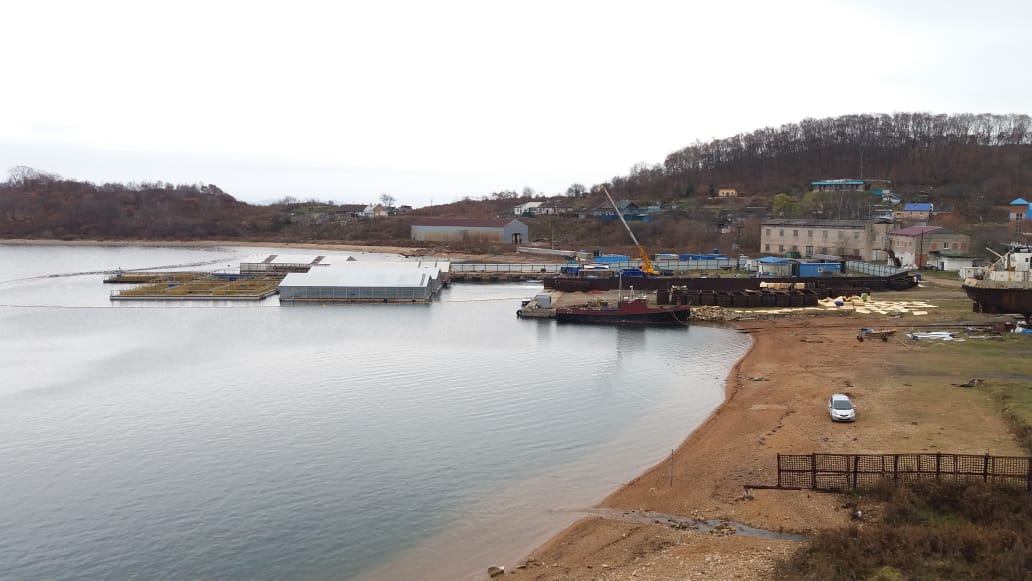
About 50 actors, musicians, writers, artists and athletes from different countries turned to Russian President Vladimir Putin with a request to release the wands and Belukh from the Kitov prison to Primorye. It is reported by "Interfax."
The signatures under the appeal were made by Hollywood actors Pamela Anderson, Holi Marie Combs, Christine Davis, Kate Mara, Edward Norton, Mark Ruffalo, French Oceanologist Jean-Michelle Coustea, Actor and Ambassador of the UN Goodwill by Edrian Grendy, Russian musician Ilya Lagutenko, singer Sati Casanova, singer Sati Casanova, singer. Models Natalya Vodianova, Dautzen Croes and many others.
The authors of the letter are asked to create the most favorable conditions for animals, to expand the aviarys in which they are now contained in the average bay. They emphasize that the life of marine mammals is at risk.
"We ask you and the Russian government to plan the return of the wanders and beluga to the Sea of Okhotsk, if possible, in their native populations, and discuss this issue with Russian scientists and non -profit organizations," the text of the appeal says .
Earlier, Pamela Anderson and Jean-Michel Kousto, who is ready to act as an expert in the process of animal rehabilitation, have already addressed Putin with a request to let go of the “whale prison”.
Kouso plans to come to Primorye to assist in the release of the killer whales and beluga, which are in the Middle Bay. He stated this in his video message posted on the Internet. According to him, it is necessary to act very quickly so as not to cause even greater damage to the animals.
The Hollywood actor and zoo defender Leonardo DiCaprio at the end of February posted a petition for the liberation of the killer whales and Belukh from the Kitov prison in the Middle Bay in Primorye.
- On March 6, the Public Coalition "Freedom to Kosatka and Belukham" announced a protest of the Ministry of Natural Resources for the movement of marine mammals from the "whale prison" to the still -existing "center" on the island of Russian. Ecologists believe that in anticipation of the construction of a center for marine animals, killer whales and belugas will have to spend several months in unsanitary conditions.
- On March 5, at a meeting in the government, it was decided to move the braids and beluga from the “whale prison” to the center of maintenance of large marine animals after it warms up in Primorye. The center will be equipped in one of the bays of the island of Russian. The participants in the meeting decided to release mammals into the natural habitat "only in the absence of risks for their life", and to chip all braids and beluga. What will happen to animals if experts decide that they cannot be released in the natural environment - it was not reported.
- On March 4, experts found that a killer whale disappeared from the “whale prison”, which looked the most patient during examination in January. The zoo defenders stated that the animal died. The abolders insist that the braid broke the network and fled. Scientists of the Institute of Oceanology of the Russian Academy of Sciences and the Moscow State Academy of Veterinary Medicine and Biotechnology have confirmed a serious deterioration in the state of killer whales and Belukh from the Kitov prison in Primorye in just two months.
- On January 18, a check organized by the Primorsky Directorate of the Border Service of the FSB of Russia was held in Kitov Prison. Independent ecologists were first allowed to participate in the audit. Dmitry Lisitsyn later told the editorial office "Siberia. Real" that the state of animals is deteriorating. These marine mammals are extremely difficult to endure the closed space and separation from relatives.
- On December 21, investigators reported that three belugas were gone from Kitov Prison, and referred to damaged networks. Ecologists said that the weakest and most exhausted cubs Beluh simply died due to the conditions of detention in the "whale prison".
- According to Russian Greenpeace, the Kitolovs wanted to sell the wanders and belugs to the Chinese oceanariums. In Russia, dolphins cannot be obtained for commercial purposes, but animals were caught by cultural and educational quota. The cost of one killer whale in dolphinaries and oceanariums in China is from 1 to 15 million dollars.
- Two of the four companies engaged in capture braids and beluga, located in a “whale prison” in Primorye, admitted that they made animals by order of foreign oceanariums.