
Translated material
Oyub is released
The verdict of the Shalinsky court to the head of the Chechen "Memorial" sends us all a very important signal
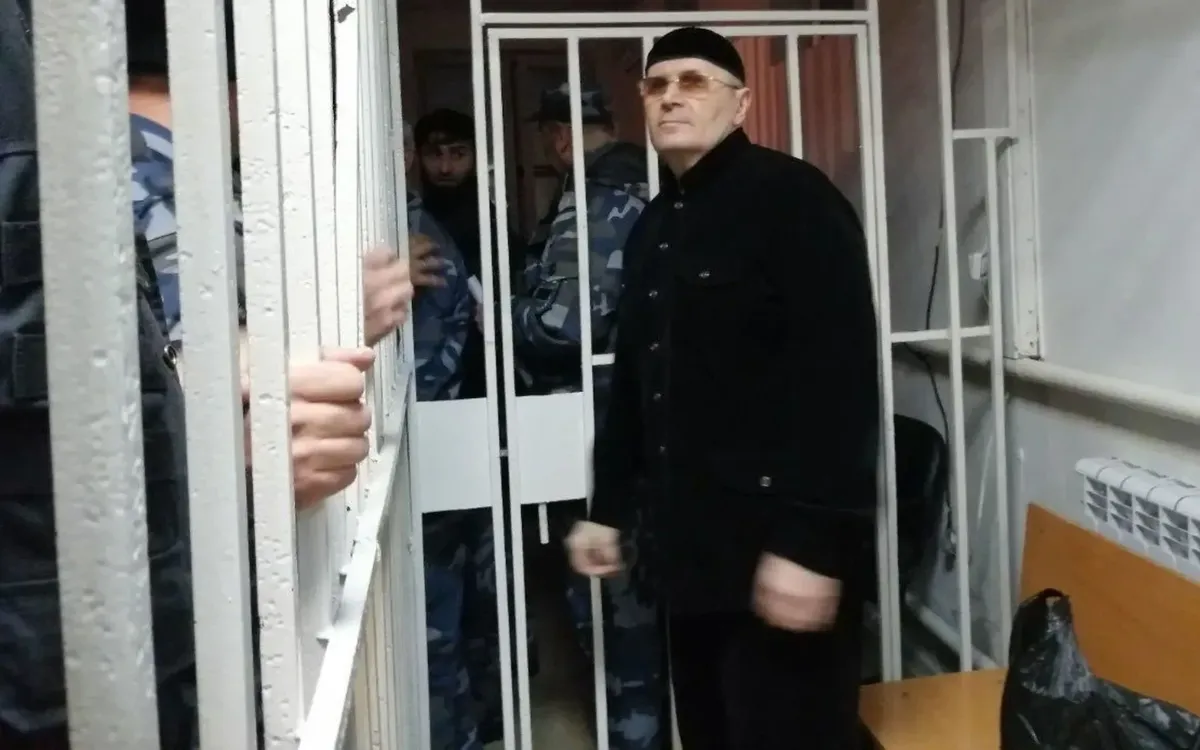
A lot of people came to announce the verdict in the case of Oyub Titiev. Someone calculated: almost two hundred people patiently waited for the passage to the Little Shalinsky City Court. Precautions on this day were strengthened in court, the bailiffs meticulously checked each bag, asked to present the contents of the pockets.
Due to a thorough examination, half of the people could not get into the courtroom when the judge Zaynetdinova began the announcement of the sentence. The operational passage was ensured only for journalists: there were more than a dozen cameras installed in the jury installed in the jury, on this day in the Shali court.
The diplomats were exhibited in the general queue - first in the rain, and then - under the door of the courtroom.
Because even if the bailiffs were able to test more quickly to watch everyone who arrived in Shali that day, the only tiny judicial hall of this court, not designed for such an impressive support group, could not be placed simply physically.
So they listened to the verdict: people got into the courtroom so tightly that I involuntarily began to envy the defendant-only in his cage there was still a little free space. Another, equally huge group of people was waiting for the doors of the hall.

The announcement of the sentence dragged on for the whole day. Judge Zaynetdinova, as always in heels, in a deaf judicial mantle, sewn on the figure, read a 180-page sentence in the folder, which she held on outstretched hands. And after many hours, when the courtroom from overpopulation turned into a murderer when people began to shift from foot to foot, and then - and completely sat on benches, and who did not have enough benches - on the floor; When the prosecutors leaned in the handrails exhaustedly, because of which the cameras, who had recently frightened them looked into the back of the head, the judge was still standing straight back and, like a robot, read the verdict, still holding it on outstretched hands. Of course, it was possible to blame her for consciously or not, arranged for all of us torture. But she herself was her victim.
The admiration of the stamina of the judge Zaynetdinova prevented her from angry. However, on this day, in general, no one was angry and not scandalized in court. Neither those who are suffocated from the absence of oxygen in the courtroom, nor those who, having arrived, God knows where Oyuba from the sentence, was forced to sit under the door, because there was no place in the courtroom ...

The verdict of the Chechen human rights activist Oyub Titiev, issued on Monday in the Shali City Court, was completely predictable from the point of view of the indictment. But he turned out to be completely unexpected from the point of view of the humanity of punishment. Judge Zaynetdinova changed not only the qualifications of the act of the act of Titiev (from grave in medium gravity), but also the category of the regime of serving the sentence (from the colony of general regime for the colony-settlement).
As a result of Oyub, whose guilt in the storage of drugs on an especially large scale the court considered proven (well, how else in another way?), Could be released in the coming months:
Changing the qualifications from serious to the average implies the possibility of release at the pre -trial of one third of the sentence. That is - already in May. And four years that appear in the verdict and which, from the point of view of the context of this case and, most importantly, the age and health of the defendant himself, look intimidating, in fact they mean nothing. The verdict of the Shalinsky court of Oyub, in fact, is exempted from punishment. Here is his main meaning.

Titiev’s lawyer Peter Zaikin could hardly give an example when, back in all -Russian practice, the court showed such enviable humanity. And everyone he remembered turned out to be not strangers to power by people. This is the case of Evgenia Vasilyeva, these are cases of numerous regional ministers who came across bribes ... But Oyub Titiev is a completely different matter. And that is why such an outcome of the conflict of the Chechen human rights activist with the Chechen authorities actually indicates something very important that must be aware and formulated.
The Chechen authorities categorically denied the fact that the case against Oyub Titiev became mediated by revenge to human rights activists and journalists who raised topics of grave violations of human rights in the republic. Oyuba friends to us, it was absolutely obvious, because the crime of which they decided to blame him was incredible. And the question was the only question: would we convince those who did not know Oyub? Including those who decided to punish him in this way.
It was both easy and difficult to protect Oyub. Easy, because Oyub is an absolute righteous. It is difficult - because as a real righteous Oyub is a completely non -public person. Publicity, which could only save him, has always been deeply alien to him. Numerous prizes and awards, hundreds of articles and interviews, sometimes deeply affecting very personal belongings, even his reaction to photo and video shooting in court (if you carefully look, Oyub never looks directly into the camera and is always very tense)- this attention was terribly difficult for him all these months.
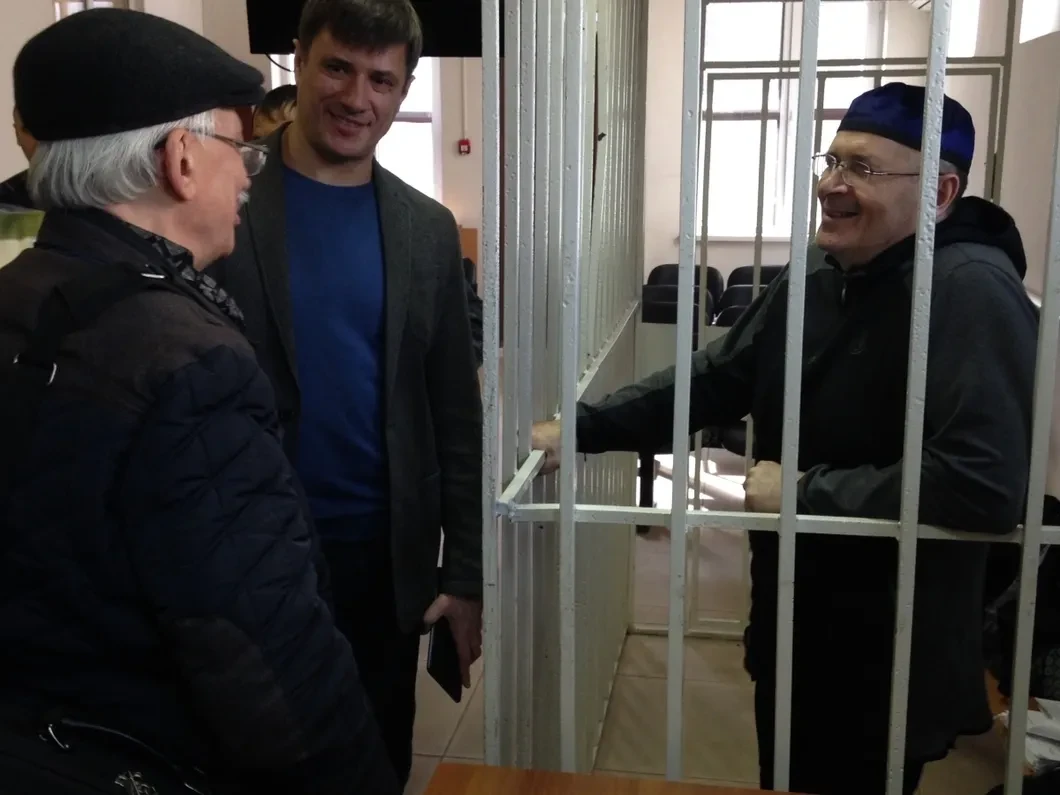
Thanks to the wide public campaign, the launched "memorial", to the doomed, seemingly, the case of Oyub Titiev managed to attract the attention of the whole world. All respectful Russian media, as well as countless foreign publications and television channels, flew to the process. Representatives of many diplomatic agents visited the meetings, some more time. Two presidential candidates personally entrusted Oyub, and Grigory Yavlinsky spoke in court even twice.
Against the backdrop of this grandiose festival of solidarity, attempts at the “witnesses of the accusation” to convince everyone that Oyub is a criminal looked completely peaceful.
By the evening of this day, all of us who lived in this hall, in this process, had the feeling that we were the defendant, and lawyers, and the public, and the bailiffs, and the judge were comrades in misfortune. The bailiffs did not vice at all when the listeners from the hall to the corridor and back began - people went out to drink, eat, smoke - or just breathe, and then returned. The same bailiffs suggested sitting on vacant places; The prosecutors did not mind the fact that their table was used by journalists who filled it with voice recorders and cameras. The judge did not even react when the lawyers brought a chocolate and they, together, ate it.
And when the judge said about the guilt of Oyub - no one shouted: "Shame!"
And the point was not even that people were tired - but how rapidly the judge switched from the topic of guilt to mitigating circumstances. And it was revolutionary - the meaning that she devoted to them in her sentence. The fact that Oyub was found guilty, but they were not going to be seriously planted, it became clear already at this stage. And therefore, when the judge finished the announcement, in the hall, oddly enough, enthusiasm was felt.
There was still no legal understanding of the situation, but it was clear to everyone that the most terrible way did not happen in some incomprehensible way. Only Oyub in this situation behaved very restrained. Before the announcement, he told the lawyers: "I will withstand any test that the Almighty sent me." And after the announcement, when the journalists attacked his cage, he repeated these words. "I will withstand any test."
Terrible