
Translated material
In China, a outstanding police dog was cloned
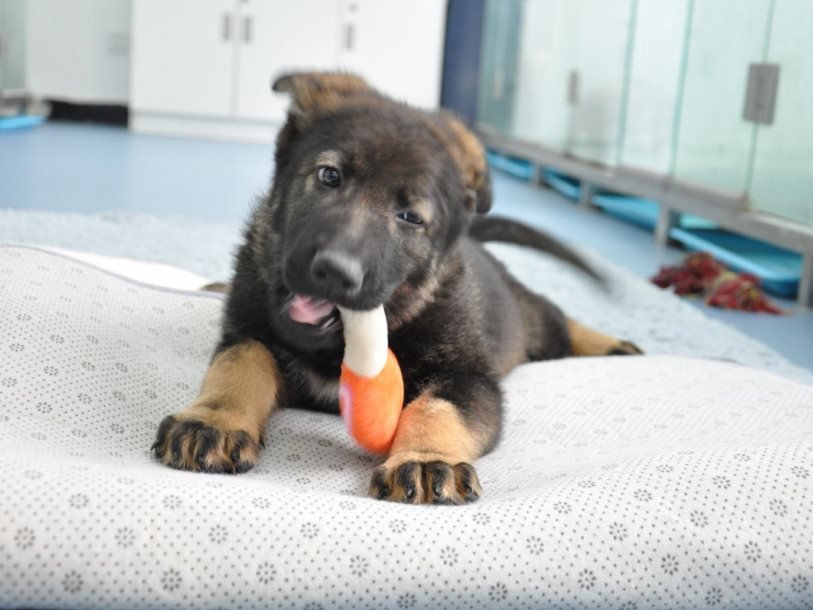
Specialists from the agricultural university of Yunnan Province and the Beijing Biotechnological Company Sinogene cloned an outstanding police dog. It is expected that the born puppy will be able to undergo preparation in a record time and start work.
As a genome donor, when cloning, a dog was chosen, which scientists call "Sherlock Holmes among police dogs." It is assumed that its outstanding abilities will also inherit the clone that received its genes. The experiment was supported by the Ministry of Public Security of the PRC.
The puppy born as a result of cloning received the name Kunsun. Now he is already three months old. The organizers of the experiment expect that in ten months Kunsun will complete the training course and be able to search for drugs and weapons. Usually, according to the preparation of a service dog, according to employees of the agricultural university of Yunnan province, it takes up to five years and is spent 500 thousand yuan. True, it is not publicly reported what are the expenses for the dog cloning.
The first cloned dog in 2005 was the Afghan Borza named Snuppi in 2005, which was born at the University of Seoul. In 2008, the Korean company RNL Bio began commercial cloning of home dogs. Since 2009, the California company Bioarts began to offer cloning (then it cost more than 150 thousand dollars). In 2015, the South Korean Sooam Biotech reported that the number of dogs cloned by it reached seven hundred (the price was about 100 thousand dollars).
Pioneers in an attempt to keep cloning to keep the ability of outstanding service dogs in offspring were also Koreans. In 2007, they cloned Labrador Chase, who worked in the customs service. After sixteen months of preparation, six puppies-clones began to work at customs. Typically, in South Korea, only a third of the dogs undergoing a training course were recognized as suitable for work. For dog-clones, this figure grew to 90 %.