
Translated material
The art of politics and freedom
As paintings by the "London school" at the exhibition at the Plane named after Pushkin is explained to us today
Exhibition of the London School in the Plane named after Pushkin - Russian spectators have been waiting for this event for many decades - coincided with a peak of worries about the Brexit. If we saw this exposition forty years ago, at a time when Bacon and Freud took possession of the minds of Europe, it would be easier; Today to think about British artists and not think about the history of British society is difficult.
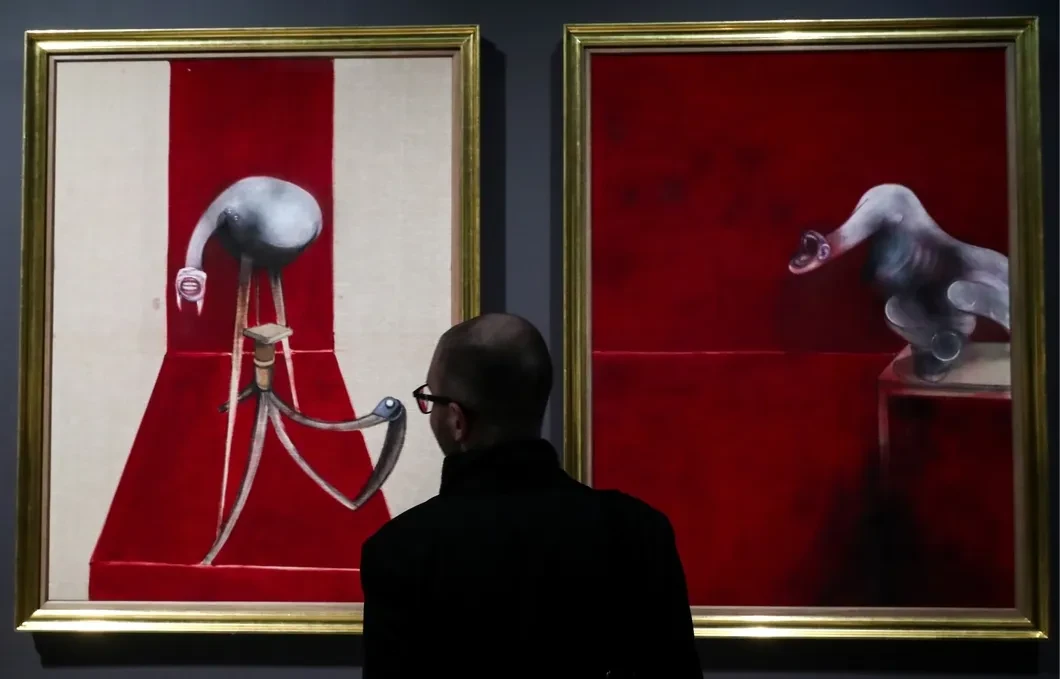
Europe excites: Britain announced the withdrawal from the European Union, the population of the island voted for its inability. Right now, at the peak of the conflict, when the divorce should be legalized, the exhibition of artists of the London school reached Moscow. Thirty years ago, Russia argued about whether it is part of Europe (over time enthusiasm faded); Today is another question: Britain is Europe or not? How do the paintings of the London school explain to us today?
They will say that culture has nothing to do with politics and lives its own life. So the director of museums of totalitarian states and artists who enjoy the support of tyrants love to say. In part, they are right: culture is not identical to politics. But culture cannot completely evade social life.
The largest artist of England Hans Golbein was a German by origin, in London a donkey thanks to the patronage of the chancellor and the custodian of the press of Thomas Mora (the humanistic thinker part -time). Thomas Mor introduced the artist to King Henry the eighth, and Holbein became a court artist. Subsequently, Henry of the eighth executed Thomas Mora, a benefactor of Hans Golbein, but this did not prevent the court master from writing ceremonial portraits of the monarch. History is ruthless discipline: we do not want to know, but, however, Velazquez perpetuated the exile of the Morisks from Spain, Botticelli portrayed the hanged conspirators of Patsci, and Golbein painted the self -confident Henry immediately after the monarch mercifully replaced the tearing off the skin and quarter - just by the cut of Tomas Mora's head.
The artist wrote a heartless monarch in glory, widely spreading his legs, violating space. Did he condemn the king in this way? Is this realism?
All of the above is not designed to denigrate the image of the artist - but it will also be wrong to perceive Holbein outside this context. You can say that art is forever, and politics is transient. Tell Tomas to the Morus and thousands of burned humanists about this: for them and for millions destroyed in the twentieth century, politics became an egregious reality. And if the art teaches something, tells about something, it is naive to deny that the politics has been intertwined with art-and the viewer is free to decide which moral lesson should be extracted from a work of art, and whether there are moral lessons in art in general.
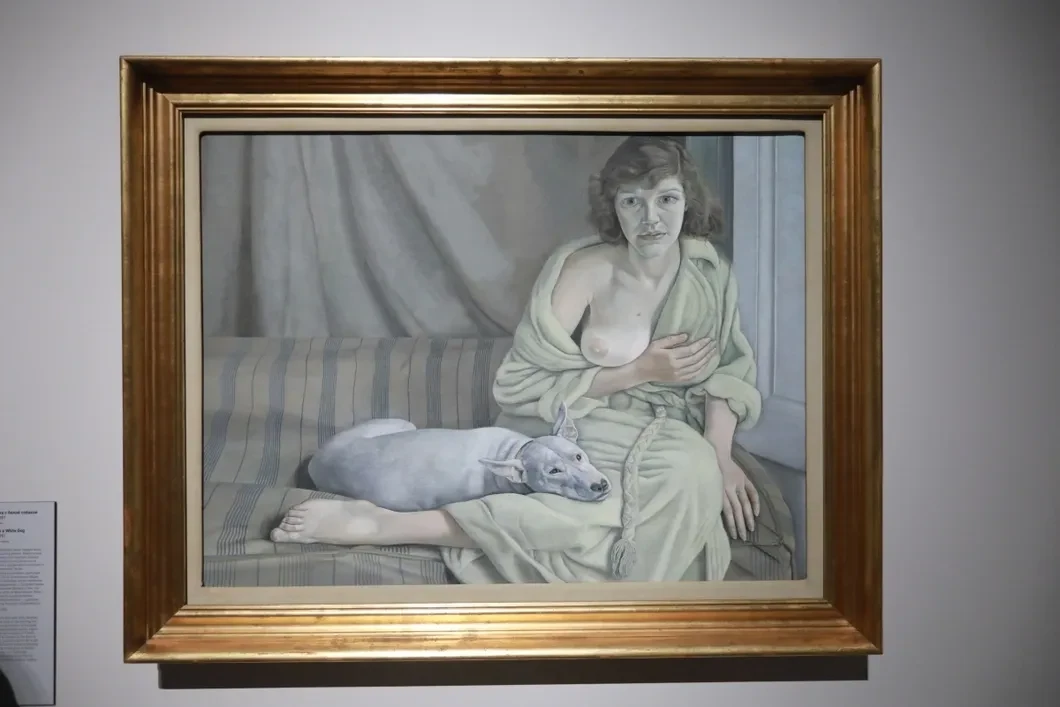
The London school of the twentieth century is primarily a school of portrait: before the audience in the museum on Volkhonka is a portrait of English society. Lucien Freud himself loved to repeat that all his paintings are a huge group portrait. Neither Lucien Freud, nor Francis Bacon made differences, wrote all the strata of society - from the royal family to social workers - with corrosive curiosity.
Having visited the exhibition, you can make out the London citizens: these are people who survived London’s bombing, they and their descendants sit in pubs, eat Cumberland sausages, did not refuse a foot and pound, declared their desire to build a social state with Europe, but a couple of years later they thought of it loudly: we were others, not to Europe, not to Europe. Similar. We want to live separately - and you deal with your refugees and overloaded with promises by democracy.
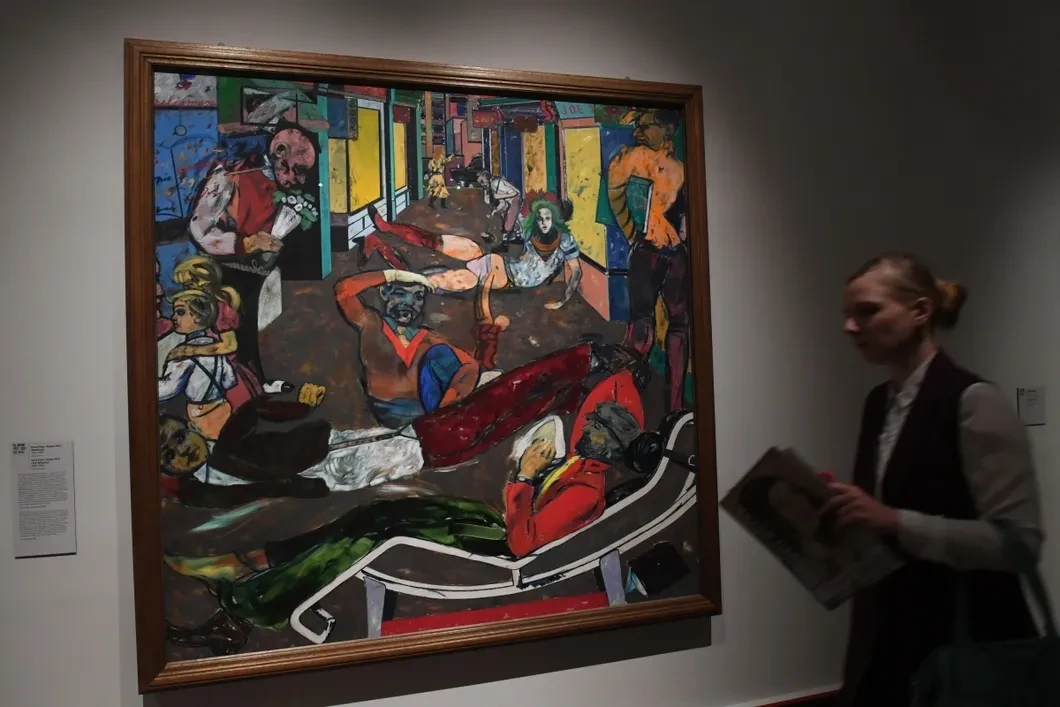
It is difficult to avoid talking about politics in connection with the London school also because almost all artists representing this school are emigrants who got to London thanks to political conflicts. It is common for artists to travel, most often painters went to Italy to contemplate the beautiful, and the artists sought to Paris of the tenths of the last century because “even concierge is understanding the painting” there, in the words of Chagall, but they fled to London because Europe was soldered to the First World War and waited for a new massacre. Not then to learn drawing (they did not study in England in England, they came there to trade the skill like Holbein or Van Dyck), but they rode because the parliament and the democratic law were ruled on the island.
Lucien Freud, grandson of Sigmund Freud, Austrian Jew, born in Berlin; Frank Auerbach, Berlin Jew; Leon Kossof Jew, whose parents came from Russia; Ronald China with Jewish-Hungarian roots-all of them represent the very refugees, of which today's Britain does not particularly accept. That is, some refugees in Britain are willing willingly, but these are fugitive financiers, there are many of them in London as in any other country in the world: for the past thirty years, London worked as a global financial laundry - but now the orderly laleads and Belarusians from the poor countries are not called to visit.
One of the aberrations of the history of London and its inhabitants is that today's financially wealthy “refugees” acquire the canvases of those beggars of the time of the Second World War - and at astronomical prices.
Refugees, whose canvases are hanging in the Plane today, arrived in a foreign city without money and did not achieve recognition immediately; Their paintings did not coincide with fashion. The London school is not a school at all; Cossof, Bacon and Freud have no general techniques; They united because they wanted to draw people, “human clay”, as one of them put it, Ronald China, using the line of Oden. And drawing portraits was not possible. Before the war, it was fashionable; And after the Second World War - no longer.
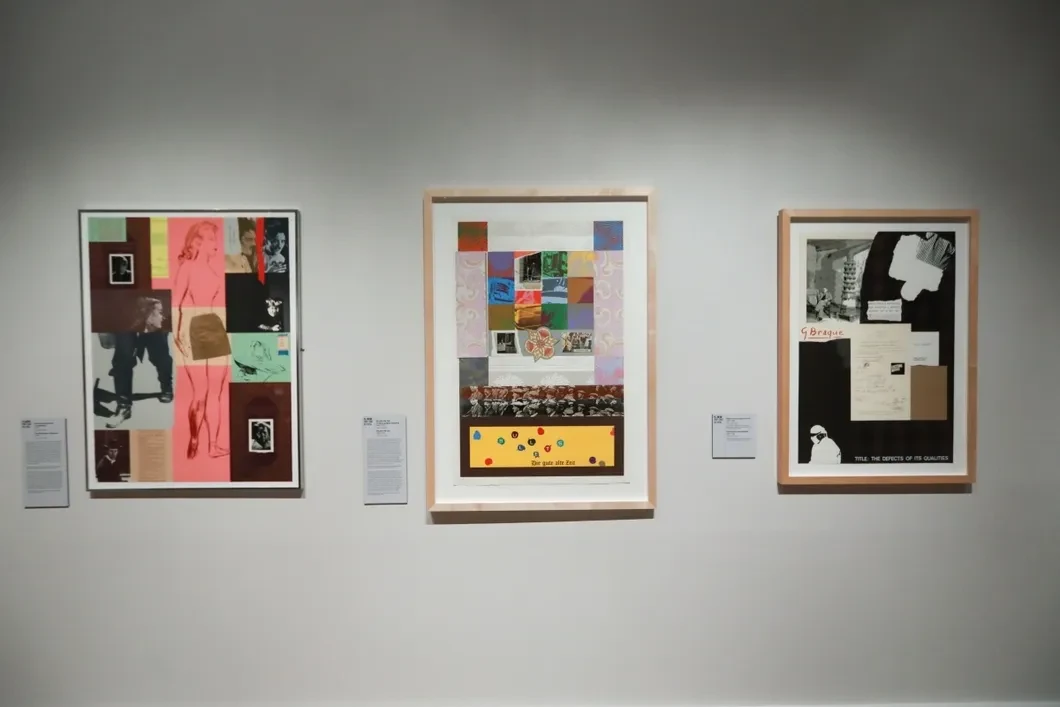
Human clay was not in honor. She was intended so much during the war that they were fed up. In post-war Europe, abstract painting took possession of the minds-an alternative to the imperial colosses of fascist regimes was indescribable art and pop art. Figure painting is compromised by orders of dictators, and it seemed forever. A character in painting is always a hero, and the European intellectual in heroism was assigned.
The London school does not portray heroes in the usual sense of the word. The hero is one who takes responsibility for many, wants (perhaps deceives, but it turns out later) to protect others. The heroes of London paintings do not think about anyone other than themselves - and they have enough reasons for anxiety about themselves.
Groundy life, giggled by passion, dejected by experience - before us those who were described by Ivlin, Garold Pinter, Oldington, Pristley. This is a convincing evidence of human mortality; These are the portraits of mortals in the most literal meaning of the word, but also in theological also: there is no faith in immortality. Everyone will perish and go nowhere. Lucien Freud loves to draw sleeping or lying in bed; A kind of rehearsal of eternal sleep. Even the young faces show what life cost: on flabby skin, fatty folds, shadows under the eyes, inconsistencies of physique - you can study vices and passions. Only one passion in these characters is absent: none of them are solidarity with another. In the huge portrait gallery of society there is no place for compassion and anxiety about someone else's fate; Everyone meets his fate alone.
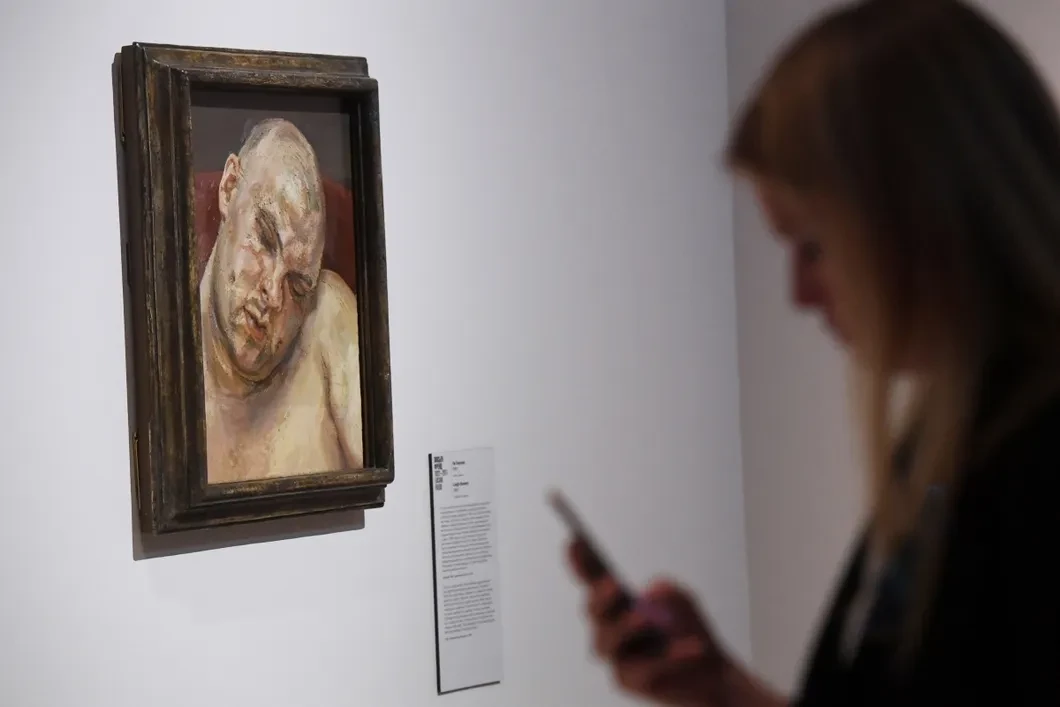
For a society voting for exit from Europe on the grounds that personal problems are more important than strangers, this is perhaps an accurate diagnosis; You can perceive paintings as a mirror of politics. But for the humanistic art of Europe, such paintings are unusual. It is even more strange that these figures are Bacon’s twisted characters and Freud's characters ghosted by passion - Portraits of the post -war generation, this is a portrait of the winner of the winners, the society of the winning society.
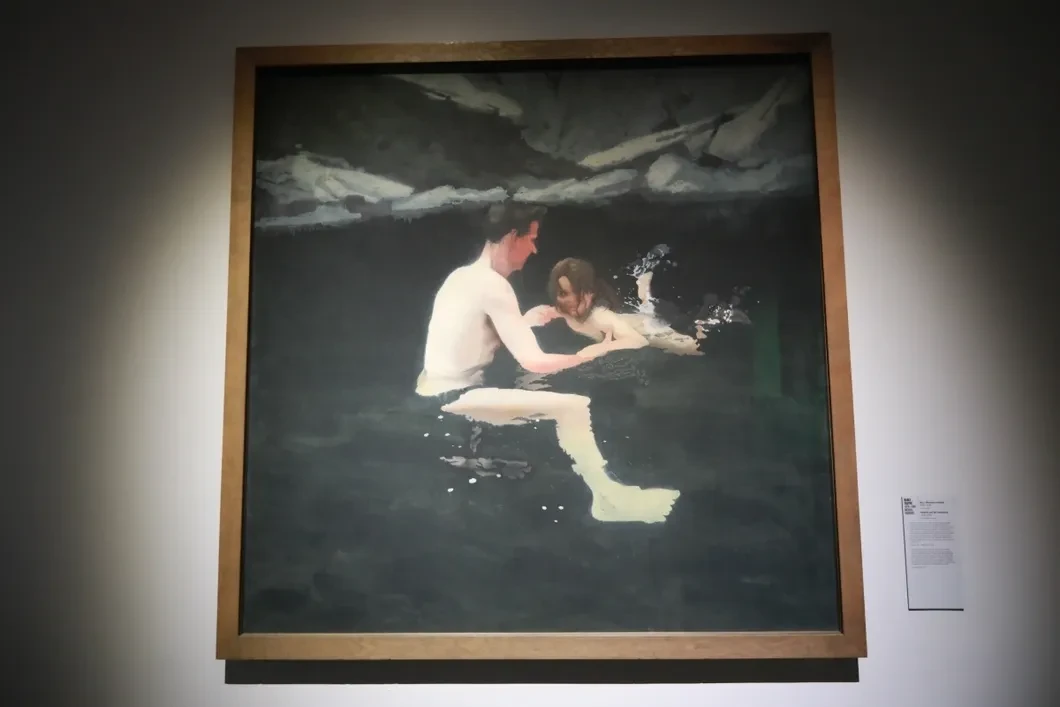
It is difficult to resist the comparison of the London post -war school with the Parisian school, which arose before the First World War. The heroes of Parisian canvases (Picasso, Sutin, Modigliani, Chagala) - they were losers. Clowns and lovers of absinthe reached each other to hide from the falling trouble; They try to cover each other, who can: the girl presses the dove to her, the old Jew - the fragile boy, the Harlequin family clenched in a desperate embrace.
If you look for a common word to determine art, that, the Parisian pre -war collection of refugees, then this word will be “mercy”. The weak protects the weakest, the loved one protects his lover - they find a refuge in each other, they gain immortality in love.
The London character does not hide at all, he fell apart in the center of space; He, like Henry Eighth, tramples space; He is lying across the space. Francis Bacon loves to build a likeness of a transparent cage around his hero - it may seem that the hero is driven into an aviary; But no - this detail only emphasizes the fragility of the perspective; Before us is the Lord of the little world, he bursts and makes a prospect. True, the winner of the victory over the world was expensive: it is obviously not good for him. He is not good alone, passions twist him, but he is no better next to loved ones.
“All people are enemies,” Oldington once wrote, his heroes brought this cruel morality from the world massacre - and the characters of the London school prove the justice of the rule.
“For a sin committed by two, each will be responsible for the dissolution” - the line of the cruel English poet Kipling as possible illustrates the paired portraits of Lucien Freud - naked lovers, devastated by passion, lie nearby, and there is nothing that unites them; Sexual intercourse is completed, no other proximity was not supposed.
Individualism, loneliness, pride or uniform heartlessness - but the characters of the London school do not burden themselves with attention to the neighbor. Their views are not found, their hands do not come in contact, they do not smile at each other. They do not hide, like the heroes of the “lost generation” - there is no one to hide the winners from the winners, they defeated everyone. But there is the mortality of human being, a limb of life, and from this to hide or not - it will not help.
In the 1984 novel, Orwell describes the limit of the enslavement that the state machine achieves - this is when a person refuses sympathy for his beloved, when he is ready to betray his half, if only they would not touch him. Is it possible to close your loved one from non -existence? The hero of Rembrandt and Picasso believes that this is possible and should. "Let it do with Julia, not with me!" - shouts crushed Winston Smith - and this scream is heard from each distorted by the fear or passion of the portrait of Lucien Freud and Francis Bacon.
But how did we allow you to do this? Have we defeated fascism and Stalinism for this? Did they abandon the doctrine of communism - false and hypocritical, but unifying people today? Did we then proclaim an open society ideal to put the iron doors to apartments, did they then reveal the privileges to our senators demonstratively?
How did it happen that after the victory over fascism, Europe decided to be one and democratic, but today it is torn to pieces and everyone is looking for its benefit and its national truth?
Somewhere, probably, a mistake occurred-that’s the naked people of Lucien Freud, resembling freshened carcasses in the shops of butcher, they are also perplexed: a person seems to be a crown of creation, but you look at fat deposits and look into your eyes, you won’t say it.
Oden writes that “human clay” is in the sketch of Goya or Daumier, and the artist Ronald China made a line of dress about the “human clay” by the manifesto of the London school - he is more expensive than the apples of Sezanne; But the trouble is that Oden could not see Cezanne's paintings. Stials with apples are written about unity, the meaning of apples in the solidarity of all things.
The fact of the matter is that the apples of Cezanna and the potatoes of Van Gogh are just as tightly clinging to each other, like a family on the barricade of Daumier and people in the crowd of Goya. European humanistic art - it exists for the sake of unity of people and space.
“Life is also only a moment, only the dissolution of ourselves in all the others, as it were, in a gift” - Cezanne’s apples penetrating each other, and the swirling line of Daumes, and the puree of the frantic heads of Goya, and Pasternak’s poems are also said about this. Together - we stand in the face of nothingness. But behind the iron doors and in yacht cabins - we will be lost. And the wild, twisted loneliness of London characters, sold out on the "Sotby" with rich refugees, screams: they are disappeared.
The new English idea is to stir with Europe and its problems is a very old idea, its author is the same Golbein Henry Eighth. It is curious that the king began as an opponent of nationalism and Protestantism (and therefore made his praise Catholic and humanist Mora), but when it ceased to be profitable, he revised his views. At first, the king simply wanted to avoid religious wars that shocked Europe; But I quickly realized that isolation from European problems gives unlimited power over subjects. Those civil, political and personal freedoms and values, in the name of which Europe fought with fascism and Stalinism, are embodied in the Renaissance and Enlightenment - using the words “freedom” and “right”, it is impossible to ignore it; But the Renaissance and the Enlightenment manifested “law” and “freedom” only and necessarily in connection with another, depending on the other, in responsibility for the other. It is impossible to be free alone.
Heinrich of the eighth to break with the Renaissance (and Catholic) doctrine, had to execute the former friend - and so he achieved the individual fate of the kingdom; For the sake of gaining freedom, he got rid of the one who embodied freedom and law. Brexit of the 16th century and Brexit of the XXI century are largely similar: it seems that the dignity of a “free” person is to be independent;
In fact, complete independence from obligations is the privilege of a slave: it acts on duress and has no obligations. Freedom is determined by the ability to protect another.
Thomas Mor denounced the power of gold (in “utopia” criminals are sentenced to wear gold shackles), but tell this to today's London and the new financial “refugees”.
Ah, before we are at the exhibition! We look at the images of Bacon and the sleepy faces of Freud's characters turned inside out, admire the ruthless analysis of human nature and ask ourselves: what will happen to all of us?
Will there be war? Will Europe break up? Will the sanctions take off? Can Britain return to the bosom of Europe - and will people be able to overcome the political crisis together? Will the solidarity of Christian democracies be able to withstand corruption and the new feudalism; Is it possible that financial capitalism arouses such moral resources in humanity that history will reach the radiant point of self -knowledge (how did Fukiyama dreamed of?). To answer these questions, imagine how Lucien Freud's characters clung to each other - like Shagal in love, and the hero of Francis Bacon defended the weaker - following the example of fragile Harlequin Picasso.