
Translated material
But we can our own "zircons"
We are able to make an anti -ship missile, which no one else has in the world. Do I need it?
In the section “War and We” we, as a rule, publish anti -war texts, that is, directly opposing the militarization of public consciousness. But this can be done in different ways. Including, calmly, at the expert level, analyzing the initiatives of our military and the leadership of the country. You can argue about whether we need new superweapon from the standpoint of general humanism. And from the point of view of the possibilities of its use in a hypothetical military conflict. Because, whether we want it or not, it is for this scenario that the military and politicians on both sides of the ocean are now seriously preparing.
For this reason, today we publish the text of our permanent author, a military engineer, and the radar developer Andrei Gorbachevsky, who reacts to the Zircon hypersonic anti -ship missile announced in the president’s message.
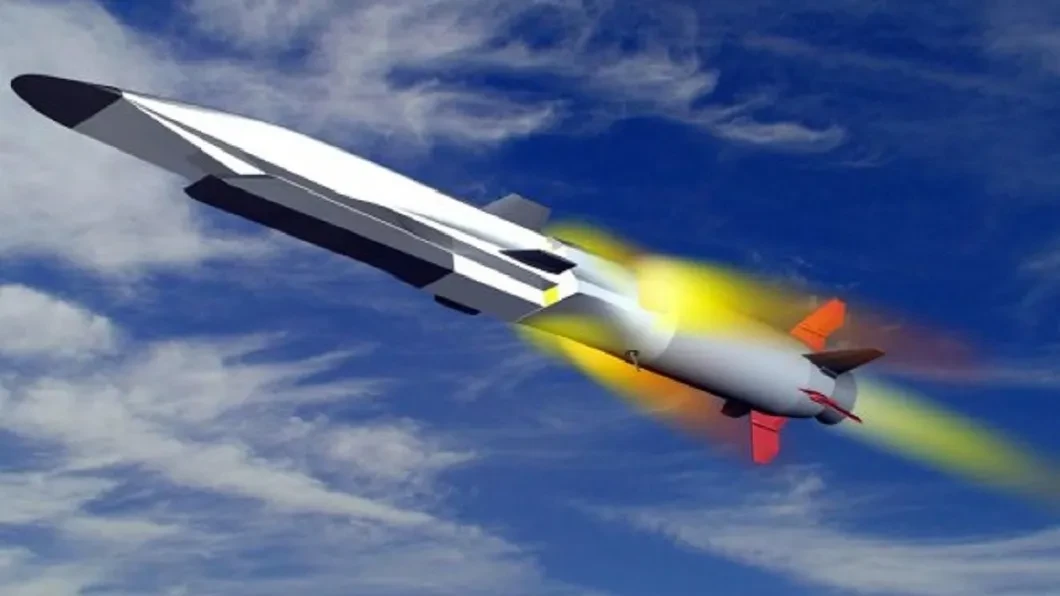
In his message, the president announced the successful progress in the development of another new product - a hypersonic anti -ship missile (PKR) Zircon. The range of its flight exceeds 1000 km, and the speed reaches 9 M (Help: M is the number of a swing equal to the speed of sound. At the Earth’s surface M = 340 m/s and with an increase in height decreases. At the heights of the “zircon” flight, M = 300 m/s, that is, 9 m = 2.7 km/s).
No pictures and additional information was given.
Further, the president invited Western partners to calculate the speed and strength of our blows.
As, knowing only the two parameters of Zircon, the president did not report the power of his blow. Maybe he suggests that Western intelligence and without it has all the necessary information.
Therefore, the "sofa" troops, to which the author, as a pensioner, also refers, remains only to fantasize. We will try to construct our version of the PCR “Zircon” and call it “sofa”.
Classification of anti -ship missiles
In terms of the speed of the PKR flight, they are divided into three classes: subsonic (DPC) at a speed of less than 1 m, supersonic (SPKR) - 1-5 m, hypersonic (GPKR) - 5-15 M. DPCR are equipped with turbojet engines and are distinguished by high economy, small mass and cost. SPKR and GPKR have a direct-flowing air-reactive engine (straightforward). The principle of operation of the straightfall is extremely simple and it is that the sparse -fraudulent air is included in the wide input hole of the air intake at high speed, and the section of the air intake along its length is smoothly reduced. Accordingly, as the air intake is narrowed, the air flow density gradually increases, and it enters the chamber of combustion under much more pressure than in the surrounding atmosphere.
The direct -way cannot provide a speed of more than 15 m, so it is better not to attribute missiles that have a speed of more than 15 m to hypersonic, as they are conventional ballistic missiles. For example, the Avangard hypersonic block is just the head of the UR-100 ballistic missile. It does not have its own engine and flies at the first cosmic speed of 27 m, to which it accelerates the rocket.
In the United States, it was considered that it is more profitable to have a lot of cheap DPCR than to do SPKR, and produced the only type of DPKR - “harpoon”. In the USSR, both the DPKR type X-35, and several types of SPKR, such as “onyx” were produced. The survival of both the DPKR and the SPKR was ensured by a fly to the target at extremely small altitudes. The DPCR flies the entire distance at an altitude of 3-5 m. With such flight altitudes due to the curvature of the Earth, the ship's radar can detect the DPCR at a distance of not more than 25 km. The advantages of the DPKR also include the fact that, with a low flight altitude, due to interfering reflections from the surface of the ship, the ship's radar is very difficult to make accurate measurements of the DPCR coordinates and to bring the ZUR on it.
, Due to a high flight speed, is forced to approach the target at an altitude of 10–12 km, as a result of which the SPKR is found at a distance of up to 30 km, and interfering with the air defense system (anti-aircraft missile system) the effect of reflections from the sea is reduced compared to the measurement of the DPC. Therefore, a decrease in the likelihood of killing SPKR compared to the DPCR occurs only due to a faster flight of the SPKR to the ship. SPKR The initial flight section fly at high altitudes at a speed of about 3 m, and when approaching the target, the last about 100 km fly at an altitude of 10 m at a speed of 2 m. At this speed, the heating of the case is moderate and it is maintained. For the advantage of the high speed of SPKR, it was necessary to pay the growth of its mass by 3-5 times.
In the USSR, they did not even try to develop the CPC, as it was evaluated that the increase in speed would clearly not compensate for the increase in the complexity of the structure, increase in value and mass even more than in the case of SPKR.
In the USA, hypersonic missiles have been conducted since 2003. Only experimental samples were built. Apparently, the experiments did not bring encouraging results and no CPC was built. The high speed of 9 m does not guarantee the breakthrough of the air defense of the ship. AIZHIS and our S-400 air defense systems are designed to defeat missiles with such speeds.
Disadvantages of the GPKR "Sofa"
- Trajectory
At a speed of 9 m, it is possible to avoid overheating of the nasal fairing only when flying in a sparse atmosphere at altitudes of about 40 km. At this height of the curvature of the Earth, it no longer affects the maximum range of ship locators (400-500 km) of the GPKR will be clearly higher than the horizon, which will allow you to detect the "sofa" 2-3 minutes before the fly to the ship. The “sofa” will not be able to go down and fly along the surface with the hypersonic speed, since at the surface of the earth, in order to avoid overheating, you can fly at a speed of not more than 2–2.5 m.
It is unrealistic to create a GPKR that can fly both at a speed of 9 m, and at a speed of 2 m, since in flight you will have to change the geometry of the air intake, wings and engine.
Therefore, the "sofa" can fly only at high altitudes and dive from these heights to the target.
- Maneuverability
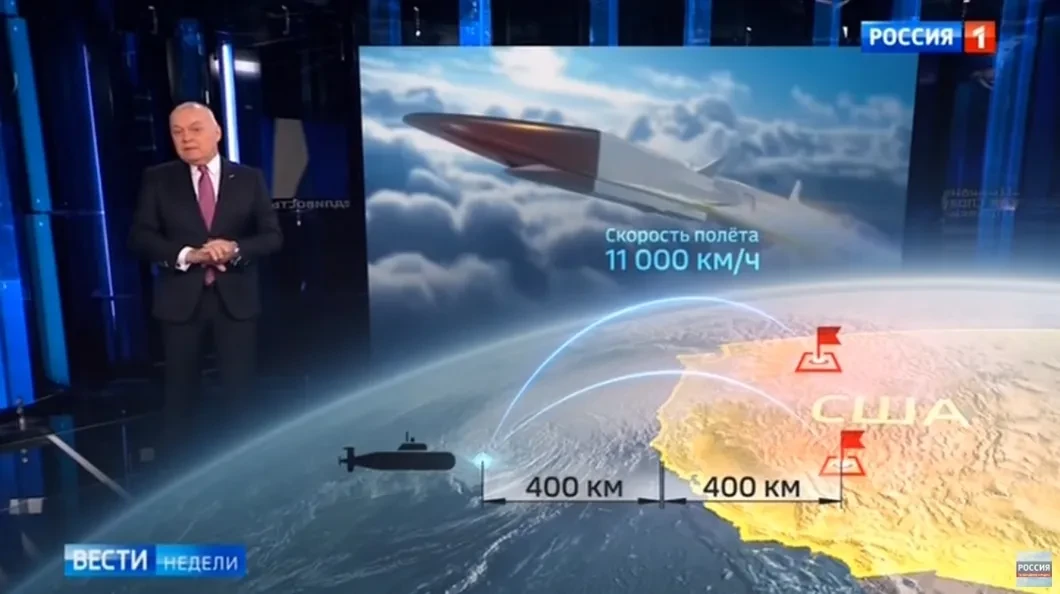
Directly does not tolerate intensive maneuvering. When the rocket rotates sideways to the air flow, then the seal surges occur in the air intake, and the straightfall may stall. Consequently, the “sofa” will not be able to evade the enemy’s sings due to the maneuvering at almost the entire flight distance, except for the last kilometers that can fly by inertia and with a stalled engine.
- Launching a straightfall to work
The PVR SPKR can be included in the work only when the SPKR dispersed to a speed close to 1 m. For this, a powder accelerator is placed inside the combustion chamber. That is, to increase the total length of the rocket is not required. In order to start the GPVRD, it is necessary to ensure the acceleration of the CCC to supersonic speeds. It is impossible to ensure such acceleration due to an internal accelerator. Therefore, the GPKR "Sofa" should be virtually two -stage, where the first stage is a powerful accelerated unit. The mass and length of the “sofa” are increasing, and it may not fit in those ship installations of the vertical launch, which now houses the caliber missiles.
- The impossibility of reducing visibility
At a speed of 9 m, despite the high flight altitude, heating the nasal fairing and the front edges of the wings can reach 3,000 degrees. The same edges give the greatest radar reflections. In the DPKR and SPKR, these edges are covered with radio -absorbing materials.
However, none of the absorbing materials can withstand a temperature of thousands of degrees.
Consequently, it will not be possible to apply the Stlass technology, and the enemy’s radar system (radar) will be detected by the GPKR over long distances.
- An increase in the time of shelling by the enemy
If we assume that the “sofa” will be discovered at the maximum range of the ship's radar and the ZUR will be launched on it, then the “sofa” meeting and the SAM will occur at a range of about 100 km. In this case, the “sofa” will have to fly to the ship for about 50 seconds, subjecting to repeated attacks of the ZUR. In the SPKR, which will be found at a distance of 30 km, the first meeting with the SAM will occur at a range of 15 km. After that, SPKR will take 20 seconds to fly to the goal. Let us ask the question: why is it required to build a GPR if the SPKR fired at a much less time?
Summarizing the above shortcomings, we come to the conclusion that the enemy’s ship can, due to the high notice of the “sofa”, detect it in advance (2-3 minutes before the climb) and let the sofa, which will meet with the “sofa” at a range of about 100 km.
Due to the low maneuverability of the “sofa”, the probability of its defeat will be high.
Of course, if you simultaneously let several dozen “sofas”, then some of them will avoid a large -range zurs, but when approaching the ship, they will be fired by a short -range ZRK RAM. The likelihood of these small Zuras is even higher, since they have exceptional maneuverability (overloading 50 G) and a thermal head of self -confidence, which with high accuracy displays the ZUR to a heated indigenous missile.
About the type of self -confidence head for the "sofa" rocket
For any PCR, the best characteristics are provided by the radar head. Depending on the visibility of the target, it is able to detect the enemy ship at a range of 20-50 km. But its antenna should have the highest possible diameter, so it is placed in the widest part of the nasal fairing. Due to the high speed, the nasal fairing of the CCPR must be very elongated and made of ceramics. Such a fairing will increase the length, mass and cost of PKR. But at the same time, it will remain empty inside. However, large detection ranges in the radio console will still not work, since at the hypersonic speeds around the fairing a plasma cloud forms, in which the radio waves are faded. The thick layer of ceramics will add additional attenuation. In addition, due to the high temperature of the fairing, the head itself will also heat up, which will require the use of a bulky air conditioner, this will even more complicate the CCC.
You can try instead of a radio console to install a small -sized optical head, which requires much less cooling, for example from the Iskander missile. At the same time, a ceramic fairing is not required. However, the optical head, even in good weather, can find a ship at a distance of no more than 10 km, and through clouds, fog and smoke clouds that the ship organizes during the attacks of the PKR, the optics does not detect the target at all.
The possibility of guiding a rocket
No rocket detects the goal on her own, she is given an external target designation before the start - at what predicted meeting point for the purpose of it needs to fly. The mistake of the target designation should not exceed units of kilometers. Due to the curvature of the Earth, a ship's radar is able to detect the enemy ship at a distance of not more than 40 km. Therefore, on large ships, heavy Ka-27 helicopters are placed, which, using an on-board radar, detect the enemy at 300-400 km from their own ship.
The use of sea reconnaissance aircraft of the Tu-142 type (Tu-95 modification) will help to find ships at the larger ranges. With a flight altitude, 10 km Tu-142 can see the enemy ship no more than 400 km from his own position. Due to the low flight speed (650 km/h), the Tu-142 will not be able to approach the aircraft carrier to the required 400 km, since it will be detected and destroyed by aircraft carrier fighters. If the scout needs to detect a group of destroyers following without an aircraft carrier, then he will be able to approach them to the far boundary of the zone of damage to the ship's-250 km. However, it will not be possible to detect destroyers at this range, since they place powerful interference stations that suppress the on-board radars of both the Tu-142 and Ka-27. Consequently, it will be possible to use the CCCR only through ships belonging to poorly armed fleets.
Then it is necessary to ask the question why the “zircon” can fly 1000 km if you can shoot at a maximum of 400 km at ships?
The President said that Zircon could strike at ground targets. However, the deplorable state of our surface fleet will hardly allow our shock ships to approach the coast of the United States per 1000 km. During the post -Soviet time in Russia, not a single destroyer was built. Of the smaller ships, only frigates of the Admiral Gorshkov type can be considered as serious combat units. But according to the available weapons program, only 4 pcs will be built. It is impossible to imagine that frigates can make an ocean transition and meet with US destroyers, the number of which reaches 80 pcs. Thus, the range of shooting at ground targets has to be given the same answer as on ships: you can shoot 1000 km, but only for weak opponents. To defeat weak opponents, we have much cheaper caliber missiles.
Conclusions
All our attempts to construct the GPKR "Sofa" did not lead to success. The design is heavy, complex and expensive. The probability of the defeat of the “sofa” by the enemy air defense systems is higher than that of the cheaper SPKR “ONICS”. How the Ministry of Defense is going to solve the most difficult design problems remains unclear.
The funds allocated to the “zircon” could be used to solve the problem of target designation at least for the existing PKR.
In the USSR, the development of new weapons samples has never been reported in advance. The enemy learned about them either during parades on Red Square, or from reconnaissance reports. Why now inform the enemy in advance about current developments is incomprehensible. Of course, the announcement of the All -Russian name contest raises the rating. By the number of names, we clearly went around the United States, which there is nothing to boast of, except for the aircraft and Stealth ships. It remains to surpass them in terms of effectiveness of samples in service. It is better to first make and then announce the result achieved, explaining what advantages a new type of weapons provides.
As a result, it can be noted that even if we were the first in the world to create a certain model of weapons, this does not mean that we were the best craftsmen in the world. Maybe rivals are better able to evaluate the cost/efficiency by the criterion and simply do not undertake for the production of ineffective samples.
Andrey Gorbachevsky, engineer-developer radar