
Translated material
The Kremlin is looking for friends
Why did Medvedev have met with an impassable presidential candidate before the elections
On the last day of March, the presidential election will be held. Contrary to post -Soviet traditions, the country does not know who will become the next head of state. But it is almost certainly known that the first tour will not identify the winner, so Ukrainians will have to go to the urns again, in April.
According to recent surveys, 41-year-old actor Vladimir Zelensky leads in the presidential race. Having announced the participation in the elections in January, he managed to increase his rating by almost double during this time: from 11.5 to 20%. Attention to Zelensky is heated, on the one hand, by his game in the comedy series “Servant of the People”, dedicated to the same plot: a person from the people becomes the President of Ukraine.
On the other hand, he successfully built into the European and world trend of the “new politicians” who oppon the former elites - like Trump in the USA, Macron in France or Salvini in Italy. The popularity of Zelensky, regardless of his personal intentions, means the chance of redrawing the Ukrainian agenda for the Kremlin.
A new person is new opportunities.
The legitimacy of the current President Petro Poroshenko - with a rating of 17% and the main competitor of Zelensky - is entirely based on his status of the head of the country of wartime. Poroshenko took office in June 2014, after Russia annexed Crimea, and already during active clashes in the Donbass. The standard image of the former businessman, which has developed over the years, is the commander in chief of the Armed Forces, a man in camouflage. Poroshenko is doomed to take the position of the hawk in the conflict with Russia and on the eve of the elections again to talk about the inevitability of the speedy return of Crimea to Ukraine.
The third in the ranking of 12% is the veteran of Ukrainian politics Yulia Tymoshenko , who promises in case of victory to change the format of negotiations on the status of Donbass. Tymoshenko and Putin are long -standing acquaintances, so it is really impossible to exclude the activation of the negotiation process (potentially at the highest level) in this scenario. However, Tymoshenko today does not have so many chances to go to the second round.
Until recently, the Kremlin distance from discussing the Ukrainian elections, demonstrating that the Russian authorities do not have their own bets on them. Any contacts of candidates with Moscow would be extremely “toxic” for them, taking into account the mood of Ukrainians. Zelensky, in particular, was accused of allegedly continuing to lead the media business in Russia, and the actor had to make excuses.
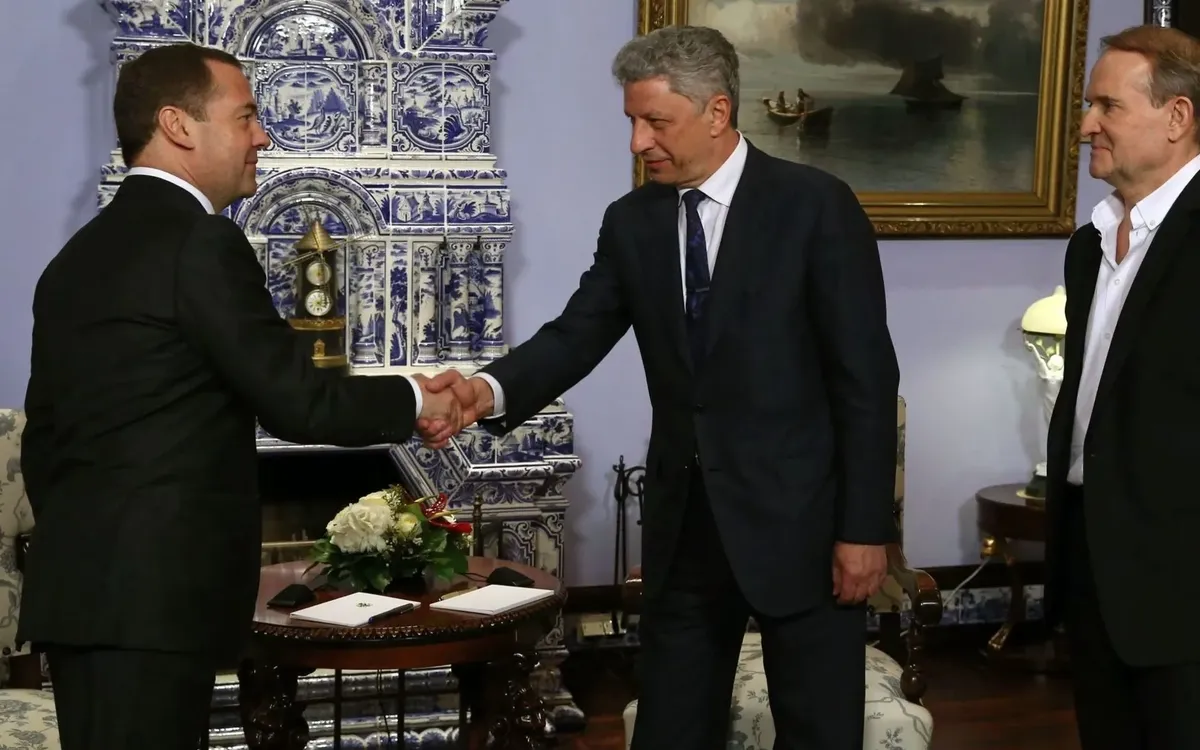
However, on March 22, the Kremlin showed that they still have their own favorite. Dmitry Medvedev publicly met with the former minister of government Yanukovych Yuri Boyko , the fourth candidate in the current ranking (for him 8% of Ukrainians). The discussion was also participated in the scandalously known politician Viktor Medvedchuk .
The discussion was somewhat nostalgic: discounts on gas were discussed, as if in the yard 2012, Boyko oversees the Ukrainian fuel and energy complex, and all this passes through the “cooperation of fraternal peoples”.
The Kremlin can hardly seriously count on the success of Boyko, so the meeting may have two goals. Firstly, to show that Moscow is ready to “conduct a dialogue with healthy forces in Kyiv”, and the main sign of health is the readiness to close eyes to the events of the last five years. Secondly, the Kremlin’s media interventions oscillating voters can be persuaded in favor of Zelensky or Tymoshenko: they do not want war, but they do not pose on cameras with Medvedev.
One of these politicians will compete with Petro Poroshenko in the second round, and then a real game can begin in the Kremlin.