Date
Author
Source

Preserved copy
Translated material
Alien as their own
Muse for imports: conversation with translator Viktor Golyshev
Alexander Genis: Presenting anew (within the framework of our new reformatted program "View from New York"), Vladimir Abarinov’s author’s cycle “Muse for Import”, I want to precede his conversation with several considerations about the subject of these programs. This year they make up a couple of the previous cycle "Muse for export", which discussed the fate of the cult books of the Soviet period in America. Now - on the contrary: about popular American, English -language writers in Russian translations.
It would seem that two cycles should be built as a mirror reflection. But this is a false impression, as well as all attempts to build a “mirror” hypothesis that describes the United States and Soviet and post -Soviet Russia. America is not a similar and not opposite, but the other world, and it is as impossible to compare them as a kilogram and a kilometer. We all became convinced of this when, having got into the New World, we accepted it, as a Columbus did it long before us, for a completely different land.
In many ways, American books were to blame for this, which we used for other purposes: we did not read them, we lived on them. And this is the source of striking differences between the two cycles of Abarinov. Russian literature of the golden 19th century really had a huge impact on American prose. Faulkner was read out by Dostoevsky, Hemingway - Tolstoy, but our beloved writers of the twentieth century penetrated only into the upper, often professor layer of American readers. Experts are immensely respected by Babel, many read "Masters and Margarita" and everyone heard about Solzhenitsyn. But this cannot be called mass influence.
With verses even worse. The poet and professor Lev Losev, having arranged a conference on American poetry in Russian translations at his Dartmut College, proposed the following image: “There is a membrane between the two cultures, which misses poetry only one direction: from west to east. Therefore, Russian poets, primarily Brodsky, experienced a huge influence of Frost and Diene, but the same Brodsky in America became the main author essay, not many poetic collections.
Today, when Russian readers read about the same as their Western peers (Harry Potter and Dan Brown), it is difficult to imagine what was someone else's literature for my generation, which became its own. Only retroactively, already firmly settled in America, I found out that I had grown in foreign literature that had developed in the domestic one. It is amazing that all this happened against the backdrop of the Cold War, which did not interfere, but increased our love of American literature, jazz and cinema.
It is important to understand that in those years, American books came to us from abroad, which was defended not only by "iron", but also, in the words of Nabokov, the "teddy curtain of vulgarity." The reader wrapped in it is charm and suffocated from the predictability of words and moves, ethics and aesthetics. The entire nightmare of passing journal fiction merged into one edifying literature for children of any age, regardless of political views. Against such a background, American imports seemed true and was freedom, and forms, because the topics of translated books, in essence, were often no different from the usual and permitted. Say, the Falknera trilogy about Flem Flem Snops or the Cradle for a Cat - Satire Vonnegut to the American military. Of course, no one believed in it, but this was not required.
It was more important that the striking circumstance was that imported literature itself did not know what topic it was written on. Reded from the oppression of ideas, translated literature removed the cataract of socialist realism from our eyes, which we then called any experience of false believables. Since none of the foreigners was placed in Soviet life, it is deprived of it - for us! - The original Western book served as metaphysical transport.
It’s a sin to laugh at this today, because the translation did what the original did not claim. The fruit of involuntary cooperation of censorship, author and reader, foreign literature in Russian has become beloved and the main. At the same time, the ways of the translation were so winding that they followed the authorities, indicating, like a sapper map, where it was dangerous. The translation has replaced the fact that the authorities prohibited. The books of others show what we lacked with our own.
That is why only in Russia, in my opinion, brilliant translators met. Giants who have the intuition of freedom and instinct for resonance, they, recreating someone else's prose, forged the style of language and life.
One of these was the guest of Vladimir Abarinov Viktor Golyshev.
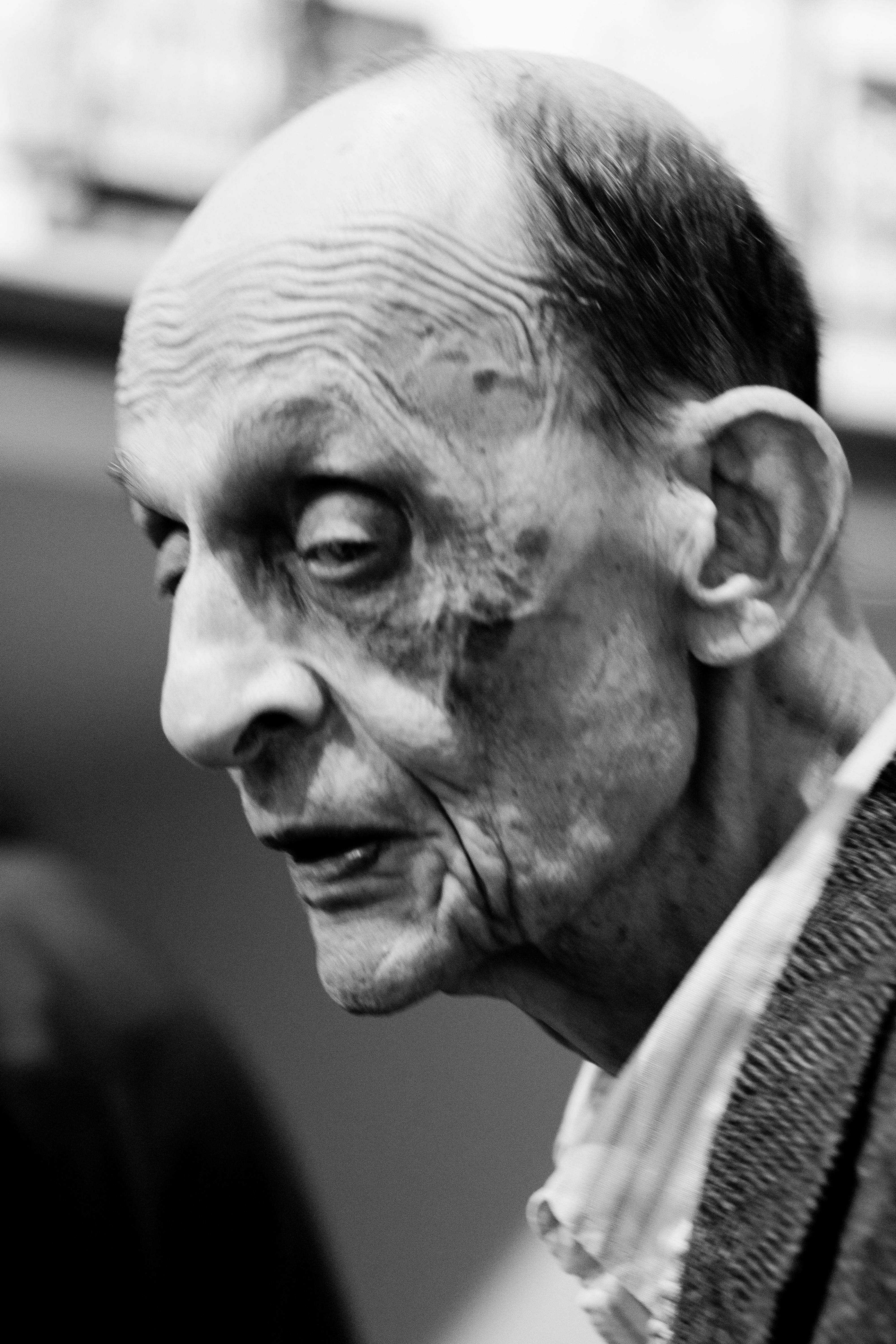
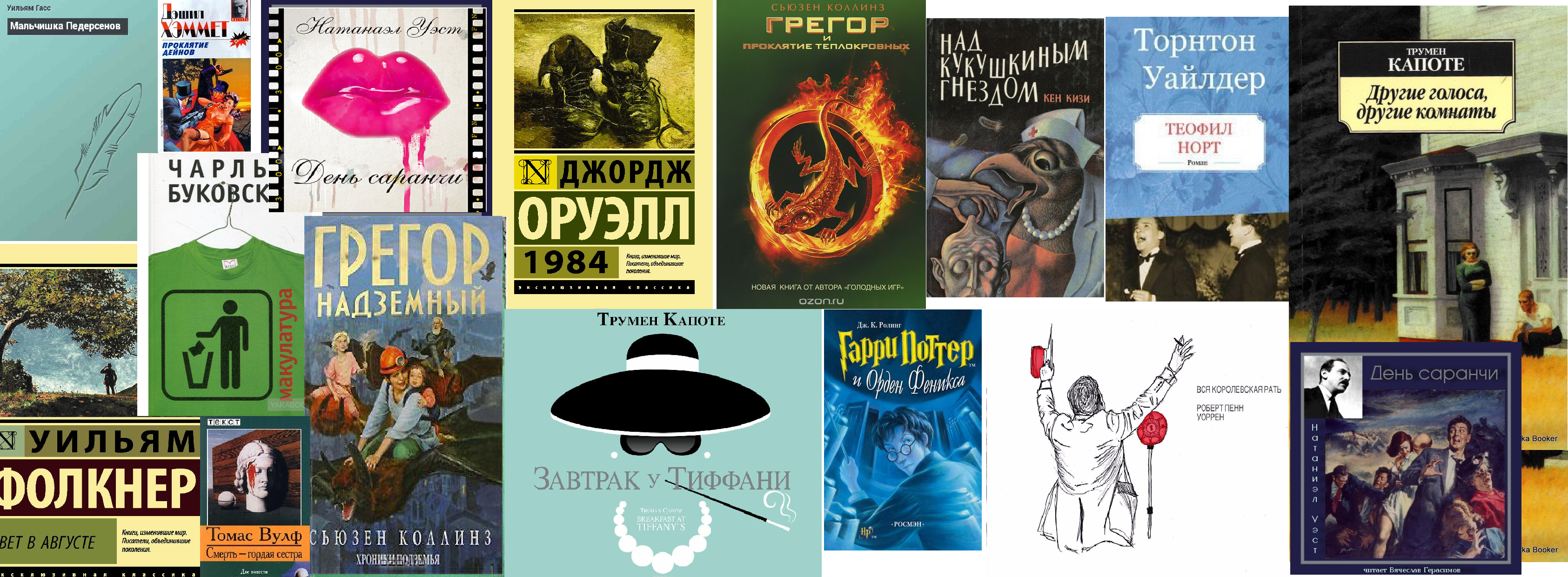
Vladimir Abarinov: My interlocutor Viktor Golyshev is legendary. It is easier to list which of the English -speaking authors of the 20th century he did not translate. It was his language with us that George Orwell, William Folkner, Truman Capote, William Styron, Robert Penn Warren, Thornton Wilder, Thomas Woolf, Charles Bukovsky ... Joseph Brodsky was his friend and dedicated him a poem under the name of 1972. 1972 is the year when Brodsky left Russia forever.
I was like everyone else. That is, lived similar
life. With flowers entered the hallway.
Drank. Flying a fool under the skin.
I took what they gave. The soul did not dig
On not your own. Possessed a hassle,
Building a lever. And the space is fit me
The sound extracted the sound, blowing into the tune of a half.
What would this be said under the curtain?!
Listen, squad, enemies and brethren!
Everything that I did, did not create for me
Glory in the era of cinema and radio,
But for the sake of the native, literature.
For what is the racer-eating
(said to the doctor: Let it be treated yourself)
Having lost the bowls in the feast of the Fatherland,
Today I stand in an unfamiliar area.
Viktor Petrovich, in the last year’s cycle “Muse for Export”, where it was about the fate of Russian cult books in America, we have repeatedly pronounced your name. For example, when they spoke with Platonov’s translator Robert Chandler, I quoted him with Brodsky’s preface to the “foundation pit”, in which Brodsky writes that Platonov is unequerful. Chandler was even angry because he is quoted in every discussion of Brodsky. And did not agree with him. And you have a lecture on Platonov in which you say that there is no such Russian literature that could not be translated into English. But now I will ask the opposite: is all English -language literature lends itself to translation into Russian?
Victor Golyshev: I think yes, everything can be translated with more or less success. The question is how much percent remains there. Since each book is connected by an infinite number of threads with local life, and these ties are sometimes unknown or incomprehensible to a foreigner, something, of course, should be lost. But I think when you read the book in your own language, many things also leave you. I know, because I tried with my daughter "Captain's daughter", we just had to read and choose words. My daughter just the teacher forced to explain all these words so that we know what they mean. It took us two days to find the explanations of these words. And the daughter was already an adult, she was there for 15 years at that moment ... not a daughter - I was lying, with her son. It seems that a very simple text, right? Not really. Words have a coloring of some of their own and local use. Therefore, everything does not reach, but part can reach. It cannot, but should reach. Another thing is that not entirely. Yes, and when you read Russian literature, you also do not understand everything, you do not trace all connections.
Two -minute hatred. Fragment of the film adaptation of the novel "1984". Director Michael Radford. UK, 1984
“By the second minute, hatred was already like a universal rage. People jumped up and sat down again, trying to shout out a voice that shouting from the screen. A little red -haired woman painted and grabbed the air, like a fish thrown to the shore. Even O'braine’s heavy face was blurred. He sat very directly and breathed heavily with powerful breasts, as if he had opposed a roar A wave. Pig! Pig! ”, Suddenly she grabbed a rapidly dictionary of New Voil and threw it into the screen ...”
(Translation of Viktor Golyshev)
Vladimir Abarinov: It's not even about vocabulary, although as soon as they did not translate the golf club or all the words that indicate in English different types of murder, or what to do with the word Privacy, for example. After all, in Rus' this Privacy has never been ...
Victor Golyshev: As for the murder, this is still the judicial system, it was not so developed in our country. Well, we will add an adjective there. You can build an explanation. But they just have terms.
Vladimir Abarinov: Yes, let's say directly: Russia has never been a legal state, therefore, legal terminology is not developed. In general, each of us probably has a collection of funny and sad examples, even excellent translators. For example, I am very mixed in the translations of O. Henry, the expression "drank Bourbon" - by analogy with Burgundy. Or trotting translated by Conan Doyle. On the other hand, Nabokov calls the jeans “cowboy pantalones” in his own translation of “Lolita”, because the word “jeans” in the Russian language did not then.
Victor Golyshev: Well, jeans appeared quite early, after the war already. I think in the 50s. And everyone already knew what it was, they simply did not sell them here, they sold speculators only.
Vladimir Abarinov: But then they were called differently - "Texas".
Victor Golyshev: Here, say, my generation is already this word in the course. Already people saw it. Because when they do not see this how they did not see Chisburger, it is very difficult to translate. And the baseball cap.
Vladimir Abarinov: But I am not so much about vocabulary as about the structure of the language, about the inherent logic. About his melody, his intonation, his ways to attract attention. You once said that in translation it is necessary to allow a little tracing paper, Anglicisms, to make a language a little strange how Russian classics allowed gallicisms. Actually, they did not do it on purpose, it was natural for them. I’m talking about phrases with the participle of the turnover, for example, which Chekhov considered it illiterate: “Passing in its place, her robe caught on something”-this is a thick, “resurrection”.
Viktor Golyshev: Yes, they were brought up in this, because the French taught everything, and it was like normal. I think it is necessary. When you read the Russian phrase, the main words are the first and last, right? The fact that stuck in the brains does not act so much in the middle. And they have a constant word order. Well, there is a subject, predicate ("with them" - in the sense of the Anglo -Saxons), a direct addition, indirect and so on. But expressiveness can be achieved in this way. In Russian, expressiveness is lost, of course. The text becomes monotonous, it simply contradicts the Russian language through the melody. He becomes stupid, here. It’s not even an intonation, but in the meaningful words. The first word and the last - they are the most strongly stuck in the brains.
Alexander Genis: Golyshev perfectly owns a linguistic tact, absolute, like a violinist. His translations speak Russian, not allowing us to forget about a foreign original. And yet, reading Golyshev, I never translate words or jokes back into English (this happens to me when I meet Woody Allen in Russian). Golyshev’s prose sounds organic in Russian, it seems that he translated not only meaning, but also sound. For example, the same Orwell that we constantly remember today have a total surveillance apparatus, a TV that works in both directions, it is called English very clear, especially now: Telescreen. Golyshev found the perfect Russian option: a telekran. The word "screen" is heard here, and the "crane" hints at the ubiquity: like water in the water supply, information about each character of the novel flows to a big brother. This word is clearly Russian, but not too much. Therefore, when Golyshev was offered to name the Orwell scouts "spyeers", he abandoned neologism as too Soviet, feuilleton, alien to the original. And this sense of proportion affects everything. In search of a unique rhythm, Golyshev listens to the author, like a pulse and knows how to save someone else's voice on his page. Such attention is flattering for the author and priceless for the reader.
I must say that Golyshev also struck me with the accuracy of his translations. All our translators have errors in realities, which is understandable: after all, they were not let go abroad. And I see nothing wrong with the fact that all Americans have lunch with a sandwich with chicken, not chicken.
Moreover, I was surprised to read the Golyshevsky translation of the novel by the American writer Alan Isler "Prince West-end." It is a cute book that awarded a bonus talks about life in the nursing home, located in New York on West End Street. Moreover, the case takes place in the 1980s. I took up this novel also because just at that time I worked nearby in the newspaper New Russian Word and constantly pushed where the book takes place. Armed with a pencil, I, with a characteristic of local arrogance, prepared to emphasize mistakes, but did not find a single one. The translation was an example of accuracy. It’s good that I managed to say this to Golyshev, it seems to me that he liked such an assessment of his good faith.
Well, now back to the conversation of Vladimir Abarinov with the hero of our program today.
Vladimir Abarinov: You said in one interview that you always translated only what you liked, but never transferred to the table, because it is stupid to transfer to the table. How did you manage to combine this?
Victor Golyshev: Well, I don’t know, somehow I succeeded. Then the copyright was not respected by us until the 73rd year in general. You could translate anything, and they paid only to those to whom you wanted-some left or located to us, and the rest ... they could translate Faulkner, and the fee should not have been expelled at all. After 1973, the situation changed a little, and then the books that, after May of the 73rd, were there, it was already necessary to pay for them. In my opinion, there was some Geneva Convention. And then we have completely joined the international legal field, and it became more difficult for the translator. And then you could translate what you wanted, because they were not obliged to pay anyone. After the 80s, it began to play a big role, since the publishers are poor, and pay the local fee ... It was necessary to agree. Anyway, we, in my opinion, sold books and films for us, by the way, too. And then they began to demand normally, and economic considerations became very important. And it was quite difficult for a new person to shove. If you proposed a translation of some new writer, usually ready, then only the content could confuse, and not that he is little known. Of course, a little -known writer like Nathaniel West is always more suspicious. Hemingway knew, and if you translated him, it would be easier, but then he was already translated. So such a resistance was - it was unconscious, it was quite difficult to shove a new writer. I remember that I had to translate Warren, before they dared to conclude an agreement.
The final scene of the film Milos Forman "Flight over the cuckoo nest" (1975)
"I strained my legs and felt something cracked under Makhina. I blown up again and heard the wires and couplings tear out of the floor. I threw the remote control to my knees and managed to grab it with one hand and the other was tidying down. The metal was cold and my neck. I got up to the window with my back, then I released the remote control at half the turn. With a bang, the grip and the window spilled in the moonlight, as if with cold sparkling water sprinkled, dubbed the sleeping earth, I thought about returning the scanlon and some more, but then in the corridor there was a runaway squeak of sanitary shoes, and I, resting with my hand, jumped out after the remote control. Moonlight ".
(Translation of Viktor Golyshev)
Vladimir Abarinov: I will quote the archival document from January 1956. The editor-in-chief of the Foreign Literature magazine Alexander Chakovsky asks the Central Committee of the CPSU "to explain how to relate to writers such as E. Sinclair, D. Pristley, who adhered to democratic views in the 30s, and after the Second World War spoke against the policy of the Soviet Union, at present occupy neutralist positions." The Central Committee of the CPSU replies:
"The question of the attitude to E. Sinclair was considered in the Central Committee of the CPSU. It was recommended to objectively evaluate his activity and literary heritage, re -reporting his realistic, exposing capitalism of the works, criticizing the weak, reactionary aspects of creativity. These principles should also determine the attitude of the magazine" Foreign Literature "to E. Sinclair, D. Pristley and other similar bourgeois writers."
At the same time, with clarification, Chakovsky receives a reprimand:
"The editorial office of the magazine seeks to attract prominent bourgeois writers as their authors - not only those who participate in the movement of supporters of the world, are loyal to the democratic camp, but also those who stand aside from the progressive movement, oppose the progressive ideology, whose work is decadent."
This line was manifested, in particular, in an objective approach to publication on the pages of the magazine Apolitical and largely the naturalistic story of Hemingway "The Old Man and the Sea".
Hemingway was translated by Elena Mikhailovna Golysheva, the mother of my interlocutor today. Виктор Петрович, ведь это была довольная частая история – когда книгу вынимали из плана издательства или из готового номера журнала, потому что ее автор вдруг оказался антисоветчиком...
Виктор Голышев: Даже не то что антисоветчиком, а просто один раз случайно что-то вякнул, и тогда возникала очень большая бдительность. Это, я помню, было со Стайроном, который сказал, что он не любит коммунизм или ненавидит коммунизм. Посередине книжки мне тогда посоветовали приостановить перевод, но уже поздно было, я уже года полтора на это истратил к тому времени. Иногда забывалось, как забывались полеты Стейнбека над Вьетнамом, где он там описывал ихние дела, и это на несколько лет затормозило переводы его. Пришлось несколько лет подождать после вьетнамской войны, когда забылось, что он там летал, на вертолете, по-моему. Ну, там через несколько лет забылось, и книжка прошла.
Владимир Абаринов: Я поясню. Джона Стейнбека за роман "Гроздья гнева" записали в Советском Союзе в соцреалисты, его издавали, вот ему как раз платили щедрые гонорары, его приглашали в Советский Союз, и он трижды приезжал. Но в 1966 году его младшего сына призвали в армию и отправили во Вьетнам. В 1967-м Стейнбек по просьбе президента Джонсона поехал во Вьетнам военным корреспондентом, провел там полтора месяца и превратился в "пособника американского империализма". К Стейнбеку со стихотворным открытым письмом обратился Евтушенко, а Стейнбек в ответ предложил ему выступить против советских военных поставок Северному Вьетнаму.
Александр Генис: Вмешаюсь еще раз, чтобы напомнить, что далеко не все переводчики были такими принципиальными, как Голышев. В советское время встречались зарубежные книги с чудовищными искажениями. Самое дикое я нашел в переводе романа кумира всех любителей фантастики Артура Кларка. Это была его знаменитая "Космическая Одиссея". Дочитав до кульминации, я с ужасом обнаружил, что текст обрывается на самом важном месте. Дальше шло извещение от издательства: "К финалу автор впал в идеализм, которым не зачем делиться с советскими читателями".
Боюсь, что сегодня мне многие не поверят, но у меня до сих пор где-то в недрах библиотеки хранится этот удивительный раритет, выпущенный, кажется, в безмерно популярной в те времена серии "Зарубежная фантастика".
И опять вернемся к Абаринову.
Владимир Абаринов: Виктор Петрович, когда вы переводили Оруэлла, вы создали русский эквивалент того, что Оруэлл назвал словом Newspeak, а вы – новоязом. Эта лексика – "мыслепреступление" например – так прочно вошла в русский язык, что кажется, будто она там была всегда, потому что всегда были мыслепреступления, просто раньше их никто так не называл.
Виктор Голышев: Там понимаете, какая история... У нас этого добра, вот этого политического языка, было сколько угодно. Но ты переводишь английскую книжку, и наши реалии русские тут опасны. Поэтому приходилось некоторые искусственные вещи придумывать. Иначе получается фельетон, а не роман. Вот между Сциллой и Харибдой приходилось придумывать что-то среднее. Некоторые вещи очень легко переводятся там в словаре, автоматически. А некоторые... Ну вот другую грамматику нужно было делать. У него грамматика – там нету суффиксов, нету окончаний, и поэтому и глагол, и существительное – одно и то же у Оруэлла. У нас этот номер не проходит – значит, приходится мне что-то другое придумывать. Это единственный случай, когда мне пришлось придумывать что-то. Обычно я ничего не придумываю. Вообще общая идея была языкового уродства. Когда ты это делаешь, надо исходить не из политической идеи, а из того, что язык уродуется.
Отрывок из экранизации романа Натаниэля Уэста "День саранчи". Режиссер Дэон Шлезингер, 1975
Рыжий еще раз попробовал подняться вместе с Хуху, сильно отталкиваясь целой ногой, но лишь волчком закружился на месте. Хуху взлетел, но промахнулся. Рыжий слабо ткнул его сломанным клювом. Хуху снова поднялся в воздух, и на этот раз его шпора пронзила глаз рыжего и вошла в мозг. Рыжий упал замертво.
Карлик застонал от горя, но остальные не произнесли ни слова. Хуху выклевывал оставшийся глаз у мертвой птицы.
– Убери эту кровожадную сволочь! – заорал карлик.
(Перевод Виктора Голышева)
Владимир Абаринов: Сейчас наберусь дерзости и приведу вам пример из вашей практики, который меня не очень удовлетворяет. Вы перевели эссе Оруэлла My Country, Right Or Left. Вы перевели "Моя страна, правая она или левая". Но мы с вами знаем, что Оруэлл скаламбурил, переиначил известный американский афоризм My country, right or wrong – "Права она или не права, но это моя страна". Согласитесь, что каламбур, основанный на двух значениях слова "правый", пропал.
Виктор Голышев: Конечно, пропал. Пропадает всегда, между прочим. Когда переводишь, можешь собой гордиться, если можешь сказать: 85 процентов я перевел того, что написано. А тут ты выбираешь просто: права она или не права или правая она или левая. Вот и все, это твой выбор. К сожалению, многие шутки нельзя перевести, каламбуры нельзя перевести, цитаты нельзя перевести. Потери неизбежны. Вообще перевод – это всегда потери. Я говорю потому, что книжка с историей страны связана, с психологией людей тамошних. Она многими нитями связана, когда ты ее переносишь сюда, нити обрываются.
Владимир Абаринов: Вам приходилось сталкиваться с цензурой?
Виктор Голышев: Мне? Приходилось, конечно. Это делается внутри издательства, тебя ни к каким цензорам не водят. Один раз я судился только, когда возник какой-то человек, который ссылался на цензуру. А в принципе у тебя вся цензура происходила в редакции. Вот у меня хотели выкинуть несколько фраз из Натаниэля Уэста. Там типа "проституция определенно прибыльна". Говорят: как это так можно писать? Я говорю: ну у него так написано. Нет, этого нельзя. Ну раз нельзя... В общем, короче, книжку издали только спустя семь лет. Я отказался убирать эти пять фраз, потому что, говорю, Уэст умер, я не могу у него спросить разрешение на это, а сам я этого делать не буду. Ну вот и все. И тогда все отменилось. Уже была набрана книжка, это была верстка. Но через семь лет ее в другом месте издали, потому что автор предисловия влиятельный человек был, ему надо было это издать, чтобы это не валялось, его предисловие. Или послесловие, я не помню.
Владимир Абаринов: С нами сегодня был переводчик Владимир Голышев. Закончим еще одной цитатой из стихотворения Иосифа Бродского с посвящением Голышеву.
Точно Тезей из пещеры Миноса,
выйдя на воздух и шкуру вынеся,
не горизонт вижу я – знак минуса
к прожитой жизни. Острей, чем меч его,
лезвие это, и им отрезана
лучшая часть. Так вино от трезвого
прочь убирают и соль – от пресного.
Хочется плакать. Но плакать нечего.
Бей в барабан о своем доверии
к ножницам, в коих судьба материи
скрыта. Только размер потери и
делает смертного равным Богу.
(Это суждение стоит галочки
даже в виду обнаженной парочки.)
Бей в барабан, пока держишь палочки,
с тенью своей маршируя в ногу!