
Translated material
"No one knew where he would sit - in the Kremlin or in the camp."
Former member of the Supreme Soviet of the USSR Sergey Tsypeyev - about how politics is born in the country
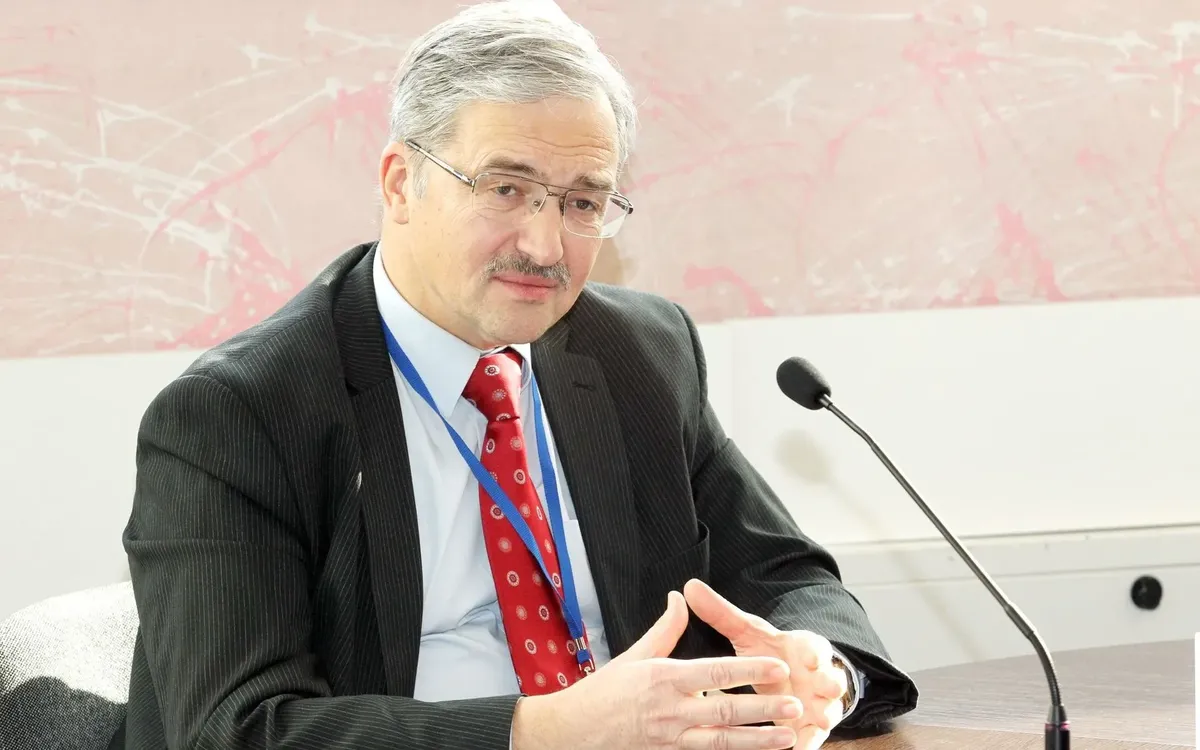
On March 26, 1989, exactly 30 years ago, the first round of elections of the Congress of People's Deputies of the USSR, the highest state authority from the end of 1988 to 1991, was held. The People’s Deputies of the USSR received authority to elect members of the Supreme Soviet of the USSR and its chairman. Of the 2250 deputies, 750 were elected by quotas from public organizations, the rest were selected directly by citizens. Today, many consider these elections even more free and honest than those held in post -Soviet Russia. The correspondent of Novye spoke about this with Sergey Tsychev, Dean of the Law Faculty of the North-Western Institute for the Office of the RANEPA, which in 1989-1992 was the People’s Deputy of the USSR and a member of the Supreme Soviet of the USSR.
- How did it happen that you decided to run for people's deputies in 1989?
- I was the chairman of the Leningrad Regional Council of young scientists and specialists and a member of the All -Union Council of young scientists and specialists. The All -Union Council decided that it was necessary to nominate their candidates from the Komsomol. Before the meeting of the Presidium of the Council, two of the youngest and active member of the Presidium came to me and said that they would nominate me. I said: “Guys, maybe not? What is the point? " They answered me: "You are so active and combat, try only to refuse."
Several people were nominated from the council, we went through a huge meat grinder of the Komsomol elections (out of 2250 deputies, 750 were elected from public organizations): there were about 10 thousand candidates, and 75 people became deputies. Of all that the All -Union Council of Young Scientists put forward, I was the only one who reached the final.
I then told my friend, a young scientist from Latvia: “If you and you, two scientists with glasses, will be elected, then something in the system has gone wrong.” We were elected, and the system went downhill.
- Did you have hopes related to the congress of people's deputies as a democratic body of a new type?
- At that moment, everyone understood that it was impossible to live like that - this is that today it begins to gradually tremble. But how to live on, few represented. But there was a clear confidence: the congress will now gather, and everything will be different. There were ultra -high expectations in society.
Every day there was a broadcast of the first congress of people's deputies on television and on the radio, and I saw people in a tram who led a receiver to my ear in order not to miss a single word from the meeting.
Now it is impossible to imagine that people live every day on the air how the State Duma is sitting. It is difficult to imagine the public energy of that time.
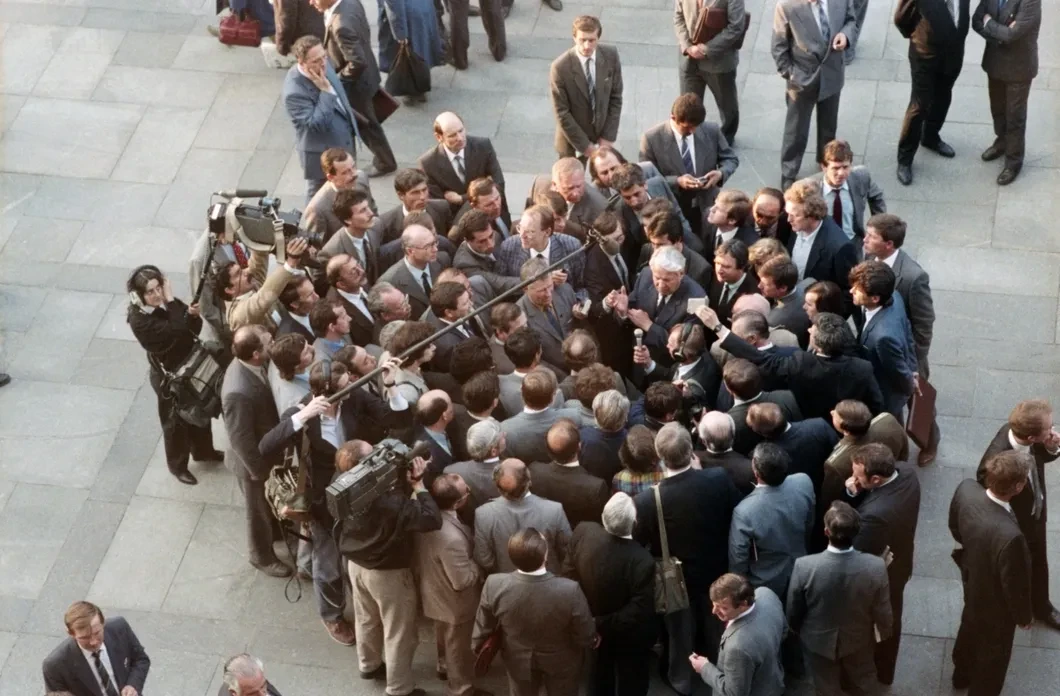
- Why were free elections announced in the USSR?
-Everyone understood what something should be done with the same economy. Gorbachev’s attempts to engage in pure acceleration of the economy quickly ended. In 1986, a landslide drop in oil prices occurred - almost 2.5 times. It was an economy infarction, food ended, grain. The leadership decided that it was necessary to include the political component. In general, turned on. Further, the process has become relatively uncontrollable.
-Those elections can be called truly honest and competitive? After all, 750 deputies out of 2250 were not elected, but appointed. Almost 2 thousand elected deputies turned out to be either members of the CPSU or candidates for joining the party.
- It is wrong to say that 750 deputies were appointed, and the rest were elected. Elections in public organizations were very cruel and very competitive. There was a few such a struggle as there.
Now they say that these were the most free elections. In fact, this is not so. There was such a mechanism as a district assembly, which was collected according to an incomprehensible scheme. Members of the meeting actually played the role of the preliminary filter of candidates. For example, in the district where the first secretary of the Leningrad regional committee of the CPSU Yuri Solovyov was running, there was not a single competitor, because the meeting did not miss anyone. Where the first secretary of the Leningrad city committee, Anatoly Gerasimov, ran, the district assembly eliminated all candidates, except for one, in their opinion, the harmless and young - Yuri Boldyrev.
District meetings are an analogue of the current municipal filters. Almost the same scheme. There is only one idea - to filter candidates at the stage of nomination, and then turn on democracy. Elections without district assemblies were already at the Russian Congress of People's Deputies in a year - in this sense they were as free as possible.
- Now the authorities are acting - it simply does not allow opposition candidates to the elections, as it was in the presidential election or election of the Moscow Mayor in 2018.
- The ideas were the same: "It is necessary to exercise control - but what, there will be absolute freedom?" Of course, then there were selection procedures, filtering. But the system has already developed by that time. Many of those who selected candidates understood that this could not continue. There were few extremely orthodox people who stood to death [for the old system].
-Modern Russia can be compared with the pre-reconstruction time-the beginning of the 80s, when there was no public policy at all?
- I think that in terms of organizing the authorities, we are approaching the state of those times. Since 1993, and in the accelerating pace since 2000, restoration has been going on.
After any revolution, there is a phase of restoration, when society and the elite want to finish experiments and changes: "Stop, a moment, you are fine." So it stopped.
Of course, there is no mood that was in the era of perestroika now. There is an experience of disappointment after super -expectations. It will be difficult to find enthusiasm to engage in a political life. In addition, during this time the social structure of society changed: the main engine of that revolution was the intelligentsia-scientific, technical, creative. Now this layer has catastrophically reduced.
- Many today say that there are no real politicians in Russia. How did it happen that people who became public politicians of perestroika appeared in the atmosphere of stagnation?
- The leadership potential in society still exists, although it was genetically deduced during the time of Stalinist repressions. Initiative people died in the first place. Nevertheless, there are some number of people who are ready to take risks to get involved in politics with an unknown result. In 1991, no one knew where you would sit - in the Kremlin or in the camp. The risks were colossal.
In my opinion, the most Russophobic of everything that can be said is that we do not have leaders in the country. As soon as the possibility of competition and free struggle opens, it turns out that we have rich potential.
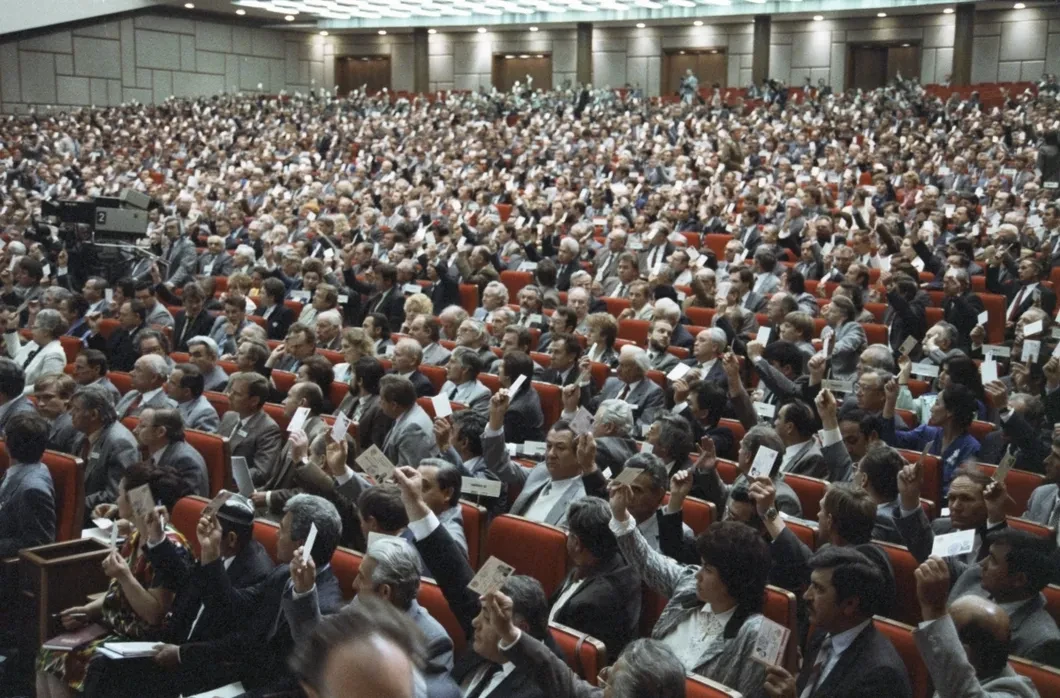
- The parliamentary opposition inside the congress, represented by the interregional deputy group, testified to the genuine democracy of this body?
- The appearance of this group of deputies is, of course, an element of a democratic organization. But the problem is that we, in fact, are carriers of authoritarian culture. Even after explosive development, we find out that we are not ready [for changes].
Those people who come on a democratic wave, then for 25 years, are authoritarianly headed by different organizations - these are the leaders of all our current parties.
The totalitarian culture is very deeply represented in our tradition. I always bring the brilliant quote from Maximilian Voloshin in 1919: "Not the first time, dreaming of freedom, we are building a new prison."
- In the interregional deputy group were bright public figures and politicians - academician Sakharov, Boris Yeltsin, Yuri Afanasyev, Gabriel Popov. But this group of deputies of almost 400 people criticized for the inability to present a general positive program: in fact, they united on the basis of the struggle for the abolition of the 6th article of the Constitution of the USSR, which consolidated the leading role of the party.
-In fact, the union was not only around the abolition of the 6th article of the Constitution. They promoted the general democratic agenda: at that time the law was adopted on entry and departure from the country, the media law.
I have my own story from the day when the 6th article was canceled. It was necessary to change another article [51st], which argued that citizens have the right to unite for the purpose of communist construction into trade unions, public organizations, and so on. I proposed to remove the words “for the purpose of communist construction” from the microphone and add a part in which citizens have the right to unite in political parties. My amendment was accepted, so, we can say, I put my hand in the creation of a multi -party system.
It must also be understood that the deputy group was a minority: out of 2250 people there were less than four hundred of them. Even those who supported them could not be in the group. For example, I was an independent deputy for the whole time in the Supreme Council of the USSR.
Then it was possible to seek decision -making or blocking idiological decisions alone. Now this is impossible.
- Sometimes they say that after the death of Sakharov, Yeltsin fully manifested leadership ambitions and he actually became the head of the interregional deputy group. Was it really so?
- If you collect the political party, the first thing we will ask: "Who is the leader there?" We just do not know how to live differently. We need a leader. If they tell us that the head of the triumvirate, it will not work. Most likely, the struggle for leadership will begin or everything will fall apart. At some point, all perestroika processes rested on restrictions on political culture and the readiness of society to move on.
- Does the current non -systemic opposition have the potential to negotiate among themselves? After all, there was a successful example - the victory of the United Democrats in the municipal elections in Moscow in 2017.
- There is an illusion that this was the victory of the opposition, but the number of places of independent candidates compared to the previous year decreased. And the number of representatives of United Russia has increased. In fact, it was a defeat.
Now for the opposition, the time is difficult, as always during the restoration period. This is aggravated by pressure that the opposition should unite, although there people with different political views.
The hardest is to engage in political activities without wind in sails. And the wind in sails are republican citizens who are ready to participate [in political life].
The opposition can create infrastructure, but the wind should be. So far, it is almost gone.
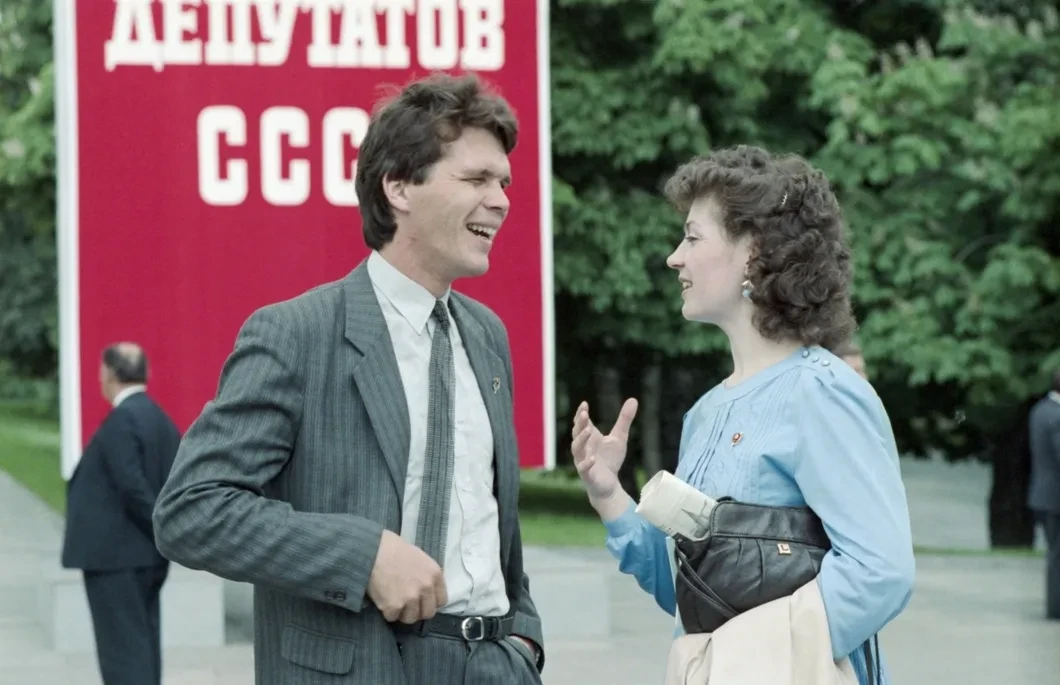
-The aggressive-auditory majority, which was spoke of in his famous speech by Yuri Afanasyev, still dominates our political elite?
- When you close the possibility of free competition, in all organs of power, preliminary selection occurs. The same elections on party lists are a deep preliminary selection, where there is no longer a personality room, there are only numbers on the list.
By the way, the list of democrats protected the list mechanism. I was categorically against any lists: they are formed in the cabinets of [power], and they are crowned with irreplaceable leaders. This scheme is used by all parties.
-Do you share the point of view that the activities of the Congress of People's Deputies led to the dissolution of the USSR and the subsequent events of the 90s (the execution of the White House, the war in Chechnya and others)?
- The decision to preserve the Soviet Union was developed: on August 20, 1991, an agreement was to be signed on the creation of a union of sovereign states. It was ready to sign 9 republics, including Ukraine. On August 19, there was a pitch, which ruined everything. On August 24, Ukraine announced independence, and behind it - the rest of the republics. It was the State Emergency Committee, and not the Congress of People's Deputies, who ruined the Union.
- The future presidents of the CIS countries, many years of authoritarian leaders: Askar Akayev, Islam Karimov, Nursultan Nazarbayev, Saparmurat Niyazov, have come out of among the people's deputies. The President of the Russian Federation on the new 1993 Constitution also received super -regulations. The formation of authoritarian leaders from democratic deputies is, in your opinion, a logical result of attempts by political transformations in the USSR?
- The Russian president does not have any superiority, this is another legend. All superior ones arise due to the fact that we are looking for a leader and want him to solve any of our problems. Why does our intelligentsia write every time the president on any issue?
We demand that the president be a dictator. If the grandmother asks the president to conduct water supply in the village, and he will answer that this is not included in his constitutional powers, we will say that “the president is inaccessible”, since he cannot order.
The point is not that the congress was a seedling of authoritarianism, but that the most “archylibaral” intelligentsia demanded Pinochet. This was a common place - everyone wanted a dictator that would plant liberal values.
At the same time, the congress brought forward people with a huge leadership potential, which later headed not only the republics: these are the mayors of the cities, and the envoy, and the governors, and the deputies.