
Translated material
Field popularization of science
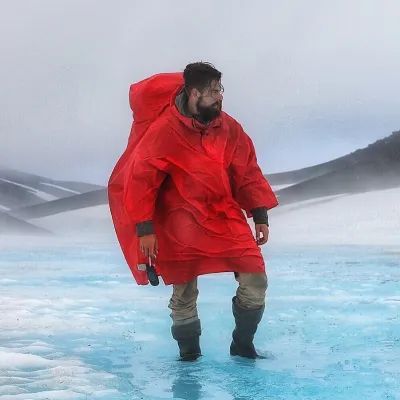
This year, Nature magazine called the field popularization of science the main new trend in scientific communication 1 . Five years ago, knowing nothing about the scale that this phenomenon will accept in Russia and in the world, I gathered my first group on a campaign in Kamchatka through the Internet. However, the purpose of this trip was unusual - to finance the selection of bacterial samples to complete the candidate dissertation. So the Russian Travel Geek (RTG) team was born - symbiosis of professional scientists and travelers, lovers of civil science. The first few trips were extremely successful and over time, soil scholars, geologists, geographers, entomologists, nerds, glaciologists, ornithologists and many other representatives of various fields of science joined the expedition group. Field work is expensive, especially if the scientist is interested in hard -to -reach regions, such as the Vulcanic landscapes of Kamchatka, the Siberian taiga, the lost islands of the Philippines, the Greenland glaciers or the savannah of Tanzania. Here comes to the rescue of crowdfunding RTG. The travelers enthusiastic by science make contributions, completely cover the cost of travel, thereby covering all the expenses of the scientist. And in exchange, they get the opportunity to take part in the selection of samples, climb a pleasant company in the most distant points of our planet and, of course, enjoy our world through the prism of science.
For example, the entomologist is interesting to the penny butterflies that inhabit the mountainous areas of Altai, and the grant system is not perfect and absolutely unclear where to get funding for the trip. Perhaps this is not a problem for already famous scientists with good ties and access to resources. But for young researchers, after the abolition of almost all travele-grants, such a task is often solved by the choice of a different, less costly, research topic. With the advent of RTG, another option arose - to submit an application for a scientific study as part of the project. You can become both an expedition guide and participate in the system of scientific orders.
Become a scientific guide. The requirements are quite simple: adequacy, a well-formulated scientific idea (as in any grant), experience in popularizing science and a desire to read a popular science course within the expedition. If the application passes, the interview ends successfully and you join the team, then with rare butterflies you can go in six months. Link to the guide questionnaire: goo.gl/cvsvwx .
Take part in the system of scientific orders. If you (or your acquaintance by a scientific employee) need materials, and you personally have no way to become a scientific guide and go for the samples, then you can send an RTG request for the implementation of a scientific order. It is necessary to draw up a detailed instructions for the selection of samples at an interest in the object (what and how to collect, fix, what to indicate on the label, how to store it). And if everything is done correctly, then it is likely that the result will be the same as with personal presence. It is also better to explain, “why all this is needed,” and then tell, “what came of all this.”
The system of scientific orders for researchers is free (we are for civil science) and is currently working in all RTG expeditions, the only restriction for it is the features of local legislation and the rules of specially protected territories. Link to the form of submitting scientific orders: goo.gl/1rgveq .
Interesting fact. Offering enthusiasts of civil science to go to exotic regions, simultaneously financing research and taking part in them, RTG continued the glorious tradition of geographical societies of the 19th century. However, now for this it is not necessary to be an English lord. Geography of expeditions rtg: Russianantravelgeek.com/expeditis/ .
Artyom Akshintsev,
The founder of the RTG project