
Translated material
Rafael's gang
What can the book called " Raphael Gang" can talk about?
And this is not important. The main thing is to start reading - and, most likely, do not want to tear yourself away. Everything else is secondary nuances, since you were able to read it ... So give yourself this rare pleasure - read a rather thick book in a row, not asking the question of whether you spend your precious time for nothing. And do not reflect on how to be with not quite understandable terms, why some topics are outlined, and even similar to them and even - perhaps! - The more important are represented as if "on tangent", etc.
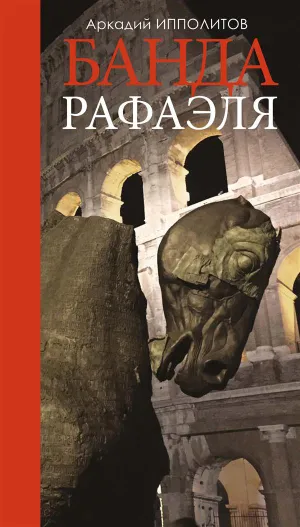
In this book, Arkady Ippolitov tells us about his Italy - and he knows how like no one. Reconfigue with this - and read slowly . And if you are not ready to reconcile with the absence in the book of reproduction of the picture “Amur pulling onions”, contact the Internet. But the main thing is to read, and best of all - in a row .
However, the numerous “branches” - or the fact that you, as a reader perceive in this way, can be missed in order to return later.
“Gang of Raphael” is a book written with the maximum of internal freedom. The reader cannot borrow this freedom, but it should be remembered about it as an author’s installation. Then the question loses its meaning about why (for example) about Parmijanino Ippolitov wrote in detail, and more about another remarkable artist - rather a summary,
I caught myself on the fact that in relation to the "gang of Raphael" the most productive strategy - it is simple to trust the author. Trust, for example, to the fact that some of the first glance are not the most important - the author told the plots in very details, while others are only mentioned fluently - you will gradually understand that it was worth it.
Trust and that some seemingly uninteresting conflicts seem to us such simply because of our general ignorance.
Instead of conclusion. “Rafael’s gang” is not a text for a fluid reading. Try to approach the book with such an assessment. I assure you - you will not regret it.
Rebekah Frumkin