
Translated material
Unusual money Africa
When European colonialists began to master Western Africa, they noticed that local women wear massive copper and bronze bracelets as an indicator of the wealth of their husbands. It took only a minimum psychological shift so that these bracelets began to be used as the money that was called - “Manilla” (rather from the Portuguese Manilha than from the Spanish Manella - “ Bracelet” - which, in turn, goes back to the Latin Manus - “Hand”). Their other name, òkpòhò , comes from one of the languages of Nigeria, Eths.
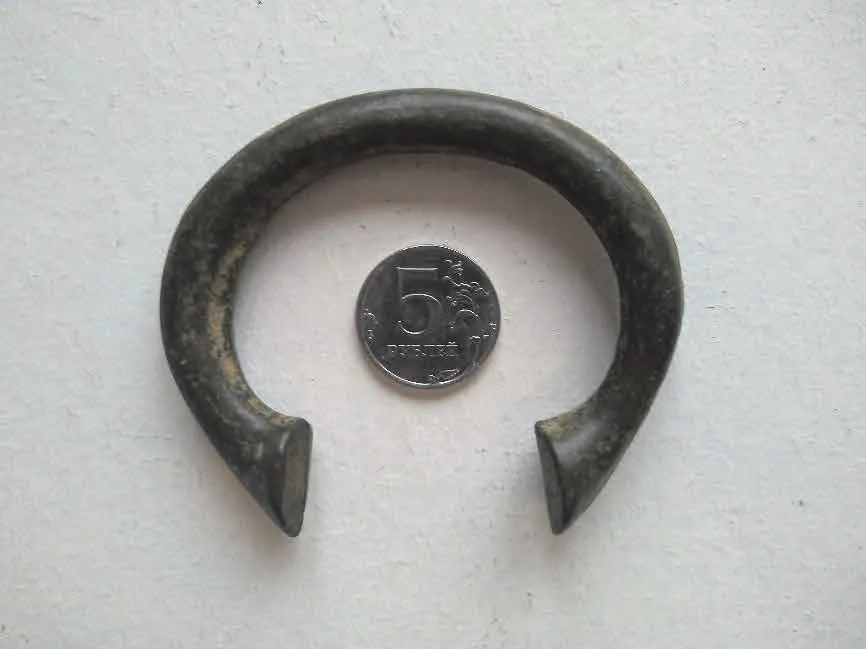
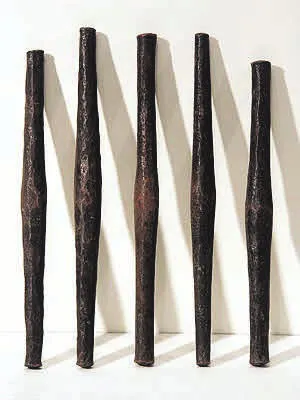
Manilla became the first full -fledged and universal money of Africa; Kauri shells were used as bargaining money [ 1 ]. There were many varieties that were valued in different ways (copper above than bronze) and were accepted in different markets; In Fig. 1 - maninylla of the 18th century from Ghana. You can distinguish them from ordinary jewelry by the uniformity of large samples by weight and shape, which is natural for money; They were made for colonial trade on an industrial scale: between 1504 and 1507, the Portuguese brought 287 thousand maninel to Guinea. It is clear that mass production led to inflation: if at the end of the 15th-beginning of the 16th century the slave cost 8-10 copper and 12-15 bronze maninlla, and the elephant tusk was one, then by 1522 the cost approached 50 mannille for a 16-year-old slave. To stop further inflation, the Portuguese king limited the price of a slave of 40 Manilla. By the beginning of the 18th century, the production center moved to the UK, but the French and the Dutch also made Maninylla. In order to accustom the population to regular money, in 1902, the import of Maninlla in Nigeria was banned, but they remained in circulation until April 1, 1949, when the operation of the British colonial authorities that lasted half a year, during which about 33 million maninillas of almost 2.5 thousand tons were redeemed.
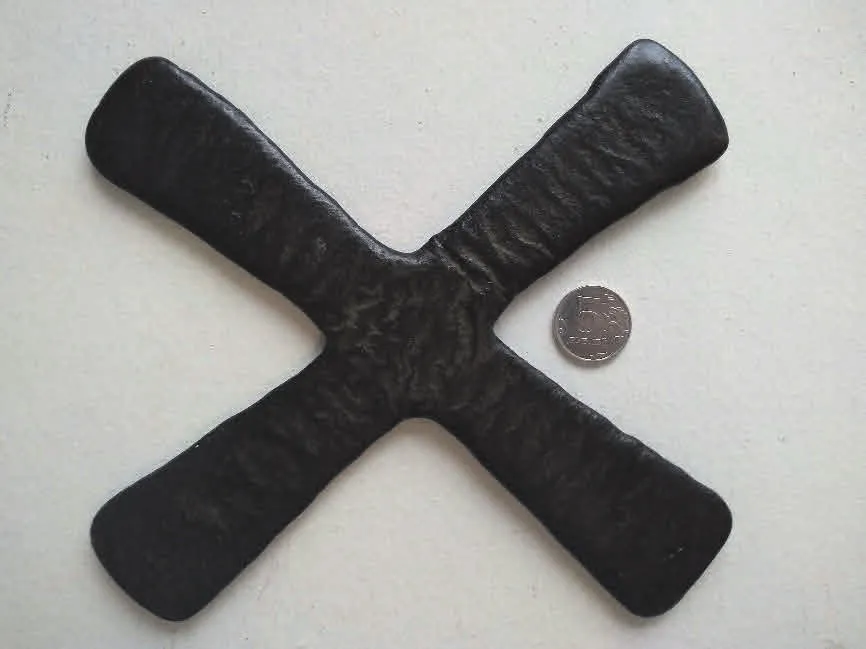
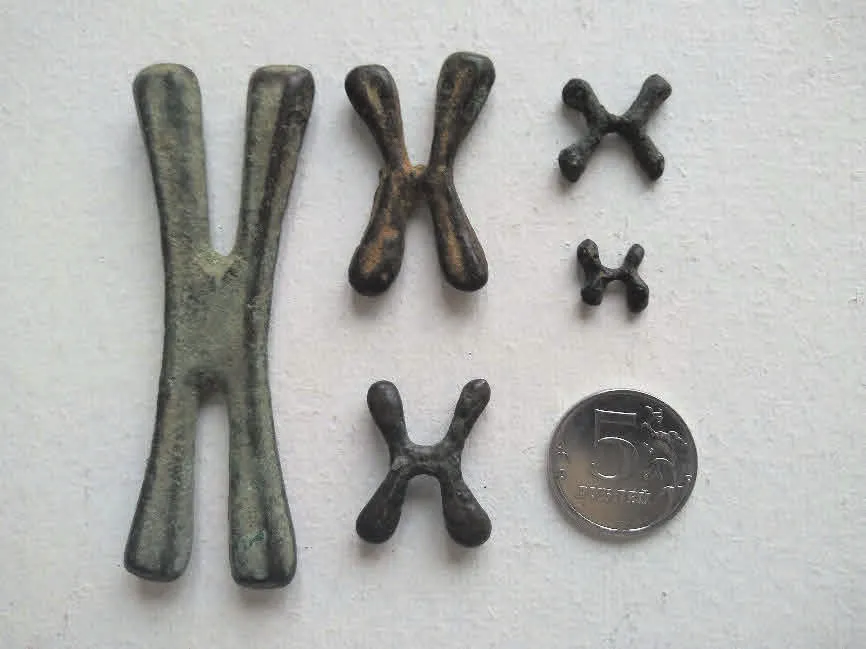
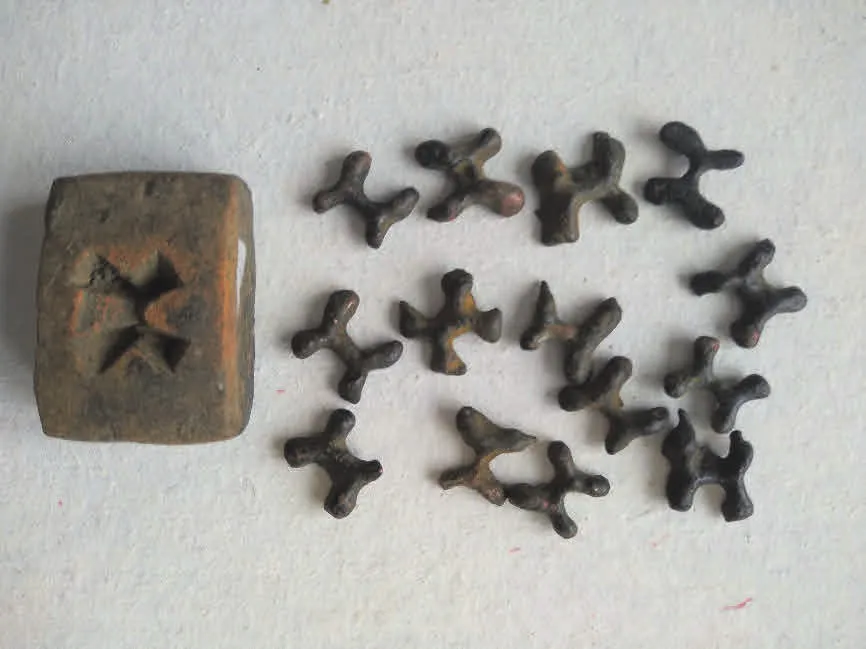
Other well -known African money also made copper, but in Africa itself, in Katang. Copper in Katang has been mined for many centuries, and ingots in the form of a cross have been known since the 13th century, but they began to systematically use them as money in the middle of the 19th century. Most sources mention large crosses weighing about a kilogram (Fig. 2), but in fact there were many varieties (Fig. 3). Forms made of sandstone were used for casting (Fig. 4). The purchasing power of a large cross differed from region to region. In Katang itself, for one cross, it was possible to purchase from four to six chicken, for five (plus or minus one) crosses-a goat, and for ten-a gun (according to other information that seems to be low-right, in just two). In the neighboring region, Babengel, the cross exchanged for Manilla, an equivalent goat; Two crosses were already needed in Bakusa near Bakus. Another neighbors, bason, one hundred crosses (more precisely, fourteen crosses, goat, gun and slave) made up a ransom for his wife [ 2 ]. (However, on the page of the Museum of the National Bank of Belgium it is indicated that there was enough one large cross to which a small one was added if the bride had completely outstanding qualities [ 3 ].) Money in the form of simple ingots (Fig. 5) is less known.
During the decolonization of the Belgian Congo (Leopoldvil), the southeastern province of Katang announced the withdrawal from the Republic of the Congo (now the Democratic Republic of the Congo, earlier Zair) and in 1961 began to be coiner than its own coin, which depicted the Katang Cross (Fig. 6). Three such crosses were depicted on the flag, which can be seen on banknotes (Fig. 7).
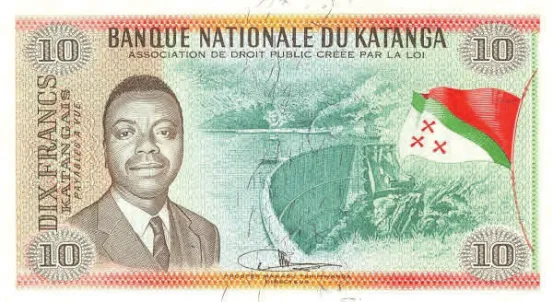
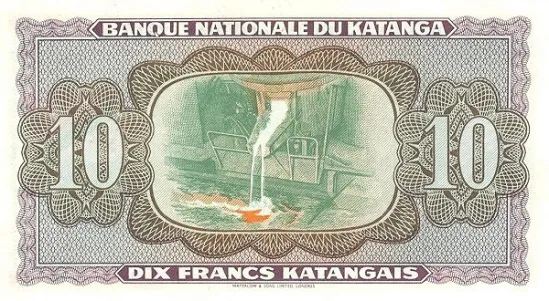
Rice. 7. Katanga. 10 francs, 1960 (Banknote.ws ). On the front side - the flag and portrait of Moiz Chombu
In Sierra Leone, the so-called Kissi-Penny, by the name of the area, made local blacksmiths from iron (Fig. 8). Kissi Peni came into circulation at the end of the 19th century and were gradually replaced by the colonial authorities with ordinary money, but retained value until the 1940s, and in Liberia-even until the 1980s. They also had magical power - it was simply impossible to fix the broken rod: it had to be “cured” with the help of a sorcerer.
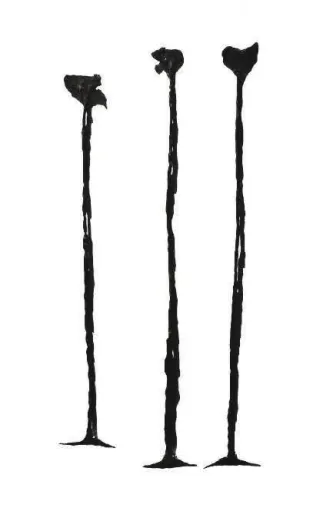
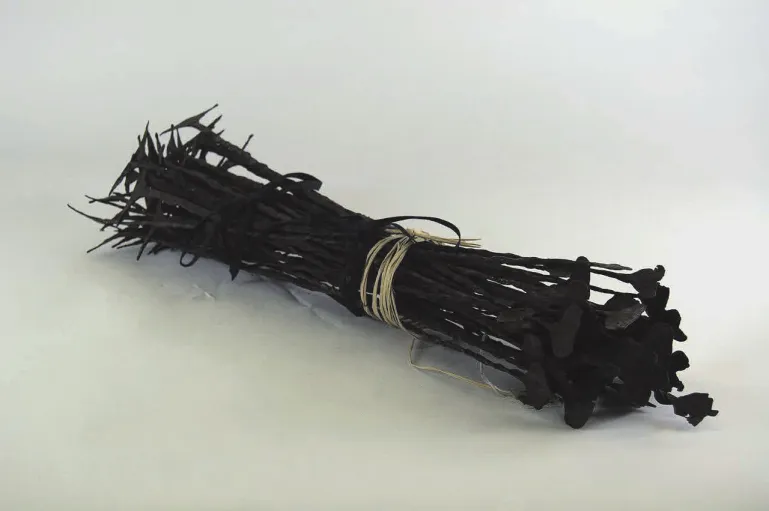
Rice. 8. Kissi-Penny (separate-from Musée des Confluences, Rouen, France; bun-from the Brooklyn Museum, USA), Wikipedia
M. G.
Photos 1–4 - author
1. M.G. Kauri // TRV-hunger No. 239 of October 10, 2017.