
Translated material
The Ministry of Defense decided to slow down the progress in Russia
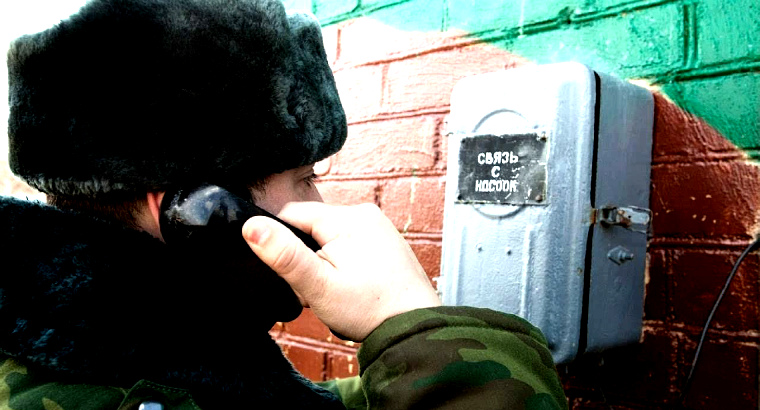
The military does not want to transmit the frequency communication operators in the range of 3.4-3.8 GHz for the deployment of fast and cheap 5G, which will interfere with the introduction of the Internet of things, unmanned vehicles, and in general will lead to the technological lag of the Russian Federation.
The Ministry of Defense believes that it is too early to transmit mobile operators to the use of the frequency for the fifth generation communication networks. The ministry gave such a review to the project of the concept of development and creation of fifth -generation networks in Russia, which Minzifra in early March sent to coordinate to the ministry. The document has a copy of the "Vedomosti".
We are talking about the range of 3.4-3.8 GHz, which is most suitable for fast and cheap deployment of 5G, representatives of Vimpelkom, MTS and Megafon noted. Now this range is occupied by a satellite connection of the Ministry of Defense and other law enforcement and civilian departments, a source close to the federal department indicates.
Without these frequencies, 5G in Russia will be only by name, says another interlocutor close to the profile department. Without 5G, the development of unmanned vehicles, telemedicine, the Internet of things, a “smart” city and other technologies is impossible.
The speed of mobile Internet in the fifth generation of mobile communications (5G) will exceed 1 Gbit/s. In practice, a high (several dozen megabits per second) The speed should be obtained by a large group of users - and these are not only people, but also inanimate subscribers: smart machines, systems of a smart house and a smart city. The fifth generation was tested at the Winter Olympics in February last year in Pyeongchang (South Korea). The commercial operation of the fifth -generation network in South Korea will begin on April 5. In April of this year, the Verizon (USA) operator plans to launch 5G in Chicago and Minneapolis.
According to the calculations of officials, the mass implementation of 5G in Russia will begin at the beginning of the next decade.
Meanwhile, the Ministry of Defense in the review asks not to rush to use the ranges that are not mentioned in the last year’s decision on the State Commission for Radio frequencies (GKRC; we are talking about the ranges of 4.8–4.99 GHz and 27.1–27.5 GHz). One of the federal officials reports that the range required for the 5G is occupied by military connection - without conversion (transfer of the right to use them), you can not do. Another source says that it will not fully free the range of 3.4-3.8 GHz: it is occupied by satellite communications, and not only the Ministry of Defense, but also other law enforcement agencies, as well as civilians.
An employee of one of the communication companies indicates that the position of the Ministry of Defense calls into question the development of a digital economy: many of its directions are directly tied to 5G (Internet of things, unmanned transport, smart city, etc.). It is technically possible to resolve the contradictions with the security forces, he is sure, but it is not yet possible to establish a dialogue.
The question of the cost of clearing frequency for 5G also remains open. In October 2018, the “Big Four” of the operators calculated that by 2022 11-16 billion rubles could take to clear frequency. But in January 2018, Deputy Prime Minister Maxim Akimov said that tens of billions of rubles would be required. He promised that the state would take these expenses for itself.