
Translated material
Repair in concentration camps
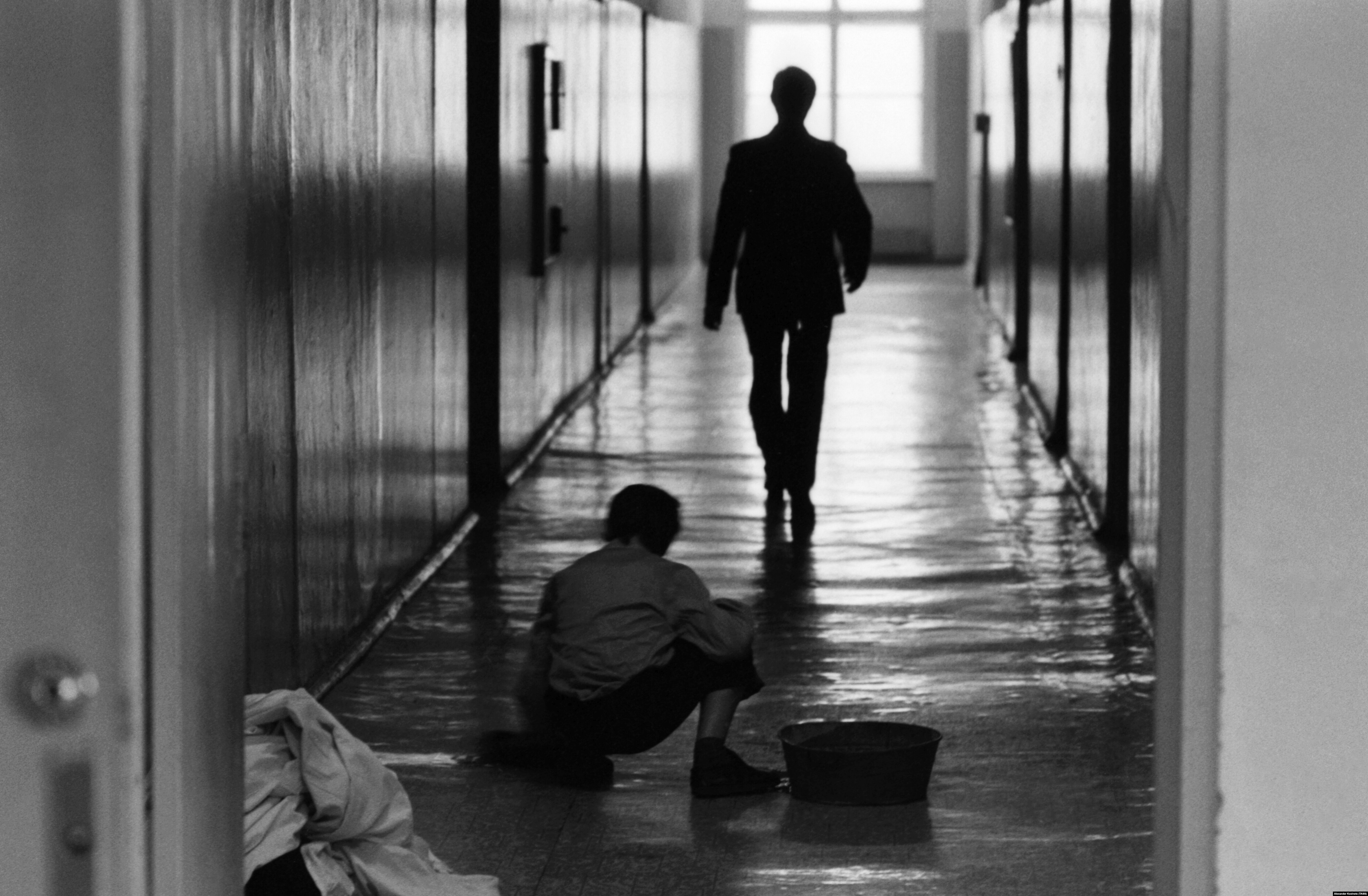
The Russian government plans to spend 50 billion rubles until 2024 on the repair of old and the construction of new psychoneurological boarding schools (PNI). The reaction of NPOs and volunteers working with the disabled, this news was sharply negative. The journalist and trustee of the Life Way Foundation Vera Shengelia called on Facebook not to give hands to the Minister of Labor and Social Development Maxim Topilin.
"Господи, как я мечтаю, чтобы каждый, каждый, кто приложил руку к этим решениям, оказался бритый под машинку, на ссаном матрасе, запертый на этаже, среди людей одного с тобой пола, которых ты себе не выбирал в сожители, в этой гребаной серой одежде, без зубов. И каждый день стоял, как узник концлагеря стоит за пайкой, за своими двумя таблетками, от которых или хочется спать, или It brings up the legs, without a phone, without everything, to come strictly from an hour to three and shit in the toilets without doors in the eyes of the whole department, ” the journalist Vera Shengelia wrote in FB.
Large, larger, more crowded
"The funds for the reconstruction, construction, development of the system of institutions for older people, neuropsychiatric boarding schools are provided. Federal financing was allocated for six years in the amount of almost 50 billion rubles," Minister Maxim Topilin announced at a meeting in Nalchik on February 5. The first tranche - two billion rubles - was issued this year. It is planned to spend money on the construction and reconstruction of 17 boarding schools, 16 of which are PNI. The largest object is a closed female neuropsychiatric boarding school in the village of Nekrasovka, Khabarovsk Territory, with 400 seats.
The chairman of the Association "Down Syndrome" Sergey Koloskov on his Facebook page gives examples of specific projects. It follows that state money is planned to be invested mainly in the enlargement of PNI - with existing institutions, new buildings will be built.
So, for example, in the Ponetaevsky PNI in the Nizhny Novgorod region, where more than seven hundred people are already living, it is planned to build several more new buildings so that the boarding school can accommodate a thousand patients. The Omsk Psychoneurological boarding school in the village of Severny will be increased per hundred seats, now 400 people live there. For 100-150 people, they enlarge PNI in the Novgorod, Ulyanovsk, Kursk region and so on. This fundamentally contradicts world trends, Sergei Koloskov notes: "Half a century ago, developed countries began the resettlement and disaggregation of boarding schools."
Similar government plans for many years close the doors to accompanied accommodation "for such as my daughter - disabled people since childhood," writes Koloskov. The draft law on distributed guardianship, which would allow the NPO to take care of people with disabilities and mental disorders of development and would give the last opportunity to live in society, and not in a closed institution, has been lying without movement in the State Duma since 2015.
The media in the regions to which the federal budget plans to allocate part of those fifty billion, write about these plans rather in a positive way. The enlargement of the old or the construction of new stumps is served as part of social policy, that is, care for people. Anxiety, if it arises, then about the safety of others.
Is it normal that adults, men and women, shave under the machine? Would you like so?
“The boarding school is closed, so the institution will be completely safe for residents of the ugravka. 260 new jobs will be created in the dispensary,” Sergei Orbodiev commented, for example, the Minister of Social Protection of the Khabarovsk Territory.
Regional media emphasize that new PNI is modern, beautifully decorated and comfortable buildings. “And in the new building there will be spacious chambers on four, the rooms will be located, as in a hotel, on both sides of long corridors. At the end of each there is a bathroom with all amenities, both for ordinary citizens and for low -mobility,” is described, for example, Potapovsky PNI in the Samara region.
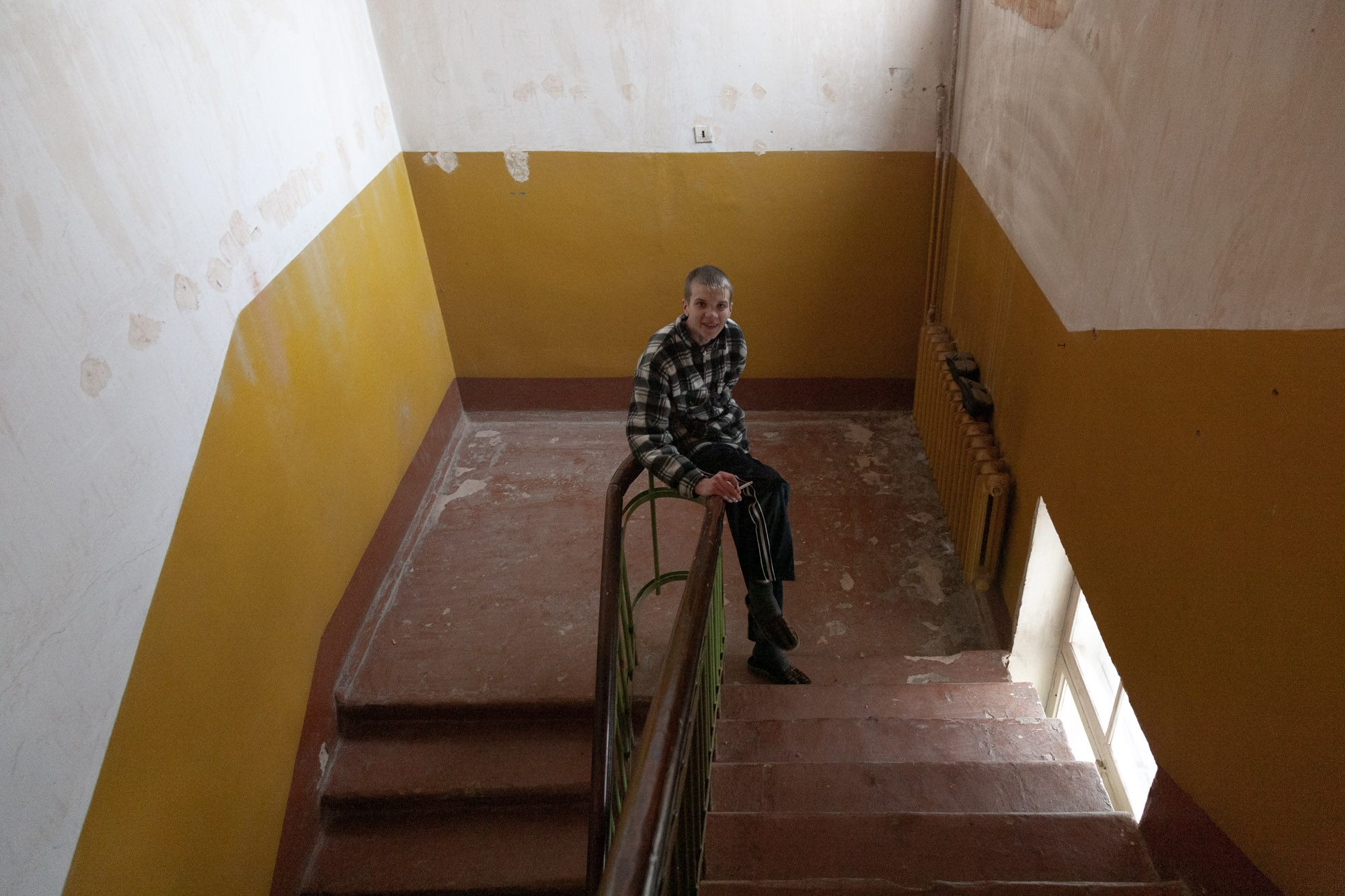
The trustee of the Life Path Foundation, which supports children and adults with developmental disabilities, journalist Vera Schngelia explains why there is actually no reason for joy.
Ask yourself the question: is this normal?
“We are in all our discussions about how the life of an adult with mental characteristics or other disabilities should be organized, we adhere to the theory of normalization,” says Vera Shengelia. -She was invented in Sweden, probably 50 or 70 years ago, when there was a society there exactly before the same problem: there are people with disabilities, we will now collect them in huge ghetto, close them behind the fence, and let them live there somehow.
At some point, when society began to move towards the protection of human rights and humanization, it began to seem strange that people, the same as you and I, who have the same dignity by birth right, for some reason should live behind these terrible fences in completely inhuman conditions.
The theory of normalization is based on very simple things. You come, for example, to a boarding school and ask yourself one simple question: "Is this normal?" Is it normal that adults, men and women, shave under the machine? Would you like so? No! Is this normal that everyone wear the same clothes? No! Is it normal that a person cannot choose, accept or not take this medicine, has no right to refuse medical care? No! Is it normal that people do not have any leisure time, no employment and all day they sit in the lobby and watch TV? No! And so on.
The normalization theory suggests you to put yourself in the place of this person. Exactly based on this, people around the world ceased to build huge boarding schools. Because a huge boarding school (sociologists call it the word "totalitarian institute") reproduces a certain institutional order, regardless of whether the good director is good intentions and so on. This institutional order, when a huge number of people are subordinate to other people, will always reproduce themselves. There will always be violence, there will always be corruption, there will always be offenses. Not because someone there is bad or good there, but simply because the institution is so arranged.
This is a fascist concentration camp, and I still cannot believe that this can happen in the 21st century
Therefore, when I read the news about the fact that the state allocated 50 billion rubles to build new boarding schools ... And especially I hurt me: not only do we build a boarding school for 400 people, it will still be a female boarding school. Let us move the women with disabilities! That is, segregation on all possible principles. I want to offer one simple thing to journalists and readers who welcome this: put myself in the place of a person who will live there. Would you like such a life?
It always seems to people that this happens to some strange, abnormal, special individuals. But I am like a volunteer who goes to a boarding school every week, I want to say that this is a thing from which no one is safe! I know a woman who had an accident. And it so happened that her husband died, and distant relatives did not want to take her. It is paralyzed below the neck. Here she was in this boarding school. Probably, the same woman may be in the Khabarovsk boarding school - in the village on the Vyselki, without leisure, without the opportunity to go out, and even separately for women. This is a fascist concentration camp, and I still can’t believe that this can happen in the 21st century, in a country that has 50 billion that it is ready to spend on people with disabilities. But just spend this way.
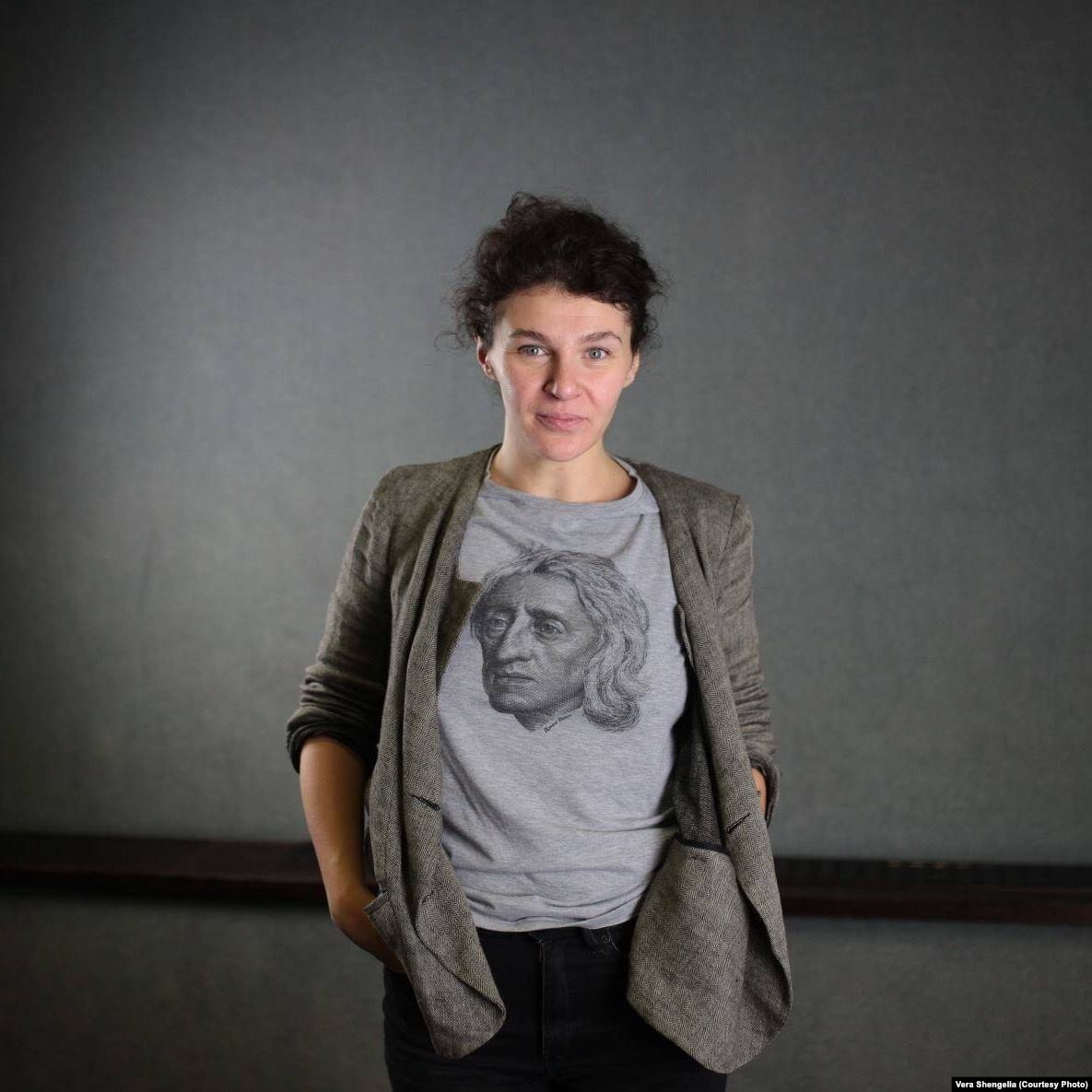
- But the government was probably guided by good motives - to invest in the social sphere, the federal project "Elder generation". Why boarding schools? Is it inertia or they don’t know how it can be different?
“They know, of course, as differently, because NPOs have been going to them for a long time.” I know that they are abroad, for sure they saw all this. But reform is a complex thing. Reform requires a team, changes in legislation. And, most importantly, reform requires the redistribution of financial flows. And this means that those who sawed at a construction site will not be able to cut anymore. Those who are used to taking rollbacks will not be able to take rollbacks anymore and so on. This requires great difficult work and great humility, abandoning its former habits. Of course, it is easier to pump another 50 billion into the existing Auschwitz.
In the boarding school in which I go by a volunteer, the functional bed does not fit into the elevator
-Some of these planned PNIs are built or repaired in return for those that burned some time ago, where some dozen people died.
- This is a great example. I will explain to you where the fires come from in the boarding schools, from where these dead come from. This is also a consequence that boarding schools are arranged as a totalitarian institution. Everything is arranged there so that, for example, one nanny remains for 16 disabled people at night. Here is one nanny with all her desire (if there is a separation of mercy, where 16 lying people) will not be able to do anything for their salvation. In the boarding school in which I go by a volunteer, the functional bed does not fit into the elevator. At the same time, for some reason are always on the upper floors. Therefore, if something happens-a fire, anything-you can not do anything about it! And we still want to build these death factories for 50 billion rubles
- And what needs to be built instead, if there are 50 billion rubles?
- What can be built instead of them? Sometimes the answer is nothing. Sometimes a person with disabilities can be supported at home, where he lives: to establish accompaniment in the place to which he is used to, where he retains family ties, neighboring or some other. Sometimes you need to build a small boarding school. All European laws prohibit, for example, so that more than 8 or 16 people with disabilities live under the same roof.
- It is in one building?
For twenty people - to teeth, probably also twenty
- Yes. Sometimes you can equip an apartment of accompanied residence, that is, such an apartment in which, as in student times, for example, four people live together. And they are helped by social workers, psychologists. At the same time, it is important that people who live in accompanied by living or in small houses for the disabled could use the entire urban infrastructure. This story - let's build a boarding school for 400 people in the forest, we will introduce our medical service to them, our leisure service is a ghetto.
There is a medical infrastructure in the city, let people use it with disabilities. The tooth fell ill - you went to ordinary dentistry, where your neighbor walks in the area. People see you in this line for a dentist, you see other people. You are inscribed in the fabric of urban ordinary life, and not sit behind the fence. By the way, we have twenty guys, to whom we go to the boarding school every week, they are all about 35 years old. And so, for twenty people - teeth, probably also twenty.
Alternative boarding schools exist, they are well described. Moreover, they do not need to go to other countries. Alternative models have long been built in our own country. There is accompanied accommodation in Porkhov, there is in Vladimir, in St. Petersburg recently opened a house for 19 apartments, which the developer and city authorities built together. People live there [with disabilities], go to work, go to the subway, use the city in the same way as all other St. Petersburgs. So all this exists, works right in our country. And to say that it is difficult or something inaccessible, no one can now.
- The accompanied accommodation is cheaper or more expensive than the content of a person in a boarding school?
- I don't know. We must sit down and count. We must write an economic model, watch how the region receives what financing, that the region can afford what - no, whether additional funds are needed for this. There would be a desire, I think that all this can be counted. At least 50 billion rubles can definitely meet.
- Why exactly in Khabarovsk they decided to build the largest boarding school for 400 people, and even purely female?
- I cannot answer this question, I do not know the details. I think that in this bureaucratic logic there is an explanation for this, but I will not invent - I don’t know.
At least one word there would be about man! Nothing!
- When you read the news about these PNI, it is striking that officials are proud of the scale of these future construction projects - that the new boarding school will be even more and there will live even more people. “Here we built a huge bridge, and we also built a huge boarding school,” as if there is no difference.
- This is the essence of the attitude to these buildings and, most importantly, to the people who are inside them. After all, no one says anything about people. Here we will build a huge one! .. If you read all these notes about how these new boarding schools will build, there is not a single word about the fact that people can do something more freely or people will be able to go out more often. Well, something! At least one word there would be about man! Nothing!
- But the interiors are praised: “The boarding school itself looks very worthy, with a good color design,” they write, for example, about the Novokhopersky Psychoneurological boarding school ...
- Well, of course, of course! I once wrote about this column for a long time, if you read how people describe these institutions, then it is most like some kind of laudatory note of the farmer, which says that we have spacious trifles, a nursery and so on. "We will store our meat well here." Approximately the same attitude to people who will live there.
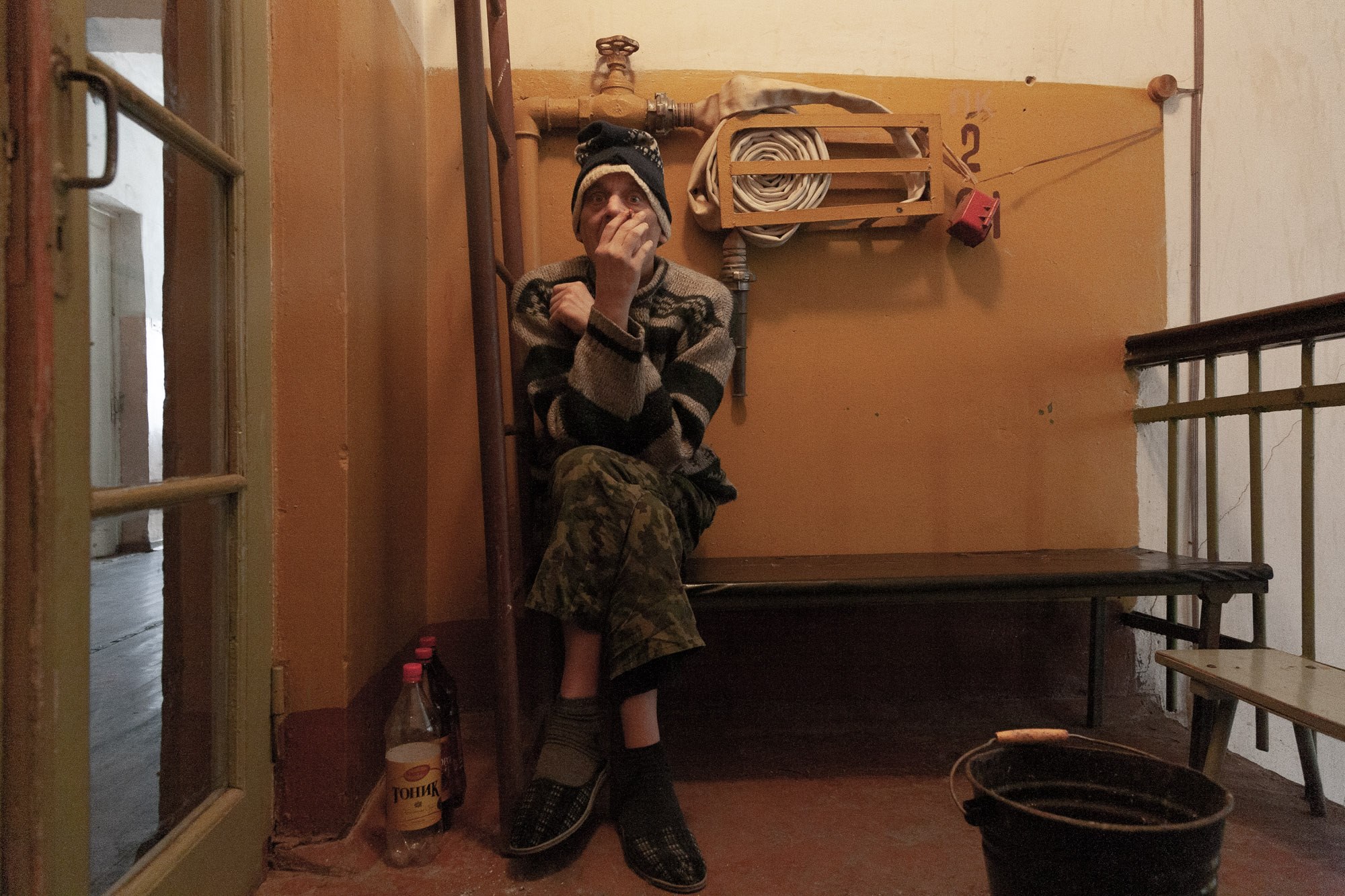
- Only in Russia is the construction of such boarding schools or in other countries, too?
“ I don't know about the whole world.” Maybe somewhere else this is happening, but I know very well that, for example, post-Soviet countries, such as Georgia or Moldova, everyone carried out reforms, everyone switches to home forms of residence.
- But there is and this is another topic. You say that PNI clients should use the same medicine, the same sotswoods as ordinary citizens. And ordinary citizens will tell you: "What are you?! I will lead the child there, where are these?!" and so on.
- They will definitely say. Our fund has three apartments of the accompanied residence. We have already encountered problematic neighbors who say: "Oh, oh, oh, what is happening here? We did not buy apartments in order to live next to your abnormal ones." This is a normal, natural stage. Everyone went through this. Nothing, everyone gets used to it, they see that it is not dangerous.
This is a vicious circle. Ordinary people are afraid because people with disabilities are hidden. In the meantime, we will hide them in boarding schools, they are unfamiliar to us, of course, that a person is afraid of everything unknown. Remember the usual picture of city life when you find yourself in some European city or in Russian. Just stand in the square and think how many people will pass by you with visible disabilities (in a stroller, on a scooter) ...
- Yes, the difference is striking.
- Do you think this is because they probably have everything with disabilities? Or simply because everyone can use the same city there as well as people without disability? This problem always rises in any society, in any country that goes through reform. And nothing, everyone gets used to it.
I wouldn’t just say that there are people who have lost their adequacy and are not treated. Everyone is somehow more or less socialized
-But at the same time, some people still need the services of boarding schools or accompanied residence? Those who have completely lost adequacy, those who do not want to be treated? Those who no one else can handle anywhere - only in such almost regime institutions?
-Firstly , I would not simply say that there are people who have lost their adequacy and are not treated. Everyone is somehow more or less socialized. Indeed, there are very difficult cases, some psychotic, with aggression and so on. We talked about small houses-there is someone who can never live in an open society. But still, at least such a person will be able to socialize at least partly. This is just a different form of organization.
- And the queues, which now, as officials say, are in PNI, where are they from?
- It's true, they really are. Because nothing else is offered to anyone alternative. If you had the opportunity for a social worker to come, for example, if it were possible to rest, as a nurse could take a rest, if the family of a young man with mental characteristics would be more support, then maybe they would not have stood in this line. Support should be a family in the usual place.