
Translated material
Wolf and lynx in the big city
"New" visited a shelter for wild animals that appeared on Moscow streets

Where to find a lion cub in a shoe box, which is why the fox is crying, and also: why you can’t select a loud in the forest.
Three rarest Javanese macaques, who were nursing two years, left for two years here, left from the near Moscow. In March 2017, 15 monkeys were discovered at the Domodedovo airport with a citizen of Uzbekistan, who illegally tried to import them from Vietnam. Animals were transported in terrifying conditions: in cardboard boxes, without food and water, at low temperature. When the monkeys were found, some of them had already died, others were in serious condition. After they were provided with first aid, the animals went to the center of overexposure of wild animals under Yakhroma. And now, when they are finally recovering, the Department of Nature Management of Moscow determined three of them in the Lipetsk Zoo.
The story of these monkeys is ordinary for a shelter. Animals of various species get there annually: from ordinary chickens to exotic lions and hyenas. And they are all with a hard fate: someone was thrown out into the street, someone was picked up to the wounded, they mocked someone. According to the employees of the Center, they do not let the contact zoos (now prohibited) are missing: every year they bring from somewhere a "wonderful" animal.

The center of overexposure of wild animals "Prostar+" is located in the suburbs of Yakhroma near Moscow, in the village of Andreikovo. We drive along a snowy uneven road through the forest. On the way, neither cars nor people are visible. As they later explained in the shelter, the village comes to life only in the summer, when the summer residents come, and now it seems literally abandoned.
On the path through the field I go to a small wooden house, enclosures with cranes are already visible in the distance, a gray -haired man in a camouflage jacket meets me here. This is the Director General of the Center Vitaly Ratner. He has been working here since its founding, that is, nearly 15 years. He used to be engaged in business, but in 2004 the idea came to open a nursery of rare species. First they bought a country house with a forest, several chickens and goats. After some time, they received sheep and birds from exhibitions as a gift. The first tossed ones appeared. A few years later, the center won the grant of the Moscow Department of Nature Management and Environmental Protection to overexposure and rehabilitation of animals that have fallen into trouble.

Some animals are contained with the money of the department, the rest at the entrepreneur's own expense. The director does not call the exact numbers how much the content of the animals costs. But he recalls that in a year, for example, herbivores eat 100 tons of hay. And predators in a week - a ton of meat. And monkeys and other lovers of the jungle are the same amount of fruits. "This is a definitely non -profit enterprise."
In the very first enclosures to which we approach, two lynxes, a female and a male are sitting: "Barsika was given to us from the nursery, we have been living with us for seven years old, and the female was brought from the Chita zoo."
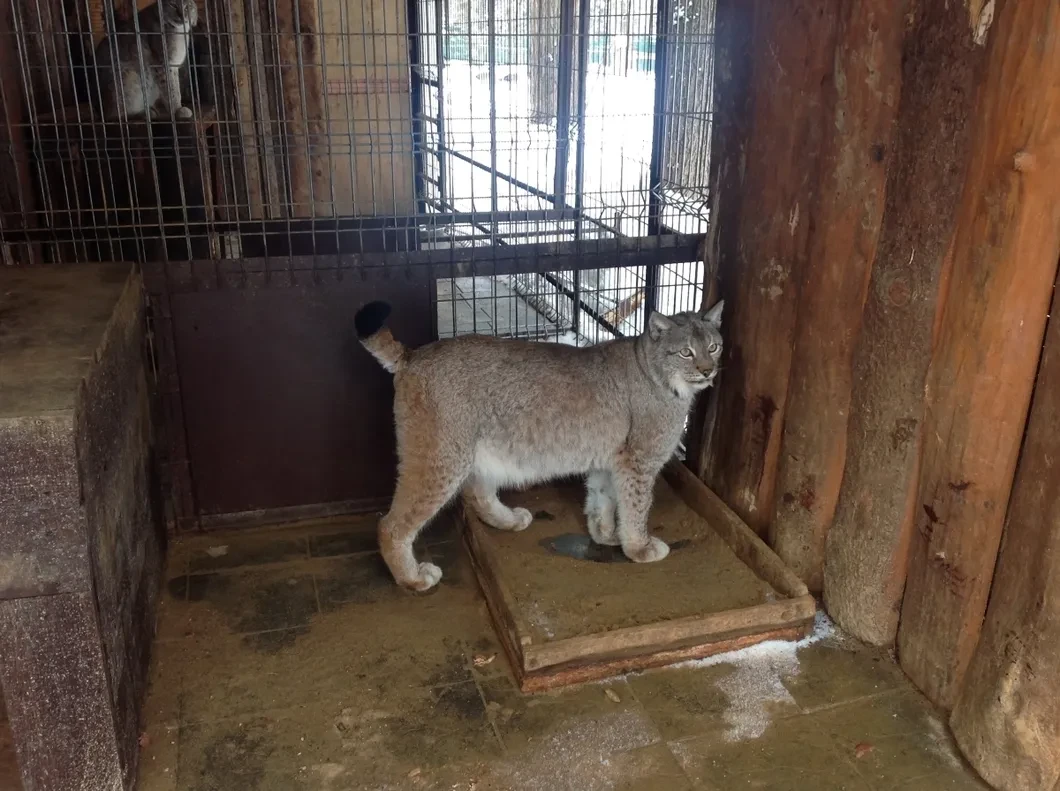
Barsik at this time looks at us lazily, then turns away - tired. It looks like a domestic cat, only very large, and the tail is shorter. When asked, what is his name “girlfriend”, the director with a laugh replies: “We rarely give them names, fantasies are simply not enough for this ... We have a lot of animals.”
There are more than five thousand animals in the shelter. Volunteers occupy an area of about 3 hectares. 12 workers are monitored by all this economy, including Ratner itself.
According to the director, almost all animals are taken to the center, except for cats, dogs or especially large animals like elephants and rhinos. But Lviv, for example, take.
We approach the huge volunte, to which the wooden house is attached. A mane is shown from a special opening, and the roar of the king of animals - Leo is heard throughout the district. His name is Boniface, or in the simple way Bonya.
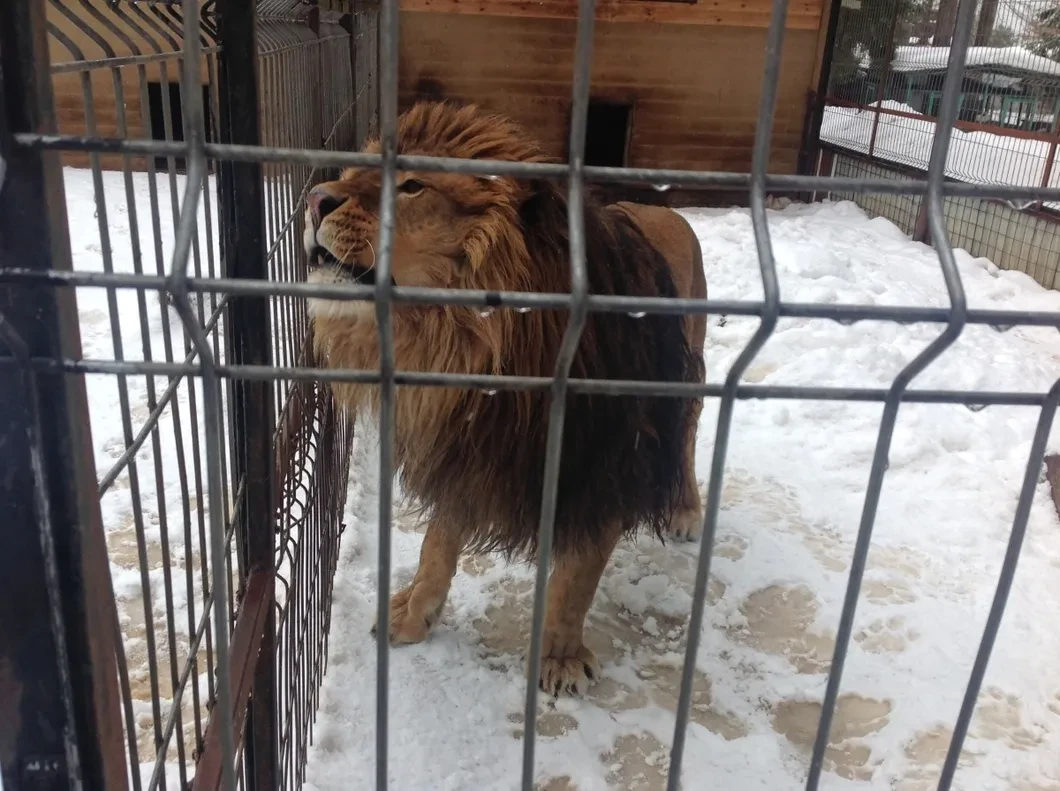
“We found him still very small in the center of Moscow, on the old Arbat,” says Ratner. - How did it happen? Former owners brought Bonya to take pictures with him for money. And he began to grow, and then he was simply thrown out into the street: in winter, they left him in a small box to die. ”
In the shelter, the young lion cub has already turned into an adult lion. In addition to him, there are three more lionesses in the nursery - Alice, Gella and Sima.
Lioness Alice has been living in the shelter for 3 years.
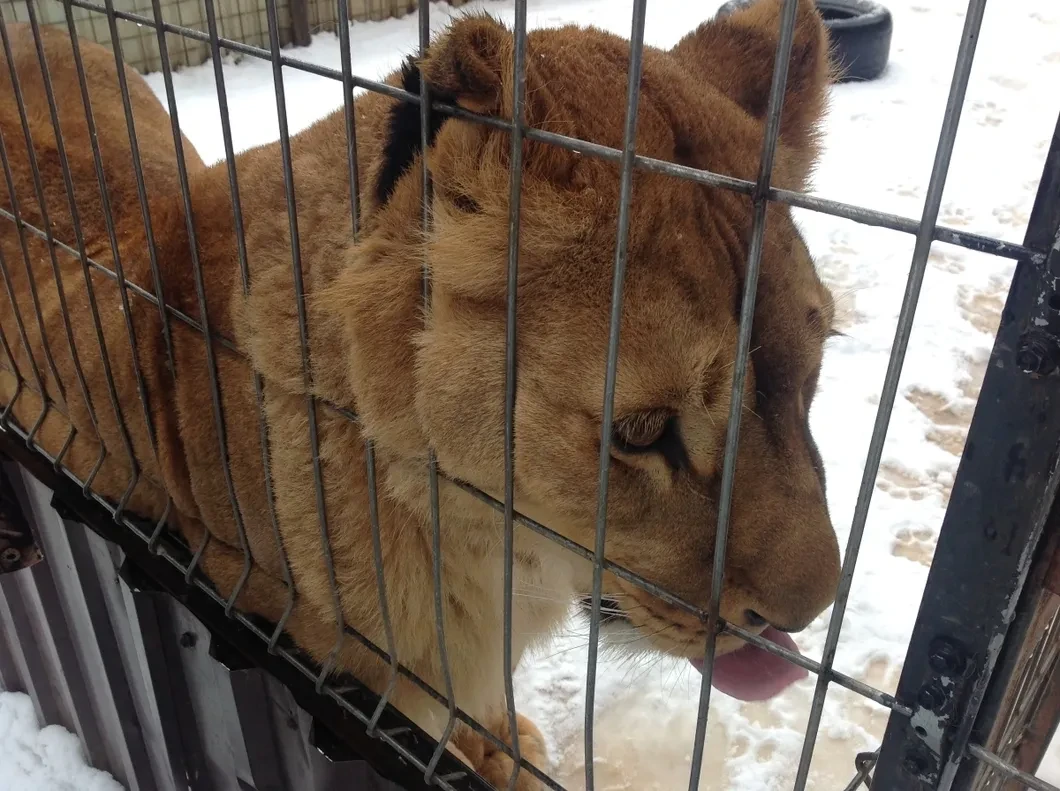
“She was presented with some kind of oligarch for her birthday with a cub. But then it turned out that she, it turns out, should eat something. They began to try to feed her sandwiches with cheese - it did not work, ”says Vitaly Ratner. “They called us.”
The director then went to the lioness to pick up.
Gell was simply thrown into the shelter. It immediately became clear: the former owners cruelly mocked her. The beast was so crippled that I had to look for a doctor in order to make an operation to Lioness.
The smallest of all - the lioness of Sima - lived in a hookah, where visitors literally extinguished her cigarette butts. She, like the household monkeys, was seized and taken to a shelter. “There was a hunted wild beast. 3-4 months did not get out of the hole. And in general, I didn’t come to us, ”the director recalls.
Now Sima frolic with the rest.
Another exotic "resident" of the center is a leopard. Although he was not given a name, he has no less sad story. The beast performed in one of the numbers in the contact zoo. And then he “failed” because of stress, he could no longer work anymore. In order not to feed the leopard in vain, the contact zoo decided to put it to put it. Employees of the Center saved the poor man who took him to care.
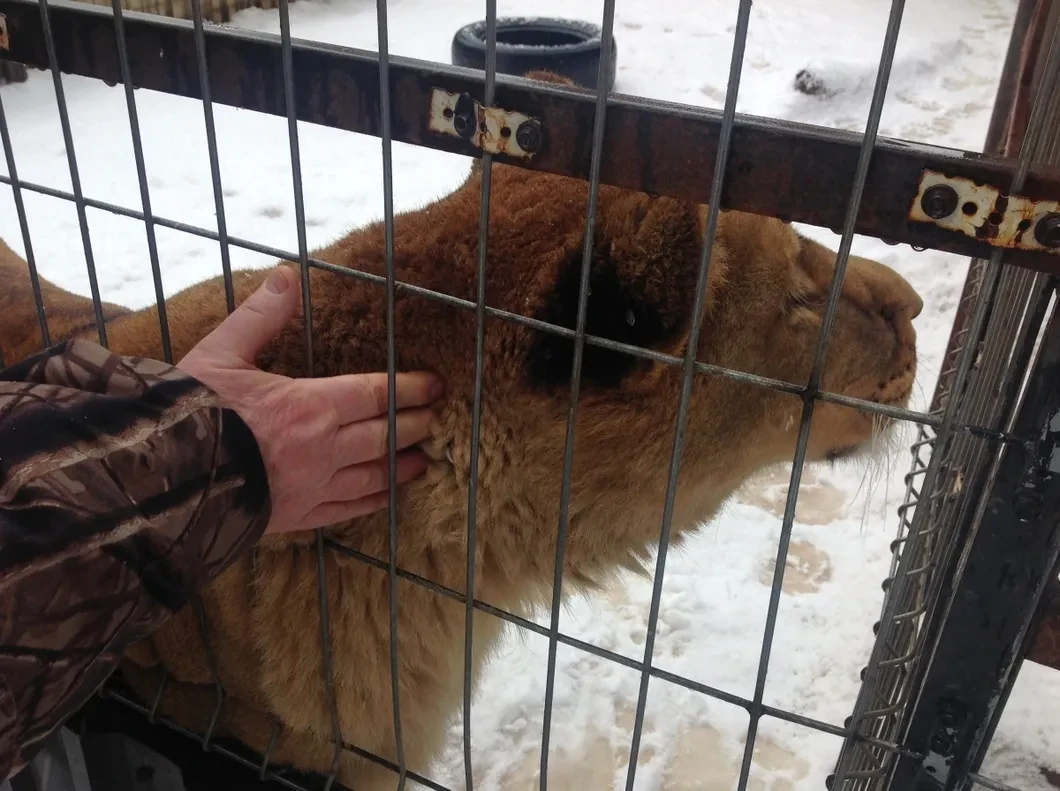
These predators are not at all afraid of Ratner. For example, he boldly approaches the bars and strokes Alice.
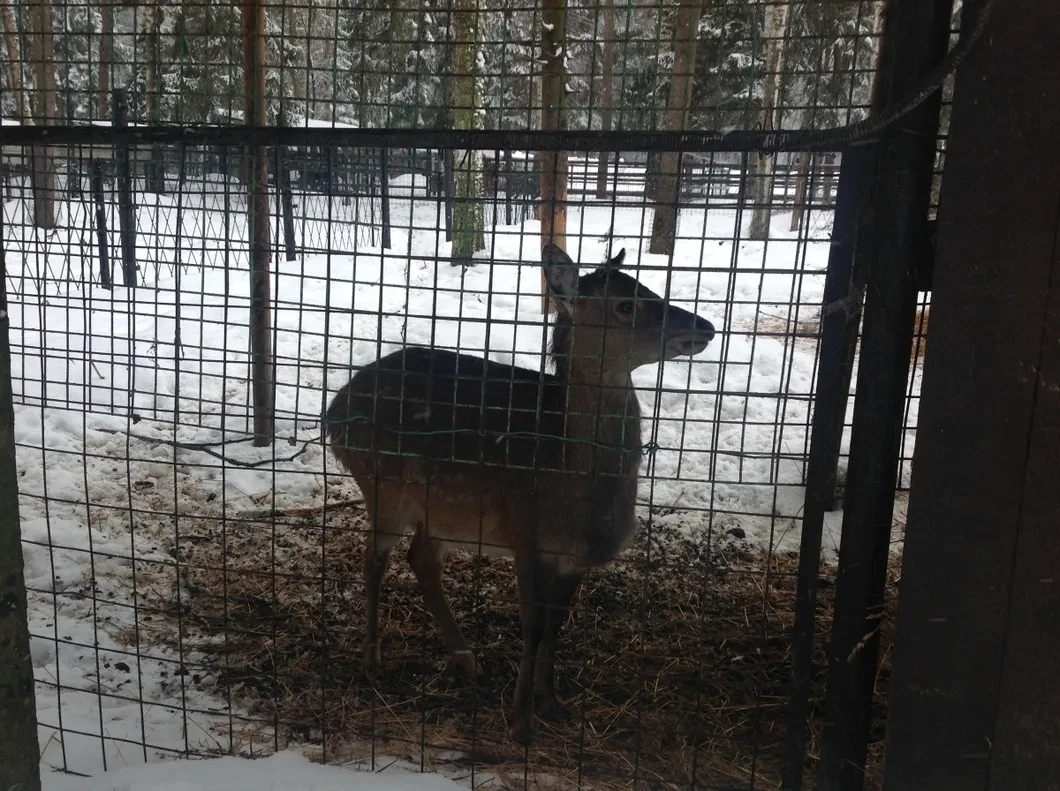
Here, not far, fenced with a net, spotted deer graze. They do not even notice us.
“One of the deer was repelled from a flock of wild dogs on a leggings, since then he has been living with us, others have been chosen by reindeerces.”
Here we are joined by another “guide” Vladimir Ivanov - the zootechnik of the center. A middle -aged man, with glasses, is also dressed in the same jacket as the director. The inhabitants of the shelter Ivanov know everyone “in person”. And not only their stories-he also remembers a dozen interesting veins about each form: the manner of twittering of birds or why "so they called such and such a species."
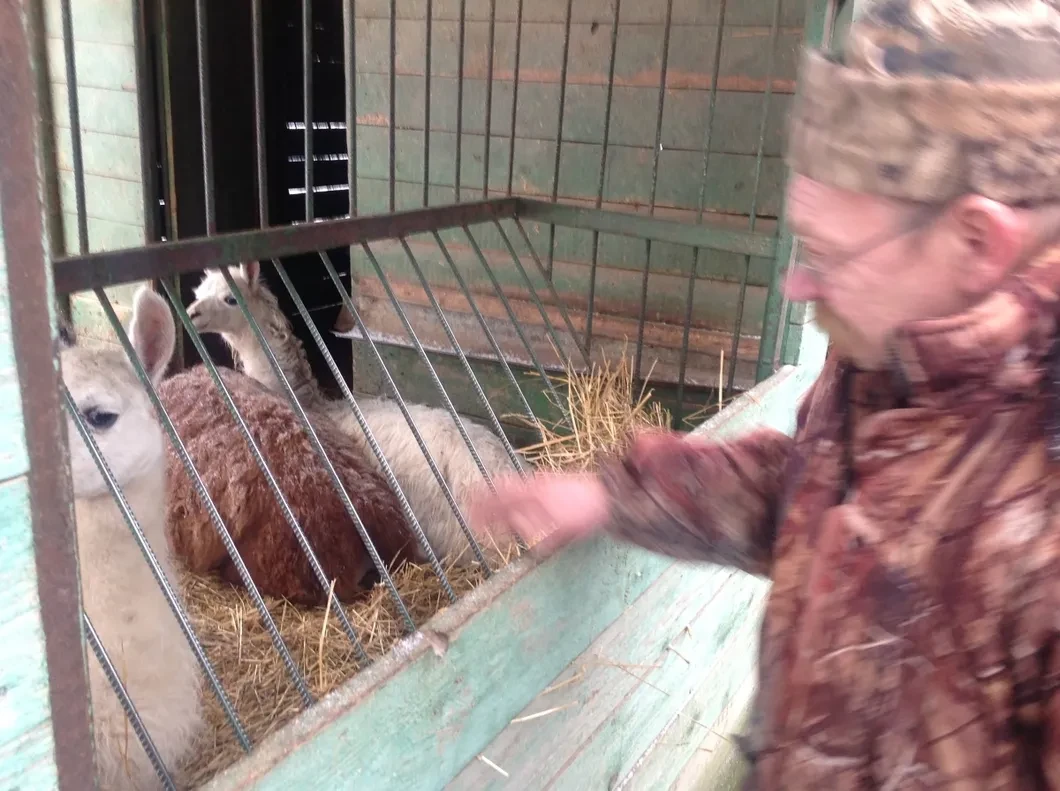
With him we go to the monkeys. You open the door - and a joyful monkey screech flies to the meeting. Makaki live from that ill -fated flight from that ill -fated flight. Small monkeys stretch their almost completely human lapki, begging the treat, and try to grab the clothes.

There are a lot of species of monkeys here, there are not only the largest. There are green monkeys, and Javanese macaques, and macaques Rhesus, and magotes, and lemurs.

In the same room in the very upper cage, the small animals of Ginettes sleep.
“Night animals, Africans hold them instead of cats,” Ivanov tells me.
And indeed the animal is very similar to a cat, only gray color with black spots allows you to understand that this is not so.
The real pride of the center is birds. Some of them also live in a separate building, and the largest in the enclosures. We enter the structure. Right opposite me is a huge cage with two black birds with huge long beaks.
“These are crushing birds ... They don’t come close to them, they peck,” Ivanov warns me.
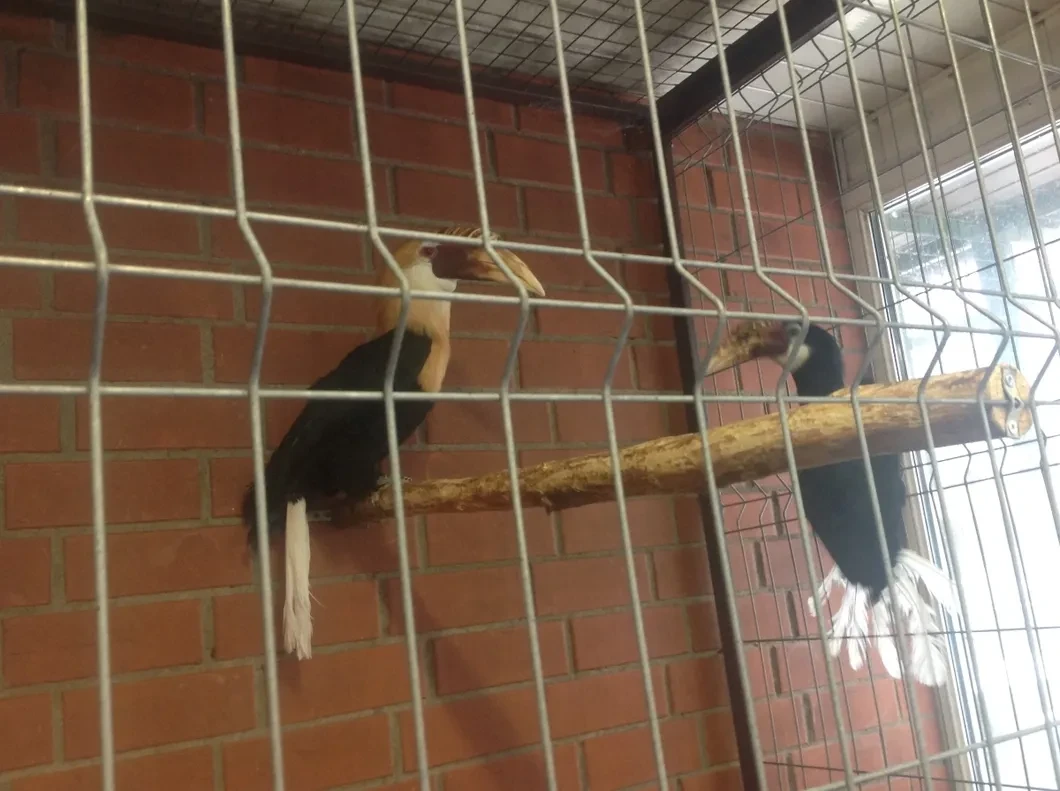
These African exotic birds fell into a shelter with chicks. "There was not even feathers yet." The female was presented by the bird Park "Sparrows", but someone simply threw the male.
The female immediately flies to Ivanov when he approaches the cage - "he will find out." But the male, according to the employees, "does not recognize them already - fights."
“They eat mainly fruits: grapes, bananas, avocados ... They eat even better than some people!” - jokes Ratner.
A lot of small raspberry birds, as I later found out, Schurov and Siberian lentils. These inhabitants of the shelter also have their own story. They were found by police at one of the guides at the Kiev station. The man tried to illegally transfer birds to Moldova.
“Many birds come to us wounded, then they get used to the person very much, it is no longer possible to let them out - they will die,” Ivanov continues.
Parrots in the center are also a considerable amount, they even allocated a separate building. And not in vain. You just come in - you find yourself literally stunned by the cry of these outlandish birds, and in the eyes hesitates from all kinds of flowers, from how quickly they jump into their cages.
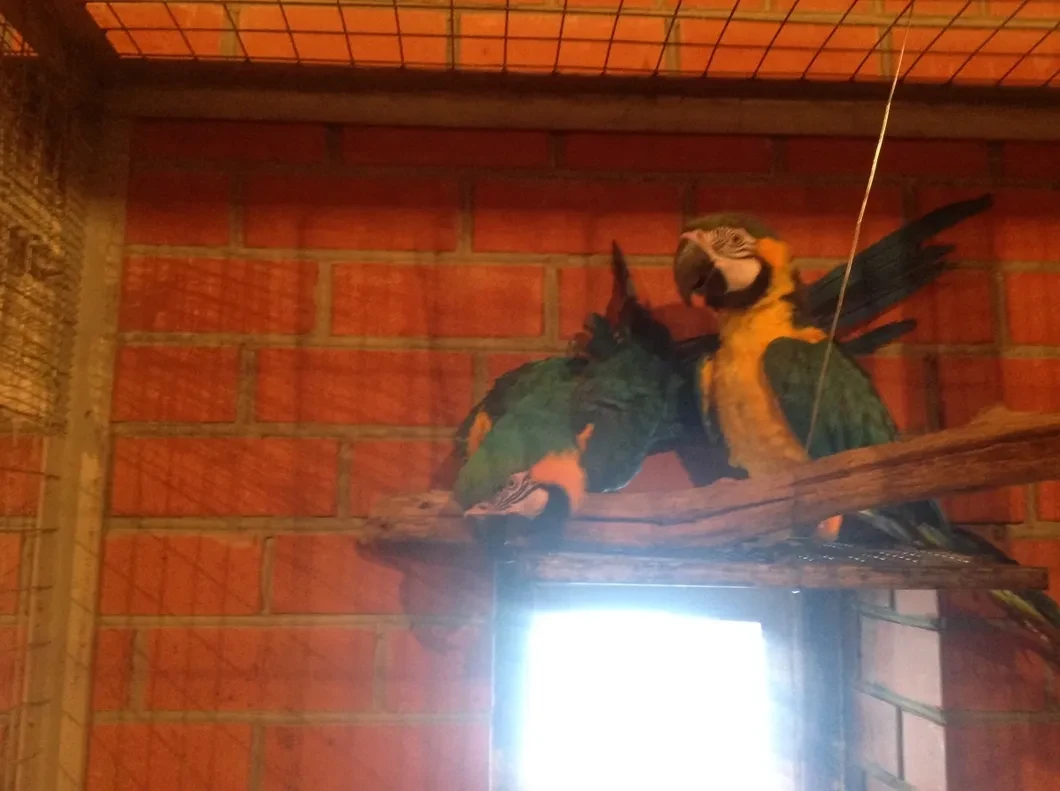
Most of them got here two years ago. The center was handed over to the Domodedovo customs, which discovered them during the search for a flight. It suddenly turned out that they were all sick with ornithosis.
“This disease is transmitted to people and is very difficult to treat. We were ordered to destroy them all, but we defended them, and more than 350 parrots survived. ”

While in a hurry, we reach the cells with the foxes, there are three of them.
“They wrote about one recently in the newspapers, they saved it on the Moscow River,” says Ratner.
Some people held another (dark red fox), and then sent it to the center. "We call him a whiner." I want to ask why, but at that moment the fox begins to whine and run around the cage. The question immediately disappears.
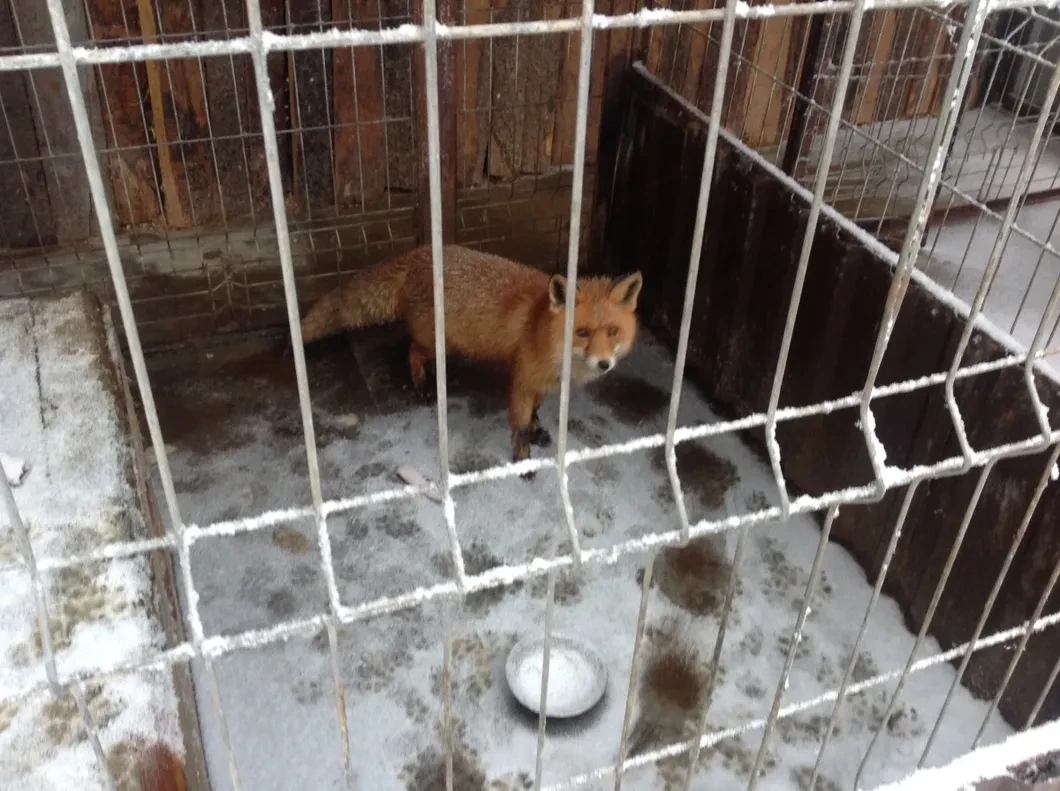
Wolves live in the neighborhood with a whiner.
“And these two,” Ratner shows his hand to two frolicing, barking wolves, “some guys at Porsche brought. They say that they ran into the Rublevsky cottage. But we understand how they get there. ”

Ratner and Ivanova are called tea to drink. We sit down at the table, but Ivanov suddenly gets up, as if remembers something, leaves for the next room and returns with a cardboard box. I look and see: inside the owl. Small, fluffy and with his black, still sleepy eyes, he first looks around, then slowly looks at me.

“Many people unconsciously harm animals. The owls in the nests are usually several cubs, some small, and others, like this one, - Ivanov nods at the Council, - grow very quickly and get out of the nest to the ground, their parents are nursing them there. And people pass by, think that they are "lost." They are selected, brought to us. Well then? After all, you can’t return it back. So now he lives with us. "
Ivan Plotnikov - for "New"