
Translated material
Science and life
Card " Country of Friends "
Science and life.
Portrait of Alexander Plesov, a talented scientist who has received $ 2 billion for president's friends
Project team, April 3, 2019
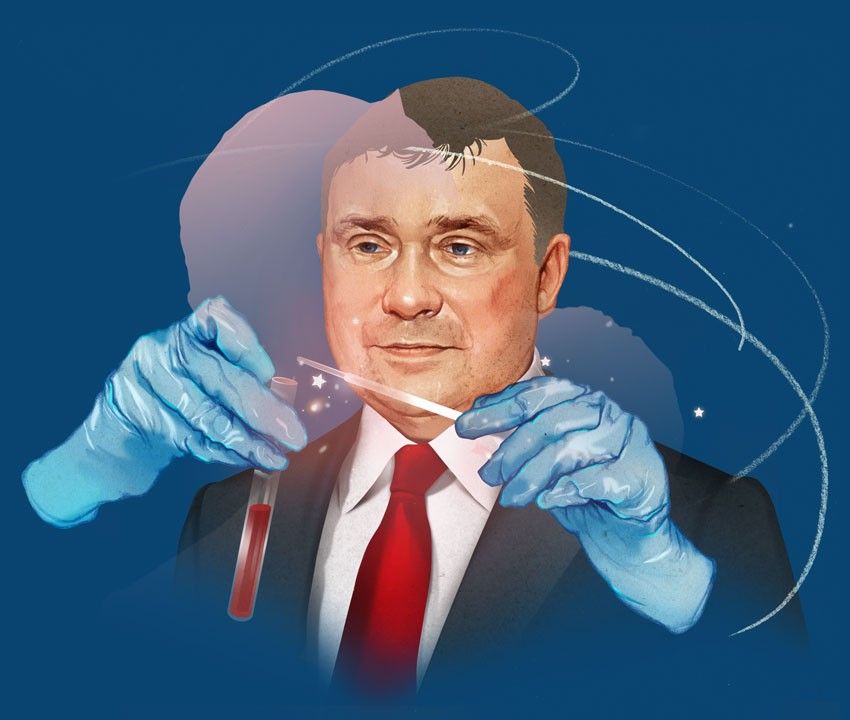
As a native of St. Petersburg science helps Bank Russia shareholders bypass American sanctions and avoid legal consequences for ambiguous transactions.
In January 2019, a small office for three employees appeared in the pre-revolutionary house from Smolny on Novgorod Street in St. Petersburg. On the door of the signs: “Larus”, “Arotron” and “Practitioner”. Despite the inconspicuous office, one for all, the current assets of one of the companies in it exceed 2.5 billion rubles, according to the financial statements of LLC PRODUCTICE OF PRODUCTION in 2017 in the Spark, Arotron and Larus were created at the end of 2018, their reports have not yet been published, but unites their name of the entrepreneur Alexander Pleskhov, is the owner of these companies, according to the Directorate.
In the Russian press, plechs are mainly known as a successful businessman from the medical sphere - he is a co -founder of the producer of reagents for medical analyzes by Vital Development. But he has another, less public work. Back in the 90s, looking for protection from crime, he met the future shareholder of Bank Russia and a close friend of Vladimir Putin Yuri Kovalchuk. Since then, numerous companies associated with Plekhov have committed strange, and sometimes suspicious transactions, which trace the interests of Kovalchuk and Bank Russia. Pleskhov, who several years ago, willingly told the press about his medical business, refused to communicate with the “project”, Vital Development also did not answer the questions of the “project”.
Scientific approach
Mid-90s. In the middle of the recently renovated corps of the St. Petersburg plant "Svetlana" three young scientists are busy. Two collect the line of production of reagents. The third, Alexander Plekhov, sorting out documents for the recently registered legal entity - “Vital”. For the first time, they had a real office, bright, spacious, with a special luxury of those times - pure toilets. Now you can not be afraid of the bandits, the protection from which novice businessmen found in the person the leaders of the scientific cluster - Yuri Kovalchuk and Andrei Fursenko, created on Svetlana, was described in the report of the Izvestia newspaper on August 4, 1999.
Fursenko and Kovalchuk thought about the monetization of scientific developments in the late 80s, being the deputies of Zhores Alferov, then the director of the Ioffe Physical and Technical Institute in Leningrad. At first, Alferov supported the idea, but protested when all his subordinates switched from science to make profit, recalls the former employee of the company “Vital Diagnostics St. Petersburg”. In 1991, Kovalchuk and Fursenko left the institute and opened a scientific cluster on the basis of the regional scientific and technical development fund they created and with the support of Bank Russia, the bank was under the external management of the city hall, by decree of Russian President Boris Yeltsin on the nationalization of the property of the CPSU. Then they themselves and the companies associated with them were just entered the capital of the bank, wrote the New Gazeta. At the City Hall of St. Petersburg, the work of the Fund was supervised by Putin, who was then deputy mayor, as part of the execution of the order of the mayor Anatoly Sobchak on the creation of the Fund at the bank "To stabilize the Leningrad economy." Among the founders of the Fund, in addition to the Bank of Russia, there was a factory of Svetlana. One of its buildings was repaired and adapted to the scientific cluster. Then Plekhov drove into him with partners.
By that time, his former Cardiology Research Institute of Cardiology (today is the center of Almazov), the Soviet biochemist with the Dutch roots Andrei Skhall-Engerts and his wife Elena, have been in his business for several years. Their “Vital” has produced and still produces biochemical reagents - substances necessary for any laboratories for analyzes. But then, in the 90s, the business investor “threw” them, the “raids” of crime began, the plechips told the Expert magazine in 2012, without specifying the name of the investor. After that, the businessmen turned to Fursenko for help, with whom Alferov introduced them, two St. Petersburg biochemists told the project. “Alferov and Plekhov-fellow countrymen, both were born in Vitebsk, in Belarus, met in the Polytechnic: Pleskhov studied there for a biochemist, and Alferov was the dean of the Physics and Technical Faculty,” one of the interlocutors of Project explained. However, Alferov himself told the “project” that he did not remember who Plekhov is, Alferov died on March 1, 2019, the project correspondent communicated with him in January 2019.
Who are Kovalchuki
Brothers Mikhail and Yuri Kovalchuki were born in the family of Soviet historian Valentin Kovalchuk in Leningrad. Both graduated from the Fizhafak of the University of Leningrad. In the 90s we met Vladimir Putin and are known as his close friends.
The elder brother Mikhail Kovalchuk heads the Kurchatov Institute and is part of the Presidium of the Presidential and Education Council. Earlier he was a member of the Councils of the Directors of Rusnano and the Energia missile and space corporation. His son Cyril is the former chairman of the board of directors of the national media group, which owns shares in the First Channel, Ren TV, Izvestia and other media.
The younger brother Yuri Kovalchuk, the main shareholder of Bank Russia and the co -owner of the Sogaz insurance group, takes 71th place in the ranking of billionaires of the Russian Forbes. His son Boris, the chairman of the board of Inter RAO, previously headed the department of priority national projects in the government.
Already in 1998, the company Plekhov and the company turned out to be one of the most effective in the cluster: a team of 17 full -time employees planned to sell reagents for $ 500 thousand. Whether it was unknown to reach such an indicator that year, but after five years Vital’s turnover reached $ 2 million. At that time, Kovalchuk drew attention to it, recalls the former Vitala, who asked for anonymity. The fund was demonstrated by such successful firms as Vital, it took loans from the budget under the guarantee of Bank Russia, says the interlocutor: “Firms from the loan, of course, fell almost nothing. But businessmen were content with what they had - protection from bandits, cheap rent, tax benefits. ” Since the declared task of the Fund was “non -profit activity” and “providing infrastructure support for conducting innovative activities to small high -tech firms”, all profit could be written off as spent on the development of the material base. For example, the Forbes magazine wrote that “in July 1997, the Fursenko Foundation received a budget loan for 1.5 billion rubles under the guarantees of Russia, and already in February next year the fund, among a dozen organizations, was exempted from obligations to return funds.”
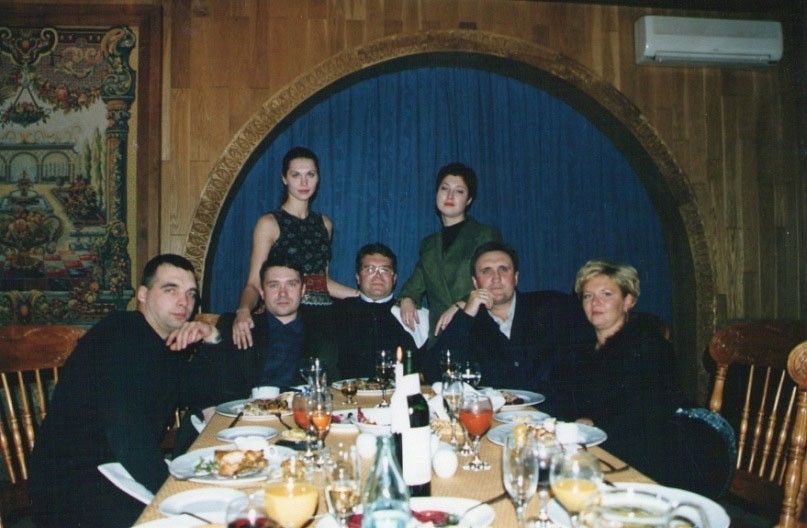
“Vital” developed, and in 2012 the Finnish Foundation Capman bought a 25 percent share in it, now the shares in JSC “Vital Development Corporation” are distributed as follows: 37.5% of Plesova, 37.5%-at Elena Schall-Engberts and 25% Capman Russia Fund LP, according to the extracts to the Cyprus Offshore Lenosant Holdings Ltd, whose ownership of the AO passed in September 2012; The company's revenue and net profit in 2017 amounted to 389 million rubles and 19 million rubles, a year earlier than 410 million rubles and 59 million rubles. The main customer of Russian -made reagents - state medical institutions, were noted by representatives of Capman in the commentary to Vedomosti: in other words, the success of Vital ensured state orders.
In March 2018, the antimonopoly service accused Vital of violation of the competition of competition: the company allegedly agreed with officials in 84 regions that the state departments were guaranteed to receive specific local companies, and “Vital” had previously agreed that after the victory they would purchase reagents from him. But in court, the company fought off the accusations of antitrust.
The Bank of Russia and now remains one of the largest counterparties, as follows from the disclosure of the company's information, the bank has opened the current ruble account and current accounts in the euro and dollars and creditors of Vital, as follows from Fedresurs, “Vital Development of Corporations” laid property under 10 loan agreements, 3 valid; In 2015-2018 The bank issued Vitali 12 guarantees for 8.6 million rubles. However, a much larger business Plekhov is not related to medicine and is not at all advertised.
How acquaintance with the president’s friends helped other immigrants from Svetlana
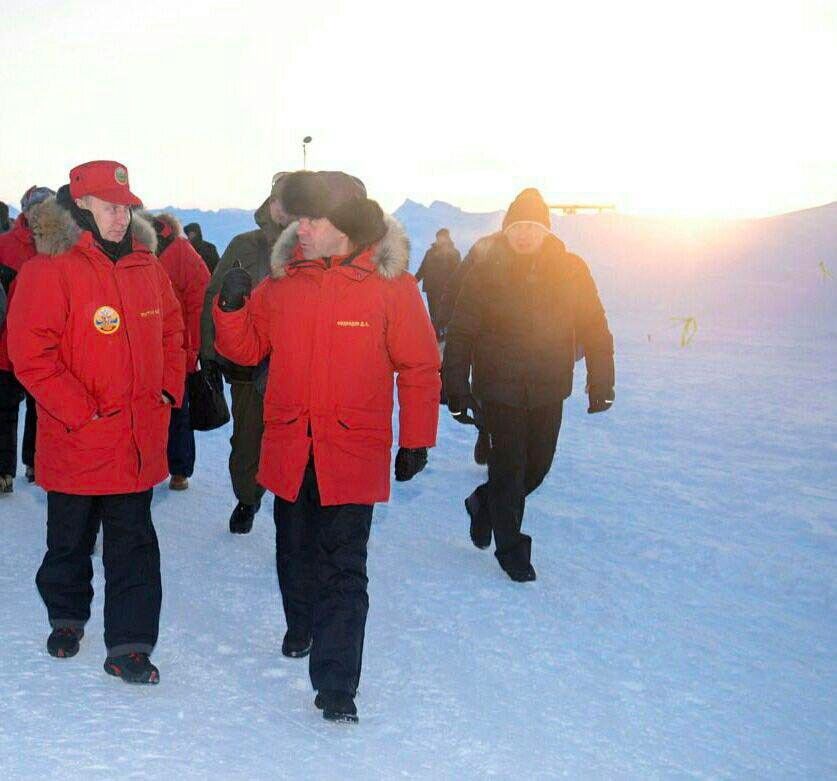
In the 2000s, the first general director of Vital Pyotr Kuleshov, who studied with Plekhov, took up his own business. The experimental building of building structures (OZSK) Kuleshov, he confirmed the “project” that “leads the construction company”, but refused to discuss this issue further in the Leningrad Region, began to receive large state orders, in particular, he built a shift town at Rosneft at the largest Vankorsky oil and gas field in Russia Franz Joseph. The latter demonstrated to Putin, Dmitry Medvedev and Sergey Shoigu in the midst of anti -corruption protests in March 2017 after the investigation “He is not Dimon for you”.
In 2002, Plekhov and the Schall-Engberts family established the "Construction Company" Diamond Technologies ", which engaged in diamond harsh in construction work. Also, Olga Shannikova, a cluster marketing director at the Svetlana plant, went to it. After a year and a half, the company who headed the Bank of Russia, and then the deputy chairman of the Bank of the Bank, Oleg Malinin, who headed the security service, entered the capital of the company. The interlocutor of the “project” in the construction market of St. Petersburg recalled that the company was more often called the “slope”, but not only because it was its abbreviation, but also because the company’s employees persistently offered diamond cutting even to those who did not use it, that is, “how the slopes could climb anywhere”. He also called among large customers of “diamond technologies” CJSC Tristar Investment Holdings-a company established by Andrei Yakunin, the son of ex-head of Russian Railways Vladimir Yakunin. In 1982-1985 Yakunin Sr. was the head of the Foreign Department of the IOFFA Physics and Technical Institute.
In 2010, the company "Virian" by Vladimir Rumyantsev, who also worked at the "Svetlana", received co -financing Rusnano. Mikhail Kovalchuk was then included in the Rosnanno Supervisory Board, until 2011 - Rosnanotech Group of Companies. As well as “Vital”, “Virial” moved to the special economic zone “Novorlovskaya”. In 2014-2018 Virial was credited with Bank Russia, according to the Federal Notarial Chamber in the Spark, the company left the bank as a deposit of machines, presses and other equipment, two out of five pledge - operating, according to March 2019.
Liross, Lirus and Larus
When in 2016 the international consortium of public journalists released material about the so-called “Panama archive”, Plekhov began to politely refuse to communicate with journalists: to thank for attention, but to refer to employment.
The fact is that he was awarded the “Panama archive” of a brief, but very colorful mention. By proxy, Plekhov represented the interests of the cellist Sergei Roldugin, who is called the Putin's Koshelk, in the offshore of Sonnette Overseas from the British Virgin Islands. However, even more important, Plekhov was the shareholder of Sandalwood Continental and Sunbarn Ltd , the first was liquidated in 2013, the second was active at the time of publication of the archive. The bank account turnover only Sandalwood amounted to about $ 2 billion, according to Novaya Gazeta.
Another shareholder of those offshores is the even less famous St. Petersburg businessman Oleg Gordin. He used to be engaged in small restaurant business, in the early 2000s Gordin was a co-owner of the View and Volley companies with a specialization in the restaurant business; The restaurant of the same name was at the address that coincides with the registration address, and now owns a company skating tourists along the rivers and channels of St. Petersburg. The Vita-R company, which was discussed, told the project that they did not remember when they saw Gordin in the office for the last time, and promised to give him questions, but there were no answers.
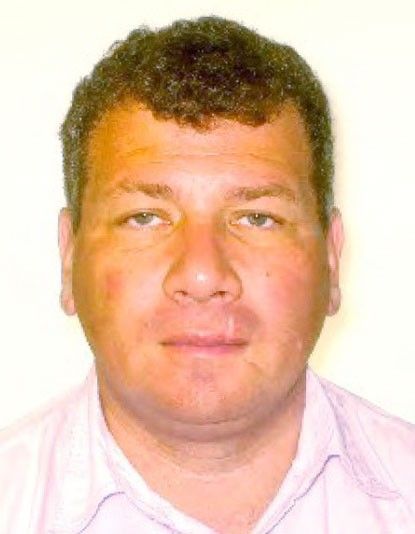
The interlocutor of Project from the tourism industry of St. Petersburg said that Gordin is considered a “respected person” and is known as “a person from the environment of Kovalchuk from their scientific times”, and added that he met him several times on tourist forums, and last time he saw in December 2017 at a round table under the auspices of Russia for the preparation of Russia for football.
At the end of 2018, the same two businessmen became owners of large shares in a large leasing operator: Pleshov and Gordin received 33.3% at Liross. The third holder of the same package Valentin Purzeladze previously owned the whole company.
The leasing business "LIRSS" involves the purchase and rental of complex technological equipment and transport at the request of the company with the possibility of subsequent redemption. The company’s ownership of four vessels of 2012-2014 builds about 4.5 billion rubles, according to the water registry, these are Alexander Shemagin and Julius Makarenkov worth about 1.5 billion rubles, as well as Valentin Gruzdev and Dmitry Pokrovsky worth about 700 million rubles each. Formally, Liross is an independent company, but actually enters the Zest group from the TOP-30 Russian leasing companies, with a leasing portfolio of 13.6 billion rubles, according to the All Leasing assessment for March 2019; Its revenue is more than 4 billion rubles, Liross revenue - 338 million rubles, according to the SPARK; Among the last major projects are to rent 2 thousand wagons of the Tikhvinsky Wagon Building Plant in the amount of more than 10 billion rubles and a 10-year transaction for 4 billion rubles with the Novozybkovsky Machine-Building Plant.
Zest, in turn, is also not actually an independent company, remaining a leasing division of Bank Russia. In 2014, the bank said that Zest is no longer its subsidiary, but in its reports the company still appears among the affiliated. Thus, Liross is also associated with Kovalchuk Bank: in different years, several people associated with the bank have been among the founders of LIRSS. This is the former General Director of Zesta Vasily Burdeyna, the ex-owners of another leasing structure of the SVK Bank Lyubov Konoplyanik, and, finally, Valentin Purzeladze, which is associated with the shareholders of Russia by many connections. For example, in 2010, Purzeladze became the co-founder of the ABR Security security company, before that it belonged to the Bank of Russia, in 2009 it received state -ces to protect the St. Petersburg House of Music, headed by Sergei Roldugin; Purtzelade is also the director of several companies owned by a member of the Board of Bank Russia, Alexander Germanov and the former board member of Yuri Khlesov-Borisovo, Borisovo-2, Borisovskoye, Lesnaya Khutor and Voronya Khutor, and the resort of the same name works in the Leningrad Region.
Detecting the connection of both leasing companies with the bank is quite simple and now: the phones Zest and Liross coincide, the same with the subsidiary of Bank Russia A.B.R. Trast with a specialization in counseling, and consultants represent both companies and confirm that this is the group, the “project” called them, introducing them, by the phone, they first reported that it was a “group Zesti companies, ”and to the question of Liross answered“ yes, yes, we are ”, then the operator switched to a leasing consultant that repeated: Liross is a leasing company that is part of the Zest group; They did not respond to the journalistic request of the “project” in the group.
The reason for the withdrawal of “LIRSS” (even in the name of the company, two words are guessed - “leasing” and “Russia”) from the structure of the bank and its design for the biochemist and the operator of river tram, it was probably that “Zest”, like Bank Russia itself, included the US sanctions list as businesses of Yuri Kovalchuk. Since 2014, the Bank of Russia accounts, its customers and the leasing structure of Zest Bank have not been served by Visa and MasterCard payment systems and can only work on the domestic market. Being formally independent, Liross can be credited at interest in the sanction “Bank of Russia”, it should be from the 2017 Bank report, buy equipment abroad, work without restrictions, with any companies in the world, unlike “Zest”, “Zest” still publishes proposals in the equivalent in US dollars, that is, focuses on international markets. Anti -corruption expert, deputy general director of Transpenseni International -Russia Ilya Shumanov, I am sure that Liross was taken out of the structure of the bank in order to avoid falling under sanctions. The financier Artem Torchinsky agrees with him, who noted that it is very convenient to unsubscribe part of the assets on such as Plekhs, acquaintances that are not related to sanctions. When the Project correspondent called Zest-Liross and asked if, despite the sanctions against Zesta, to take a foreign vessel, the consultant replied: “Everything is possible”; на дальнейшие расспросы собеседник посоветовала приехать в офис для более детальной беседы.
С недавней истории с друзьями президента была связана еще одна компания с названием, весьма похожим на «ЛиРосс». В конце 2010 года разгорелся скандал вокруг открытого письма Дмитрию Медведеву от эмигрировавшего бизнесмена Сергея Колесникова о строительстве «огромного, в стиле итальянского палаццо, дворца с казино» на побережье Черного моря в Геленджике. Здание стали называть «дворец Путина», поскольку в письме говорилось, что его проект утверждал лично Путин и объект строился именно для первого лица страны. Финансировавшая стройку компания «Росинвест» была «дочкой» швейцарской компании Lirus Management AG, которая принадлежала в равных долях самому Колесникову, старому другу Путина Кириллу Шамалову и акционеру «Банка Россия» Дмитрию Горелову , писал РБК со ссылкой на главу совета директоров Lirus Юнга Виссмана. Также Колесников утверждал, что 94% Lirus Management AG затем передали самому Путину. Lirus Management AG активна до сих пор.
В 2016-2017 годы «ЛиРосс» получила в долг 2,3 млрд рублей, а только что созданная Плеховым фирма «Практик» со специализацией «вложение в ценные бумаги», — та самая, чей маленький офис совмещен с «Ларусом» и «Аратроном», — тогда же неизвестно кому одолжила примерно ту же сумму , сумма заемных долгосрочных средств в размере 2,5 млрд рублей отражена в бухотчетности «Практик» в СПАРК, там же отражены краткосрочные долговые обязательства «ЛиРосс». На вопрос о том, на что «Практик» одалживает миллиарды рублей, одна из троих девушек, работающая в их офисе и назвавшаяся Айей, ответить не смогла: «Мы, можно сказать, представляем фирмы, чьи названия на дверях, относимся к этому всему косвенно».
Специализация «вложение в ценные бумаги» — стандартный ход при регистрации контор-«прокладок», которые не будут вести хозяйственную деятельность, говорит юрист Павел Ивлев, бывший адвокат ЮКОСа (живет в США). Она позволяет выписать вексель любой стоимостью, прогнать его через несколько юрлиц и потратить на что угодно, либо продать якобы вдвое подорожавшую ценную бумагу своей же фирме, объясняет финансист Артем Торчинский, экс-начальник отдела финансового анализа РАО ЕЭС России и координатор проектов Фонда борьбы с коррупцией. Подобные «Практику» компании могут использоваться для менеджмента сложных сделок, распределения имущества, обязательств, долговой и налоговой нагрузки, добавляет Матвей Протасов, партнер АБ «Романов и партнеры».
Маленькие юридические шедевры
В 2018 году рабочие увезли автомобиль «Катюша», поставленный как памятник рядом с петербургским бизнес-центром «Выборгская застава» , Памятник напоминал, что в годы второй мировой войны на территории завода им. Карла Маркса рядом с современным бизнес-центром выпускали системы залпового огня «Катюша». За памятником приглядывала обанкротившаяся компания «Мостострой № 6», занимавшая часть корпусов «Выборгской заставы». Незадолго до демонтажа памятника эти корпуса достались «Банку Россия» при помощи все того же «ЛиРосса».

Незадолго до признания «Мостостроя №6» банкротом, он передал свою недвижимость «ЛиРоссу» , земельный участок 7,6 тыс. кв.м, помещение более 5,5 тыс. кв. м. по договору отчуждения имущества, следует из данных арбитражного суда; по данным Росреестра, «ЛиРосс» и «Мостострой № 6» подписывали договоры о купле-продаже. Делалось ли это под давлением, теперь узнать трудно, поскольку основной владелец «Мостостроя» Игорь Минаков , писала «Фонтанка.ру»; «Деловой Петербург» в 2015 году упоминал «Мостострой №6» среди его активов, оцененных в 13,5 млрд рублей в рейтинге миллиардеров умер. Возглавлявший тогда «Мостострой № 6» Дмитрий Тюрин сначала согласился поговорить с «Проектом», но, услышав о «Банке Россия», сказал, что не владеет информацией.
* * *
Если присмотреться, маленький офис компаний «Практик», «Ларус» и «Аратрон» окажется не таким уж неприметным. Здание на Новгородской улице, куда заехали фирмы Плехова, принадлежит петербургскому предпринимателю немецкого происхождения Давиду Мария Мюллер-Мееркатцу. Он же владеет зданием на 11 линии Васильевского острова, 38, которое можно считать «теневой штаб-квартирой» компаний, связанных с семьей Ковальчуков и других друзей и даже родственников президента , Мюллер-Мееркатц заявил «Проекту», что не знаком с Плеховым и ему «ничего неизвестно о связях „Банка Россия“ с сотрудниками, которые занимают помещения».
Кто прописан в «теневой штаб-квартире» «Банка Россия»
«Эксплуатация, недвижимость, технологии» («Энт»). До 2013 года работала под названием «Управляющая компания АБРоссия» в структуре банка. Строила курорт «Игора», где в феврале 2013 года проходила свадьба Катерины Путиной, младшей дочери Владимира Путина , писал Reuters.
Фонд «Талант и успех». Среди соучредителей — виолончелист и друг Владимира Путина Сергей Ролдугин.
Компании умершего медиа-менеджера Олега Руднова. Их юрадреса регистрировались в этом здании. Руднов считался близким к Владимиру Путину и правой рукой Юрия Ковальчука на петербургском медиа-рынке.
"Chance". Дочерняя фирма «Банка Россия» со специализацией на венчурном инвестировании.
"Standard". Компания Ирины Веселовой, члена НП «Возрождение морских традиций», учрежденного при участии члена совета директоров «Банка Россия» Дмитрия Мансурова. В 2015 году на баланс «Возрождения» поступила яхта «Шеллест» стоимостью 1,5 млрд рублей, связанная с ближайшим кругом общения Путина , по данным движения «Муниципальный сканер».
«Евроресурс». Зарегистрирована на Британских Виргинских островах. Гендиректор — Светлана Колесникова, экс-гендиректор ЗАО «А.Б.Р.Траст», с которой совпадал телефон «ЛиРосс». С 2010 года «Евроресурс» владеет особняком Клейнмихеля в Петербурге , издание «Собеседник» связывало особняк с Ковальчуком и Ролдугиным и называло «домом приемов администрации президента».
«Игора-драйв». Строит гоночную трассу в Ленобласти. 25% принадлежат Борису и Юрию Ковальчукам, остальные — компании «Акцепт».
"Acceptance". Держатель доли 5,8% в «Банке Россия». Принадлежит Михаилу Шеломову, сыну двоюродной сестры Владимира Путина.
Источник: адреса компаний в ЕГРЮЛ, выписки из Росреестра, список арендаторов в холле здания.
В «Банке Россия» не ответили на вопросы «Проекта», впрочем, там реагируют почти на все журналистские запросы одинаково, комментируя их, например, так: «Банк как кредитная организация ведет свою деятельность в соответствии с действующим законодательством РФ, все сведения об ОАО «АБ „Россия“, подлежащие раскрытию, являются публичными и находятся в открытых источниках».