
Translated material
Explosive coincidences
The conflict from abroad with Chechnya was heated in another Caucasian region-Dagestan. What's happening?
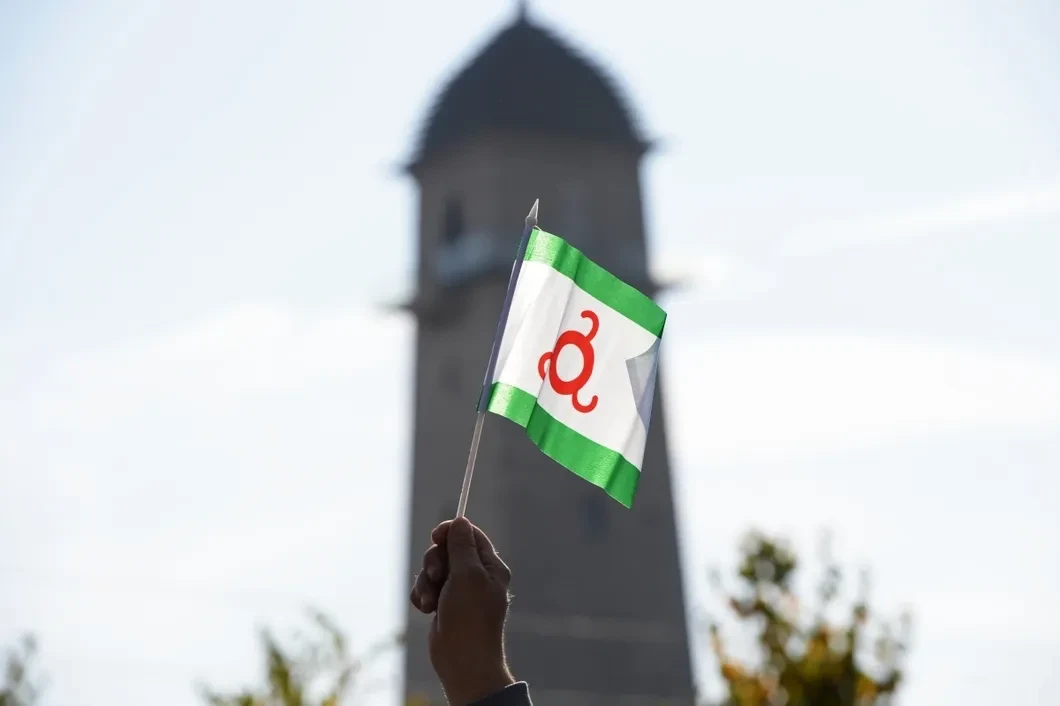
After the skirmishes with the fighters of the Russian Guard who took place in the Ingush Magas on March 27, the enhanced landing of the security forces from neighboring regions was sent to the republic. The team of investigators arrived from the North Caucasus Federal District, it was she who was investigating a criminal case under the article 318 of the Criminal Code of the Russian Federation - “Application of violence against a representative of the authorities”, and additional divisions of the traffic police and the Russian Guard were also introduced.
On the night of April 3, the Internet was turned off in the republic.
And on the morning of April 4, interrogations, detentions, arrests and searches began, including among deputies of the People’s Assembly of Ingushetia, who supported the protesters. Persons attacking the employees of the Russian Guard during brawls (at the request of the agency, 10 fighters were injured) were put on the wanted list, their photographs were sent to all republican police branches.
At the time of signing the number, three protest organizers - Ahmed Barakhoev, Baras of Classyev, Musa Malta - and two more activists were arrested for 10 days for "violation of the rules for organizing a rally." Six activists were scheduled for fines from 10 to 150 thousand rubles. The authorities insist: the rally was sanctioned only on March 26, but the organizers arbitrarily extended it until the morning of the 27th, when the protest and grew into clashes with Rosgardia. Oppositionists claim that they coordinated the rally before March 28.
After the news of the detentions of the leaders of the protest, dozens of young people began to tighten to the district court in Magas, where meetings were held on the measure of prevention. The situation in the republic again began to heat up. In this regard, the most authoritative member of the rally organizational committee Ahmed Barakhoev, who received an arrest for 10 days, recorded an appeal to the youth of Ingushetia. He called: “Do not do anything illegal, do not arrange the riots of nothing terrible ... We will return, and Yunus Bek ( Yevkurov, the head of the Republic of Ingushetia. - Ed. ) Will leave.”
According to the sources of Novaya, Barakhoev, Chemurziev, Malsagov and several more activists were sent to serve his sentence in a pre-trial detention center of a neighboring Kabardino-Balkaria.
Against the background of the ongoing ships, the public rhetoric of Yunus-Bek Evkurov has also changed significantly.
A few days ago, the head of Ingushetia in a purely peaceful manner turned to the people and asked not to "allow illegal actions."
And already on April 3, he demanded that law enforcement agencies of strict punishment for the organizers and the most active participants in the protest.
“After the rallies last year, not a single organizer was punished. Now I will turn to all instances and seek criminal prosecution of all the organizers of the rally. They must be put in prison. Work out this moment hard. We must keep everyone in control, in the morning and evening to hear the reports of what is being made for them ... those of the youth who participated in the riots will be punished so that it would be disliked by others, ”Yevkurov said.
The tension in the republic has been preserved since the fall of last year, when it became known about signing an agreement between the Ingush and Chechen leadership regarding the consolidation of the administrative border between the republics. This signing occurred without any public publicity. In response, Ingushetia protested for two weeks, but the legality of the agreement was confirmed by the Constitutional Court of Russia. Then the protesters went home, but in mid -March, a document on amendments to the Law on a referendum was made to the Ingush parliament. In the new edition, the most important paragraph on the approval of administrative borders through the republican referendum disappeared from the law - as the authorities later explained, “by chance”. And people again went out into the streets with a categorical requirement of the resignation of Evkurov and his government. The review of the bill and the readiness of the head of the republic publicly discuss amendments to the Law on referendum, they did not play a role.
Result: at the moment, all large settlements are controlled by the reinforced patrols of the Russian Guard, field military towns are defeated throughout the republic -
Everyone says that the seconded security forces here for a long time. At the same time, the press service of the Russian Guard stubbornly refuses to respond to both oral and written requests of Novaya Gazeta about the quantity and composition of additional forces introduced into Ingushetia.
In parallel with protests in Ingushetia in Dagestan, a similar story is developing, fraught with popular unrest.
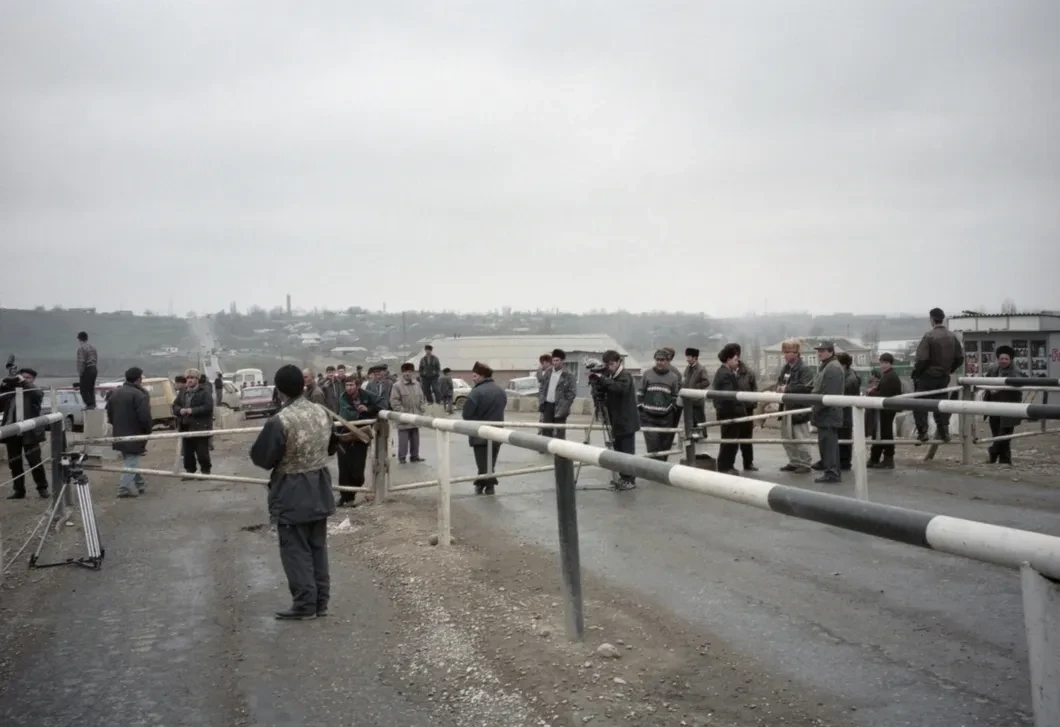
Last December, the head of Dagestan, Vladimir Vasiliev, stated that there would be no “Ingush scenario” on the issue of determining the administrative borders with Chechnya, insisted on “complete understanding with Chechen colleagues” and absolute “transparency” of procedures. Talking about the “eight disputed points” available on the border with Chechnya with a length of 400 kilometers, he said that everything would be done for a painless resolution of controversial moments.
However, so far many “disputed points” have remained controversial. So, in March, on the website of the Parliament of the Chechen Republic, cards were published on which one of the important disputed sites in the area of Lake Kazena-am-the Dagestan recreational pearl-was completely included in Chechnya.
The card was removed from the site only after the Dagestan social activists made a scandal.
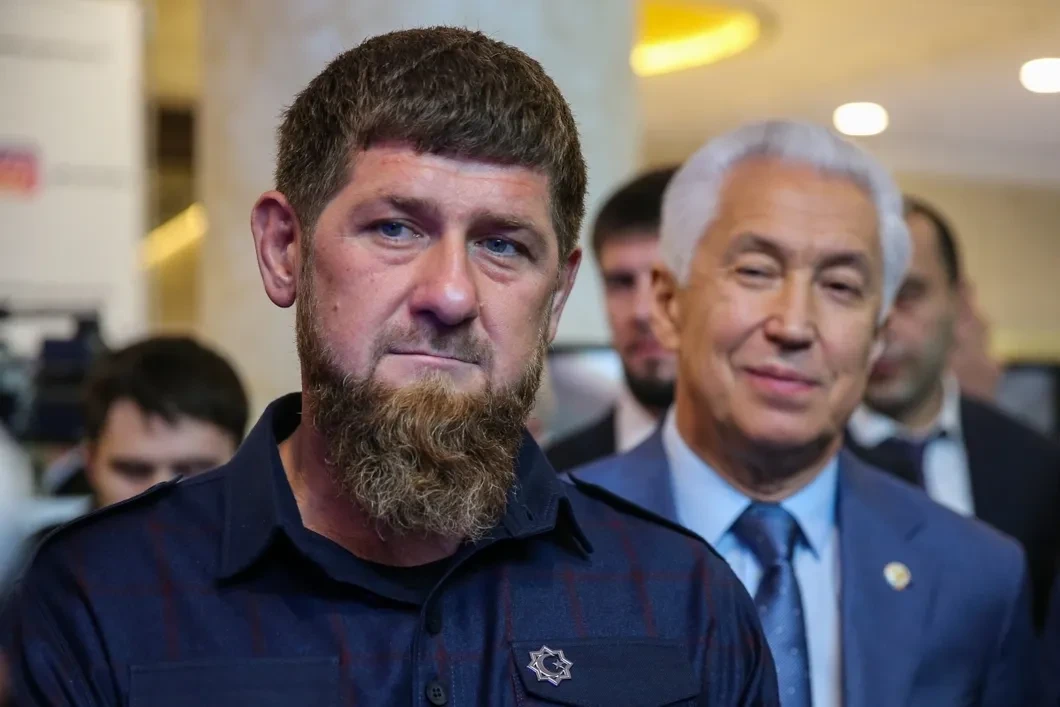
The people have many questions left to the very process of establishing borders. What, for example, are the differences in the powers between the commission, in agreement, led by the speaker of the Dagestan parliament Hizhri Shikhsaidov and the government commission to determine the borders led by Deputy Prime Minister Catherine Tolstikova? Why are all meetings of Dagestan officials with Chechen are held behind closed doors, and the decisions made on them are not released anywhere? Where is the transparency in determining the boundaries that Vladimir Vasiliev spoke about in December last year?
Dagestan officials prefer to be silent, and in cupor conversations, any incidents around the definition of borders with Chechnya prefer to call “randomness” or “misunderstanding”.
Against this turbulent background on March 28, on the website of the information and analytical department of the National Assembly of Dagestan, information appeared that Prime Minister Dagestan Artem Zdunov and the chairman of the People’s Assembly of Dagestan Hikhsaidov officially addressed the president’s envoy to the North Caucasus Federal District, Alexander Matovnikov, Spiker of the Chechnya Parliament. Magomed Daudov and the head of Rosreestr Victoria Abramchenko, speaking out against the “unilateral definition of borders” between Dagestan and Chechnya.
At the same time, Zdunov acted as the acting head of Dagestan. Vladimir Vasiliev himself was on vacation.
The reason for the public demarche of Dagestan officials was another unexpected “misunderstanding”. It turned out that on March 16, the Chechen department of Rosreestr unilaterally cadastralized one of the border sections that was part of Dagestan.
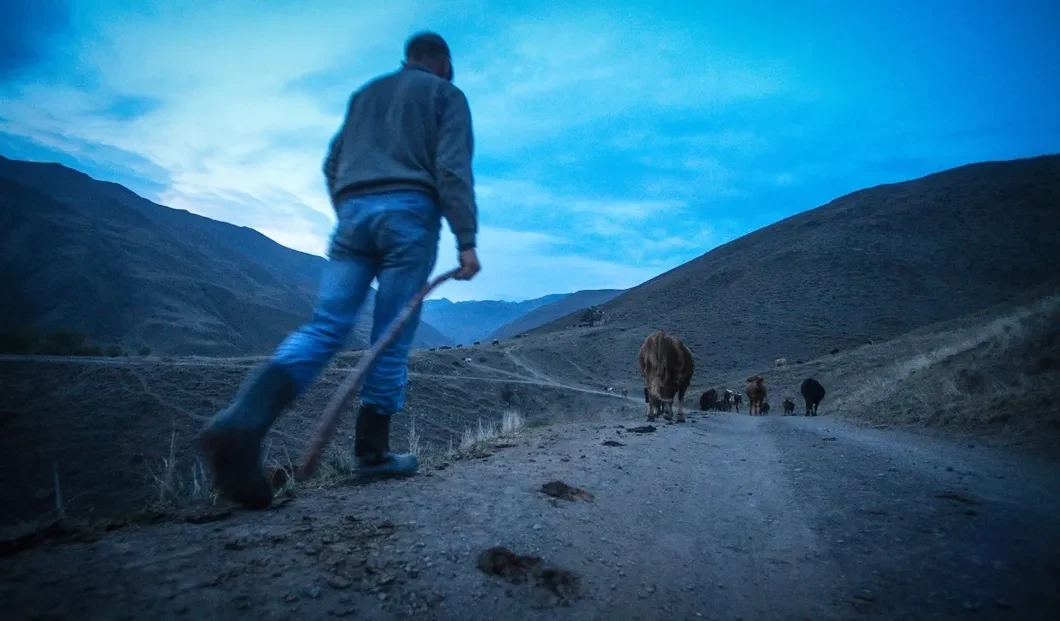
18 hectares of land in the Kizlyar region without any approvals suddenly ended up in the Chechen Republic. But no one in Dagestan knew about this.
Allegedly, the Chechen side was waiting for an answer from Dagestan regarding this site until March 15 and, without waiting, included it in its composition. This was discovered after the appearance of appropriate changes on the public cadastral map.
The letters of protest themselves were not presented to the general public. It was only reported that "the letters say the need to cancel the registration of this land plot in order to prevent violation of the rights and interests of Dagestan and its municipalities." However, a few hours later and this message disappeared from the website of the information and analytical department of the People’s Assembly. The head of the department of Ullubiy Erbolatov told Kommersant that the news was deleted, as she fulfilled his function: “We used this publication instead of sending the media editorial office. After it was reprinted by everyone, the need for it has disappeared. ” Nevertheless, this news was also deleted from state media sites.
No more official comments from both Dagestan and Chechen authorities have not yet been obtained.