
Translated material
Small peoples of Moscow
Paper men appeared on the streets of the city. We tell you who makes them and why
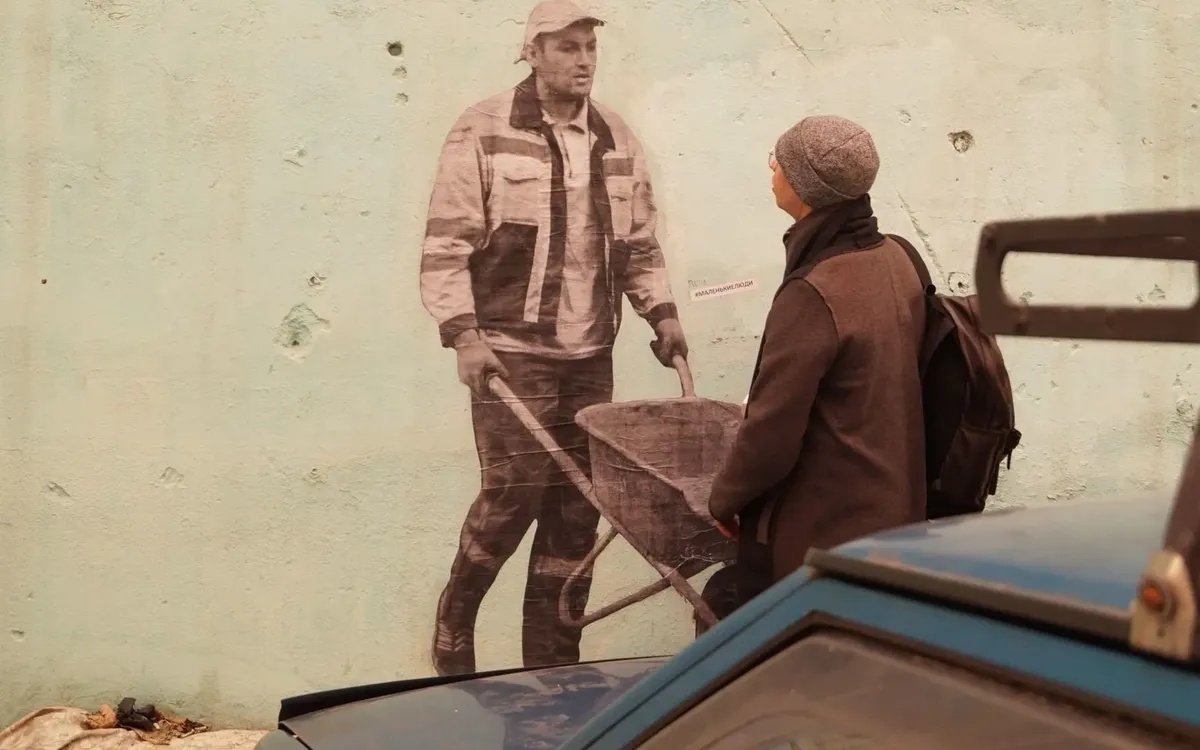
A naked girl in chains, glued to an interrupted brick wall at the temple. A janitor with his own shadow under the street windowsill. Three friends on the bench. Sleeping tramp. By inhabiting Moscow, its walls, gateways, corners with his little people, Ivan Simonov solves artistic problems. And on an accidental viewer, his paper little men give the impression of an unexpected find. He does not immediately understand what is happening. But then he realizes that the figures are not random, they were glued to see them. And he feels in some way a co-author, because he found them.
For four and a half years, Simonov cuts out people from paper and puts them in the daily urban environment. It all started with beach photographs taken in Sochi: “Usually on the beach people are ridiculous, relaxed. In swimming trunks or without them at all. There was a very funny grandfather there, almost in thongs. And I thought: what if these people move to stone walls, to concrete boxes. If you stand in shorts and throw pebbles on the beach, it is absolutely ethical and appropriate. But if you stand in the same form and throw pebbles into pure ponds, it will be strange. Unethical and inappropriate. Although it seems that no one performs any unlawful actions. This is only a natural manifestation of their desires - nevertheless they like to throw pebbles into the water. It’s just that in a big city it is difficult with a manifestation of simple human feelings. ”
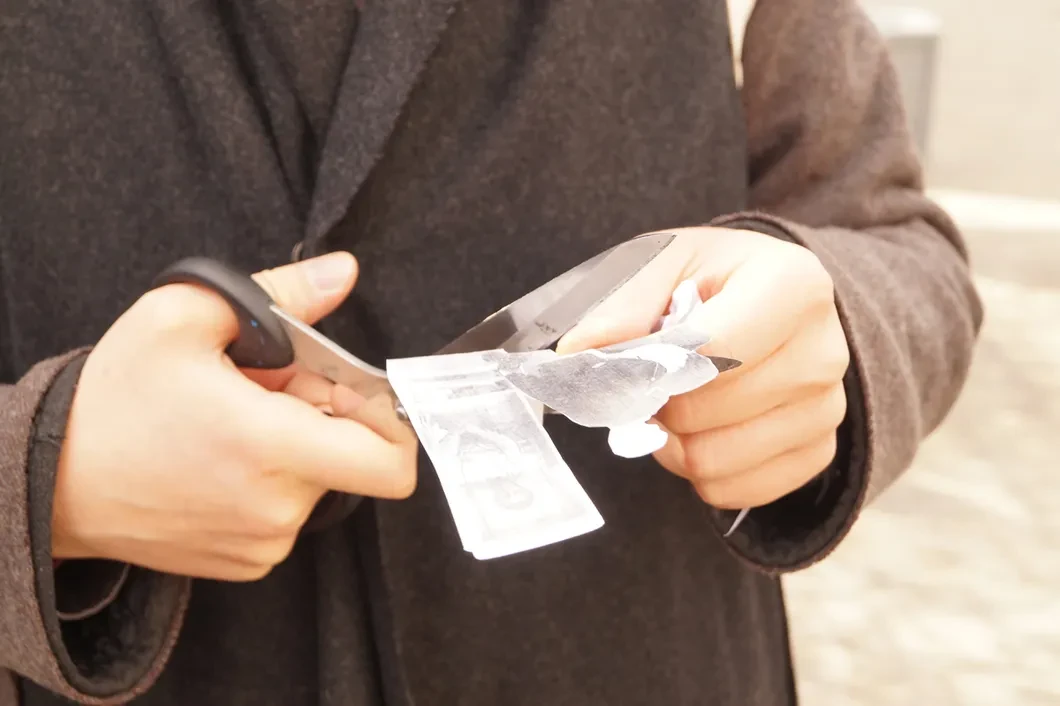
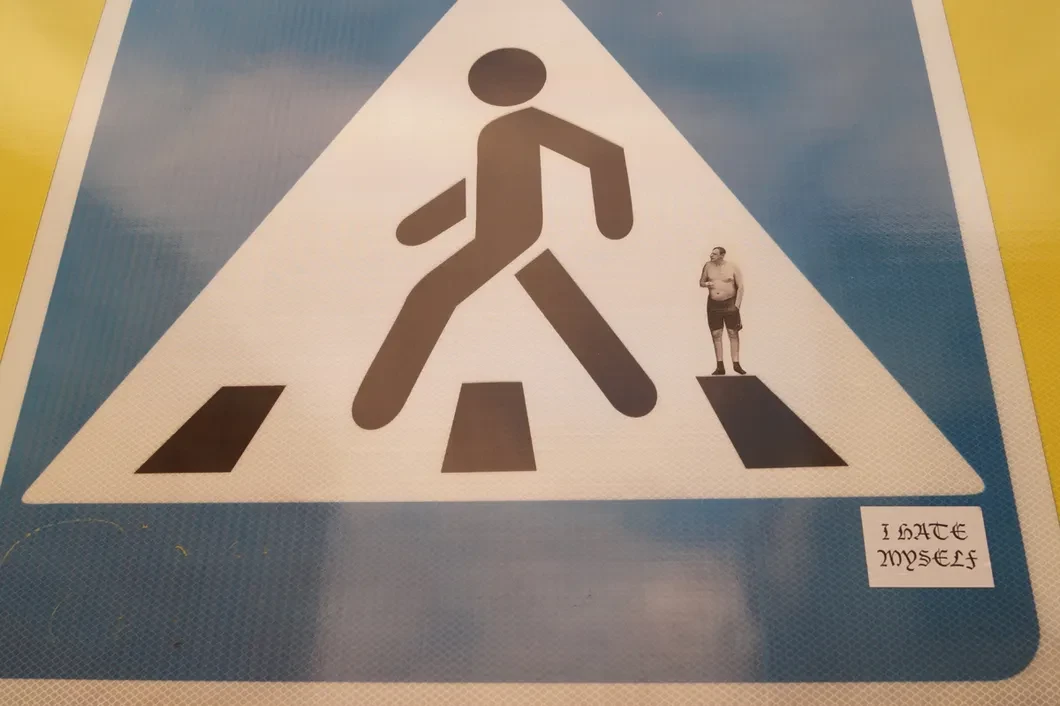
We meet at the China-Gorod, at the temple of all saints on the kulishki. In the hands of Ivan the scissors, he cuts out of the contours of people from a photo printed on the printer. He wants to find a place for his new job today. Having cut out, removes scissors and paper in a backpack, and we go along the Solyansky passage. In Podkopaevsky Lane, Ivan shows me a person. He is dressed only in shorts and socks with slippers and smokes, glued to the zebra on the sign of a pedestrian crossing: he does not want to walk or cross anywhere. In fact, this is a conductor of a postal and gagge car, and somewhere in the city even a whole car is pasted.
In Khokhlovsky, on the wall of the art ghetto "Art Khokhlovka", an almost disappeared work. Ivan lifts a paper girl that lay down on the windowsill: "She looked at the train with graffiti."
Ivan's works are made of very fragile material: ordinary office paper. They do not spare them any rains or wind. But, oddly enough, public utilities are often spent.
In the garden settlement on the old wall, which has garbage tanks, he pasted the figure of a janitor - also with a garbage tank. The whole wall was in graffiti and tags (these are brief autographs that street artists leave, whose activities are often only tags and is limited). Sooner or later, this was supposed to happen: the wall was painted with fresh paint - but the garbage man was left. Ivan's works have one good property: to excite, but not annoyed with persistent egoism, which very often limits the street art.
As a rule, conflict situations do not arise, although it works mainly in the afternoon. “Once I glued a photo of girls who kept portraits of my friends who were in prison in Swamp business,” says Ivan. - And a man came up to me, he was there near a good announcer voice in a meat shop. He says to me: "What are you doing this, fascist?" I explain to him: “You see, in the modern world, the statements of little people are invisible. And I'm trying to attract people's attention to what they are talking about and what is happening to them. ” We talked, he understood the meaning and said: “Great! And what are you gluing such little ones? "
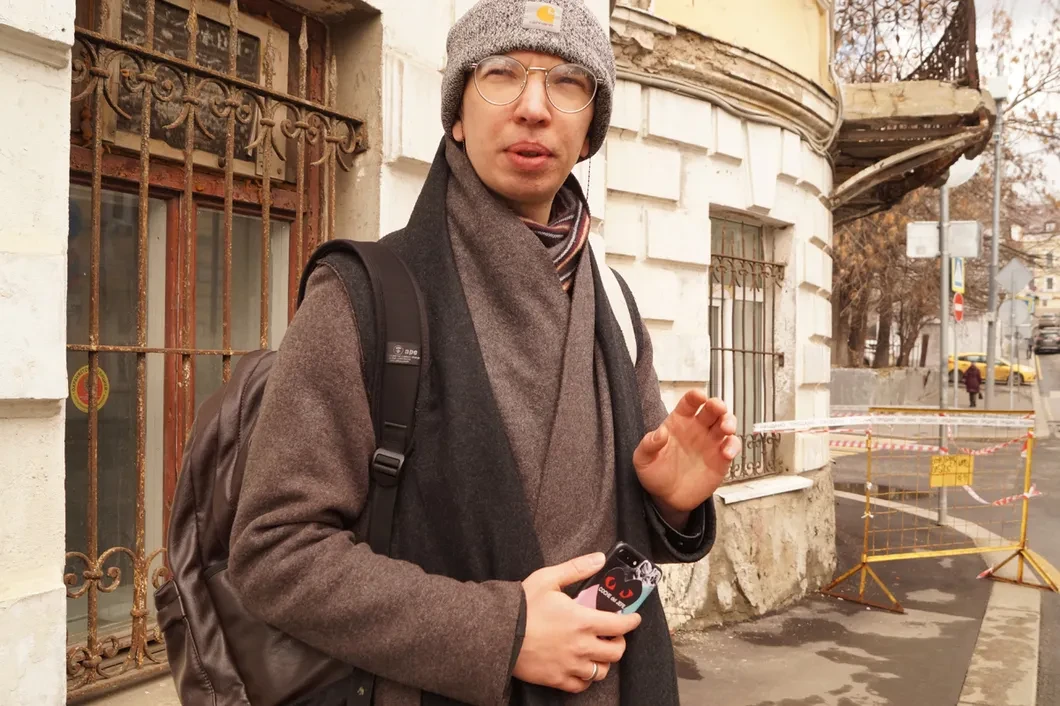
One of his most famous works, the “Trinity”, was three figures of police officers taken by Simonov on Red Square, united by angel wings and halo. “I just started to lay out everything, as the patrol car arrives,” Ivan recalls. Two policemen with machine guns come out at the ready: "What are you doing here?" I say: "I am an artist, I am engaged in the design of the walls." They say: "Who is this?" I answer: "These are police officers on Red Square, now I will glue them."
They ask: "And you think it is smart?" I answer: "Yes." They said: "Good." And left. After all, you need to talk with people when you talk, aggression usually does not arise. ”
This story had a continuation. People often recognize themselves on the street and in social networks, where Ivan's works are distributed with the help of hashtag #little people: “Work with the police was placed in the VKontakte group“ Russian Police ”, and one girl in the comments said about one thing:“ Oh, I know this guy! ” And then she wrote that she showed him the work, and he liked it.
Before moving on, Ivan suddenly takes out the tape wheel from the backpack, on which the word “sold” is propagated, and glues the perimeter of the house on the corner of Khokhlovsky and the cap. The house is homelessly destroyed, it is surrounded by metal fences with a red and white ribbon. Ivan just adds an additional meaning to this border: “We have capitalism, everything is sold. So I decided to delay this tape of various city objects. Half-Moscow is fenced with this red and white ribbon, and I began to actively interact with it. She herself says where I need to stick "sold." This angle has been restored for several years, only nothing is changing. ”
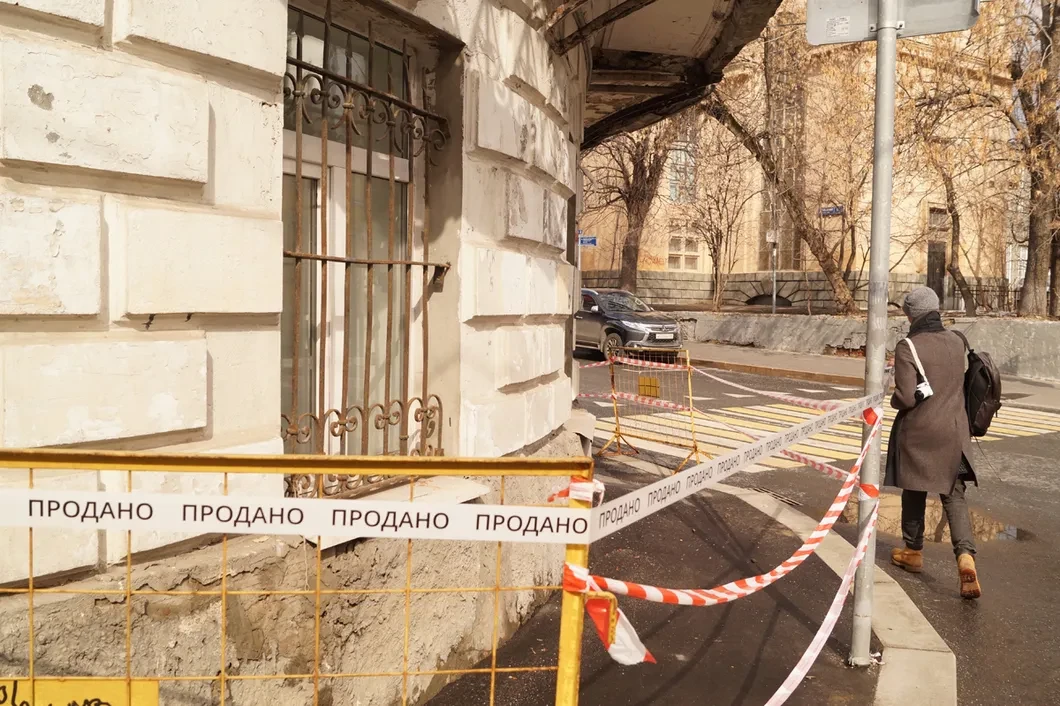
And again the paradox: this adhesive tape with a repeating inscription looks very organic, very consonant with the place and time. It is necessary not only to notice it, but to pay attention to it, and then a thought flickens, for which everything is started: this is not the work of utilities, this is someone else's work. And then a chain of associations and comparisons will start. “Street art is a conversation with a simple, unprepared viewer,” Ivan explains. - In addition to the decorative, aesthetic purpose, it is valuable with its communicative capabilities. It should encounter the viewer with something incredible, with what will make him think. Well, or somehow react, at least. ”
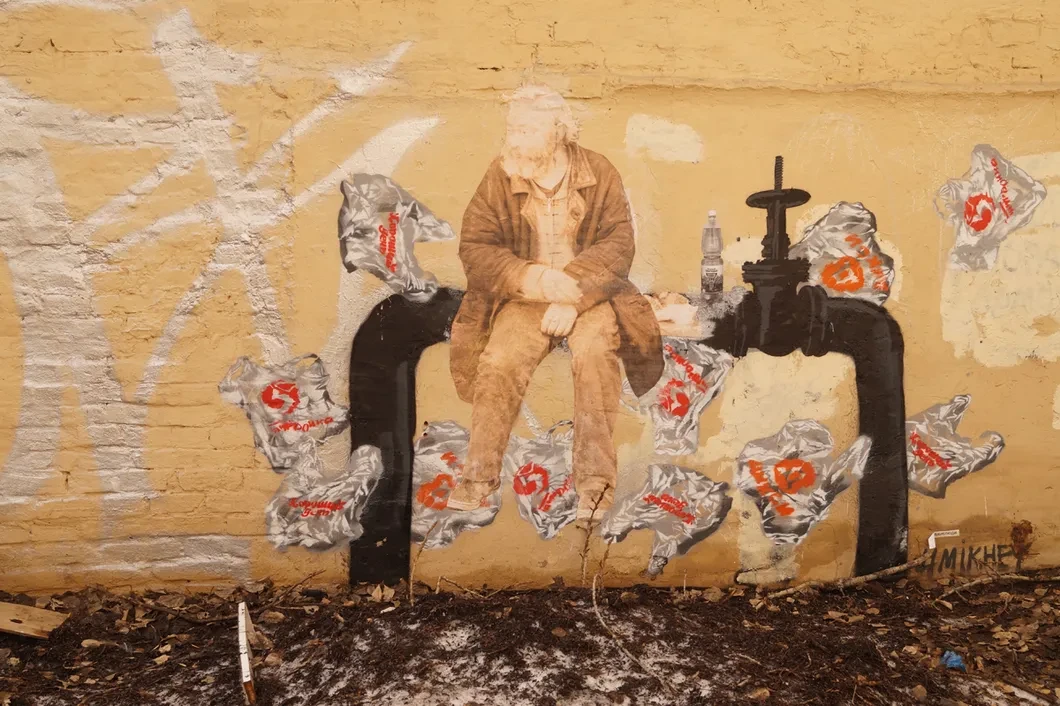
At first, Simonov did not at all invest in his little people in the Gogol's meaning. He appeared later, because he could not help but appear. Ivan shows one of his works in the courtyard on Pokrovka: a homeless, battered by life, sits on a drawn pipe, and empty bags of Pyaterochka curl around him. “This is our joint work with Lesha Mikheev. He is a mosaic, works as a restorer, says Simonov. - And so we made a homeless person with him.
This is a completely outstanding bum from the Taganka. He sat with his friend, and the photograph in itself turned out to be good: behind their backs there was a cafe with the inscription on the window: "The friend who shares food with you."
See how the figure fades over time. And he faded very beautifully, still spring mud is so good around, adds the atmosphere. Street works are valuable in that they have a dialogue with the environment, and you cannot predict it. As a rule, everything becomes even better than you thought. Gradually, my heroes disappear, become ghosts. ”
How the work on which this one was done became a ghost. Ivan says to take a closer look, and indeed, two painted spots are visible: “There was a boy who caught the planes with a clock, this was done by the artist F20. And I thought that I wanted to do something with this boy, I had a long time to have the idea that you could attach to him. And here is the news that Vladimir Vladimirovich Putin was withdrawing troops from Syria. I remembered this boy, and immediately the idea was born to stick a grandmother, who says: "Vova, it's time to go home." In general, I often work with sentimentality: children's memories, courtyard memories. ”
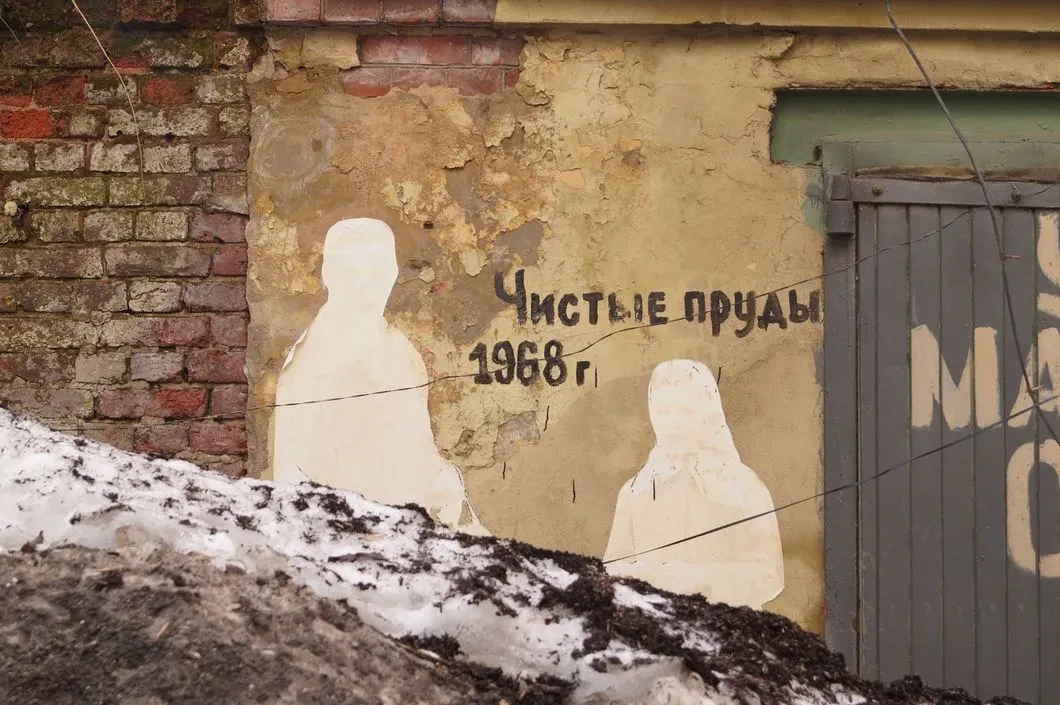
We come to Potapovsky Lane, Ivan leads me to the most ordinary decrepit Moscow court. There, behind a dirty-gray snowdrift on the wall of the old shed, completely faded contours are pasted, and next to them the inscription: “Clean ponds. 1968 ”...“ What happened to this work will happen with the homeless, ”says Simonov. - She goes into oblivion from natural phenomena. The work was done eight months ago. This is my grandmother, my mother and my aunt, a photograph from a personal archive. They lived here, here in this house. And in this barn there was a piano on which they played. And this is a personal story: my grandmother died, Aunt left for America, only mother remained. ”
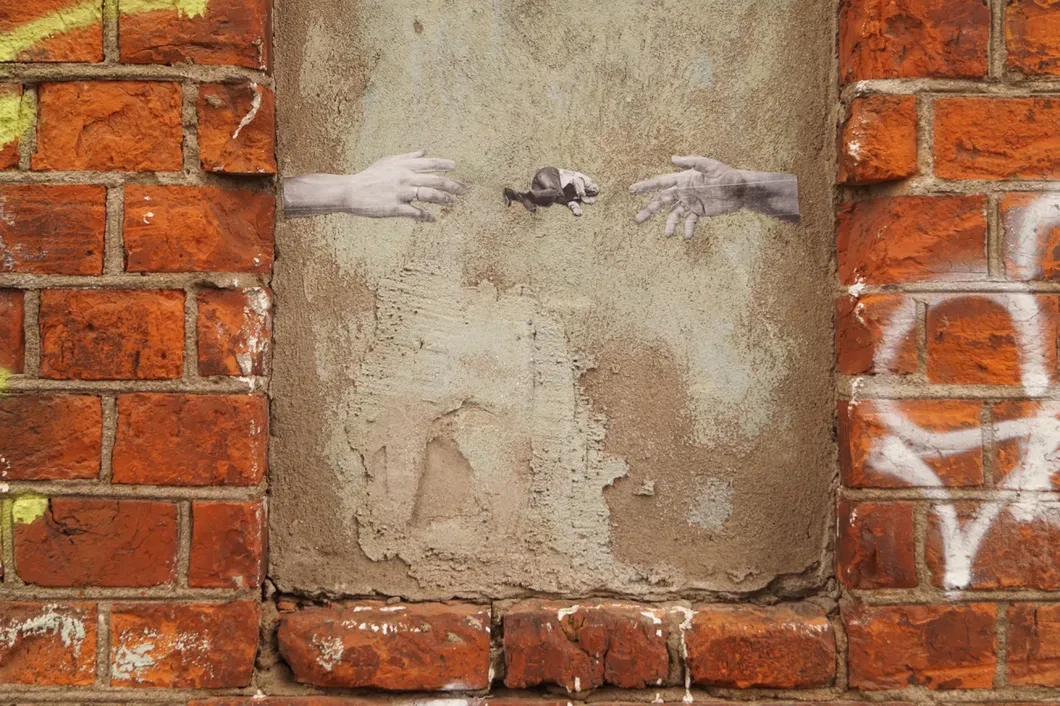
Nearby is another job. On concrete stains on a window laid with bricks - two hands in the manner of Michelangelovsky “Creation of the World” are drawn to a person who sleeps on the asphalt. When we go through the courtyards and go to the purebred boulevard, a guy in a suit of a plush cat rolls up to us. "Take a picture of me!" - He says to Ivan and poses, leaning his hand with a cigarette. “He still does not know what kind of artistic project he got into,” Simonov comments. This cat will probably also be cut out of paper and glued, maybe even next to the place where it was fixed.
“As I began to work on the street, I was three years old, my older brother listened to Beastie Boys and similar commands, and he drew - that is, for me it was a natural habitat since childhood,” says Ivan. “But I was somehow uninteresting to go outside and make fonts.” For a long time I was looking for what can be said to such people that they could somehow associate and connect with this. So that there is the unity of the work and the one who perceives it. I am fond of documentary cinema and I like stories about ordinary people: about the fact that the life of the shepherd is no less saturated than the life of some star.
In the life of any person, if we start talking to him, many layers will open. I was impressed by the idea that each person in itself is a work of art. So I started my project. ”
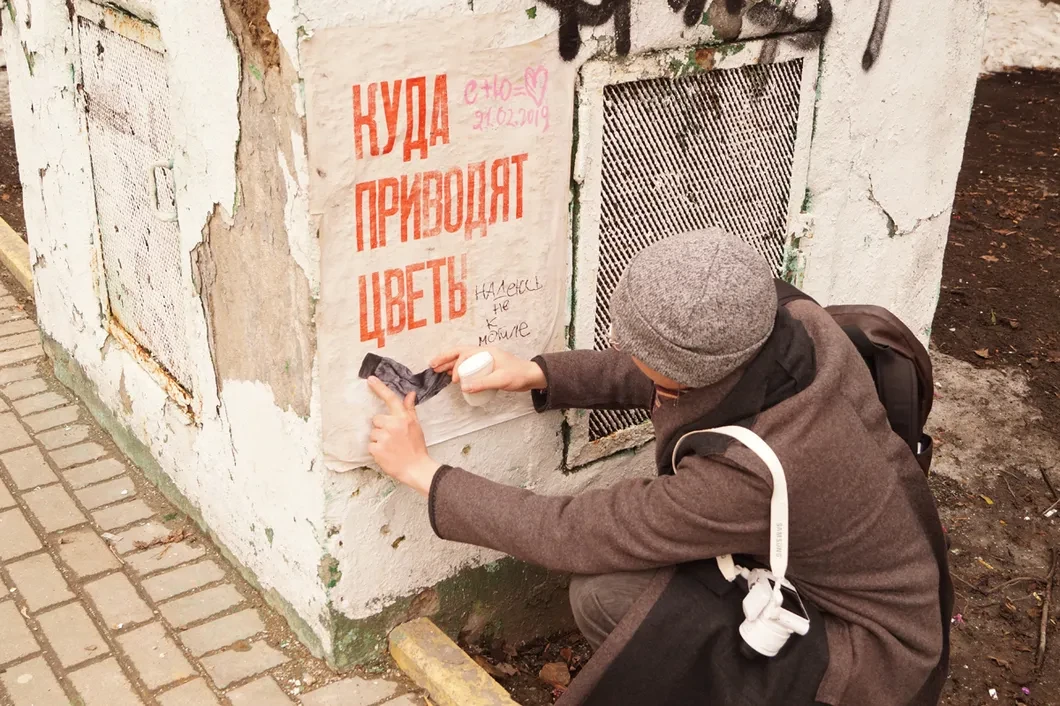
We reach the garden settlement, to the wall where there should be a janitor with a tank. But there are only real, green tanks, but there is no glued. The wall is once again painted over and once again covered with drawings and marks. “At first, of course, it’s a shame that work disappears like this, but then you get used to it,” says Ivan. And he leads us into the courtyard nearby: there, next to the entrance, a worker with a wheelbarrow is glued to the wall: “Here, please, an example of how long it can last: two years, plus half a year ago I made a restoration. All in safety. So, a good place. "
Roman Loshmanov - especially for "New"