
Translated material
Under the crypt of terror
The financial authorities of the world attack cryptocurrencies
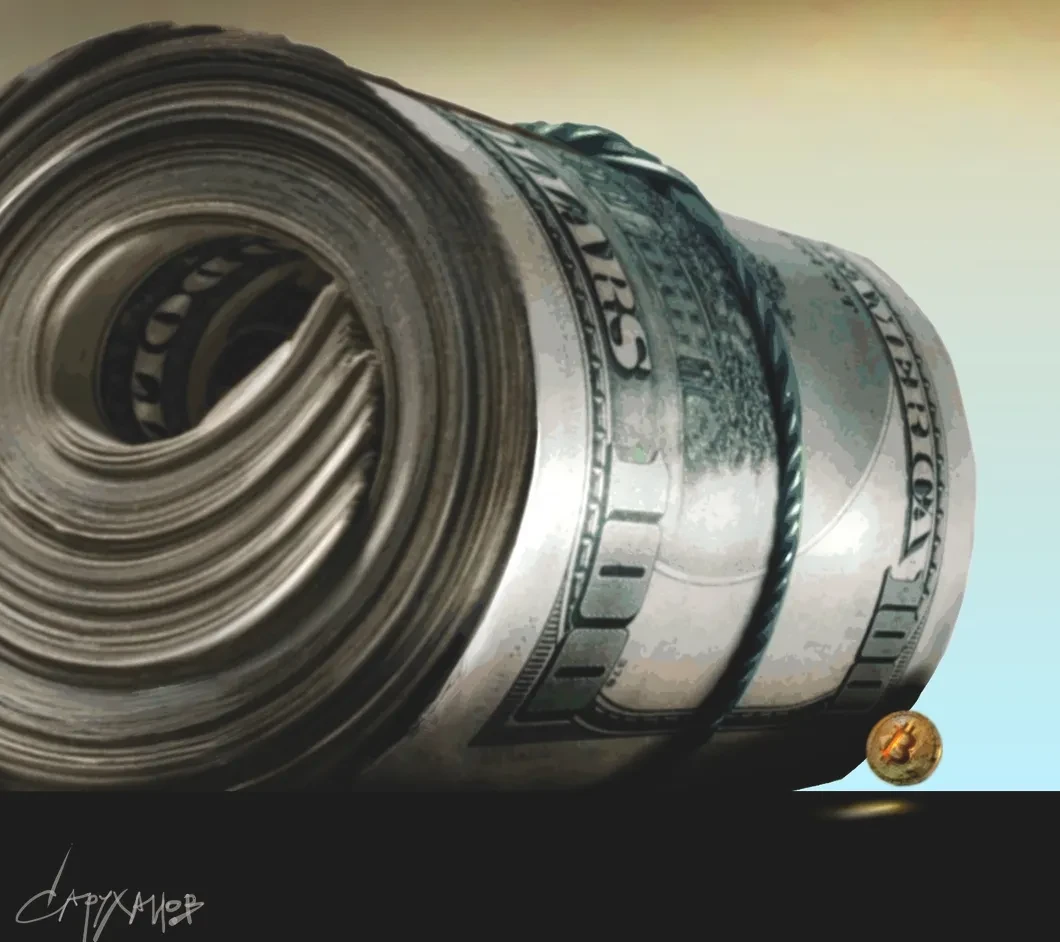
In early April, the Center for International Security and Defense Policy of the American Corporation Rand published a report “The use of cryptocurrencies with terrorists: technical and organizational difficulties and future threats”. The title, as it were, hints at the existence of a new al-Qaeda conspiracy ( the organization is recognized as terrorist and is banned in the Russian Federation - approx. Ed. ), Which forces the title consultant of the American government and law enforcement agencies since 1948, transfer the cryptocurrency theme to the context of terrorist threats of national security.
The categorical syllogism, voiced in the introductory part of the report, only strengthens the hint.
Large package: financing is a key factor in conducting terrorist operations.
Smaller package: special services have achieved serious success in the issue of monitoring and suppressing bank transfers using fiat money by terrorists.
Conclusion: Terrorists have to think about the possibility of using cryptocurrencies to finance their activities.
The authors of the report begin an analysis from areas of potential use of cryptocurrencies and then step by step by step they will disavow their own hypothesis. It turns out that the reception of sponsorship contributions, the movement of funds to different countries in order to finance local divisions and ensure the logistics of terrorist operations, as well as the coverage of current household expenses to terrorists in cryptocurrency to carry out unprofitable, because they do not ensure proper anonymity in their mass, they have limited areas of application in real life, transaction are unreliable and transients are unreliable and transients and transaction Unwinded volumes are insignificant, and the constant hacker hacks of crypto -streaks and metabolic points finally turn Binladen from bitcoins.
As soon as Rand reporters call the drug and weapon trading a key source of financing world terrorism, it becomes clear that the “ banking transfers / cryptocurrency” dilemmas from the finger, as it artificially excludes cash from syllogism - the king of criminal transactions of any nature.
It is the cache, and not banking transfers (especially not cryptocurrency), there was always, and will remain in the foreseeable future the main channel of financing terrorism. Everyone knows this, including the authors of the Rand report.
Where did the main brain center of America then need to discuss cryptocurrencies in the context of national security? Did the terrorists have a lack of cash? At their revolutions of weapons and drugs? It is hard to believe.
The rand is not Bitcoin, the good half of the report is dedicated to Bitcoin to defects in anonymity and safety, but the new generation cryptocurrencies, in which the anonymity and safety of transactions is displayed to another - incomparable with Bitcoin and ether - level.
The report does not have a new generation cryptocurrencies, but they are called by name - Blackcoin, Monero, Zcash. Readers are made to understand that terrorists today could successfully use these crypto tools in their financial schemes.
Terrorists, however, do not use it. Why would it? I will set out the version of the speakers a little later, while I want to pay attention to the smooth flow of the topic “Cryptocurrencies and terrorists” in the topic “Cryptocurrencies and cross -border translations”, which we observe in the middle of the Rand report.
The displacement of accents is accompanied by such a transparent justification that it is impossible to resist quoting:
“The US Treasury has access to unique financial data related to cash transfers within the framework of the international financial and trading system, and this access is very valuable to combat illegal cash flows. This access is in danger due to the undermining of the financial system by cryptocurrencies, which can uncontrollably move around the world through channels like Ripple, located outside the traditional financial system. ”
Now everything falls into place. Cryptocurrencies became an enemy of the national security of the American state, not through the fault of terrorists who have enough cash for the eyes, but because of the uncontrolled channel of cross-border transfers. Moreover, transfers are not so much cryptocurrency themselves as national fiat money (according to the scheme: the sender buys a crypto for local cash - he transferred crypto to a wallet in another state - the addressee exchanges crypto for his local currency).
I must say that Rand Corporation is absolutely right in its fears. Because an uncontrolled translation system really poses a fatal threat to the global financial establishment.
It will be appropriate to recall that it is for the sake of getting rid of the financial establishment that the whole movement with cryptocurrencies initially started.

Today, in the mainstream information field, the emphasis is made exclusively on the blockchain, and cryptocurrencies are portrayed by a small application to the great technology. You will not believe, but in the Bible Bitcoin, the so -called White document (White Paper) Satoshi Nakamoto, not a word is said about the blockchain! And all because Nakamoto was obsessed with the idea of creating a new financial system - decentralized , uncontrolled and anonymous , which sooner or later will have to destroy credit fiat money controlled by the state with the hands of the Central Banks.
Incidentally, the components mentioned - decentralization, non -controlled and anonymity - these are the main applied values of cryptocurrencies, which are completely devoid of internal value and therefore are exactly the same fiat as all modern credit money.
State money also has applied values: the legislatively fixed status of an official payment fund in the country and the requirement to pay taxes in local currency.
These applied values of the old money of Cyberpanes, who created cryptocurrencies, contrasted their own, reasonably believing that at some point in history the attractiveness of new “trump cards” would outweigh the classic fiat in the eyes of society.
You need to be blind (or pretend) so as not to see the obvious: cryptocurrencies are a deadly enemy of the credit-fiat system, which has been established over the past 50 years around the world.
You can flirt from crypto as much as you like, try to adapt to it or redo it in your own way, but it is impossible to get away from the inevitable direct confrontation of the old and new financial systems.
The other day, the chief cryptoquector of the planet, financier Nuriel Rubini, warned the participants of the conference in South Korea against excessive optimism about the experiments of national central banks with their own cryptocurrencies.
Rubini is convinced that not a single Central Bank will go to the use of an open blockchain, since the principle of openness contradicts the philosophy of the current financial system. Even if states someday create their own cryptocurrencies, they will all be centralized and controlled.
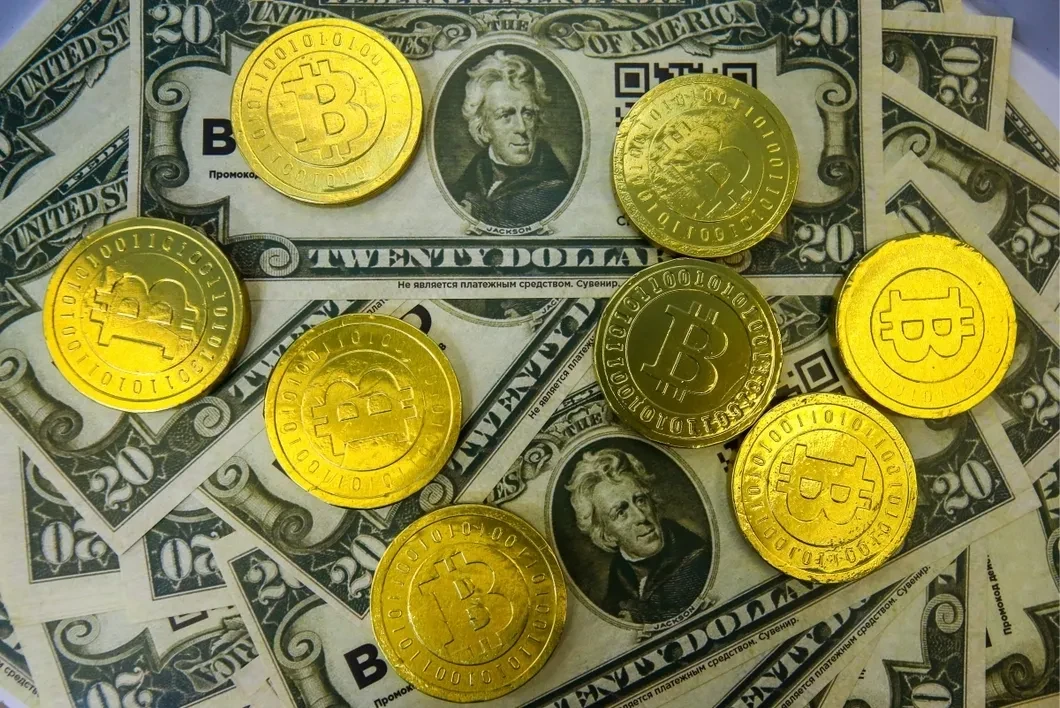
According to Rubini, independent cryptocurrencies have an unenviable fate: as soon as their turnover reaches a serious level, the states of the planet will unite and destroy both coins and their blockchains.
It is significant that in the report of the Rand there is a motive similar to Rubini: for successful control and regulation of cryptocurrencies, cooperation of national special services is required.
Rand even formulates the semblance of super -assessment: sooner or later cryptocurrencies will have to be combined in a universal legal register. Coins who abandon centralized regulation should be marginalized.
Apparently, in this way, Rand hopes to defeat "terrorism."
Speaking of terrorism. I promised to tell readers how Rand speakers explain the unwillingness of world bi -worship to use the new generation cryptocurrencies in their financial schemes.
The explanation is so anecdotal that the reader is unlikely to believe in a word. Therefore, I quote:
“Cryptocurrencies are much less determined and much more dynamic ( in comparison with official financial systems. - S. G. ), therefore, the next innovative round of development with high probability will provide terrorist groups with the possibility of bypassing monitoring means ( from the state and central banks. - S. G. **). On the other hand, cryptocurrencies are an area requiring professional temptation. Washing money carried out by sophisticated professionals may be difficult to track, however, the technical level of many terrorist groups is unlikely to be suitable for this activity. ”
Assessed the depth of analysis? That's the same. These conclusions draws after 100-page analysis the largest brain tank.
However, one should not fall into naivety: 99% of the intellectual product Rand is stored behind seven seals for state security reasons, therefore it is not surprising that the remnants flowing into a public domain are balanced between the joke and the instrument of sensing public opinion.
In truth, readers should be deeply indifferent to what Rand thinks about the mental abilities of Binladen. The “terrorist” aspect of the report lost attractiveness after a large package of the starting syllogism, which is false through and through. Remember: financing is a key factor in conducting terrorist operations?
Something similar slipped in American public rhetoric in the first days after the 9/11 tragedy: then the mainstream media only wrote that the terrorists who exploded the WTC towers were the cowards that worked for the money.
Apparently, the primitive of mental constructions provides mental comfort, in contrast to the painful search for the true reasons for the hatred of one part of mankind to another.
Much more interesting in the report of Rand, practical recommendations for combating cryptocurrency claims for undermining the existing world financial system.
The idea of the Rand about the unification of the special services, as well as the confidence of Nuriel Rubini is that the states will sort with alternative cryptocanals for cross -border financial transactions together, turn out to be very shaky.

The anonymous use of bitcoin, the Rand report says, is difficult due to rigid regulation in the USA, Europe and China. However, it is worth a deal in the country in which regulation is weakened or completely absent, as there are immediately problems with tracking this transaction.
Decentralized crypto -rhones are even more dangerous, the first of which - Binance Dex - is commissioned in April 2019. What are the chances of "unification of special services"? I'm afraid that insignificant. Even Oceania Orwell, who has established his hegemony on the planet, constantly had to conflict with small stop and Eurasia.
It is worth some Mukhostan to have its own plate on the patho, as the effectiveness of efforts to remove cross-border cryptopopopagers comes to naught.
The situation is aggravated by the fact that today it is not anti -antenatan who think about potential confrontation, but giants such as Japan and China.
In Japan, cryptocurrencies have every chance of becoming a new state financial philosophy, while China has long been controlled by Bitcoin mining and the work of the largest crypto -rhizas.
But there is also Russia, which, for ideological reasons - the fight against world dominance of Atlantry! - It can easily lead the struggle of cryptocurrencies for the sake of stripping financial elites from the throne, whose jurisdiction, as you know, coincides with geopolitical rivals.
Add to the plot the objective lessons of history, according to which the state’s only chance to resist technological progress is to turn the planet into a post -apocalyptic anti -utopia in the spirit of “crazy Max”, and you will understand that the outcome of the battle between the old and new financial systems almost certainly will not like neither Nuriel Rubini, nor the Rand corporation, with all due respect to their academic regalia.