
Translated material
How to read Stalinism
Interview with the researcher of Soviet everyday life, co -founder of the project "Life" Ilya Venyavkin

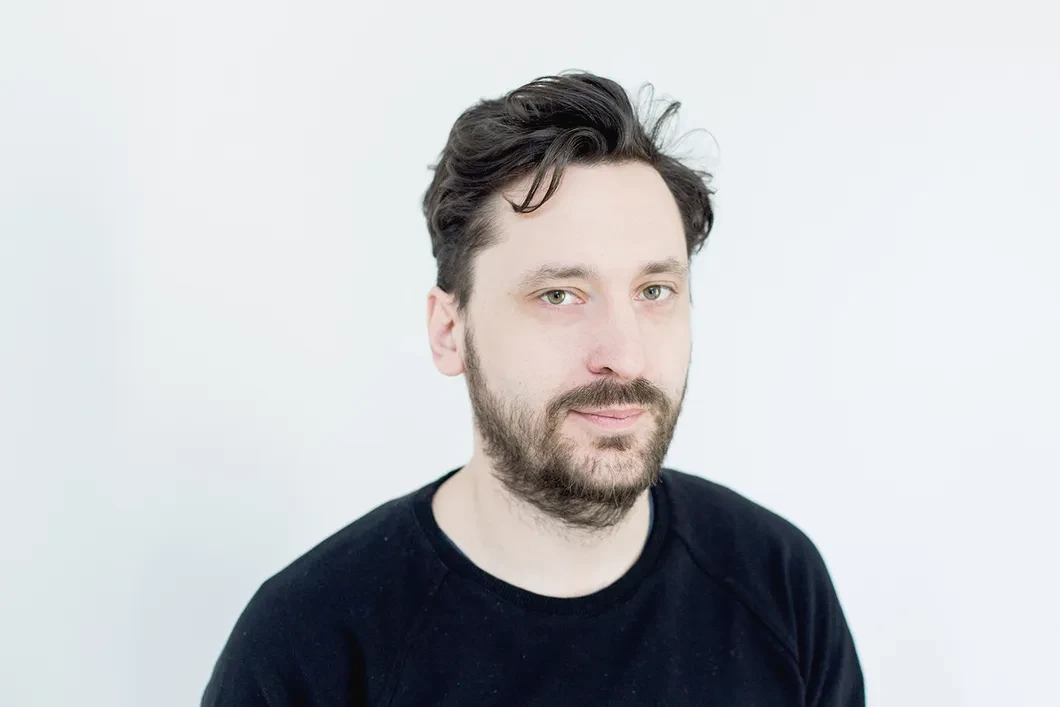
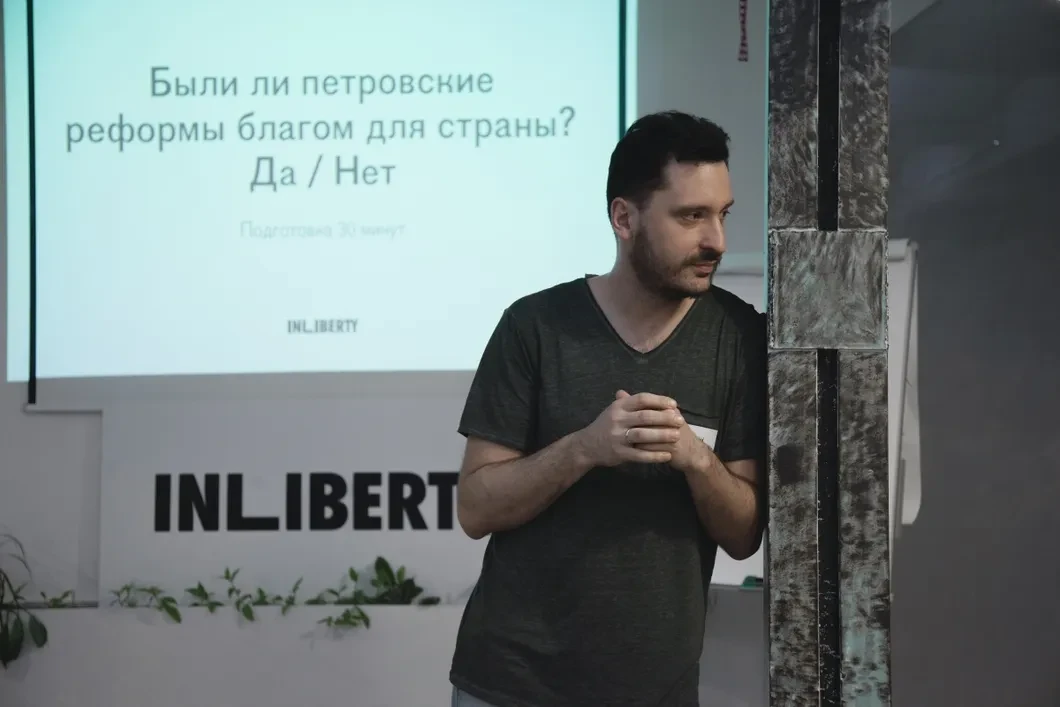
What does it mean to live a little life in a totalitarian state? Who wrote millions of denunciations? Who are “Soviet people”, and what is the meaning of the discussion about their experience for us today? The researcher of Soviet everyday life, co -founder of the project “Life” and the director of educational programs inliberty, Ilya Venyavkin explains how the latest Western historiography interprets Soviet totalitarian experience.
-What seems to you most important in discussions about the Soviet 30s?
- The question that fascinates me the most is the question of a new person. There is, in particular, a large sociological project related to the name of Yuri Levada, “Soviet man”, and he is still important. In modern Russian journalism, reasoning about the Soviet man is quite common. Here, there was some Soviet person, he had certain qualities, then he turned into a person’s man of the post-Soviet man, and now these qualities of the post-Soviet person influence what is happening in modern Russia.
Levada described this through a very specific set of qualities: he is a paternalist, an imperialist, a passive manual and an immoralist.
This set of qualities arose in seventy years of Soviet power and now they are complexly scattered from people who live in modern Russia, and they interfere, for example, the modernization and democratization of Russia.
- Are you skeptical about this concept?
- Yes, skeptical. The sphere of my research as a whole is associated with great polemic in historical science, which is dedicated to Soviet subjectivity. These are works written by Johen Hellbek and Igal Halfin. Recently, with a huge delay in Russian, the book of Hellbeck “The Revolution in the First Person”, which is better called-Revolution On My Mind, was published. This is a metaphor through which Hellbeck’s thought is easy to explain that the revolution is what the Soviet man of the 1930s thinks, and what is happening in his mind.
The basic idea of Helllbek, who, as I understand it, carefully read Michel Foucault, is to destroy those ideas about the Soviet man that his predecessors had. If it is quite rude, then this is such a three -part scheme. In the 50s, a totalitarian school of American Sovietology arose, which proceeded from the presumption that a large totalitarian state suppresses a free independent individual and cripples him. The understandable expression of this idea is found in the book of Orwell's 1984. There is a large apparatus of external coercion, which suppresses all kinds of human freedom and does it with the help of violence and lies. In the totalitarian school, the division into “we” and “they” is sewn: I am and is power, there is freedom, but there is suppression. In addition to Orwell, Hayek’s book “The Road to Slavery” is important - they were written as a warning to the post -war world or the world, which will now come out of the war, regarding the danger that the Communist Project carries.
-It seems that in Russia this position has become a kind of common sense.
- Yes, but this approach has significant drawbacks. The totalitarian school focuses on ideologists, on those who have power and issues messages, much more than those who perceive them. This also happens because it is much easier to understand what Zhdanov wants to inform, and in order to understand how the Soviet writers perceive the performance of Zhdanov, it is necessary to do a much more complex work. Speaking very rudely, then the model is such-Zhdanov comes and says: “Now we write so,” and everyone says: “Yes, now we write this way.” Everyone was scared and washed everyone's brains. This approach of researchers represented the Soviet ideological policy as an unusually successful one. As ideologists said, so people thought.
The next stage in understanding is related to the revisionist school. The most interesting and productive author that belongs to this direction is Sheila Fitzpatrick, and her books, the main of which is probably “everyday Stalinism”. Again, the emergence of these ideas is also associated with a historical context. The Totalitarian School wrote at the height of the Cold War, in a situation where it was assumed that there is a dangerous other that is preparing to capture us. Fitzpatrick came to the Soviet Union in 1966 and notes that Soviet people are not the way they could think about them, looking at those pictures that are broadcast outside.
They are not convinced, impenetrable carriers of ideology and are not the embodiments of totalitarian evil.
The change in the research paradigm is also due to the fact that Western researchers - after the fall of Stalin - gain access to the Soviet Union. They come, and for them it also becomes a personal story - they get acquainted and begin to establish relations with Soviet people. As a rule, these are Soviet intellectuals striving for free thought.
One way or another, Fitzpatrick notes that these people are not so “others”. They have some kind of motivation that can be described in quite pragmatic categories. Yes, they have some interests, they are able to adapt and adapt to different requirements and conditions descented from above. Fitzpatrik transfers this optics to the Soviet 30s and begins to look at its heroes-and she originally engages in the figure of Lunacharsky-and at the history of the Stalinist “cultural revolution”. She begins to see pragmatists in Soviet people, that is, people who adapt to the regime and learn to use it in their interests.
- What is usually called Soviet doubles.
-This is a functional double-domed, when people, as it were, are built into power relations, understand how to get some benefit, how to pursue their own interests, and therefore they are pragmatic artists of the power agenda. That is, relatively speaking, if Fitzpatrick answered the question of why Soviet people wrote millions of denunciations, she would say that this is a way to realize their own interests: he wrote a denunciation - received an apartment, or wrote a denunciation to protect himself from being brought to you. There were many examples that the person who acted as Whistleblower ( informant. - Ed. ) Was exhibited as a fiery fighter, a person who shows maximum vigilance, as required by the official press of that time. Well, accordingly, became significant, received additional symbolic authority and some kind of social bonus. The same applies to Soviet ideological products - books, films, performances - it cannot be said that people consumed them solely because they were planted from above.

-Do you analyze this idea on the example of the playwright Afinogenov-one of the most popular Soviet writers of the 1930s?
- Alexander Afinogenov was engaged in the fact that he tried to catch the ideological message coming from the party, and transfer it to the artistic text, and succeeded in this. He proved that almost better than anyone can translate party resolutions into the language of drama. An important feature of Afinogenov is that he really “hit” the Soviet audience of the 30s, unlike many others. Despite the fact that this cultural sphere was arranged completely differently than now, it is also impossible to subtract the consumer from it either - readers and spectators still existed. Films and plays became successful not only because censorship or organs that lowered these ideas on top decided.
- We talked about the totalitarian school and about revisionism. But there is another third paradigm in the historiography of the Soviet period?
-Yes, and at some point it turned out to be very influential and productive. This is a paradigm, which can conditionally be called "new revisionism" - it is engaged in revising the revisionism itself. It occurs as part of the Western revival of interest in the left ideology, and proceeds, among other things, what needs to be seen in Soviet ideology and the productive part too. It cannot be reduced only to repressive power, which suppresses everyone.
Initially, it was associated with the name of Stephen Kotkin and his book "Magnetic Mountain: Stalinism as civilization." This is one of the most influential, in my opinion, books in modern Sovietism-it was published in the mid-1990s, but has not yet been translated into Russian, possibly for ideological reasons. The new revisionism turned out to be, as they say, against the wool in relation to the intellectual context that existed in Russia for a long time, because the new revisionists are often accused of idealizing Stalinism, because part of this approach is to perceive the Stalinist discourse directly, not obviously rejecting it as a lie and manipulation, but to read it with a philological Tools, trying to understand what he tells us and what a picture is behind him.
Actually, the most influential part of Stephen Kotkin is associated with the idea of Speaking Bolshevik and the image that Soviet people in the 30th learned the Bolshevik language about a foreign language. Kotkin writes that ideology works as a language, and in order to live in everyday life, you must communicate in this language and can no longer perceive this language as an alien.
Then this turn was connected with the names of Johen Hellbek and Igala Halfin. Their main innovation is the idea of the Soviet subject and Soviet subjectivity, analyzed within the framework of the Foucault methodology. Speaking very rudely, they proceed from the fact that the division into an independent individual and power are not working, non -functional and does not make sense.
Power is distributed in society unevenly and connected with knowledge. A person who assimilates the new Soviet language, he at the same time becomes both the subject of power and the object of power.
When Hellbek and Halfin begin to read personal documents of that era, they make an important conclusion that state violence is impossible without normalizing interpretation models that people themselves produce. People themselves are creatively participating in explaining why newspapers do not coincide with reality. According to the Soviet diaries of the 30s, we see that people are very semantic-they wanted to see the meaning in that outwardly it seemed nonsense, and they were ready to produce this meaning. Of course, it is important that then there was a common frame, the general regime of truth, in which it was impossible to admit that the Soviet government was mistaken. The playwright Afinogenov could see that a dubolona lie was written in the newspaper Pravda, but did not conclude that the entire Soviet project was built for lies. On the contrary, he could reason that bad journalists were simply put in the newspaper.
- What influenced the emergence of new approaches to the study of Soviet history, except for a change in the political context?
- The change of research paradigm is largely tied to an archival revolution and access to sources. If the totalitarian school basically dealt with the evidence of immigrants and the official Soviet press, then the revisionists gained access to Soviet archives and saw that everything was not as smooth as in newspapers. For example, if you look at the archive of the Soviet organization, then in it you can find traces of an endless departmental struggle, some memorandums that fly back and forth, resolutions that are not executed, etc. Perhaps from here a feeling arises of the pragmatic Hobbcian struggle of everyone against all in order to realize their goals. Hellbek and Halfin read diaries, and they really give completely different sensations.
- You began with criticism of the concept of Soviet man. But it turns out that the new revisionists are returning to her?
- To answer the question “was a Soviet man or not” is very difficult, because no object called “Soviet man” existed in nature, but there were many different people with different fate, from different generations and from various social strata. Hellbek and Halfin do not say that they understand something about a person-they say that they are engaged in words and symbolic dimensions that people who lived in the USSR made. The "Soviet subject" is not shifted to Homo Soveticus. These are different analytical categories. If we begin to talk about the Soviet subject, we thus make a choice and push the first two paradigms and say “thank you, but the totalitarian approach and revisionist are not very happy with us.” And the criticism that Hellbeck and Halfin ultimately received is clear - because in addition to the discursive structures that Soviet people produced, there were many more. There was violence, terror, there was an ethical and pragmatic choice.
- This is similar to what Yurchak offers in his work "It was forever until it ended." It was exhausted by the Bolshevik language, it does not reflect more the feelings of believers, and that means everything is scattered. But it seems to me that this is a rather strong assumption.
- I do not quite agree with Yurchak here. As I understand it, its design proceeds from the fact that the monolithic Soviet Stalinist language existed, and then, in recent decades of the Soviet Union, it collapsed. It seems to me that this is not entirely true.
In the 1930s there was a strong promise that this Bolshevik language would arise. But if we again look at the diaries of people of that time, then we will see that he was never the only language.
For example, when Afinogenov is excluded from the party, he finds himself at a dead end - he cannot smoothly and evenly shift his own story into the language of party resolutions, because then he would have to write in his diary that he is an enemy. In search of a new language, Afinogenov began to look around, and it turns out that the language of Tolstoy and Dostoevsky and biblical imagery turned out to be no less significant for him. That is, it turns out that in the specific situation in which Athenogens was, the Bolshevik language stopped working. He was not enough to help a person comprehend everything that happened to him.
- Here I am a letter from Bukharin before he was shot when he writes his wife that there were excesses, they will shoot me, but these are some costs of the project that is being built, but despite this we must believe in it. That is, he had this Bolshevik language a sufficient resource to explain the upcoming death.
- If you look at the whole array of texts that Bukharin wrote in prison, and not just for his political testament, then the image will become more difficult. He was incredibly productive in conclusion: he wrote one and a half theoretical books, an autobiographical romance, and the volume of poems. If you perceive this as one large text, then it turns out to be much more irresistible, broken out beyond the framework of the Bolshevik language.
I see the transformation of the culture of the 1930s in the fact that at some point for the native speaker this language it becomes clear that the Bolshevik language cannot be the only language and its monopoly is gradually destroyed. Along the way, Soviet ideologists understand that it is necessary to make a rollback: to rehabilitate Russian history, rehabilitate patriotism, and rehabilitate religion. It turns out that the language in which we can say “I am a patriot” or “I am a Russian man” are not so bad, especially if he coexists with the language in which I can say “I am a Bolshevik”.

-To what extent did the decay of the Bolshevik language nevertheless influenced the fate of the Soviet project?
- It seems to me that the sustainability of the Soviet project was associated with its ability to absorb other languages. Here, the history of the Stalinist transformation of 1930-1940 is indicative, when over several years the country has gone from Bolshevik radical internationalism to the ideas of nationalism and patriotism. As a result, Soviet, but not necessarily Bolshevik discourse.
It was possible to remain a Soviet man and go on campaigns, get carried away with cybernetics, engage in amateur performances or dig beds in the country and not very carefully read Engels, Lenin and Marx.
- Historians are still arguing about the reasons for the collapse of the Soviet Union and put forward new hypotheses. Can we give priority to one version over another today?
- There are really a lot of these explanations. We know the explanations about Sergey Parge’s internal national conflicts, we know the explanation of Steven Kotkin about ideology, we know the explanation of Yegor Gaidar about the inability of the centralized economy to realize his own goals and promises, we know the explanation of Alexei Yurchak related to the collapse of official discourse. All of them are interesting, curious and important in their own way, but ultimately we come to the conclusion that there is a huge bunch of factors, each of which has its own dynamics. They are interesting to analyze separately, but if they are united, it turns out that there are many convincing ways to answer this question from different social sciences and disciplines.
I solve this problem for myself in a simple way. Я понимаю, что не могу ответить на вопрос о том, почему случилась сталинская культурная революция. Но я могу попытаться изучить, какими словами люди, которые жили в эту эпоху, описывали себя и объясняли происходящее, и как эти модели интерпретации влияли на их поступки и на их судьбу. То есть можно всматриваться в конкретных исторических субъектов.
Интервью подготовлено подкастом inSTUDIES в рамках проекта «Демократия и свобода» при поддержке Фонда Фридриха Науманна
Беседовал Сергей Машуков