
Translated material
In Israel, there are elections to the Knesset, following which the prime minister will be appointed. Two Benjamin fights for this chair - Netanyahu and Hanz
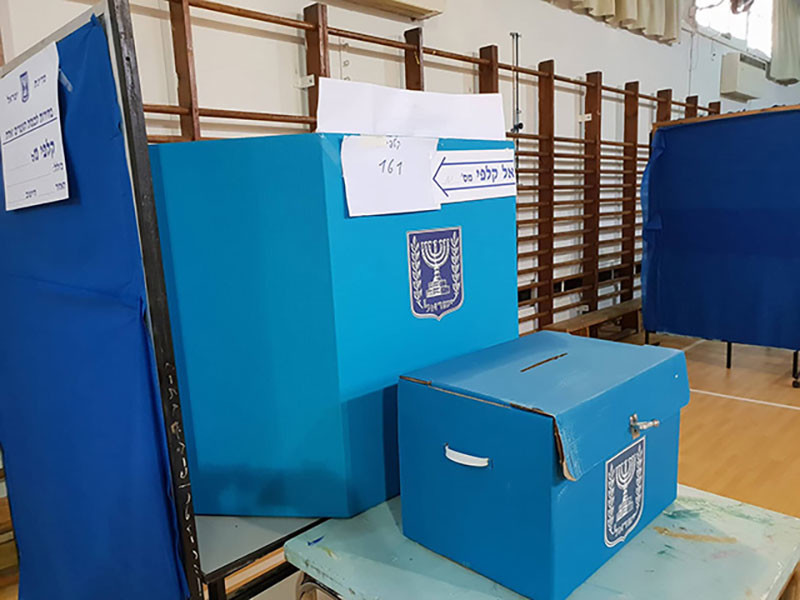
In Israel on Tuesday, April 9, at 07:00 (time coincides with Moscow), parliamentary elections to the highest legislative body of the country - Knesset began. The Israeli parliament is one -fascinated and consists of 120 deputies. According to the results of the elections, the new government of Israel will be formed and the Prime Minister was appointed.
Over 6.3 million voters will be able to vote in 10460 polling stations throughout the country. To vote, it is necessary to throw a piece of a piece with a letter symbol of one of the running parties into the election urn. The counting of votes will begin after 22:00, when polling stations close. The election results will be updated once per hour on the Israeli CEC website. And the final results will be published within 8 days after the end of the elections.
39 blocks and parties were registered to participate in the elections in the Knesset of the 21st convocation, however, to count on overcoming the electoral barrier of 3.25% and the passage to parliament (about 4 mandates) can no more than a dozen of them, reports Newsru Israel .
According to the latest public opinion polls, the main applicants for victory in the elections are:
The Likud party of the current Prime Minister Benjamin Netanyahu;
The central block of the Kahol-Lavan parties (“White-Blue”, is named after the colors of the Israeli flag), headed by the former head of the General Staff of the Israeli army, Benjamin Ganz;
Agreements on the residual votes have already signed the Avoda-Modetz, A-Yamin A-Hadash, Ram-Balad-Taal-Khadash, Likud-“Imud Mythlagot A-Yamin”, Shasat “Yaaata,“ On Nah ”-“ Piratim ”.
- Two Benjamin: who will become the prime minister - Netanyahu or Hanz. How will this affect relations with the Russian Federation
- Preliminary results of the elections in Israel: the right wins
- How do they vote in the elections in Israel
Voting in the Knesset passes through party lists. Lists that have received at least 3.25% of the vote take part in the distribution of deputy mandates. It is interesting that in the history of Israel, not a single party managed to become a "party in power" and get most seats in parliament (61 out of 120). The Israeli government has always been formed on a coalition basis, therefore, even before the party and blocks, they conclude agreements.
For several months, voting leaders have constantly changed. However, the Likud party, the current Prime Minister Benjamin Netanyahu expects to form a government coalition that can control at least 50% + 1st place in the Knesset. If Likud gains the required number of mandates, then the leader of the Israeli right -wing benjamin Netanyahu will remain in the premiere’s chair for the fourth consecutive and the fifth in his career. Otherwise, the prime minister’s chair will be occupied by the head of the Kahol-Lawan Center Bloc, the former chief of the General Staff Benjamin Hanz.
Next week, President Israel Reuven Rivlin, after consultations with representatives of the parties elected to the Knesset, will instruct one of the deputies to form a government coalition. The party leader with the largest number of deputy mandates becomes a candidate for the prime minister, however, the president can also entrust the president to form a policy whose batch has not received the most votes, but who is able to form a stable coalition that controls the minimum majority of mandates.
How do Israeli parliament vote in the election
The procedure for elections to the Israeli parliament is regulated by two basic laws: the “Basic Law on the Knesset” (1958) and the “Law on Elections to the Knesset” (1969).
Parliament elections are held every four years. But in some cases, the parliament can work for more than four years.
Voters vote for a party list, and not for a specific candidate.
Citizens of the country who have reached the age of 18 can take part in the vote.
Persons who are citizens of Israel and have reached the age of 21 can be selected. The president of the country, state controller, judges, officers of the current troops, high -ranking state workers cannot be elected to parliament. To participate in the elections, they need to quit six months before the election.
A voting participant must submit an identity document to the commission and get an envelope. In the voting cab, there are ballots of all lists running in the Knesset elections, as well as empty white forms and a handle with blue ink. The voter needs to choose only one ballot balloon on which the letter, a combination of letters or a symbol of the list, to which he wants to cast his vote, are printed.
The voter has the right to use an empty white ballot balloon, which lies next to printed ballots. On an empty bulletin, he can write by hand (only in Hebrew or in Arabic) the letter and the symbol of the list of candidates to whom he wants to cast his vote. The ballot must be invested in the electoral envelope, close it, then leave the cabin, approach the electoral urn, and in front of the members of the election commission to lower the envelope into the urn.
If there are two or three identical ballots in the envelope, then the voice will be taken into account as one, and if more than three, the voice is canceled.
The election results are published within eight days from the end of the elections.
Having received the official results of the elections, Israeli President Reuven Ruvin holds consultations with parties that have been held at the Knesset. According to their results, he entrusts the formation of the government to one of the deputies, which, according to the head of state, has the best chances to enlist the support of the parliamentary majority.
Before taking office, deputies take the oath. The first meeting of the new parliament should take place after the publication of the results, within 14 days from the date of the election.
Two Benjamin: who will become the prime minister - Netanyahu or Hanz. How will this affect relations with the Russian Federation
The Kahol-Lavan block was created in February 2019. In this alliance, headed by the three former chiefs of the Israeli General Staff - Benjamin (Beni) Ganz, Moshe Yaalon and Gabi Ashkenazi - the parties they presented ("Hosen Le Israel", "Esh Atide" and "Telem").
As the Hanz previously stated, the main goal of the formed bloc is to stop the monopoly on the power of the current Prime Minister Benjamin Netanyahu, since he "deals with personal issues than the problems of the country." Therefore, in the event of victory, the HANC promises to adopt a law limiting the possibility of a person’s stay as prime minister for two terms.
The 59-year-old ex-head of the Israeli General Staff, Benjamin Hanz, who became the main opponent of Netanyahu in the Knesset elections, previously announced that he supports the line of the current government in security and foreign policy. However, his centrist block "Kahol -Lavan" has discrepancies with Netanyahu in matters of the country's domestic and social life - they offer a more liberal alternative to the conservatism of the right.
The most important issues that the possible future of the Ganz government raises the Palestinian-Israeli settlement, socio-economic problems and Israeli safety problems. And these problems are the leaders of the block, being professional military, know thoroughly.
Relations with the Palestinians and the arising from here the problems of the national security of Israel for the Kahol-Lavan bloc are also important as for the Likud party. Netanyahu promises after the elections to extend the Israeli sovereignty to Jewish settlements, including isolated, on the occupied Palestinian lands on the western bank of the Jordan River. And the leader of the "blue-blue" Hanz believes that the "one-sided steps" only harm the regulation process. However, the former head of the General Staff believes that the Israeli sovereignty should be extended to the Jordanian Valley, part of which is located on Israel occupied by the West Coast, as well as to large blocks of Jewish settlements in the Palestinian territories. Both potential premieres advocate the “unified and indivisible” Jerusalem as the capital of Israel.
"We do not want to be a bippable state. We want to remain a Jewish and democratic state ... I believe that Bibi (Netanyahu) is not able to do anything, I believe that Abu Mazen (the head of the Palestinian administration) is not able to do anything. When there will be new leaders here and here, we will begin to talk," says the gantz.
Members of the Kahol-Lawan Bloc admit that in matters of security between them and the Likud party, Benjamin Netanyahu has almost no contradictions. “There is no right and left in this critical issue. When we are talking about protecting the state, there is no coalition or opposition. I fully support the prime minister in his actions against Iran, and I am sure that he will take an identical position after my election by the prime minister of Israel,” said the GANC in February this year.
The leaders of the centrist bloc agree that the Golan heights should remain part of Israel, and the Iranian deterrence policy is continued, including the possibility of bombing of Iranian objects in Syria. The GANC supports the Netanyahu line to confront Iran and promises it to continue if he gets the right to form his own office.
“I will not admit the new Munich -Cherlen conspiracy - there will be no peace policy. Iran will not threaten Israel from the territories of Syria, Lebanon or Gaza sector. I will also not allow Iran to have a nuclear weapon,” the HANTS promised, urging European countries to recognize the Livanese traffic “Hezbollah”. terrorist organization.
As for relations with Russia, the HANC has always emphasized the importance of developing close relations with the Russian Federation. At a recent meeting with reporters, the leader of the Kahol-Lawan Bloc emphasized, in particular, the importance of Syrian settlement and the role of Russia in this process. "We believe that we need to return calmness in Syria. I am very glad that numerous meetings with Russia are coming. As a power it is very important in this matter," said Ganz.
Recall that the “Iranian question” is extremely important in relations with Russia, for which Iran (like Türkiye) is the main partner in Syrian settlement.
During the current election campaign, Benjamin Netanyahu twice came to Moscow for negotiations with Russian President Vladimir Putin - February 27 and April 4. In the February negotiations, as Netanyahu said, the parties agreed to continue the coordination of actions between the Russian and Israeli armies to achieve a common goal - the withdrawal of foreign troops from Syria.
However, if the Cabinet of Ministers will receive the right to form the Cahol-Lawan alliance and the post of prime minister will take the GANC, then Tel Aviv’s relationship with Moscow will not fundamentally change, since it will be extremely difficult to ensure its own security without effective relations with the Russian Federation.