
Translated material
New about supernova
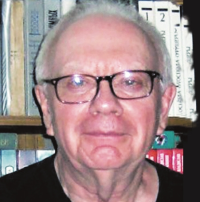
On January 8, at a half -month conference of the American Astronomical Society, the winners of the Chelissa Prize in the field of astronomical literature (Chambliss Astronomical Writing Award) of 2019 were named. This award, established in 2006, is noted by authors of textbooks and textbooks (mainly a graduate student) who have special value for teaching the science of the universe. This time, the prizes of the Astronomy of the University of Texas at Austin John Craig Weler and the Honored Professor of the University of Oklahkh ( David Branch) for the monograph “Supernova Explosions” were awarded the awards In which, with exceptional completeness and clarity, the nature, causes and consequences of supernova outbreaks are discussed.
Alexei Levin , who has been familiar with this scientist, talked about the latest results in the area that became the subject of the premium book, with Craig Wieler.
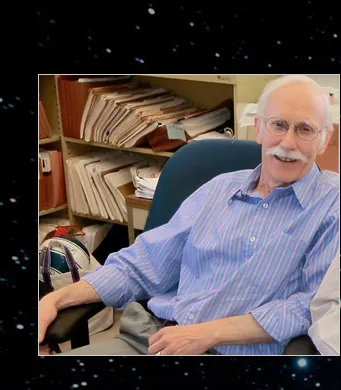
- Dear Craig, first, take all the laid congratulations!
- Thank you. I can admit that I began to think about such a monograph about forty years ago. To a large extent, this happened under the influence of the wonderful book of Joseph Shklovsky about supernova stars, which in the late 1960s was published in English.
- This book has long become a classic. And what, in your opinion, what is the current state of affairs in this area of astronomy?
- Well, not to answer such a question briefly. For more than half a century, we are actively studying outbreaks of supernovae stars, but many problems are still unresolved. After all, we are dealing with three -dimensional rotating objects that do not have a spherical symmetry - and axial is not always guaranteed. The role of turbulence and strong magnetic fields with a complex spatio-temporal structure is very large there, and these circumstances make numb simulations very difficult. In addition, the dynamics of supernova explosions largely depends on the processes involving neutrino, which are also poorly lended to accurate counting.
- So what is missing more - theoretical structures or computing resources?
-In general, those and others. We constantly improve physical models, invent effective algorithms and, of course, build more and more advanced computers. But if you are trying to push too much physics into the computer, you will soon see that its power is not enough - and then you have to start a new one.
Here is a simple example. We know very well that as a result of gravitational collapse of massive stars, both neutron stars and black holes are born. Twenty years ago, it was believed that the outcome of these transformations was almost completely determined by the initial mass of the star. If it is below a certain threshold, supernova leaves behind a neutron star, if above - a black hole. Now we believe that the situation is not so clear. The current consensus consists in the fact that the final result of the gravitational collapse depends on the speed of rotation of the star, the nature of its magnetic field, the concentration of elements is heavier than helium in its composition, the presence or absence of a companion star and, most likely, some additional factors. In general, the processes of gravitational collapse are now much more complicated than at the end of the last century.
The same can be said about supernovaed a different kind. Let me remind you that supernovae is divided into groups in accordance with optical spectra. This classification was proposed 80 years ago by astronomers from the California Observatory Mount-Swillon, German emigrants Walter Baade and Rudolf Minkovsky (by the way, the nephew of the famous mathematician). The radiation of supernova type I (SN) does not contain hydrogen emission lines, which, on the contrary, are available in the second -hand second type (SN II). Supernomous first types include the SN IA family, whose spectra demonstrate the presence of ionized silicon. Although members of this power family are practically not inferior to supernova, born of gravitational collapse, they explode completely differently.
For many years, astrophysicists attributed these explosions only to one mechanism. It was considered undoubted that supernova types of IA are born in star pairs consisting of a carbon-acid white dwarf and an ordinary star, most likely, a red giant. The dwarf draws with its attraction (in the language of astronomers, accracts) hot plasma from the surface of the neighbor and, as a result, explodes, leaving neither a neutron star nor a black hole.
Here, probably, it is worthwhile to give an explanation. According to the standard scenario, an outbreak of supernova type IA occurs when the flow of an accreted substance increases the mass of the dwarf actor to the threshold, after which its substance can no longer withstand gravity forces. This threshold, which is approximately equal to 1.44 mass of the sun, is called the limit of Chandrakar. As a result, the dwarf is compressed by about three times, and the temperature of its central zone increases sharply. When it reaches 400 million K, the thermonuclear burning of carbon begins, which additionally heats the center of the dwarf and triggers the intensive synthesis of heavier elements. The front of thermonuclear burning moves from the core of the dwarf to the surface, most likely, first from the subsonic, and then with supersonic speed. As a result, the dwarf explodes without a trace, scattering a newborn (if you like, Novosynthetic) matter through the surrounding space.
- And what, is this interpretation wrong?
- She is quite convincing, but there is an alternative script. It is possible that supernova type IA also flashes in connected systems consisting of two white dwarfs. When rotating around the general center of inertia, they radiate gravitational waves, lose kinetic energy, come closer and ultimately collide and merge. The results of such mergers are described by various scenarios that would be listed for too long. It is important that some of them lead to explosions of supernoye type IA - sometimes with a delay for thousands and tens of thousands of years, and sometimes almost immediately after a collision. Disputes on this topic have been held for fifteen years, and something is not visible to them. I trust the standard model more, which, it seems to me, explains the spectral characteristics of supernova radiation. However, time will tell.
- Is it possible to say that now the processes that lead to the birth of supernovae look much more complicated than, say, thirty years ago?
- So it is natural. Then we had a much more modest array of observation data at our disposal. Now we know many nuances of supernova explosions of various types, which we simply did not suspect about at that time. On the other hand, three decades ago we knew how to count only spherically symmetrical models of such explosions. For general considerations, it was clear that this was too strong idealization, but we could not go beyond its borders. Now we are already able to at least approach the development of realistic three -dimensional scenarios of supernova outbreaks. For this, there is a theoretical device and computer resources. And this is very important.
Since 2015, a number of scientific centers have been working on three -dimensional dynamic simulations of collapsing supernovae. Results have already been obtained that demonstrate a very complex picture of the occurrence and spread of shock waves that play a key role in the processes of gravitational collapse. However, so far such simulations are performed only with a significant simplification of basic models and require the months of work of supercomputers. To make them more realistic, it is necessary to increase the power of computers a hundred times. Now it is believed that such systems may be born no earlier than ten years later.
- Is it possible to give a couple of examples of such nuances?
- Certainly. Say, now we know that the power of supernova varies stronger than was considered at the end of the last century. In particular, it turned out that some supernovae not only find a slightly smaller brightness in the explosion compared to typical indicators, but also fades with increased speed. This allows you to connect the dynamics of supernova light curves with their original luminosity. The identification of such connections makes it possible to improve the calibration of the brightness of the explosions of the most distant supernova and thereby more reliable to measure the distances from which their light reaches the solar system. And this, in turn, helps to better track the expansion of the universe.
The second example is the opening of a new class of abnormally bright supernovae. It includes supernovae with an initial power of at least 1044 ERG/s. In the name of this family, the prefix “Super” appears twice - Slsn, Superluminous Supernovae. In all likelihood, the first explosion of such a supernova was observed by the German astronomer Max Wolf almost a hundred years ago, at the end of 1920. However, the recognition of such outbreaks as an independent variety of supernova took place only in our century.
These outbreaks are rather rare "animals" in the zoo of exploding stars. There is no exact statistics yet, but, apparently, for every ten thousand collapsing supernova, on average, there is no more than one star of this family. Now there are already more than a hundred of them, and this is a very hot area of modern astronomy and astrophysics. By the way, my former graduate student Robert Quimby, who is now headed by the Mount Laguna Observatori at the University of California in San Diego State University, played a large role in these studies.
The nature of these super -tasted outbreaks remains a mystery so far. Many of them have a hydrogen line in their radiation, but some are deprived of them. So among them there are supernova both main types, SLSN I and SLSN II. Several models have been invented for them, but they all raise questions. I myself am refrain from final judgments. In the current situation, you should be careful.
- Then the last question. About half a century ago, the theoretical model of the so -called supernova with paired instability appeared, which just predicted over -power explosions. What is her current status?
This model describes the final fate of collapsing stars, whose initial masses lie in the range of 140–260 masses of the Sun. They very quickly burn hydrogen with helium first, and then carbon. After the combustion of carbon, they form primarily oxygen nuclei, whose mass exceeds 60 solar masses, and the temperature goes off scale for a billion of the Celvins. There is an intensive generation of rigid gamma quanta, which give birth to electron-positron pairs, and possibly heavier particles and antiparticles. Due to the reduction in the density of gamma radiation, the pressure in the nucleus decreases, and the outer layers of the star fall into the central region. This implosion further warms the star subsoil and launches thermonuclear reactions in which a number of elements are synthesized up to nickel, cobalt and iron. The pressure in the overheated nucleus increases catastrophically, and the core explodes, not having time to scollaps into a black hole. So the outbreak of supernova with pair of instability in consequences resembles explosions of supernova type IA-with the difference that its brightness is one or two orders of order exceeds the typical brightness of these supernovae.
- In fact, we must talk about the whole family of models. They are based on the general theoretical concept of the transformation of rigid gamma radiation into electron-positive pairs. It is actually formulated for a long time, but still causes considerable interest. We well understand how it works, but so far only in theory. There is still no convincing evidence of the reality of precisely those nuclear synthesis processes that are predicted by supernova models with paired instability.
But, of course, it is too early to put the cross on them. They best explain the fate of ultra-massive hydrogen-helium stars, which were the first luminaries of the universe. So it is possible that these models can be confirmed using new equipment that can collect much more information about the early history of the universe than we have today. In this regard, great hopes are laid on the James Webb Telescope space telescope, which should someday take it to orbit. He will be able to look in the era of the initial starship, separated from the big explosion of only four to five hundred millions of years. I have no doubt that then we will learn a lot of interesting things.
Astronomers and cosmologists actually expect a lot from this giant telescope with an aperture of 6.5 m. It will conduct observations on the site from 0.6 microns to 28.5 μm (that is, from the orange area of the visible spectrum to the middle infrared zone) and will become the successor to the infrared space telescope Spitzer Spitzer (Spitzer Spitzer Telescope) with the diameter of the main mirror 85 cm, which was launched from Cape Canaveral on August 25, 2003 and is still successfully working. The resolution of the new telescope is an order of magnitude exceeded the corresponding indicator of the Spitzer. Initially, it was assumed that it would cost $ 1.6 billion and will be sent to the L2 L2 L2 point of the Sun - Earth in 2011. However, in March 2017, NASA reported that the launch would take place not earlier than May 2019, and in July 2018 this date was shifted to March 2021. According to today's estimates, the cost of this joint project NASA, ESA and the Canadian Space Agency will approach 10 billion and will exceed the price of a large Adron Collider.
- Well, let's hope that it is not so long to wait. And thank you so much for the conversation!
Craig Will
Talked by Alexei Levin