Why is the word "urbanist" by many perceived as a curse, how the authenticity of the city is lost and what needs to be done to return his soul? These and many other questions are answered by the American urbanist and sociologist Sharon Zukin, recently translated into Russian book “Naked city. The death and life of authentic city spaces. ” At the request of Gorky, Nikolai Protsenko tells about her.
Sharon Zukin. Naked city. The death and life of authentic city spaces. M.: Publishing house of the Institute of Gaidar, 2019. Translation from English by A. Lazarev and N. Edelman
Book Sharon Zukin “Naked city. The death and life of authentic urban spaces ”, written almost completely on the material of New York, is actually devoted to the global trend, which almost all megalopolises of the world have come across in recent decades. The main plot of the “naked city” is the transformation of urban life under the pressure of large capital, making all large cities similar to each other and supplants the images of life that do not fit into the market. But the more flat and one -dimensional the world becomes, the higher the demand for authenticity, which itself has long become a well -sold product. Far from the ideas of anti- or alterglobalism, Sharon Zukin believes that to preserve and expand the islands of authenticity under the pressure of the ubiquitous “Urbanins”, that is, denotriating, renovation, radiuloption and other processes, profitable for capital, it is possible only due to the collective actions of local communities that protect their right to the city.
In search of a lost soul
The name of the book Sharon Zukin contains two references at once to the cult works, which largely formed what can be called the New York text of modern American culture. “Naked city” - the so -called Noar of 1948, director Jules Dassen, where urban space becomes the same significant character as other heroes of the picture.
Forty years after the release of this film, another “Naked City” will appear, the famous project of composer John Zorn, who gathered the whole color of the New York Dautunard Avangard under this label. The resulting explosive mixture-in the albums and live performances of Naked City, the musicians demonstrate the ability to play in any styles, from country to Graindkor-not only reflects the eclectic life of New York, but can also serve as a well-successful soundtrack for the “naked city” Zukin.
The second reference, of course, to the book “Death and Life of Big American Cities” (1961) Jane Jacobs, the first experience of harsh criticism of “high modernism” in architecture and urban planning, in retrospects perceived today as a harbinger of the postmodern era. The work of Jackobs after almost six decades remains urban classics, but Sharon Zukin points to it in order to thoroughly criticize Jackobs's ideas, which, by and large, are one of the variations on the theme of “small beautiful”. Jackobs came to Russia with a great delay (the New Publishing House released it only in 2011), although now it is necessary to read this work, of course, in the context of the transformation of megalopolises that took place the following half a century: it is precisely this reading that is largely a “naked city”.
As you know, Jane Jacobs contrasted large -scale plans for the reconstruction of American cities based on the principles of Fordism and Keynesianism, the “Urbanist Village”, the mcrovor universe within the boundaries of one quarter, for which the author proposed the term “paving ballet”. In this regard, the efforts of Jacobs and as a theorist of urbanism, and as a city activist cannot be overestimated. After all, she, according to Zukin, “emphasized the significance of authentic contacts between people that the old and unplanned Kuter of the city made possible” and “defended authenticity as a democratic expression of roots, as the right of the region, contrary to the state’s decisions to determine the conditions of its own life.”
It is on such ideas that the ideology of the gentleman of urban spaces is ultimately based, which prevailed in New York after the city in the mid-1970s was on the verge of communal and criminal collapse (brilliantly shown in another cult film-“taxi driver” by Martin Skorsze). Gentricators, Zukin notes, “turned into an influential political force and, which was less expected, but even more important, in the image of the city. Such areas as West-Villij, Brooklyn Hight and the Slud Park became examples of aesthetically fashionable life in the central part of the city and attracted in the 1980s a new middle class of professionals, artists and intellectuals (that is, the very “creative class”) before this phrase itself appeared.
However, Jacobs's good intentions turned into an unsightly reality: “The new owners who return their architectural brilliance to the old houses usually expel old residents from their small, inexpensive apartments. Dipeteris from the middle class are replaced by super -rich homeowners. New boutiques replace cheap, often ethnic stores, depriving old -timers and places for social interaction. In general, the tastes of new, mobile, wealthy and highly educated residents - including publishers, writers and bloggers - create a cultural climate in which older and poor residents feel uncomfortable if they do not feel a frank threat. ” Very little time passed, and New York with all its gentlemen at the beginning of the 21st century lost his soul: from this statement, the book of Zukin begins.
The key term “naked city” “authenticity” becomes a main direction for finding this lost soul. “The craving for authenticity reflects the gap between what we experience in this space, and our self -awareness, which make up an important part of the modern mentality,” writes Zukin. - Although it seems to us that authenticity belongs to the properties of this area, in fact, it expresses our concern about the changes that go in it. The idea of authenticity is important because it connects our personal desire to take root at a particular spatio-temporal point with the cosmic scale of the wide social forces that rebuild our world through many small and often inconspicuous steps. The conversation about authenticity means that we are aware of the existence of an evolving power technology that destroys one system of meanings and feelings and replaces it with another. ”
Gentrification against authenticity
In the original, the “naked city” was published in 2010, shortly after the global financial crisis, which essentially summarized the unlawful result of three decades of dominance of neoliberal ideology, which, after the collapse of the USSR, has become virtually non -inferior. In this regard, the book Sharon Zukin is an attempt to find new guidelines for existence in the reality where there are less and less non-capitalist, non-market foci: “At a deeper level, a statement that New York has lost authenticity, reflects our inability to realize the change in the variable meaning of space and time. This is, if not about the end of the story, then at least about the end of the cultures and identities attached to a certain place, which we mistakenly considered the eternal ... with the city that we knew was over. It has turned into a corporate city of the headquarters of transnational companies, hypermarkets and territorial business associations-as the architectural critic Herbert Maschap, in the city of Business Class, “does not recognize the differences between creating and consumption”. But at the same time, this city, believing that it smoothes the sharp edges of uneven development, managed to lose its moral authority ... We feel the conflict between the corporate city and the city village as a crisis of authenticity. ”
In New York, the neoliberal doctrine of “creation of markets”, developed on the spot by the Manhattan Institute, finally triumphed in the practice of urban planning in the mid-1990s under the mayor of Republican Rudolian and his single-party, Governor of George Pataki. Initially, this approach brought convincing results: the most indicative of them was Genetrification of Harlem, the area, the name of which has long been a household name of the city ghetto. “By the end of the 1970s, random visitors practically stopped appearing in Harlem. There were almost no jazz clubs and good restaurants left, and in 1976 the famous Apollo Theater on 125th Street closed. In those years of the fiscal crisis, when almost the whole city was at the bottom, this neglected area, from East-Said to Shugar Hill with its sandstone mansions, lost hope for the future ... The scale of the decline made no large-scale poverty programs useless ... Experts believed that it was impossible to get GarnitCin, ”Zukin recalls. However, the Harlem Renaissance, which followed in the 1990s, quickly led to the fact that the area gained a new life. At the time of the writing of the “naked city” in Harlem, crime not only sharply decreased and fashionable restaurants, trade malls and hipster places appeared-we began to actively move there and work wealthy New York, led by Bill Clinton, who opened the office of his fund after the addition of presidential powers.
But this successful statement at first glance led to the fact that Harleus began to gradually lose authenticity, losing the reputation of the main black - and at the same time the poor - the United States area. Here is how Sharon Zukin describes this process: “The vast majority of Harlem inhabitants (75 %) still call themselves black. More than 50 % of local households belong to the two most poor quintiles of the city’s population, and another 20 % are somewhere in the middle part of the scale ... However, so many wealthy people are moving in Harlem that this area quickly changes its image. The lease term does not extend cheap family shops, and some of them are expelled by churches spending unexpected profits proceeds from the sale of their property, on a new environment and financing their programs; Elite housing attracts a new, black bourgeoisie ... As a result, Harlem has a hitherto unimaginable call before: does any quarter in modern New York are the right to be poor and black? Did Harlem have lost his authenticity as a black ghetto? "
The remarks of the old -timers of Harlem, with whom Zukin spoke in the process of working on the book, leave no doubt that they categorically do not suit what is happening. A fashionable Italian restaurant, described in detail at the beginning of the chapter “why Harlem is not a ghetto”, a real Harlem calls “fagot”: “He does not rejoice in this style and does not feel that this style is intended for him. A low metal fence with rectangular canvas inserts of the same red color as the tents in Settepani serves as a symbolic barrier between him and the new Harlemsky top of the middle class. ”
But the most gloomy fact that the locals had to come to terms with, Zukin notes, was that other blacks, new representatives of the middle class actively participated in the expulsion of blacks from Garlem. For this group, Harlem no longer played the role of “black culture incubator”, and now the legendary Harlem musical stores are evicted outside, and their owners are forced to sell their discs on the street next to contrandifact cigarettes. “There is still something like Harlem, but all this quickly disappears. We are selected what we built. Our culture is selected from us, ”said Zukin Sikhul Shandzh, the owner of the famous Record Shack Audio Writer store on 125th Street, deprived of the premises in 2007.
At the same time, the author of the “naked city” recognizes, a new authenticity is born in Harlem: a black ghetto turns into a racial integrated, cosmopolitan community in a middle class, whose culture is formed by the waves of residents, white and black, Africans, African American, Latin American and Europeans. But for now, Zukin hints, this is largely an “imaginary community”: “No one is yearning for the Harlem past with his black ghetto, but the shadow of this ghetto gloomy cloud hangs over the future of Harlem. Chronically high unemployment, bad schools and unimportant situations with healthcare indicate that racial inequality remains a reality. Financial collapse caused a stop of the construction of many facilities, leaving in the neighborhood with non -exposed condominiums empty areas. Nevertheless, the gradual restructuring of the physical environment of the black ghetto - along with the rejection of its population - leads to further cleaning the unsightly story of Harlem. ”
Equally ambiguous were the consequences of dressing for the bohemian region of East-Willidge in Nizhny Manhattan, whose inhabitants for a long time professed the ideology “Dean, filthy jappy!”. “East-villij has always been a area where history is important, and where a protest is a way of life,” writes Zukin. -They provide East-villid with an authentic place and are alive due to the low rent and social spaces of this sometimes battered and often strange zone of residential buildings and small stores. However, bizarre shops and poetry cafes of East Villij, on which for decades, the free lifestyle of the 1960s lasted, cannot withstand the onslaught of fashion restaurants, chain stores and expensive rebuilt apartments. New residents and visitors literally eat the district ... East-villij still has a reputation as an oasis of authenticity in the Walmart desert, which makes life here even more expensive. ”
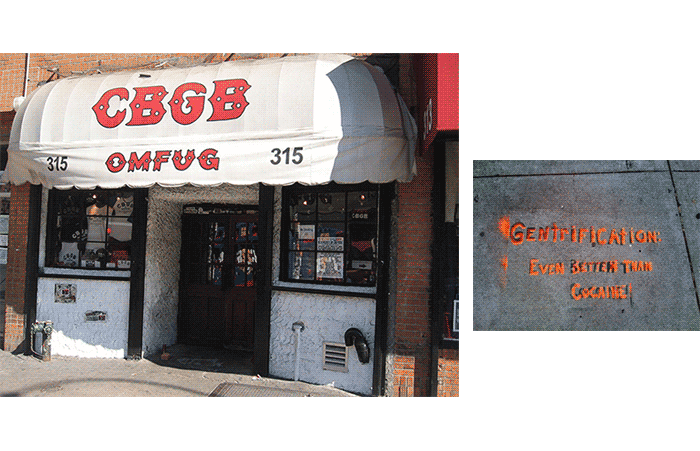
To understand what is happening, it is enough to give only one example from the book. In 1973, the famous CBGB music club paid for rent $ 600 a month, and in 2004 it was already 19 thousand, and in 2005 the non-profit organization owned the premises, which helped the homeless, evicted the club and raised the rent, up to 65 thousand dollars a month. The same sad fate befell another religious institution of East Villij-the Tonic club, which in the late 1990s was the main platform for the performances of the musicians from the company of John Zorn (to feel the atmosphere of this place, it is enough to watch any concert video shot there). In 2007, the institution was closed due to an increase in the rent, and the day after the farewell concert of the guitarist Mark Ribo and singer Rebecca Moore, they were arrested for refusing to leave the premises.
“If the rent continues to increase, then the authenticity of the area will be more provided with the appearance of old buildings than the historical compromise between the social worlds opposing each other ... Like Harlem and Williamsburg, the East Villidge was transformed under the influence of new tastes and lifestyle depending on continuous interaction of people, goods and capital. However, the more “local” the face of this area seems, the more he attracts the attention of the media; And the more attention they pay him, the greater the risk that he will become a place of “cultural pilgrimage”: the local flavor will become more and more expensive, succumb to standardization and disappear. The history of protests and the struggle in East Willidge, his emphasized unwillingness to be fashionable and rude intellectual charm can no longer withstand the onslaught of a hype on the Internet, numerous departments of chain stores and a rapid increase in requests from an ethnically heterogeneous, socially depressed population. I do not feel sorry for the past times of drug trafficking and crime, but I am outraged by everything that is associated with Starbucks, including new high-altitude hotels and restaurants that turn Baueri into a glossy and expensive street, as well as real estate speculation, because of which the rent has taken off to heaven. I feel sorry that East Willidge ceased to fight wealth and power, which ensured him a reputation as an authentic place, ”summarizes Zukin.
Further - everywhere
“Naked city” is the most New York book, Sharon Zukin, whose biography is inextricably linked with this city (it teaches at the Brooklyn College and the city University of New York). The level of immersion of Zukin in the fabric of urban life can be a standard for any urban study, especially in those fragments of a “naked city”, where the author dissects the smallest, but invariably colorful details, such as the manufacture of trunks, a traditional Salvador dish, which has become a popular street-food in New York. But due to attention to the details, the book does not become hermetic: on the contrary, Zukin emphasizes that everything that happens in New York is only a cut of trends common to all global cities. Примерно так Маркс в свое время писал в предисловии к «Капиталу», что страна, промышленно более развитая, показывает менее развитой стране лишь картину ее собственного будущего.
«Когда все города стремятся приобрести один и тот же современный, креативный образ, результатом становится не аутентичность, а угнетающее сходство, не слишком отличающееся — с глобальной точки зрения — от „великого проклятья скуки”, вызывавшего такое презрение у Джекобс», — констатирует Шарон Зукин. Так происходит потому, что во всех глобальных городах запускается один и тот же механизм «создания рынков», о котором уже говорилось выше. В конечном итоге магистральной темой, на которую выходит Зукин во второй части «Обнаженного города», посвященной общественным пространствам Нью-Йорка, оказываются последствия приватизации государственных функций корпорациями. Следуя за Пьером Бурдьё, Зукин показывает, как структура социального пространства начинает определять структуру пространства физического — и наоборот. На смену демократическому общественному пространству, восходящему к агоре античных Афин и к форуму древнего Рима, приходят общественные пространства, доступ к которым определяет капитал, фактически получающий их в откуп.
«Приватизация общественных пространств усиливает социальное неравенство. Изгнание некоторых социальных групп из общественного пространства сужает разнообразие тех впечатлений и контактов, которыми определяется городская жизнь. Оно делает городские центры похожими на важнейшие частные общедоступные пространства нашего времени, а именно пригородные моллы: чистые, безопасные и предсказуемые», — эти формулировки из «Обнаженного города» в равной степени применимы и к Нью-Йорку, и к Лондону, и к Шанхаю, и к Москве. Механизмы и инструменты в этом процессе могут существенно различаться в зависимости от, скажем, законодательства о землепользовании, источников фондирования и т. д. Но гораздо важнее то, что вытесняемый социальный ландшафт в каждом конкретном городе обладает собственной аутентичностью — в отличие от похожих друг на друга джентрифицированных пространств глобальных городов. Вспоминается подпись под одним из фото в автобиографии певца Марка Алмонда: «Еще в начале восьмидесятых в этом заведении в Барселоне можно было реально нарваться на нож, а теперь тут обычное гламурное место».
В логике Зукин для Нью-Йорка приватизация общественных пространств исходно во многом была выбором из двух зол. Стимулом для этого изначально выступал тот упадок центров крупных городов, о котором писала еще Джекобс, и на практике привлечение к управлению общественными пространствами территориальных ассоциаций бизнеса (ТАБ) означало закрытие их для бездомных, наркоманов и прочих маргиналов — в этом смысле многие американцы, отмечает Зукин, считают частный капитал эффективным. Да и в целом Нью-Йорк по сравнению с теми временами, когда снимался «Таксист», стал, безусловно, гораздо более безопасным и ухоженным местом, причем наведение порядка в городе начиналось с одного из самых запущенных мест — метрополитена. Но облагораживающее проникновение частного капитала породило новые контрасты и диспропорции. Например, парк Брайант в Среднем Манхэттене в 1970-е годы, по определению New York Times, «был настолько неприятен и наводнен нежелательными лицами, что считался символом городского падения» — теперь же это одно из самых модных мест города, привлекающее тысячи посетителей. Но на фоне роста расходов на содержание парка до 6 млн долларов (только ремонт туалета обошелся в 200 тысяч долларов!) лишь еще сильнее бросаются в глаза те общественные пространства, которые — пока еще? — «не вписались в рынок», согласно чеканной формулировке отечественного подвида «чикагских мальчиков». «В явном контрасте с продолжающейся деградацией государственных школ, метро и общедоступных парков, еще не оказавшихся под контролем частного сектора, предприимчивое управление общественным пространством, осуществляемое территориальной ассоциацией бизнеса „Брайант-Парк”, задает высокий стандарт коллективного потребления, которому вынужден следовать финансово слабый государственный сектор», — констатирует Шарон Зукин.
Захватом общественных пространств экспансия корпоративного капитала не ограничивается — одновременно он предъявляет все больше прав на частную жизнь людей. То, каким образом горожане последовательно лишаются права на город, демонстрирует такая статистика: с 1990 по 2007 год Нью-Йорк потерял 30 % из почти 120 тысяч квартир, субсидируемых властями, а всего за четыре года, с 2003 по 2007 год, частные фонды скупили 90 тысяч доступных квартир. При этом капитал регулярно покушается на те направления деятельности горожан, которые не укладываются в капиталистическую логику, но регулярно порождаются «урбанистической деревней» просто в силу самого факта совместного существования людей. Отсюда столь пристальное внимание Зукин к продавцам пупусов, которые смогли построить целую индустрию общепита на базе родственных и земляческих связей, или общественным садам Нью-Йорка, возникшим в качестве низового ответа на разруху 1970-х годов. В таких спонтанных формах экономической жизни автор и видит альтернативу неолиберализму: идея по большому счету не новая, но всякий раз обретающая неожиданные воплощения в терруаре конкретного города (специфический термин из сферы виноделия, обозначающий сочетание природно-климатических особенностей, которые определяют уникальные качества вина, стараниями Зукин оказывается вполне уместным и в урбанистике). Те же общественные сады, «не будучи социалистическим экспериментом, в чем их обвинял мэр Джулиани, действительно посягают на землю, подчиняющуюся рыночной экономике, и „декоммодифицируют” ее. Благодаря социальной и экологической опеке со стороны садоводов она-де-факто оказывается у них в общественной собственности, отличающейся как от частного предпринимательского использования общественных пространств, поддерживаемого территориальными ассоциациями бизнеса, так и от государственного предпринимательского контроля, осуществляемого такими муниципальными учреждениями, как Управление парков. Садоводы в своем стремлении пустить корни олицетворяют модель общественного пространства, отличающуюся от рыночной модели, приспособленной к мобильности городских жителей. Эта ситуация, типичная для недавней эпохи неолиберальной экономики, стала еще более актуальной в нынешние времена экономического кризиса».
Все эти формы спонтанной экономики «для людей» в конечном итоге оказываются той путеводной нитью, следуя которой, можно найти утраченную душу города. Поэтому в эпилоге «Обнаженного города» автор призывает не ограничивать усилия по поиску аутентичности одними историческими зданиями — следует стремиться к новому пониманию аутентичного города в человеческом смысле слова: «Аутентичность почти всегда используется той или иной группой населения как рычаг культурной власти, позволяющий предъявлять претензии на данное пространство и отбирать его у других, не вступая с ними в непосредственную конфронтацию, при поддержке со стороны государства и выборных должностных лиц, а также СМИ и потребительской культуры с их силой убеждения. Но мы можем повернуть этот рычаг в сторону демократии, создавая новые формы государственно-частного управления, которые бы наделяли местных жителей, трудящихся и владельцев малого бизнеса, а также здания и улицы, правом укорениться и оставаться на одном и том же месте. Так будет достигнут баланс между истоками города и его новыми началами; так возродится душа города».

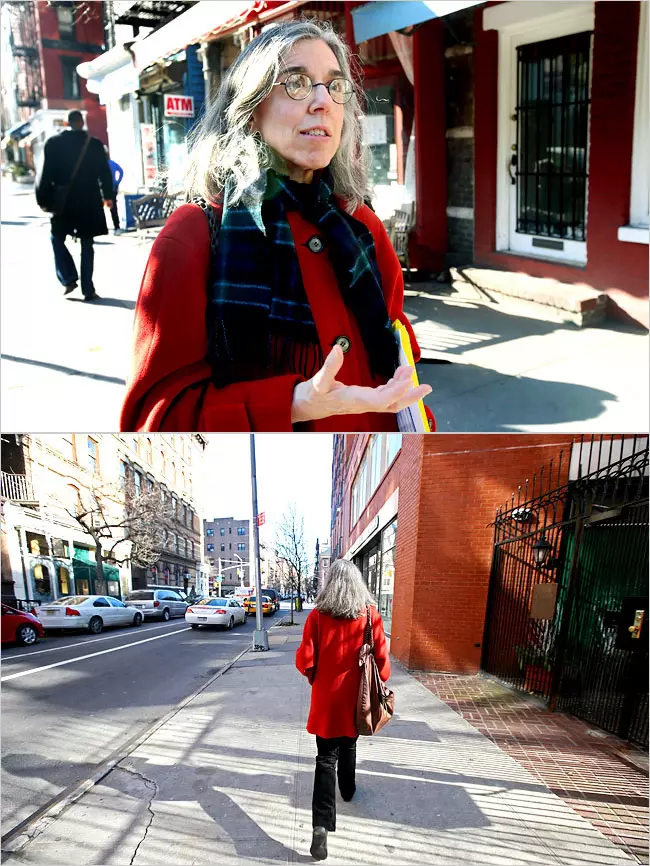
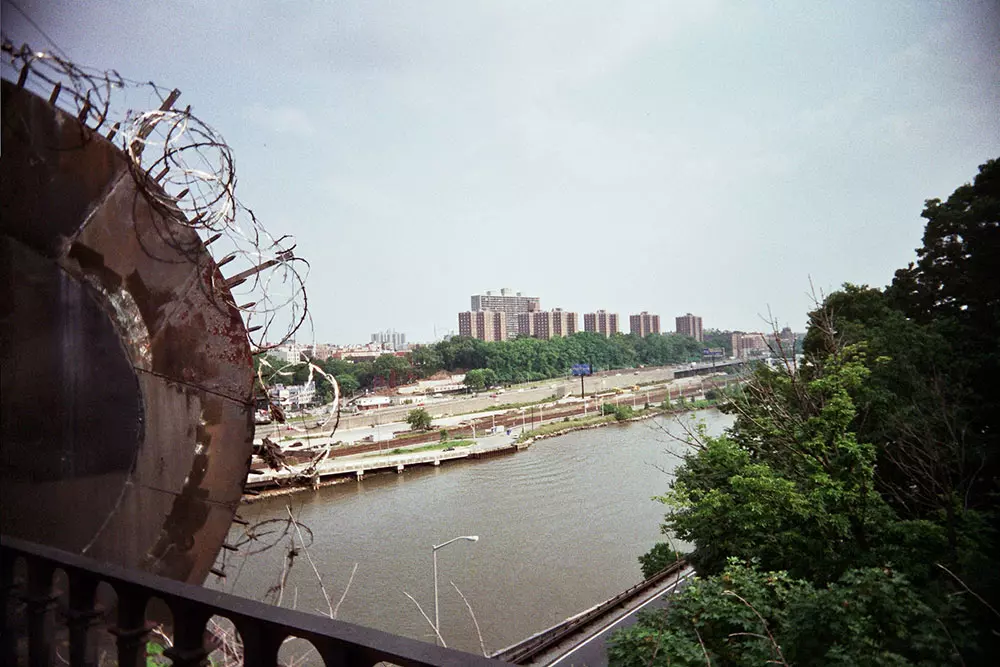
 Sharon Zukin. Naked city. The death and life of authentic city spaces. M.: Publishing house of the Institute of Gaidar, 2019. Translation from English by A. Lazarev and N. Edelman
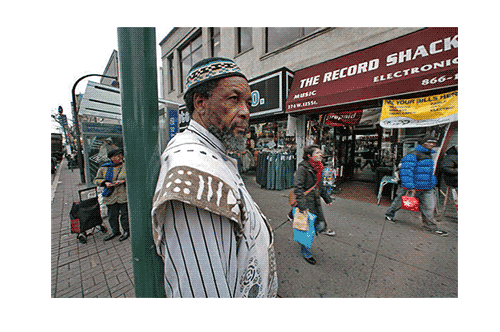 At the same time, the author of the “naked city” recognizes, a new authenticity is born in Harlem: a black ghetto turns into a racial integrated, cosmopolitan community in a middle class, whose culture is formed by the waves of residents, white and black, Africans, African American, Latin American and Europeans. But for now, Zukin hints, this is largely an “imaginary community”: “No one is yearning for the Harlem past with his black ghetto, but the shadow of this ghetto gloomy cloud hangs over the future of Harlem. Chronically high unemployment, bad schools and unimportant situations with healthcare indicate that racial inequality remains a reality. Financial collapse caused a stop of the construction of many facilities, leaving in the neighborhood with non -exposed condominiums empty areas. Nevertheless, the gradual restructuring of the physical environment of the black ghetto - along with the rejection of its population - leads to further cleaning the unsightly story of Harlem. ”
 “If the rent continues to increase, then the authenticity of the area will be more provided with the appearance of old buildings than the historical compromise between the social worlds opposing each other ... Like Harlem and Williamsburg, the East Villidge was transformed under the influence of new tastes and lifestyle depending on continuous interaction of people, goods and capital. However, the more “local” the face of this area seems, the more he attracts the attention of the media; And the more attention they pay him, the greater the risk that he will become a place of “cultural pilgrimage”: the local flavor will become more and more expensive, succumb to standardization and disappear. The history of protests and the struggle in East Willidge, his emphasized unwillingness to be fashionable and rude intellectual charm can no longer withstand the onslaught of a hype on the Internet, numerous departments of chain stores and a rapid increase in requests from an ethnically heterogeneous, socially depressed population. I do not feel sorry for the past times of drug trafficking and crime, but I am outraged by everything that is associated with Starbucks, including new high-altitude hotels and restaurants that turn Baueri into a glossy and expensive street, as well as real estate speculation, because of which the rent has taken off to heaven. I feel sorry that East Willidge ceased to fight wealth and power, which ensured him a reputation as an authentic place, ”summarizes Zukin.