
Translated material
Draff from the Kremlin
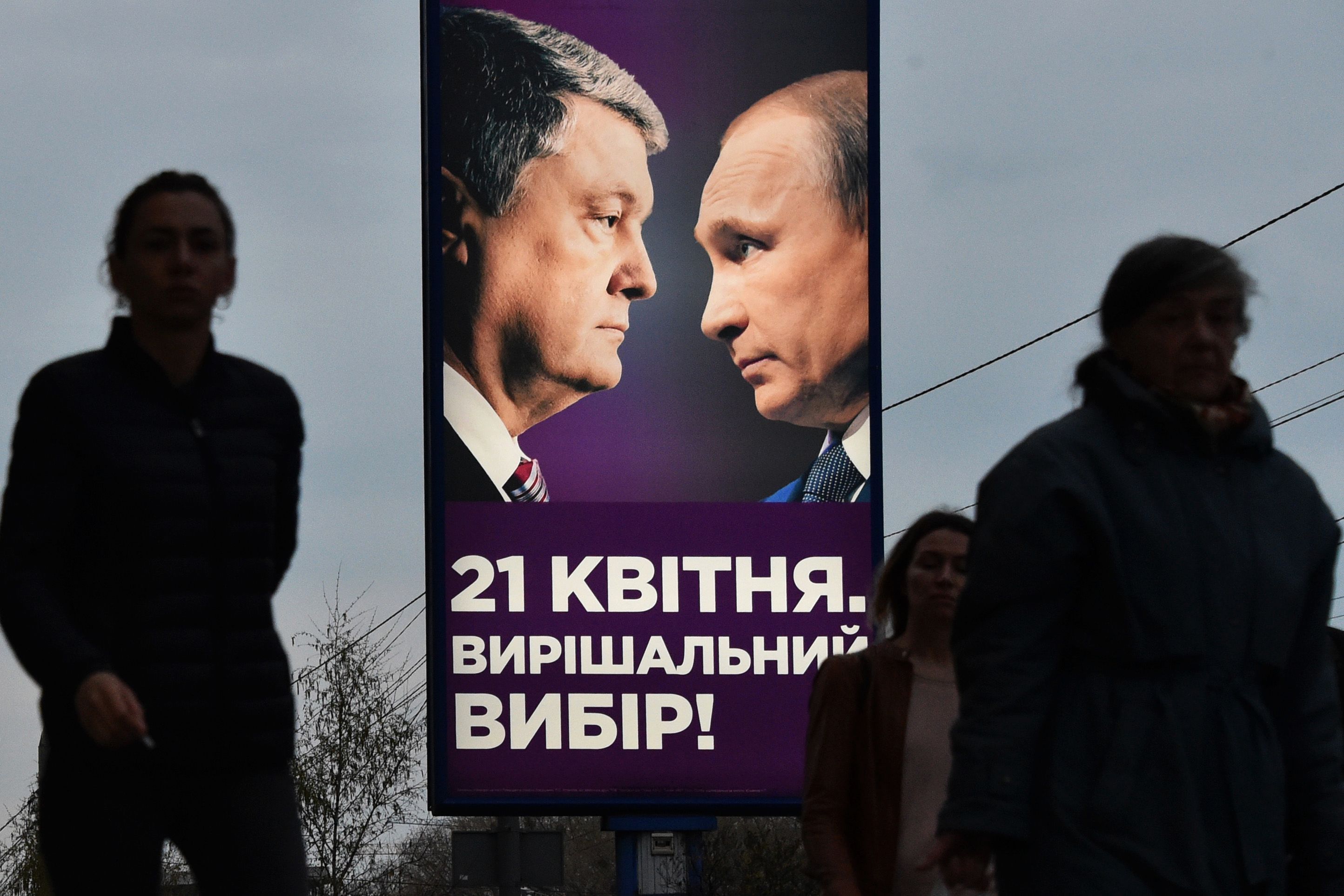
How does Putin's policy affect the post -Soviet world? Transit of the authorities in Kazakhstan, Belarus, Ukraine and the gradual departure of the countries of the former CIS from the zone of influence of Russia are discussed by politicians Konstantin Borova , Yaroslav Romanchuk (Minsk), political scientists Andrei Okara and Dosim Satpaev (Alma-Ata). Mikhail Sokolov is broadcast.
Video version of the programMikhail Sokolov: In Kazakhstan, extraordinary presidential elections will be held on June 9. In Belarus, the election of the head of state this year, the date is not scheduled. And in Ukraine on April 21, the second round of elections, they compete Petro Poroshenko and Vladimir Zelensky. Let's try to compare transit processes in post -Soviet countries.
Let's start with Kazakhstan, because the news came from there in recent days. The temporary president of Kazakhstan Kasym-Jormat Tokayev announced the holding of extraordinary elections of the head of state on June 9. There will be a congress of the ruling party, headed by former president Nursultan Nazarbayev. How would you evaluate transit in Kazakhstan, which has begun recently?
Konstantin Borova: A very calm process. As far as I understand, this is what everyone is interested in. The former president is interested in this, the future president and interim president are interested in this. In order for this to happen calmly, China is interested. To some extent, Russia is interested in this. If you do not take into account the opinion of the people, which, in my opinion, no one is going to take into account, then everyone is happy, everything is happy, everything happens very calmly, methodically, systematically. It is clear that in such cases it suddenly arises unexpectedly, and this is quite often happening, a small outline, some kind of nonsense, Komarik squeaked-and everything went differently. Something similar can happen here. Not everyone has taken into account the interests in this process, they forgot the people to ask, and the people are not very pleased with this, I would say, not an ideal process.
Mikhail Sokolov: In your opinion, in Kazakhstan, authoritarianism is effective if compared with Russia? Is it more effective than in Putin's Russia, for example, in terms of ordering economic processes?
Konstantin Borova: Russia gives such a negative example that any deviation from the Kremlin strategy will already look like a positive process. Against Putin, any Chinese leader looks good. Absolutely communist power, authoritarian, with prisons, with Gulag, in essence, with the ruling communist party, but with a market economy that exists somehow parallel, China looks good. I think that after a while some positive examples can be expected from transit in a cube, for example. They already adopt some new laws, new rules, new regulations. So in a sense, Putin becomes a reference point of negativity, to the right of which everything is good.
Mikhail Sokolov: In addition to the DPRK.
Konstantin Borova: I'm afraid that the DPRK over time. Negotiations are underway, they go to something, they are ready for risk. There is common sense, there is an equivalent - a bag of rice and nuclear tests. Not a bag, of course, a large amount of rice and missile technology. This is not in the case of Russia, there is no rational component, everything is so absurd that it seems even strange.
Mikhail Sokolov: How do you see this process of transit of power? Many were surprised, thought that Dariga Nazarbayeva would be a successor, but still another person. How do you justify this choice?
Dosyny Satpaev: In fact, Kazakhstan has not yet begun classical transit of power. From my point of view, the transit of power will begin when the first president in the physical plane will not be. While he is a system player, all power is concentrated in his hands. He, like the rest of the Kazakhstan elite, is interested in maintaining the status quo both in domestic politics and in the foreign. It would be naive to expect any reforms, political changes in the current situation.
I think the transit of the authorities will begin when the first president Nursultan Nazarbayev will not be the main curator of the elite, when he is not as an active player. Whoever comes after him, in any case, he will have to adjust this system to himself, make certain changes. Because all these 30 years in Kazakhstan the Nazarbayev political system was created, and it cannot be controlled as Nazarbayev, the second Nazarbayev will not be in Kazakhstan.
We will observe the same situation as in neighboring Uzbekistan, where Shavkat Mirziyev under the slogans of the continuity of power in any case is rebuilding the system. He rebuilts the economic system, the foreign policy model of Uzbekistan. Moreover, now we see that he conducts elites with powerful cleaning, which intensively weakened the members of the presidential family of Islam Karimov. Therefore, the issue of continuity in Kazakhstan has been discussed for a very long time, since 2010.
Maybe we are the only one of the countries of Central Asia, where this topic was discussed quite actively, somewhere even openly. Many experts came to the conclusion that the problem is not in the successor, but the problem is that whoever takes the place of Nazarbayev, the continuity of the problems, that is, the very problems that the first president could not solve, and there were a lot of them, they began to explode, all these social problems. This is a serious challenge for the future of Kazakhstan. That is, not that the elite will decide, they have already prescribed their script, they believe that they control the situation and society, I think that the situation can really get out of control, as a small pebble can cause a large rockfall. In principle, in Kazakhstan, after the departure of the first president from the political scene, the number of force majeure situations, “black swans” will automatically increase.
Mikhail Sokolov: At the moment, what is the background for those political changes that have begun to occur, some kind of economic growth or stagnation, as in Russia?
Dosyny Satpaev: We are served by economic growth in comparison with other economies not the best. Officially, Kazakhstan announced that he wanted to enter in 2050 on the list of 30 developed countries of the world. But just recently, the European Bank for Reconstruction and Development presented a rather interesting report where Kazakhstan warned that our republic could be trapped in medium height. I think that Kazakhstan can really fall into this trap. Kazakhstan as a twin brother in this regard, our raw material economy, our corruption rent is also associated with the extraction and sale of raw materials. Therefore, I think, unfortunately, the economy, which was created in Kazakhstan, it looks more attractive compared to other countries of Central Asia, but less attractive in comparison with more competitive economies of at least those countries that are included in the list of 30 developed countries of the world.
Mikhail Sokolov: There are some opposition forces that in these elections, as it is called according to the Constitution, in these transitional processes will be able to at least prove themselves, act, propose some kind of program, say something critical within the framework of the possible? Or everyone resigned to the fact that we should look at these renaming with emotion, look at the role of the first president with tenderness, and everything that has been done, approve and go the path that Mr. Nazarbayev destined?
Dosyny Satpaev: In Kazakhstan, the opposition field was completely cleaned over the past few years. We were eliminated by the latest more or less opposition political parties, as I remember, it was the Communist Party of Kazakhstan. We neutralized more or less active public politicians.
Protest sentiments went to social networks, they are very much mobilized there, concentrated. There was not a single force in the form of a party, a political movement in a public political field. There is no opposition media around which a certain protest mood could concentrate. Therefore, the authorities feels more or less comfortable. Separate oppositionists are now abroad, from there they are inflicting information blows on the Kazakhstan political elite.
In the country, this field is rolled up in asphalt. Here, the authorities made a bunch of fake pseudo -polation organizations, that is, some imitation of pluralism exists. The authorities approached these elections very prepared. Moreover, over the years, she adopted amendments to the constitutional election law. For example, we cannot have self -nominates, the candidate must nominate from the republican public movement. We have any presidential candidate should have five years of experience in the public service. That is, just a person without experience in a civil service cannot nominate himself. Therefore, these restrictions on the legislative plan were created so that there were no dark horses, the candidates were more or less adjusted.
Mikhail Sokolov: In general, prepared. Probably, a lesson for modern Russia will also prepare, drive the remains of the opposition from the political field and hit on the Internet with various initiatives.
Konstantin Borova: The filters that are installed today in the elections in Russia are enough. We saw when it is necessary to promote some candidate ...
Mikhail Sokolov: Ksenia Anatolyevna Sobchak, for example.
Konstantin Borova: For example. Or Alexei Navalny, receive the necessary votes even from United Russia, from the camp of enemies, so to speak. And when it is not necessary, then the deputy of the regional legislative assembly can simply be killed so that he does not participate in the elections.
Mikhail Sokolov: Are you talking about Nemtsov?
Konstantin Borova: Yes, I hint at Boris Efimovich. So in this sense, I think we have advanced further in Russia. But again, there are a lot of random factors, random processes. In the same Kazakhstan, any unexpected performance, or a change in the situation, or how it happened and occurs very often, when the desire to get to the National Guard, at the Ministry of Internal Affairs, at OMON, can lead to some kind of tragic events-this can cause a chain reaction at any time. So, creating a structure to protect the authorities today, they create risks for the displacement of this power.
Mikhail Sokolov: Andrey, how do you look at Kazakhstan and are there any lessons for modern Russia?
Andrei Okara: For modern Russia, the political regime, similar to Kazakhstan, is one big continuous lesson. In general, the political systems of Russia and Kazakhstan are largely similar and comparable. By the way, the political system of Russia is definitely more like Kazakh or Turkish than Ukrainian. Now I have a small mystery to you: what unites people, former or current presidents as Gorbachev, Yeltsin, Putin, Nazarbayev, on the one hand, which fundamentally distinguishes them from people like Aliyev, Lukashenko and Yanukovych?
Konstantin Borova: This is a well -known thing. On the one hand, these are representatives of some corporation, and on the other hand, representatives of the clans. This is a reflection of a different structure of society.
Mikhail Sokolov: Some were in the Central Committee of the CPSU, while the others were not, some were nomenclature, others were not.
Konstantin Borova: It doesn't matter. Before the collapse of the Soviet Union, there was absolutely the same situation as now with Ingushetia.
Mikhail Sokolov: Maybe we did not guess?
Andrei Obara: Gorbachev, Yeltsin, Putin and Nazarbayev, they only had daughters, they did not have sons. Therefore, the successor who could become the president, as, for example, this happened in Azerbaijan, such models somehow did not work out.
I understand that Dariga Nazarbayev is a very smart, very bright interesting woman and politician, she is even a singer. She is probably a worthy person to become the president of Kazakhstan, but, apparently, Kazakh society is not quite ready for a woman to become president. Such a nuance gives rise to the false mechanism of the continuity of political regimes or the continuity of the rulers, which led to the fact that now in Kazakhstan there is a new president, temporary president, and locomotives. In the near future there will be presidential elections that are most likely to legitimize this figure.
A very interesting question is how transparent, these elections will competently pass. Judging by the fact that they will be at the beginning of summer, they will probably take place in an atmosphere and an atmosphere of universal consent and approval. The fact is very important that Dariga Nazarbayev will not run for them and, apparently, will remain the chairman of the upper house of the parliament, in which case she automatically becomes the president. Such a complex mechanism.
The question is that such a model of the continuity of the authorities made political strategists very seriously in the vicinity of the Kremlin. As far as you can see, the President of Russia did not appreciate this situation, but at least emotionally reacted very intensely, without any serious delight. In a sense, this is a challenge to the Russian continuity of power. Moreover, the priority system of rotation or continuation of the current Russian president in politics was supposed to actualize the Russian-Belarusian Union, this scenario was a priority, but the Kazakh example introduced some uncertainty to the joy that was about the consensus in relation to the Russian-Belorian Union as a script to continue the political regime in the Russian Federation.
Mikhail Sokolov: We have Yaroslav Romanchuk in touch on Skype from Minsk. He heard your discussions about Belarus, about this script, probably it surprises him. Since it seems to me that at the moment, at least, Mr. Lukashenko, who, by the way, has a male sex, worthy of the inheritance, apparently, in his opinion, the elder is in power structures, the younger beloved is also shown, he is somehow not very eager to give his country to Vladimir Putin, to intensify the alliance.
Yaroslav Romanchuk: In fact, Alexander Lukashenko is categorically against any scenario of the transfer of power to the Kremlin. During a recent meeting with the Russian ambassador to Belarus Mikhail Babich, he assured that the official position of Russia, categorically, is not worth the question of any events in order to somehow infringe on the sovereignty of Belarus.
The question that is asked to me now: what does the Republic of Belarus want in the context of all those union agreements that are signed? I am happy for our Kazakh friends, for Russia. But you understand that in Belarus, according to the imitation of the election process, we always say-a parliamentary campaign, a presidential campaign, no reason to say that this year and next year there will be some changes in the legislation to ensure at least what is approximately reminiscent of elections. There will be no election. As I understand it, Lukashenko already said how many votes he would receive. Recently, during one of the regional visits, he said that I would support 80% of the population, but I want to be president and 20 remaining.
Mikhail Sokolov: He strives for the figure that Putin has 86% of support, which is pedaling all the time. How to explain some intensification of repressions recently against the Belarusian opposition, which, sorry, is not too strong, is this story with partridges in connection with protests, a pogrom in Belsat recently? It seems that, nevertheless, just in case, they want to clean the field.
Yaroslav Romanchuk: It is symbolic that all these actions took place against the backdrop of a visit to Belarus of the Federal Chancellor of Austria. There was a very victorious relation from the Swiss business, which praised Alexander Lukashenko for a magnificent business climate. He successfully sufficiently realizes the position that the European Union needs a pragmatist of relations, investments, economics, nothing more. It seems to me that the European Union, even such countries as Poland, are on this scenario. Alexander Lukashenko is actively advancing west, including in the United States, the thesis is that we are the only country that can become a certain bridge in negotiations with Russia, we claim Helsinki-2. This, in fact, is a hypocrisy and a feature of the situation that someone in the context of these all repression is able to even believe in it. But paradoxically, today the West is extremely very passionate about his problems, his ideas, he does not have an answer to how to solve the Russian-Ukrainian conflict, therefore Lukashenko was left in the backyards, he, as I understand it, is clearing all those foci of the possible information civil resistance that is in the country.
Mikhail Sokolov: What about Belarus and another, apparently, preparing transit from Lukashenko to Lukashenko? Apparently, so far not from father to son, but still from the dictator himself to him.
Konstantin Borova: Alexander Grigoryevich plays a very dangerous game. You know, I am not an ardent supporter, to put it mildly, but I understand that this is a very dangerous game in a situation where Putin does not have much time and not much resources, to continue to play on Putin’s nerves, the team surrounding Putin is a huge risk. The script of an unexpected fever becomes simply real.
Mikhail Sokolov: Do you scare us that Russian troops will go there?
Konstantin Borova: No, I think the troops will not go there. After all, everything holds on one person, there is no team. This game is very personal, the game of one person. В тот момент, когда Александр Григорьевич по каким-то причинам не сможет быть этим одним человеком, ситуация быстро изменится и будет сделано то, что нужно.
Михаил Соколов: То есть вы не исключаете возможность сценария союзного государства, во главе Владимир Путин с Лукашенко в качестве партнера или без Лукашенко в качестве партнера?
Константин Боровой: Александр Григорьевич согласился на эту игру в тот момент, когда ему казалось, что это конец эпохи Бориса Николаевича Ельцина, ему казалось, что его рейтинг выше, чем рейтинг Ельцина. Для него было вполне реальным возможно стать президентом уже не только маленькой колонии России Беларуси, но и самой России. Сегодня ситуация другая, шансов никаких нет. Но свернуть ситуацию назад, загнать дым назад в костер невозможно. Ситуация трагическая для Лукашенко.
Михаил Соколов: Пока выигрывал на этих играх с Кремлем, деньги получал почти ни за что.
Константин Боровой: Игра с нулевой ценой. Он получал деньги для того, чтобы удерживать стабильность режима.
Михаил Соколов: И удержался сколько лет. Процесс важнее результата, но результат тоже есть.
Константин Боровой: Экономика не развивается, политическая система не развивается, риски те, которые были в самом начале, они сегодня – риски потерять власть просто в любой момент. В тот момент, когда Бабич щелкнет пальцами, Лукашенко потеряет власть.
Mikhail Sokolov: I do not believe. Андрей, каковы шансы Александра Лукашенко транзит провести к самому себе в этой ситуации определенного осложнения отношений с Кремлем?
Андрей Окара: У Юрия Антонова были такие слова "я иду от тебя до тебя". Лукашенко идет точно от себя до себя. Он, конечно же, абсолютно уникальный политический деятель на постсоветском пространстве. Он ухитряется реализовывать белорусскую стратегию, которая раньше формулировалась такими словами, как "газ в обмен на поцелуи", а теперь она трансформируется, потому что газа и нефти для Беларуси у России все меньше и меньше. Тем не менее, Лукашенко ухитряется отбиваться от тех очень серьезных объятий Кремля, которые постоянно к нему тянутся, как в сказке или фильме ужасов. Он вынужден лавировать между Западом и Кремлем, он вынужден не потерять собственное лицо, собственную власть и при этом не поссориться с Кремлем, давать Кремлю как можно больше эффективных, красивых и обнадеживающих обещаний. У Кремля действительно кончается терпение.
Мы видим, что Лукашенко в этой политике удалось найти взаимопонимание даже с оппозицией, Ярослав Романчук подтвердил этот тезис. Мы видим, что у него есть несколько небезопасных для собственной политической биографии факторов, как возможность дворцового переворота. Наверное, нельзя исключать абсолютно таких сценариев, что однажды он может проснуться в окружении высших белорусских военачальников, которые могут ему сказать: знаешь, мы как-то стали, пока ты ночью спал, генералами объединенных российско-белорусских войск, наверное, мы уже не считаем тебя своим главнокомандующим.
Михаил Соколов: Ярослав Романчук, вопрос тогда прямо от этого тезиса: удержит ли Александр Лукашенко государственную власть?
Ярослав Романчук: Александр Лукашенко с очень высокой степенью вероятности удерживает власть, удержит ее вплоть до 2025 года в неизменном состоянии. Потому что он уже сказал, что он готовит конституционные изменения, над которыми нужно работать. Я думаю, чтобы какой-то транзит состоялся, он об этом думать будет после 2025 года. Вопрос, что дает ему основания – очень серьезное лобби и поддержка. Самый большой его сторонник – это сторонник международный, интернациональный, включающий серьезный российский элемент. Те российские группы олигархов, полусерые криминальные структуры, теневые, которые занимаются контрабандой, которые занимаются теневыми потоками, в том числе нефтепродуктов, всего того, что обеспечивает достаточно серьезные потоки. Он умеет договариваться. Даже многие российские эксперты признают, что эти схемы дают около 70% прибыли в российские карманы, а 30% остается Белоруссии. Это самый мощный интерес, который обеспечивает нейтральность Москвы, официальной российской власти по отношению к нему. Другого сценария пока у Кремля нет.
Поэтому сценарий физического недомогания, мягко сказать, я думаю, он в принципе существует, но пока интересы основных группировок, которые зарабатывают на Беларуси, через Беларусь, сохраняются, я думаю, Александр Лукашенко вполне способен пробыть не только 5-летний, но и 10-летний срок. У нас в Белоруссии достаточно активно идет схема создания бизнес-структур отставных силовиков, там сплошь и рядом генералы бывшие во главе. Так что они тоже создают теплое местечко для того, чтобы после службы в силовых структурах обеспечить свое пребывание в бизнес-структуре. Поэтому Александр Лукашенко, очевидно, ведет с ними разговор так: я же свой, а если придут другие, другие правила игры. Поэтому Александр Лукашенко пытается нейтрализовать даже эту критическую группу.
Михаил Соколов: Действительно, многих, наверное, научил Крым уму-разуму, что придут чужие, отберут, все переделят, все будет не очень хорошо для прежних владельцев собственности. Кстати, насчет бизнеса силовиков, я опять вспомнил Корейскую народную демократическую республику, там всяким экспортно-импортным бизнесом занимаются все силовики, любое министерство, и армия, и чекисты, они создают свои фирмы и торгуют в серую, в белую, как угодно. Тоже интересный урок, наверное, для современной России. Мы сейчас двинемся в сторону Украины, поскольку здесь другой вариант транзита, второй тур Зеленский – Порошенко, очень яркая кампания. Сейчас мы видим борьбу за дебаты, будут дебаты, не будут дебаты, мы не знаем. Как вам на фоне Казахстана, Белоруссии и России украинский вариант?
Константин Боровой: Это жизнь, это хоть какая-то жизнь. В Казахстане – это не жизнь, это имитация жизни. В Беларуси то же самое имитация электорального процесса, имитация конкуренции. А здесь реальная жизнь, реальная конкуренция. Причем в отличие от тех двух случаев здесь не выбор между авторитаризмом и демократией, выбор между стагнацией или спокойствием, стабильностью, как говорят, и возможностью каких-то реформ.
Я совершенно не согласен, что что-то не определено в Украине. По моим ощущениям, по данным, по статистике почти все решено, 30–70% или 40–60% в пользу Зеленского. Какие-то колебания возможны на уровне использования административного ресурса, 5–7%, но они ничего не решают. Дебаты, которые могут повлиять на 2–3%.
Михаил Соколов: А может быть на 10?
Константин Боровой: Может быть на 10, все равно несущественно. Поэтому там все более-менее определено.
Михаил Соколов: Определен победитель, по вашей версии. Определена ли политика победителя?
Константин Боровой: Не определена. В этом серьезная проблема, потому что призыв Владимира Зеленского создать программу, реакция адекватной части общества все-таки такая: ты что-то предложи, ты же теперь лидер. Нам теперь вопросов не задавай, теперь мы тебе будем задавать вопросы. И вопрос простой: что делать? Пока полной ясности, к сожалению, нет. Хотя в команде появились реформаторы, появились несколько человек, которые были отстранены в свое время от правительства, от власти. Сделаны очень серьезные заявления о необходимости привлечения Михаила Саакашвили. То есть по всей видимости Михаилу Саакашвили Владимир Зеленский вернет и гражданство, и каким-то образом будет использовать в своих процессах. Дальше неопределенность.
С моей точки зрения центральный момент, с которого начинали в Грузии – реформа системы безопасности государства. Потому что от нее потянулись корни к структурам властным, к структурам экономическим, безопасности вообще армии. В частности, здесь Украина пока не демонстрирует тех примеров, которые мы видели, скажем, в странах Балтии, когда новые структуры безопасности создавались просто на пустом месте, не из КГБ, не из ГРУ, а просто на пустом месте с привлечением новых людей. Всякие эти события с коррупцией, с крышеванием бизнеса со стороны бандитов. Еще один пример, вы правильно сказали, торговля оружием в условиях, когда государство воюет. Оказывается, ладно бы продавали, покупая более современное, но ведь продают и прибыль тоже исчезает.
Михаил Соколов: Как видится этот второй тур украинских выборов на фоне авторитарных транзитов в бывшем СНГ?
Андрей Окара: Действительно, если сопоставлять нынешние президентские выборы в Украине и тот транзит власти, который есть в Белоруссии, Казахстане и надвигается в России, то мы видим разницу политических культур, политических традиций, политических систем. В Украине выборы могут удивлять, в Украине нам может казаться, что кандидаты чем-то неэффективны или нам несимпатичны, но то, что выборы конкурентные, прозрачные и они в глобальном измерении не фальсифицированы – это то, с чем приходится согласиться даже самым большим критикам Украины и украинской политики. В Украине сейчас, мне кажется, главная ситуация, которая сложилась накануне второго тура, главная интрига не в том, Порошенко-2 или Зеленский, даже если они имеют равные шансы, главный вопрос – это что будет дальше со страной, не будет ли того, что в российской истории называется Смутой, то есть когда государство обрушивается, превращается в "фейл стейт". Не будет ли гибели государства, не будет ли внешней военной агрессии, не будет ли расчленения страны, а тем более ситуация передачи власти от одного президента к другому всегда уязвимая ситуация, объективно она не может быть иной. Это как раз для больших любителей такой страны, для внешних конкурентов алчных, наиболее эффективное время придумать какую-то военную провокацию.
Михаил Соколов: Как вы оцениваете появление этого заявления Медведчука по Донбассу: Москва и ДНР, ЛНР согласны на автономию в составе Украины? Кому сброшена эта карта?
Андрей Окара: Я думаю, это заявление адресовано непосредственно Кремлю, главному политическому союзнику Медведчука президенту России. Месседж тут такой, что, дорогой Кремль, знаешь, очень долгое время вы слушали моих советов и доверяли мне как такому Вергилию, который ведет Москву по пространству украинской политики, каждый раз были какие-то обломы. То речь шла о "Новороссии" и ничего не получилось, то шла речь о том, что Бойко эффективный политик, за него могут проголосовать, тоже ничего не получилось. Теперь скоро будут парламентские выборы, вы мне снова должны поверить, может быть еще дать денег, что тоже неплохо.
В этом смысле Зеленский, по крайней мере, существуют утечки из его штаба, о том, что 10 пунктов, и в первом пункте написано отдельным абзацем, что ликвидировать Медведчука из переговоров по поводу Донбасса. Это означает, что по поводу этой фигуры есть в политическом классе Украины полный консенсус. Один эпатажный политик украинский заявил, это было перед первым туром: что нужно сделать Порошенко, чтобы повысить свой рейтинг в два раза? Надо арестовать Медведчука. Это коррелирует с тем, как к Медведчуку относятся в украинской политике. Здесь полная консолидация всех, кроме непосредственных союзников Виктора Медведчука, о том, что любое его участие в любых украинских процессах – это всегда игра на стороне Кремля. Нужен ли такой переговорщик Украине? I don't know.
Михаил Соколов: Поскольку про Донбасс теперь заговорили вдруг опять, я попросил сделать опрос, вернется ли он под контроль Украины.
Poll on the streets of MoscowМихаил Соколов: Состояние умов, конечно, в Москве соответствует телепропаганде. В интернете несколько иные результаты: 37% считают, что будет возвращен и еще 20% – будет возвращен как особый район. 29% – Россия сохранит контроль и 14% подозревают, что будет аннексирован Россией. Вот этот фактор войны, Донбасса и так далее, как вы оцениваете?
Константин Боровой: Ясно, что общество, опять граждан никто не хочет учитывать, никто не хочет учитывать их интересы, ясно, что их эта ситуация не устраивает. Ясно совершенно, что они готовы возвратиться в нормальную ситуацию, быть частью Украины. Никто не ставит вопрос иначе.
Михаил Соколов: Почему не ставят? "Россия, выведи войска". Два этих корпуса наемников или как их назвать. Зеленский говорит, что о Крыме, о Донбассе разговора нет, но он хочет, тем не менее, переговоров с Путиным, а Путин не хочет переговоров ни с Зеленским, ни с Порошенко. Единственные переговоры, которые он ведет по этим вопросам, он ведет с Западом в нормандском формате.
Константин Боровой: Мне кажется, здесь существует некоторое заблуждение относительно заявлений Медведчука, предположение о том, что он сделал заявление, обращаясь к Путину – это не точно. Мне кажется, что это все-таки заявление, если не Путина, то во всяком случае согласованное с Путиным. Это желание не получить эти мятежные регионы, нестабильные регионы в качестве территории Российской Федерации.
Михаил Соколов: Может быть, это желание как раз втолкнуть эти регионы в президентство Зеленского?
Константин Боровой: Да, это всегда было и остается, сохранив нестабильность в этих регионах, втолкнуть их в область действия нынешней власти и нового президента, не выводя оттуда войск, как и с Крымом получается. В этом смысле, если вы позволите, я сделаю соответствующее предложение уже новому президенту.
Михаил Соколов: Еще нет президента Украины нового.
Константин Боровой: Будет. Необходима полная ясность, необходимо Украине поставить вопрос о том, чтобы Россия либо освободила оккупированные территории востока Украины и Крым, либо это должно быть состояние войны, а это значит – прекращается торговля, прекращается транзит нефти и газа через территорию Украины и так далее, всякие неприятные для Москвы последствия.
Михаил Соколов: Состояние войны, извините, это может быть поход на Киев. Вы как-то провоцируете.
Константин Боровой: Я не думаю, что сейчас это реально.
Михаил Соколов: Может быть разрыв дипломатических отношений?
Константин Боровой: Я думаю, что состояние войны – это то состояние, которое позволит использовать Украине механизмы экономического, а не военного давления на Россию.
Михаил Соколов: Я думаю, нам не надо разжигать. Андрей, как этот процесс с оккупированными территориями может развернуться при возможном президентстве не Порошенко, а Зеленского?
Андрей Окара: Совершенно правильно вы отметили, что идея Кремля по поводу Донбасса заключается в том, чтобы его впихнуть обратно снова в Украину и использовать его как генератор управляемого хаоса, соответственно, блокировать разные геополитические стремления Киева. Эта идея сохраняется до сих пор. То есть Донбасс Российской Федерации в качестве второго Крыма точно не нужен, по-моему, тут есть полный консенсус, кроме отдельных телепропагандистов, которые постоянно призывают власть с российских телеэкранов, говорят: давайте признаем наконец Донбасс, выдадим всем российские паспорта и так далее. Но в том-то и дело, что в Украине в политической элите точно не идиоты, там нет желания как можно скорее вернуть Донбасс на любых условиях. Там есть понимание, с этим пониманием лично я солидарен, что вопрос Донбасса решается не в Киеве, не в "вашингтонском обкоме" и не в Донецке, не в Луганске тем более, он решается в Москве, в Кремле. Пока в России есть те политические реальности, которые есть сейчас, никоим образом радикально изменить этот вопрос вряд ли представится возможным, хоть с президентом Порошенко-2, хоть с президентом Зеленским, все равно это капсулирование ситуации, это в чем-то напоминает Приднестровье. Никаких возможностей для существенных подвижек лично я не вижу.
В украинской элите есть очень серьезные настроения о том, что Донбасс не нужен вообще – это не консенсусное мнение, но значительная часть людей так думает. Большая часть людей говорят: давайте подождем, и как-то эта ситуация сложится сама по себе, но не сейчас, зачем торопиться.
Михаил Соколов: А Путин и российская элита какие выводы сделают из свободных выборов в Украине, где власть, видимо, может смениться?
Константин Боровой: Сохраняются инструменты влияния экономического, торговля не прекращалась ни на секунду.
Михаил Соколов: Что в России они будут делать с населением, которое смотрит на смену власти в Украине? Вот молодой президент придет вместо старого, например.
Константин Боровой: Пока этот вопрос неактуален, пока удается сдерживать разными способами оппозицию и оппозиционные настроения, что самое главное. Потому что оппозиция, с этим удалось сделать все, что надо, имитировать свою оппозицию, дезинтегрировать существующую оппозицию. Все-таки это клановый процесс и с Лукашенко, и с Казахстаном.
Михаил Соколов: В общем, в Кремле будут учиться у Лукашенко, будут учиться у Назарбаева.