
Translated material
"Man, you're right"
Pskov deputy, author of the law on the protection of the people from disrespect for power Lev Schlosberg - on time, Putin and about himself
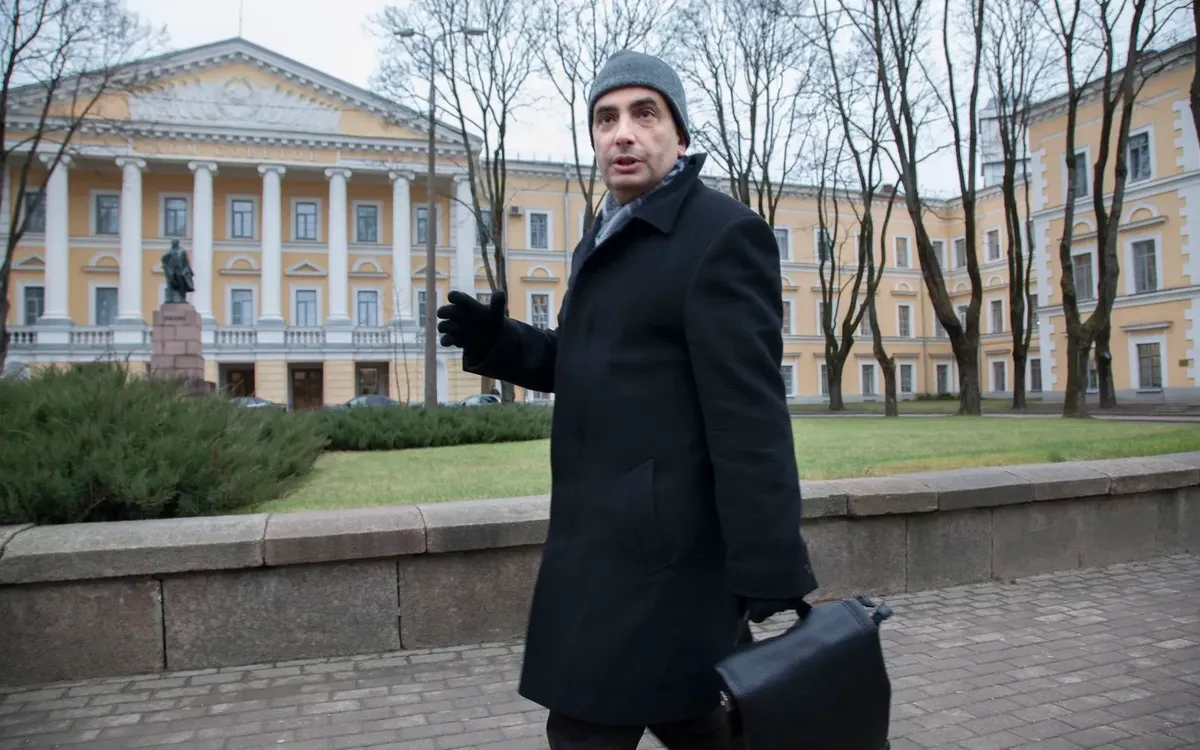
The deputy of the Pskov Regional Assembly Lev Schlosberg made the initiative to introduce fines for officials for disrespect for the people. The politician explained the need for such measures by the fact that the authorities regularly insults Russians for its part - this has become a familiar practice. Amendments to the legislation, the Pskov deputy, "Yablonik" is going to be held to the State Duma through the regional parliament. The famous critic of the current government, the author of the famous investigation about the death of the Pskov paratroopers in the Donbass recently published a book about the events of 2014 “Russia and Ukraine. Eide days. " In an interview with the special commander of the “New” Pavel Kanygin, Lev Shlosberg spoke about his vision of the consequences of the Ukrainian war, about the education of the voter, whom the authorities would not dare to insult, and whether to run for president of Russia.
- Leo, many books about the war have already been written. What is your remarkable for yours?
- In our book there is an important feature: it did not make any substantial amendments in the materials that were published in the newspaper. In fact, this book is a diary, and each of its material remained the same as it was on the day of delivery [to the newspaper in 2014-2017]. Such a look is the most honest: at that moment you saw so, thought, wrote, you understood that way, felt so.
This book consists of almost a hundred such living pieces.
In those days, we were encouraged by an understanding of the madness of what was happening. Everything that happened in the Russian-Ukrainian war, starting from the capture of the Crimea, the Crimean parliament, the use of the Armed Forces and Navy, we understood-the year 2014, and then a real war.
We were never in this position, what was happening was very different from the establishment of the so -called constitutional order in Chechnya. As a historian, I understood: the events of 2014 destroyed the Potsdam world, Russia not only broke the world order that arose in 1991 with the collapse of the Soviet Union - it broke the Potsdam world of 1945, affected the pillars of several historical eras.
Such things happen once in a century or less often. The authorities say: well, five, ten years will pass, and everything will resolve, we can agree, there will be concessions, forget, soften ... But nothing will be forgotten, nothing will soften, nothing will resolve.
- And how are the events of 2014 see you now?
- Every day I am convinced that a fatal, irreparable thing happened in many ways. I repeat: irreparable. The events between Russia and Ukraine are still following the scenario of continuing bloodshed. Sometimes it is suspended, but this does not mean that the problem is resolved, just events become latent.
The war gave rise to enmity in people, and it is transmitted from man to man with an airborne route-this is a real evil. It turned out to be not so difficult to scurry, there was enough one action - the annexation of Crimea, and then - Donbass and hatred everywhere.
We were at war not only with Ukraine, but with the whole world. We have become a besieged fortress that is ready to fight with everyone and builds its own identity on this, explains to citizens that enemies are enemies - enemies of Putin, enemies of Russia, and if you support these people or even just sympathize with these people, do not see enemies in them, then you yourself are the enemy.
It was in 2014 that the post -Soviet modernization of Russia failed. Until 2014, some illusory opportunities were still preserved under the conditional third term of Putin, which could finally take up the country. But instead, he broke the entire historical process.
Crimea destroyed everything. And the conceptual-confrontation [of the post-Soviet modernization of Russia] happened on March 18, 2018, this day opened a new era in Russian history.
- As a result, what did we come to now, in 2019, five years after the capture of the Crimea and Donbass?
-We are in the swamp in which we were because of this war. The country is at a dead end, the world historical process develops in one direction, and we go to the opposite, this is not even a step to the side. The world develops high technologies, but the authorities are officially trying to put the Internet under control - not in order to ensure its uninterrupted work, but so that it can be chopped off at a decisive moment.
For a year now, Roskomnadzor has been fighting with a telegram, spending money on this. In the Pskov region, for five years in a row, bulldozers have grown high -quality food products because they came from the wrong country, and this is accompanied by solemn photographs. At the same time, we have 115 thousand people in our region (every fifth resident) receive income below the subsistence level.
Fruits, vegetables and other products that press bulldozers, these people cannot afford to buy in the store.
That is, you see, the country has gone crazy if you call a spade a spade. We have gone crazy.
I have no recipe for treating political crazy people. You can put on a prominent shirt, but, they say, it does not help very much. Can be isolated. But how to isolate such a country as Russia?
State development has stopped, there is only regression, including in a general cultural atmosphere: we become a wild country, with wild reflexes. This all developed for a long time, but Russian-Ukrainian events became the quintessence of this cultural failure.
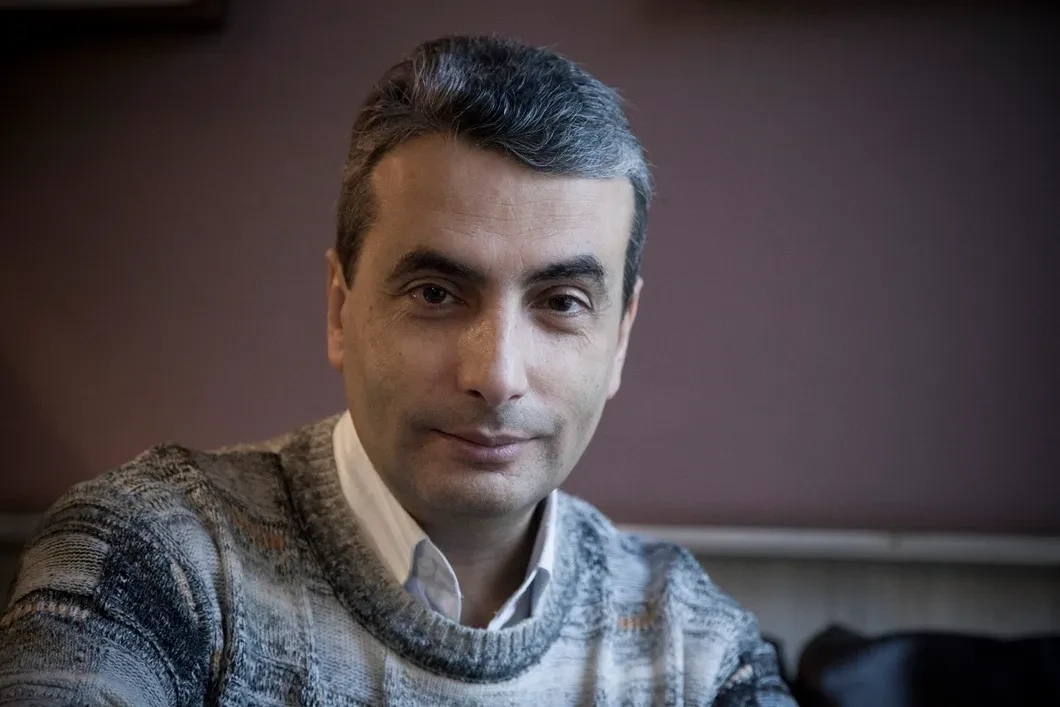
“But we are reassured at the same time: they say, the elite is in reason and quietly resists, as he can.”
- The elite retains a secret mind in the kitchen, tightly curtaining the curtains, lighting a candle, turning off the mobile phone, alone with him. Trying to realize whether we have the bottom or not the bottom yet, and how can this be experienced. He justifies himself that if there is some other bastard in her place, it will be even worse than if they continue to engage in their nasty things.
I do not believe in the current Russian elite. The elite is responsible to society, the elite must express its opinion, express also to the king, if he is, what she thinks. This is its function. The elite should be bolder than society, be more open and more fundamental. Then it can be called the elite. But this gathering listening to the President’s message to the Federal Assembly is something indecent, this is not a establishment, this is not an avant -garde of society. These are people who are shamefully using the benefits of power, who sold the soul for loyalty and reliability.
Our elite, Pavel, is located (I am very sorry for this completely non -parliamentary assessment) in the ass. The elite and ass are incompatible. And if you are there, then you are not an elite.
The elite today is those who can tell the truth publicly. Calculate how many of us are all over the country. I think we would fit in one hall. Maybe the whole country of several thousand people - journalists, politicians, civilian activists. And this elite today does not have the possibility of real influence on power.
- In this case, where is the place of this real elite, where is your place and ours?
- Where we are, Pavel, and there is our place, this is the whole chip. We cannot move anywhere, we have a nationwide problem in the glaring numerical failure of people who tell the truth due to the atmosphere of fear. People do not dare to realize their abilities in professional journalism, politics, human rights. These types of activities became associated with extremely high risks, when a person should be aware every minute, that everything can end at any hour: they will catch up with the back, hit the head, shoot, hit with a knife, anything. And all this will be in the interests of the current government.
That is, the phrase ( Vladimir Putin, said after the murder of the journalist of the “New” Anna Politkovskaya in 2006. - P.K. ) that her death did more harm than her activities - this for centuries, this is “cast in granite”. This is his attempt to evaluate our place in the country.
- All over the world, and in Russia, all the more, professional journalism is experiencing severe depression. Loss of influence, distrust of the audience, Jesuit censorship and self -censorship. The same challenges in the field of politics. Despair is generally spilled everywhere. This is acutely felt even by Moscow, but how do you deal with Pskov? What do you say to people in the city?
- It is very important to understand your responsibility. Responsibility to the company, to ordinary citizens. I will say as a politician. First - we must inspire people. We must inspire them that we are, that they are not alone, that we protect them, that we express their point of view and expand our statements for them for self -expression.
If politicians, journalists said about something openly, publicly, and hundreds of thousands read it, and in some situation millions of people, then it is not so scary to speak.
And if I am an ordinary citizen and I am the expression of a certain position, then a desperate courage will be required, I must overcome myself in a situation of universal silence. It is necessary to be Sakharov before the congress of people's deputies, so that under howl, hooting and screeching to tell the truth.
But in a situation where politicians and journalists do their work, it is easier for people to speak out, people simply become easier physically.
You see, we should work with icebreakers, and it will be easier for us to go on clean water not to such large courts. We can squeeze us in the ice, we can drown us, blow up, drag mines under us, but if we cracking ice and pure water behind us, then people will follow.
- In an interview with Eho, you talked about “harsh disappointment in ideals in the era of developed Putinism”: the disbelief of people became total. So what's the point of pricing ice further if there is no effect?
- We are now experiencing a period of absolute disappointment and decline, but this is fair and correct. A reason for bitterness would be if despair and decline were unnatural, undeserved. And here everything goes naturally. At the end of the 20th century, the authorities made wild mistakes - political, economic, social, social, managerial.
The society was disappointed, and now a new wave of disappointment is coming, already associated with the actions of Vladimir Putin. And in this disappointment you need to see the potential.
Recently, a former deputy of the regional assembly from United Russia entered my office. "Hello". - "Hello". Word for word. And then he says: “And you know, I said at the very beginning, at the very beginning he saw: this is not the person, he has no state thinking.” And this says a person from United Russia, a deputy who was previously not seen in critical statements in relation to power. Why did he do it? Probably, in this form to say: "Man, damn it, you're right." And even in this form it is moral support for me.
You can always lower your hands, move away, turn off, do not participate in anything. This is also a natural reaction. And we must not blame such people of anything. But we must be able to talk with such people as they say with tired, overwork, with people in a state of stress. With them you need to begin to speak human language.
The Russian authorities neither under Yeltsin, nor Putin, nor, sorry, in the Medvedev Rika, never spoke human language with people. We must do our work, realizing that the entire system of relations in politics and society is absolutely distorted. There is no place for respect for a person. And we must build these good relations at least with the part of the society that hears us.
We now need to support an active, moral and quality part of society. Protect it so that people are also not disappointed. So the story is arranged: a drop of stone sharpens. It is impossible to expect rapid large -scale historical changes now, they need to be filed ...
Let's think about how the restructuring began? I tried to comprehend as a historian how much time she was preparing. And he came to the conclusion that perestroika began with the death of Stalin, in March 1953, and lasted, ripened 30 years and 3 years, directly a mystical number. Yes, this is long, but it is in the 20th century, in the absence of modern communications, technology.
Now the processes have accelerated several times. Society will grow up and develop so quickly that at some point it suddenly turns out that it overtakes politicians.
I do not want to be a politician whom society overtakes, I want to develop with those people who move quickly and are ready to act. Then we will make an elite, then there is a chance.
And despair is a feeling that is familiar to every person, but despair does not make a person stronger, despair-this is when a person refuses to do anything. But guys, look at the story more calmly and wider: it is wiser than all the rulers who now hope for political immortality.
-You can only envy your voters, and what to do with others who do not have a lion Schlosberg?
- Yes, political life is almost concreted, it is difficult to break through this concrete. We are children of the 20th century, and I do not know what would happen in politics, if I were now, for example, 20–25 years less and I would be included in politics, roughly speaking, in 2011-2012. How would I perceive reality without having it, Soviet experience. In 1985, I was 22 years old, I graduated from the Faculty of History. The teachers, in addition to books and reader, told us about Stalinist repressions, the truth of the war, which it really was. But to those who are now entering politics, to those who have not seen any power at all except Putin, they did not even see Yeltsin, they are more difficult for them. What experience do they have? They have nothing to compare with. The state is in the stage of non -Nosovka. And I now understand that the way out of this impasse is not a way out of the conditional 1984 in 1985 and 1986, that is, to perestroika, and the exit in the opposite direction in 1983, to Andropov, Chernenko. And the authorities are now just moving from modernity to this cave.
I optimistically believe that progress will defeat obscurantism, because, well, humanity is arranged. But nowhere is it written that this victory will happen today or tomorrow, and we will force it, see or will realize ourselves.
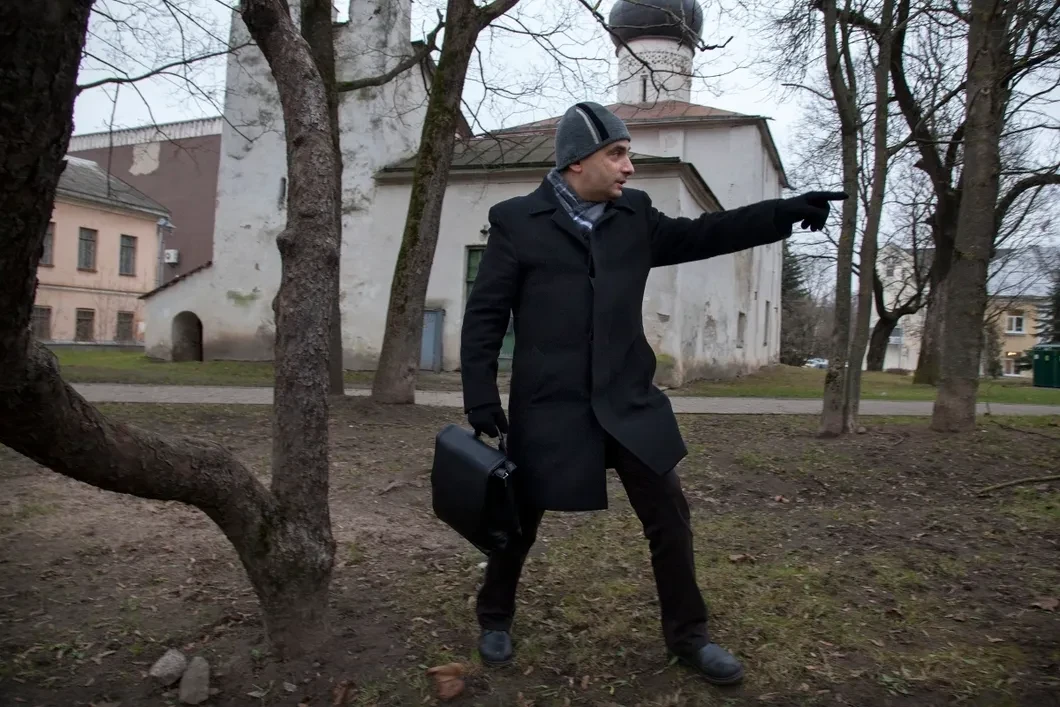
- There is a feeling, Lev Markovich, that your access to the federal level was very tightened. What stops?
“What does access to the federal level mean, Pavel?” I have to stop living in Pskov and start living in Moscow for this? Yes, of course, I work and live in Pskov, I spend a lot of time here, but this does not prevent me from communicating with the “new newspaper”, with the “echo of Moscow”, with the “rain”. Communication is not closed. Of course, if I had constantly lived in Moscow, we would have talked with you more than once a year, and maybe once a month ...
- You have long been speaking on the topics of the federal agenda, but at the same time you remain a politician in the Pskov region. So, more convenient?
- And what is the contradiction here? Now I am already in the second convocation of a deputy of the regional assembly, I have a qualitative understanding of the regional, municipal, private life of people. In the vast majority of Moscow politicians, the so -called federal politicians, this understanding is absent simply because they live a different life. They do not understand what the province is made of. I understand, and this knowledge will not disappear anywhere if it happens that I will live and work in Moscow. But even if this happens, I will spend a lot of time in the Pskov region, because this is my tuning fork, I clearly understand what is happening with the country.
- Just everyone remembers the election of the chairman of the Yabloko, on which you were a clear favorite, but unexpectedly for me and many colleagues were pushed and lost to Slabunova.
- In 2015, the most competitive election of the chairman in the history of the party was held in Yabloko. We had six applicants, two -Tour elections, this never happened. And for the first time, a candidate who lost the election of the chairman did not leave the party. And the previous stories ended with the fact that the loser of the elections either left the party, or, say, froze their activities and ceased to actively work.
I did not leave. As a matter of fact, I consider the Party of Yabloko a party of my values, there are many of my supporters in the party, and throwing these people would be completely unfair. As in every party, there is a struggle for power in Yabloko, there is a struggle for influence.
This year we will have another reporting and election congress, obviously, also in December. I do not have a decision made at this moment, but I do not exclude that I will be elected to the post of chairman again. For this, I need to talk with a very large number of people both inside and outside the party - with representatives of civil society, with journalists, with researchers, scientists. But I'm not afraid of the election ... This may be my difference from many other politicians. I have no fear of defeat, I feel free and confident in any situation.
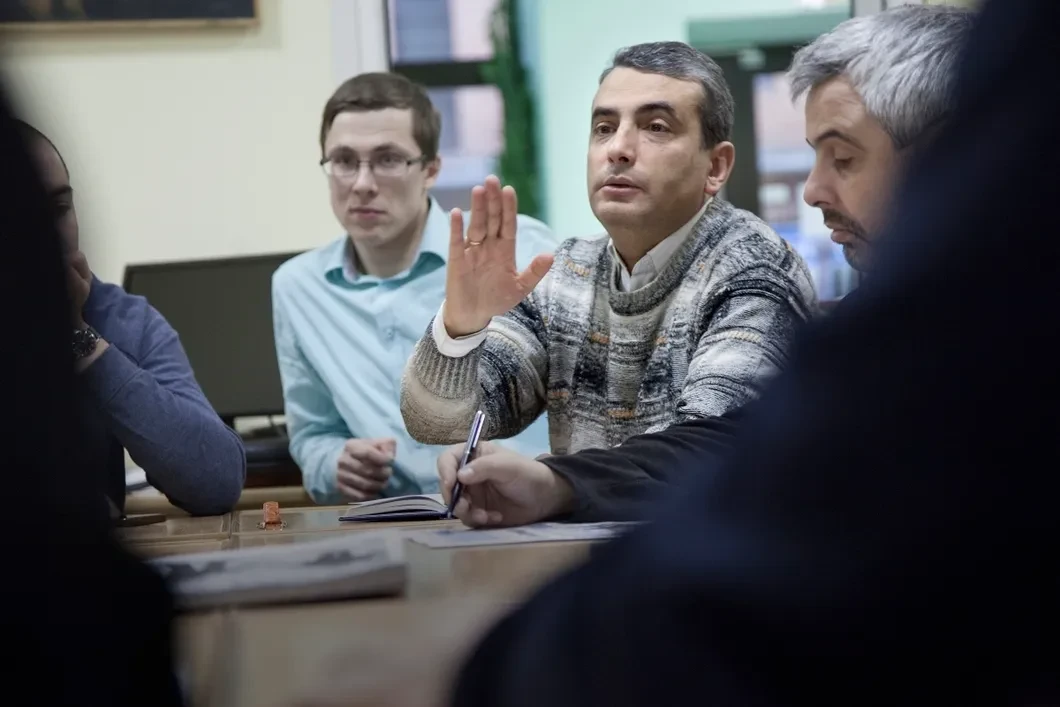
-In the central office, it was said that in 2015 the Kremlin forced the leadership of Yabloko to prevent your victory. What do you know about this?
- Pavel, I was also interested in this issue, but I have no facts that were at least indirectly confirmed. But I have an understanding of the internal struggle in the “apple”, and, in my opinion, my non -removal of the chairman was exclusively the result of this internal struggle.
- And no intrigues from the outside?
- There were intrigues inside. After all, this is also a struggle for influence, finances, albeit in a small party. Yabloko leaders did not want to share this resource inside the party with this resource. Perhaps these people believed that my approaches to politics, party management, and the development of the party are too risky. Но не потому, что так им посоветовали в большой администрации, а потому, что они сами так считают.
Ведь я тот человек, который, будучи в руководстве, готов со всеми советоваться, со всеми вести диалог, со всеми разговаривать, но я не технический председатель, мне невозможно диктовать. В итоге в 2015 году я эту борьбу проиграл, ресурса той части партии, которая меня поддерживала на выборах, оказалось недостаточно.
А разговоры про давление извне — допускаю, что эта легенда родилась внутри партии. Эти люди, будучи тоже испуганными — за себя, за партию, за своих близких, нашли обоснование тому, что повышать риски, избирая руководителем «Яблока» человека с такой биографией и с такими жизненными принципами, чересчур опасно.
— То есть это мог быть акт самоцензуры?
— Допускаю такой мотив.
— Как все пройдет в этом году?
— Если сейчас мной и моими товарищами будет принято решение о моем участии в выборах председателя, мы не будем ориентироваться на условную позицию условной администрации или кого-то еще. Если мы видим смысл приходить в руководство партии «Яблоко», ставить перед собой политические задачи, как, например, прохождение фракции партии в Госдуму в 2021 году, мы будем работать на этот результат вне зависимости от того, кому и что кажется. Мы сами принимаем решения, мы не объекты политики, мы ее субъекты. Это в администрации президента пусть думают.
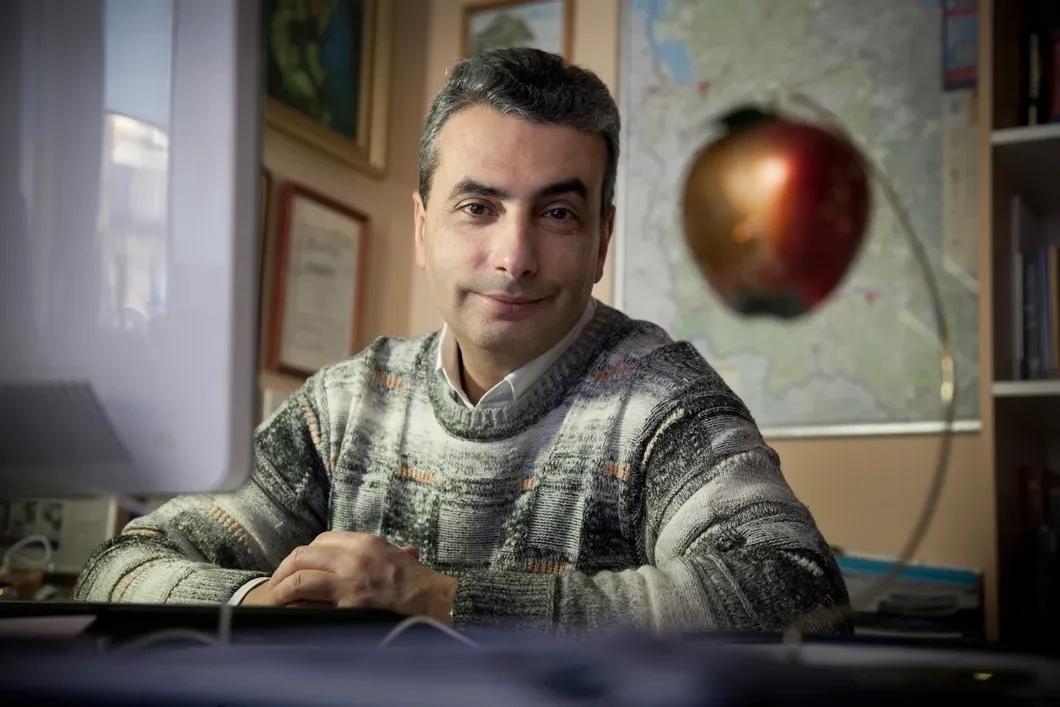
— Вечный вопрос. С какими демократическими силами вы готовы действовать вместе? Navalny?
— Павел, ответ очень буквальный. В первую очередь демократическая партия должна работать с обществом. Слабость демократических организаций связана с тем, что они имеют заведомо недостаточную общественную поддержку. Судьба власти решается на выборах. Это не вопрос общения демократических или околодемократических политиков между собой.
Конечно, мы можем вести переговоры о том, чтобы какие-то партии прекратили свою деятельность и, допустим, влились в «Яблоко». Но ведь это другие партии приходят к нам и говорят: «Слушайте, закройте уже, наконец, ваше «Яблоко», мы 25 лет из-за вас ничего не можем сделать».
Но штука в том, что те, кто просил «Яблоко» закрыться, уже политически не существуют. И те, кто сегодня просит «Яблоко» закрыться, через несколько лет исчезнут. Такова историческая традиция в новой России.
У меня есть опыт переговоров с демократическими политиками при подготовке выборов в Государственную думу в 2016 году. Полгода я ездил в Москву, до последнего пытался из российских демократов создать единую команду.
И должен вам сказать, что сейчас, уже после того опыта 2016 года, я намного более критично смотрю на наших демократов. Я вижу там запредельный эгоизм, я вижу там высокий уровень не то что неискренности, а напрямую нечестности. Я понимаю, что люди, называющие себя демократами, используют это слово, но в жизни не ведут себя как демократы. Они не готовы вести демократические переговоры, выстраивать демократические отношения, с уважением относиться к другому мнению.
Мы же сторонники разных точек зрения, мы изначально исходим из того, что мы можем быть разными, и мы должны это принимать с уважением, мы не должны никого заставлять закрыться и ликвидироваться. Мы можем обсуждать, дискутировать, каким образом лучше вести политическую работу, но при этом для начала мы должны поддерживать откровенные отношения между собой, а не получается.
И вместе с тем мы продолжаем воспитывать своего избирателя: ходите на выборы, выражайте позицию, не расхолаживайтесь, не опускайте руки, не чувствуйте себя бессильными, гоните отчаяние.
Это очень вредно — призывать избирателя к неучастию в гражданском процессе. Завтра нам потребуются эти голоса, а нам люди скажут: «Ребята, простите, вы только что, год назад говорили нам — никуда не ходите, там все сукины дети, близко не приближайтесь вообще, даже не берите в руки избирательные бюллетени». Это бумеранг, он ударит по нам всем.
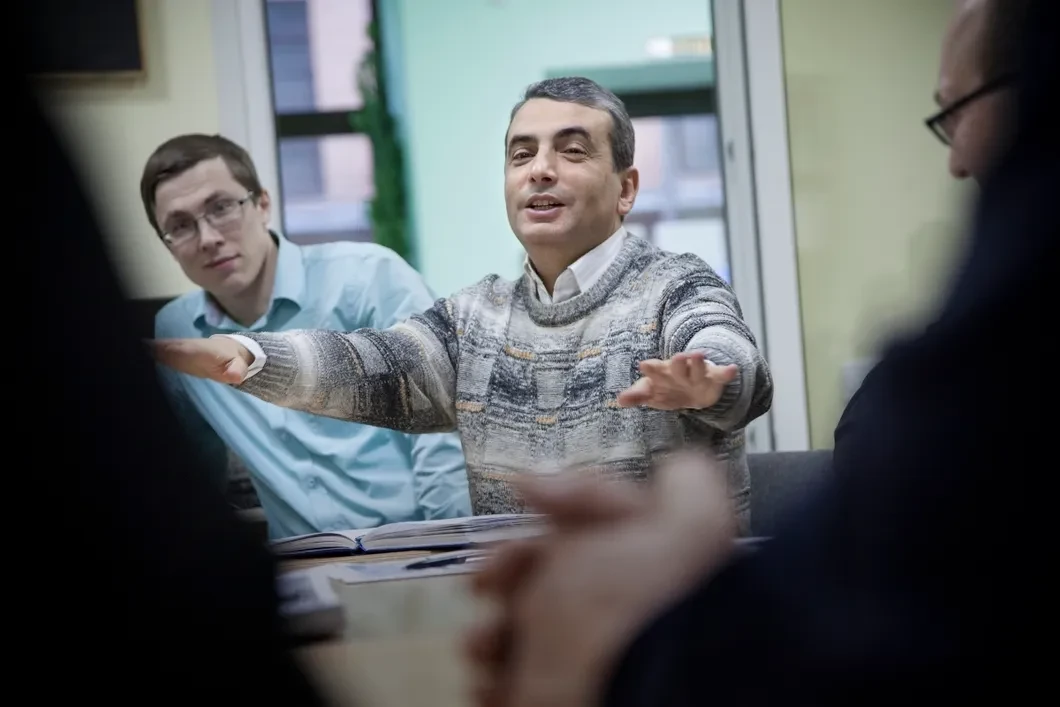
До тех пор пока мы можем изменить власть легальными, политическими способами на выборах, мы должны это делать. Если, не дай бог, объявят военную диктатуру, запретят политические партии, запретят СМИ, запретят выборы, мы с вами будем в концлагере, и тогда будем жить по законам концлагеря и бороться по законам концлагеря.
А пока мы находимся на территории формально свободного демократического государства, которое де-факто не является таковым, но все атрибуты этого государства присутствуют. Пусть они имитационные, но мы должны эти институты наполнять смыслом. Ах, у вас нет честных выборов? Мы приходим, и начинаются более честные выборы. Ах, у вас нет прозрачной власти? Мы приходим, и начинается прозрачная власть. Ах, у вас нет депутатов, которые способны выдвигать альтернативную позицию? Приходим мы — и становимся такими депутатами. Без того, чтобы воспитать альтернативу, чтобы общество видело эту альтернативу, мы ничего не сможем сделать.
— Вспоминаю вашу фразу, что «в нашей стране много людей, которые могут заменить Путина, и я один из них». Доживем мы до того дня, когда увидим в бюллетене ваше имя, Лев?
— Я буду стараться.