
Translated material
"And you would vote against"
Monologues of deputies who did not support the law on the "sovereign Internet"
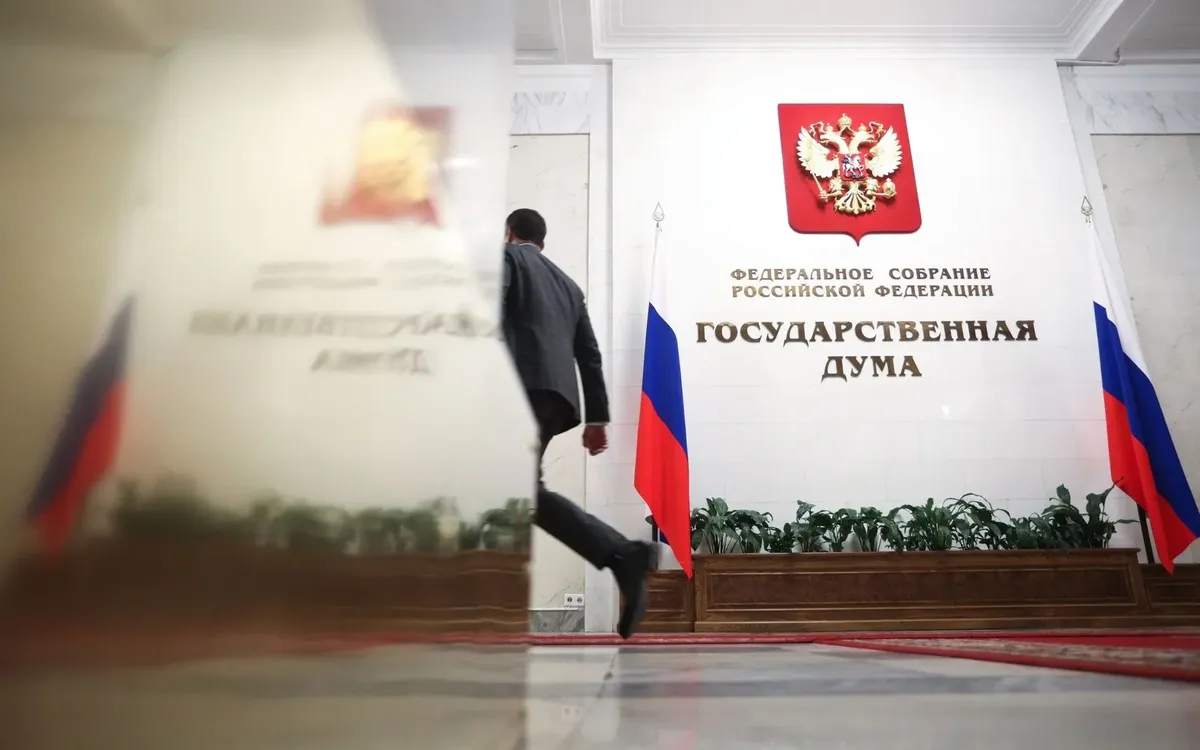
On April 11, the State Duma adopted in the second reading the law on the “sovereign Runet”, implying the possibility of disconnecting the Russian segment from the World Network. 320 deputies voted for the bill, 15 against the United Russia voted unanimously “for”, the parliamentary opposition, which visited the plenary meeting, opposed. Among them are 12 deputies from the Communist Party, 2 from the LDPR and one from “Fair Russia”. The correspondent of Novye found out from the parliamentarians why they do not support the party in power in the desire to limit the Russian Internet.
Vladimir Blotsky
State Duma deputy from the Communist Party
-I voted against because I think that there is no financial and economic justification that would make it possible to agree with the concept presented. In the first reading, I also voted against. I believe that nothing has changed for the second reading, so I could not support this bill. The position of the faction is in many ways similar to mine. We had a free vote, but everyone proceeded from the actually submitted bill and amendments to it. We cannot vote for the laws not calculated with unreasonable consequences.
Vera Hanzya
State Duma deputy from the Communist Party
- This bill, as always, was furnished with an exceptional lie, that is, good intentions. It seems like since 2014 we have a threat of Internet disconnecting due to sanctions. But why were we against?
Of course, we need to insure yourself with this, but I and I believe that the most important thing [in the bill] is to take control of the Internet, and therefore the free thoughts of our population.
Today, one after another, laws are toughening the Code of Administrative Offenses. United Russia pushed and adopted without our participation a law on insulting power. Well, where is the most insulting power? Is it really in newspapers or federal media? All negativity pours on the Internet, into social networks.
Alexey Kurinni
State Duma deputy from the Communist Party
- By the second reading, the bill has become even tougher from the point of view of restricting information. There were new responsibilities for the owners of networks, those who control the traffic exchange points, provide relevant information to Roskomnadzor. There were additional costs assigned to telecom operators. The amounts are rather big: we are talking about tens of billions of rubles, which, as I understand it, will form the basis of the next increase in communication tariffs, in fact - for citizens.
This bill is a desire to fulfill previous unfulfilled laws in a new way. For example, providing encryption keys, as it was with Telegram, or the need to store personal data for operators that is not respected. Roskomnadzor cannot control all this by virtue of technical, organizational and, as I understand it, intellectual restrictions. They failed to unravel the codes. Therefore, they decided to make it easier - cut off traffic.
Of course, this is a number of repressive laws, the famous three - “Fake News”, insulting power and this, so -called domestic Internet.
The decision of the faction was not to support the bill. Someone voted against, someone did not participate in the vote-mainly those who were not in place.
Sergey Panteleev
State Duma deputy from the Communist Party
- I am in the opposition party, so I see that through this law measures can be taken, which are not voiced in the text.
By and large, any person can bring any person to this law and limit something, but this would not want to.
The laws on fake news and disrespect for power are from the same opera. Of course, I am opposed to scolding the symbols of state power or the country itself. But [in these laws] there are also restrictions under which a person can be found by scolding power. Unfortunately, we have enough reasons for this. I read somewhere that in tsarist Russia to scold power was the only compensation for poverty.
We must respect your flag, homeland and country. Another thing is power that does not always work for the good of the people.
Vladimir Bortko
State Duma deputy from the Communist Party, film director
- I voted against this bill, because you would vote against. I am for the maximum openness of everything, for freedom of speech. The people should speak out the way they want and where they want. In the first reading, I either did not vote, or voted against.
I, in principle, against any oppression of the opinions of citizens. It doesn’t matter if they speak out about age, about appearance - they must be expressed. Say what they think.
Sergey Shargunov
State Duma deputy from the Communist Party, writer
- In my opinion, this law is foggy and contains many threats of freedom of speech. And I always vote in the Duma according to conscience - against any dragon laws.
In addition, we are talking about the development of a colossal budget for an indistinctly and semi -competitively formulated needs. I trust those professionals who are afraid that the implementation of this vague law can reduce the speed of the connection and lead to error blocking.
Vasily Vlasov
State Duma deputy from the LDPR
Firstly, at first, representatives of the relevant committee [State Duma on Information Policy] said that this law would not require any financial investments, but in fact it turned out that several tens of billions of rubles would be required.
Secondly, to think that the United States will turn off us for no reason, not quite right. Many representatives of the authorities took up arms against some Internet media. We understand that some media, financed by the West, simply will not be able to convey information to our citizens. Why then the United States turn off their own media, depriving Russians of access to their information?
We do not want to turn our Internet into a kind of Chinese, where all sites are filtered and are simply not allowed to the consumer. Therefore, I voted against amendments and against the law in the second reading. In the third reading, the LDPR faction, most likely, will also not vote or will vote against the law.
Our state now has nowhere to invest money? There is healthcare, there is education, and we are engaged in the Internet.
If you want to engage in safety, it is better to strengthen the turnstiles in the subway.
I also voted against the laws on fake news and disrespect for power. I join my colleague Sergei Ivanov, who spoke from the rostrum that the authorities needed to earn respect.
Denis Parfenov
State Duma deputy from the Communist Party
- What motivates the authors of the law by the need for its adoption? The fact that there is a threat of cybersecurity of Russia, which can lead to a disconnection of it from the World Wide Web. What kind of threat it is, it is not said from the word at all. The amendments to the second reading specify that the list of these threats should be determined by the government. That is, in fact, they deduced this from the action of the law.
It is absolutely not clear how the expensive equipment that they are going to install will help us if the evil Western capitalists will turn us off this Internet.
The biggest question is just for equipment. One side of the matter is material. Money could be found the best application - give orphans, spend on social needs. But if you discard the monetary question, the most important thing is what kind of equipment it will be? What will it serve? Based on the text of the law, architecture is built for deep censorship of traffic-apparently it will be powerful DPI filters. We understand that centralized Internet management is being created, that is, in fact, the basis is created for the Russian Internet disconnected from the network.
Oleg Shein
State Duma deputy from "Fair Russia"
- I am an opponent of the ban on the dissemination of information with the exception of the information that contains a call to violence, inciting hatred on a national, racial, religious basis. Otherwise, people have the right to freely receive information. A person is called a reasonable creature-he himself can draw up causal relationships and come to the right conclusions.
The Fair Russia faction did not vote for these laws [on “sovereign Runet”, fakes and disrespect for power], because it does not support such decisions. But inside the fraction there are different points of view. Opinions are expressed that the law on autonomous Runet can insure Russian information networks when trying to turn it off. This point of view takes place, this is the subject of internal discussion. In order not to arrange disputes, we decided not to vote at all. I considered it reasonable to deviate from fractional discipline and vote against. In Fair Russia, this is possible.