
Translated material
Dmitry Butrin: Active inequality
Dmitry Butrin 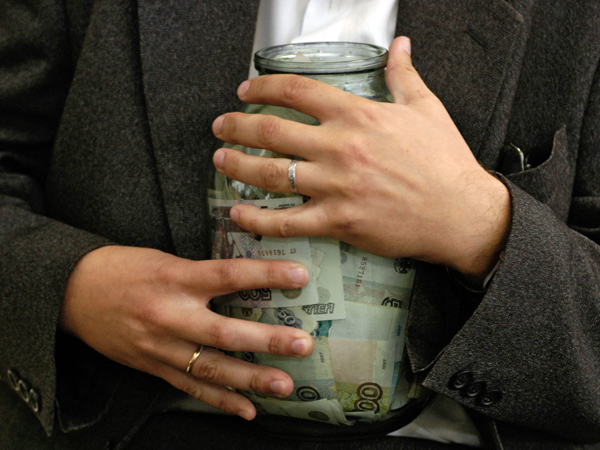 Money in the bank photo Moscow Moscow/Flickr.com
 Dmitry Butrin
 OCCUPY Wall Street, February 29, 2012 / Asterio Tecson / Flickr.com
 Money in the bank photo Moscow Moscow/Flickr.com
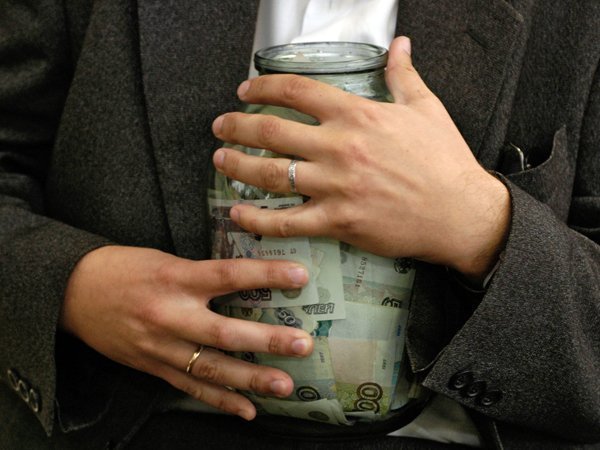
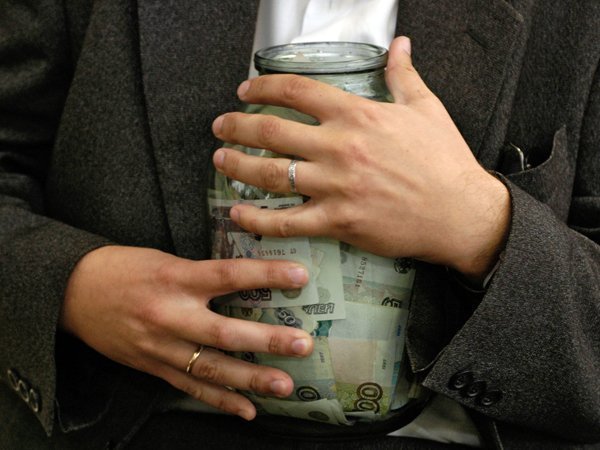
In 2018, 3% of the most wealthy population Russia accounted for 89% of all financial assets, 92% of all urgent deposits and 89% of all cash savings in the country, Kommersant reports with reference to analysts of the Higher School of Economics and the Institute of Research and Expertise of Vneshephon Bank. The results of a study based on data from consumer finances of the population and banking statistics were presented at the XX April Economic Conference of the Higher School of Economics.
Dmitry Butrin, deputy editor -in -chief of the economic policy of Kommersant, shared his opinion on the results of the study with Polit.ru.
Dmitry ButrinSuch studies that evaluate the structure of assets or income of the upper quintil, the upper ten, three or one percent are usually not very reliable. Qualitative assessments are clear, since the investment results, albeit with a certain error, are evaluated and, in general, it is approximately clear what belongs to. However, quantitative estimates are very difficult. Because of the Institute of Trusts, due to long inter-border chains and breaks in them, due to the existence of offshore jurisdictions that do not disclose information. And it is quite curious that this study uses an unusual methodology.
What is this research talking about? Firstly, it says that privatization was largely, as was supposed to be the authors of its concept, a scatter of playing bones. So you took the playing bones, scattered around the population, someone got six, and someone was nothing. Then everything happens as it should occur in a slow, sluggish market, in which there is no large mixing. Who got something, that got it.
In principle, it cannot be said that the authors of privatization did not want anything like that. Of course, they expected that mixing assets would be more active. It didn't work out very much. I will not be surprised if it turns out that when you look at the period 1995-2015. Three quarters of the assets are one way or another in the origin of privatization. From the point of view of the economy, the rest of the quarter is interesting. Since it is she who is the economy itself, it is it that is the history of transactions and the history of the property increased.
So this study shows that the Russian economy is extremely inert, the processes are slow, and we have not gone very far from the distribution of privatization times, although we significantly increased the cost. This, by the way, shows how the cost increases. If you monitor assets, if we update fixed assets, the shareholder will generate financial flows. Financial flows will generate profits. You can reinvest most of the profit to increase the share value, a smaller part to add up and form the same personal wealth.
I saw similar research in the USA, the distribution is quite similar. There are no good works of this kind in China, but we see about the same. There, of course, are somewhat different principles of the economy, but the result is still about the same. Does such inequality interfere in the distribution of assets of anything? There is no answer in the work, but, in my opinion, it does not interfere. When looking at other countries, with a variety of economic structures, it turns out that in practice it is not very important for the economy in whose hands financial assets are located.
OCCUPY Wall Street, February 29, 2012 / Asterio Tecson / Flickr.comThe second question arising, will there be something sensible if everything is “taken and divided”? In principle, the answer to the first question leads to the idea that there will be no effect, except for transaction costs,. If for the work of the economy it is not very important in whose hands are financial assets, then there is no reason to say that redistribution will somehow contribute to the growth of the economy.
I can send to the texts of Rostislav Kaplyushnikov, who analyzed a very large set of issues related to profitable, property and expenditure inequality and hierarchies. Apparently, some of the inequality ranges, which, in particular, Russia, can inhibit economic growth. But at the same time it is also important to understand that inhibition of economic growth and restriction of the current level of consumption of the population are completely different concepts. Such economic growth is possible in which 97% of the population will reduce their consumption. And you can arrange such a recession that 97% of the population will increase their consumption. Not long, but it is possible.
It does not follow from all this that such a distribution of assets is ethical and optimal. Probably, something else could be constructed from all this. But, firstly, the issue of the cost of such construction arises, and secondly, the possibilities of such construction.
It should also be noted that such a “crooked” distribution of assets is usually perceived as a result of the action of some kind of devilish machine or someone’s evil will. Chubaisa, Yeltsin, world backstage, planet Nibiru and so on. I would look for the answer closer, not in the garden of Anatoly Borisovich and not by the Jews. If in a different economically and politically arranged countries everything comes to one result: one, three or five percent of the population concentrates a significant part of the assets-this means that there are certain features in the global economy that generate the concentration of capital.
At the same time, these people, at least those whom I know, do not take practically any actions to happen. This is precisely “money for money”, and not that “evil oligarchs make titanic efforts to concentrate 90 percent of assets”. There is, in general, there is, in general, what problem in the financial machine leads to this, but they go beyond any research. There is a feeling that this is just a consequence of the device of the banking system that has existed for many centuries and about the same in the world.
In connection with the publications about this study, they began to discuss the flat scale of personal income tax and the ability to cancel personal income tax for those who make little money. From our minimum wtter, no one actually and does not pay, there are standard tax deductions. If you need to subscribe somewhere so that the possible deductions are increased, I am quite ready for it. But another thing is that in solving the problem of inequality this will not give a lot, it is rather simply a certain social payment. This is a little affected by the inequality for expenses, but income inequality is generated not there. As for the progressive scale of personal income tax, such a system operates both in China and in the USA. And we have a flat scale of personal income tax. However, the inequality in the distribution of assets is approximately the same.