
Translated material
"Many Russians are offended"
The next four years, Estonia will be managed by the party of the Russian -speaking minority in the coalition with the nationalists
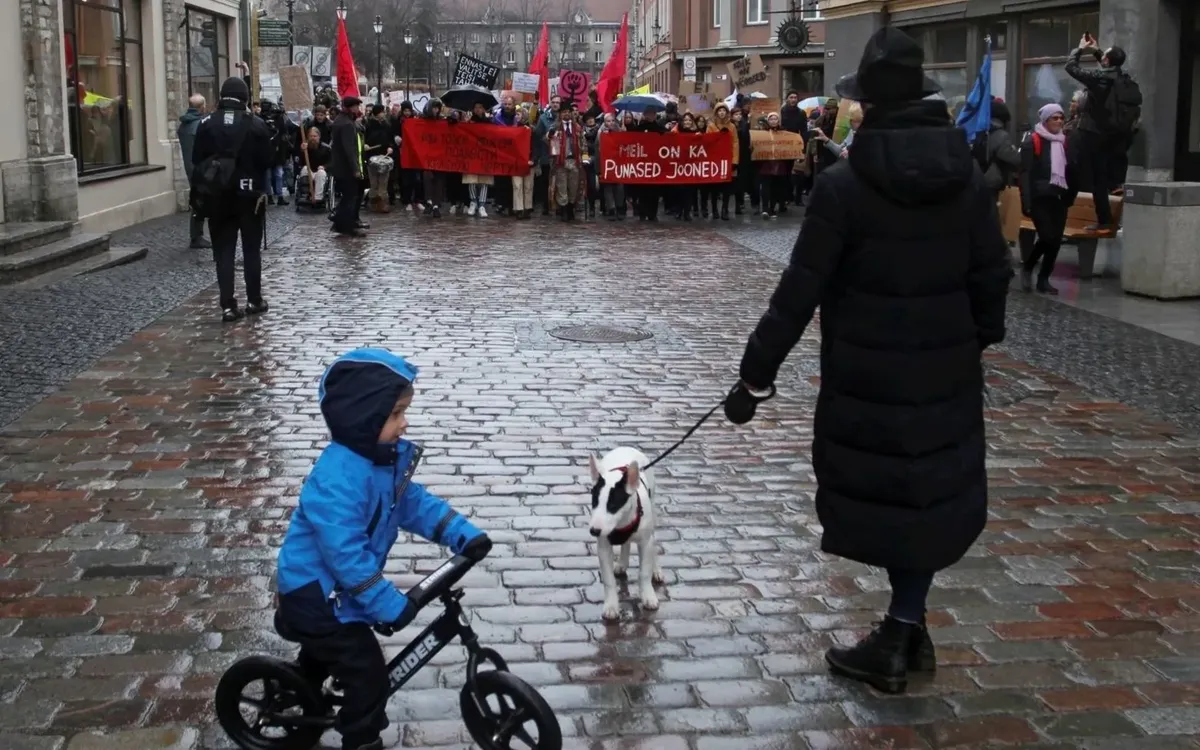
In the last parliamentary elections in Estonia, the Liberal Party of Reforms won. However, the ruling coalition will be formed by the pro -Russian Center Party along with the ultra -right from Ekre. On the agenda of the new government - refusal to receive refugees, a more stringent migration policy, and the issue of translating schools into Estonian is still frozen.
How the Prirusian Party and Nationalists agreed
In the past parliamentary elections, the first place was taken by the reform party, the Center Party, representing the interests of the Russian -speaking population, was in second place, and the third went to the nationalists from Ekre. In total, five parties went to the parliament. According to Estonian legislation, the president first proposes to form the ruling coalition of the winning party, if she does not succeed - the second batch in line, and so on.
The winning reform batch could not be enlisted by the support of the majority: the government offered by them, the Estonian parliament raised them on April 15. This time, the leader of the party, this time, is not destined to become the first woman-Prime Minister in the history of Estonia.
The second in line is the leader of the centrists Yuri Ratas, and his coalition is already ready. Formally, this coalition from the centrists, nationalists and the Conservative Party "Fatherland" should still approve the parliament - this will happen in late April. But there are no intrigues here - three parties together represent the parliamentary majority, so the coalition will be supported.
At the same time, both reformists and the centrists said before the elections that they were not ready to work with nationalists. Immediately after the election, the reform party invited the centrists to start negotiations on the creation of the coalition, which seemed logical - together the party had a significant superiority of votes. However, negotiations did not go long: a day later the centrists announced irreconcilable discrepancies in the field of tax policy, and the potential coalition broke up.
And a few days later, the centrists announced the start of negotiations with the EKRE and the Fatherland party - in this situation, they receive the majority in parliament.
Why they don't like ekre
Many voters - and some members of the Center Party - did not appreciate a sharp turn to the right. The mayor of Tallinn Mikhail Kylvart condemned the beginning of negotiations, but entered the team of negotiators. And another member of the party’s board, Raymond Kaliulaid, left the board in protest, and after signing the coalition agreement - generally from the party.
“In this agreement, I do not see plans to make Estonia more powerfully,” the politician wrote on his blog. - I do not see any plans to increase income, salaries and pensions of people. The Russian community should concern the lack of clear formulations regarding the future language of training in schools. ”
Negotiations of the centrists from Ekre also condemned the Russian-speaking wing of the Party of Social Democrats.
“As soon as Ekre, I did not insult and humiliated us, Russian-speaking ones-we are the“ fifth column ”, and“ parasitic tibli ”, and“ additional risk ”, and“ cancer tumor, ”the centrists' social democrats say. - One gets the impression that this party does not consider us for full -fledged people at all. <...> And you, however, do you believe that after all this there will be at least one Russian -speaking one who will support the coming of this party to power? I really do not want to believe in it. "
However, the EKRE leadership is sharply in its assessments not only in relation to Russian -speaking ones. So, indignation caused a recent statement by the deputy chairman of the party Martin Helme about the need to ban free abortion, and the gynecologists accused of violating the oath of Hippocrates for the fact that they "kill four and a half thousand children before the birth."
A few days later, Helme distinguished himself again: he asked Estonian public television to remove from the air and punish several journalists who, in his opinion, biased and critically illuminated the activity of Ekre.
In both cases, the head of the Center Party of Yuri Ratas publicly apologized for the potential coalition partner.
"General Estonia" or "Estonian Estonia"
A few days after the start of the negotiations of the centrists with the nationalists on Facebook, the General Estonia group was created, now more than 28 thousand people have been signed on it (by local standards - a lot), and the group has grown into the public movement.
“General Estonia stands for the worthy, rich in the capabilities of Estonia, where mutual respect and care for people dominate,” the main page of the site of the new movement and the logo in the form of a black asymmetric heart says. And although “General Estonia” did not say anywhere that the new movement originated in the peak of the coalition with the nationalists, the latter took this in this way - and in response they launched their flash mob: they began to publish a heart in the colors of the Estonian Estonian Estonia.
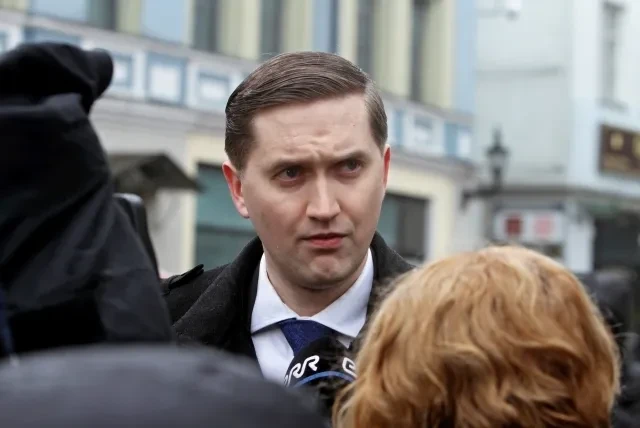
“If the owner or mistress put on the threshold of his house a beautiful sign“ General House ”, then he would be automatically open to everyone - regardless of the personality of his intentions. My house is not a common house. And I choose who I would put on the door, ”Yaak Madisson, deputy of the Parliament from Ekre, explained on Facebook.
“After all, this is betrayal
While the reform party agreed with the Social Democrats, the centrists, nationalists and conservatives completed negotiations, divided the ministerial briefcases and created the coalition. The 36-page document surprises with its slurred.
“The contract is very general,” the Estonian political scientist Peeter Tim fixes. - The only point that is scheduled in detail is the pension reform. Otherwise, I do not understand how exactly we will live in the next four years. ”
The viability of the future coalition raises questions. “It is written in the coalition agreement: in order to stop the leakage of money in Latvia, we are going to reduce excise taxes on alcohol and fuel,” recalls Peeter Time. - The next day, the future Minister of Economics says: no, there will be no decrease. That is, disputes have already gone. "
The future of the schools of Russian -speaking national minorities is not spelled out in the contract: to leave them, (as made in Lithuania), or gradually translate all schools into a national language (as planned in neighboring Latvia). The centrists, being a party of the Russian -speaking minority, naturally went to the polls with the slogan about the protection of Russian schools. Ekre and the Conservative Party "Patronymic" in their programs talked about the need to transfer Russian schools to Estonian. What will happen in the end is incomprehensible.
But it is obvious that this coalition will cost the Center Party expensive. The support of the party by Russian -speaking residents of Estonia has already fallen from 67% in February to 47% at the end of March. “After all, this is a betrayal,” says political scientist Peeter Tim. - Many Russians are offended. How strong - we will see in two years, in the municipal elections "