
Translated material
The era of subsidiarity
What to expect from the new management of the ECHR
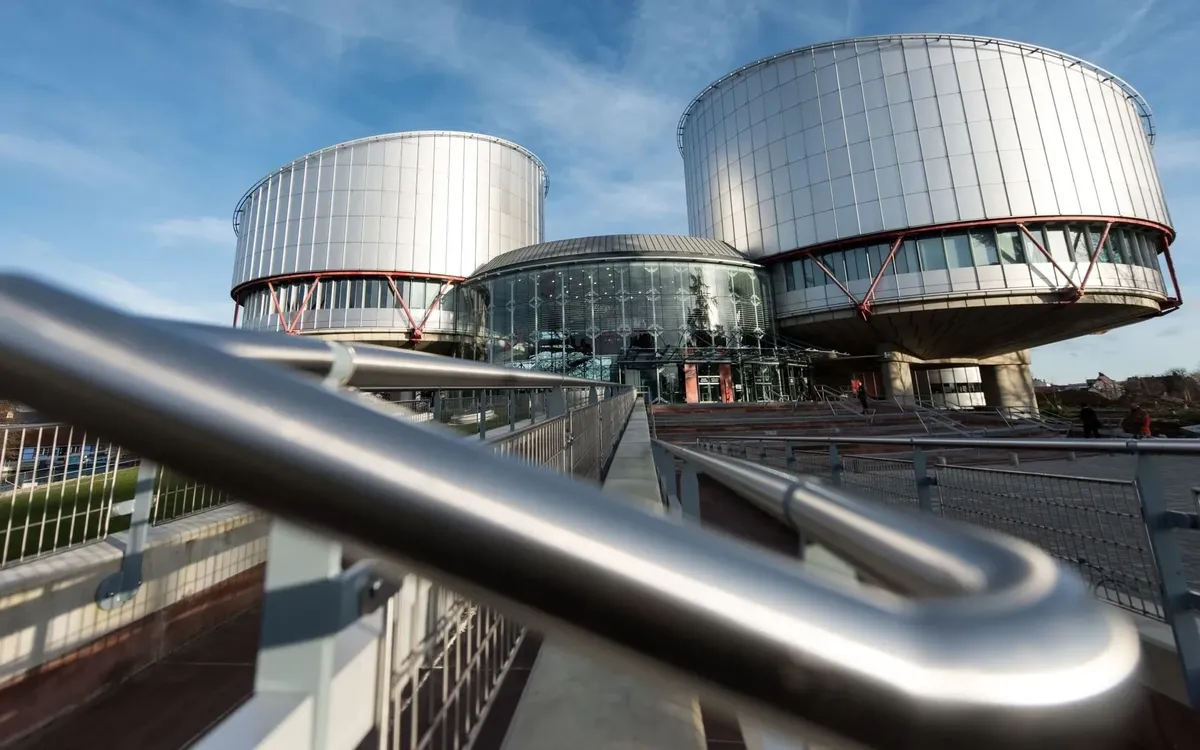
In April, a plenary meeting of the ECHR was held, at which 47 judges chose a new chairman. On May 5, Gvido Raymondi, elected to the court from Italy, will be replaced by the Greek judge Linos-Aleksandr Sicilianos, who has been in recent years one of the two deputies of the chairman. The liberated chair of the deputy will be occupied by the Icelander Robert Spano, the chairman of one of the five sections of the court.
The identity of the Chairman of the ECHR practically does not affect the content of the decisions: like any other judge, he has one vote during a meeting of judges and sits in all cases filed against the country from which he is elected, in position presides at meetings of the Grand Chamber. For the rest, the role of the chairman is the organization of work and the representative office of the court in the external world, but when formulating conclusions in a particular case, any other judge may have the same weight.
Nevertheless, the choice of the chairman shows how most judges sees the direction of further development of the court, expresses dominant trends in the interpretation of the provisions of the European Convention on Human Rights. In Strasbourg there is no strict division into liberals and conservatives, as in the US Supreme Court. The judge, advocating to strengthen the rights of protection in the criminal process, may be conservative in socio-political issues. The views of the judges can be described as the desire or to provide the State parties to the Convention more discretion when making decisions and condemn only completely unacceptable, or to create a single corps of rules on the basis of the Convention and strictly monitor its implementation by states.
Although the chairman is elected for three years, the choice of Sicilianos is temporary, his nine -year judges will end in a year, on May 17, 2020. A graduate of the University of Athenian, he continued his studies and scientific work in Strasbourg in the 1980s, when the University of Strasbourg was named after Robert Schumann, and the ECHR was not in a huge bright palace, but in a small functionalist building. Its main activity was research and teaching, the dissertation was devoted to the countermeries and self -defense of states in international law. In court, he is one of the few specialists in this field, the vast majority of judges are experts in various branches of domestic law. The Russian observer may noted that at the hearing in the Beslan case, Sicilianos asked the parties questions about the applicability and compliance with the norms on the international legal liability of states developed within the UN.
But the choice of deputy chairman of Robert spano, perhaps, is much more indicative and alarming. He will be a judge until November 2022 and the most likely chairman from May 18, 2020. The spano is most known that he proclaimed the “era of subsidiarity” in the court’s activities: Strasbourg does not interfere in the decisions adopted by states if the process is carried out in such a way that everyone can speak out, and all the arguments of the parties received an impartial assessment.
The bar for states decreases, and for applicants, it rises.
Although this prospect can hardly inspire supporters of a single European legal space, there is no predetermination. The chairman in 2012-2015, the judge from Luxembourg, Din Shpilmann showed that you can not only occupy firm liberal positions and strengthen the right to defense in the criminal process, but also collect the majority around him. His merit was the decision to prohibit the prohibition of the confessions received without a lawyer, on the right to interrogate all the witnesses of the prosecution, on guarantees not to be subjected to the court twice for the same actions. The states of Europe resisted the strengthening of Strasbourg control and began to appoint judges with other views. Therefore, the chairmanship of Gvido Raymondi can be remembered without nostalgia. Under him, to almost all the principles developed by the court, a comma was added, after which it followed that it is still possible to limit the rights of protection if, in general, the process remains fair.
And at this time
The Ministry of Justice proposed to pay compensation to the prisoners for poor conditions of detention without complaints in the ECHR
These, nevertheless, are examples from the field of “thin configuration” of the conventional mechanism, therefore, for a significant majority of Russian affairs, it will not be important who is in the leadership of the court. On the prohibition of torture, inhuman conditions and excessive duration of detention, the inadmissibility of acceleration of peaceful demonstrations and abuse of detentions that are placed in hundreds and thousands of complaints from Russia, a consensus developed in Strasbourg.
Kirill Koroteev, head of international practice, international human rights group "Agora"