
Translated material
"Some just survive"
Prime Minister Medvedev reported to the State Duma: he talked about poverty and national projects, but forgot about "pension reform"
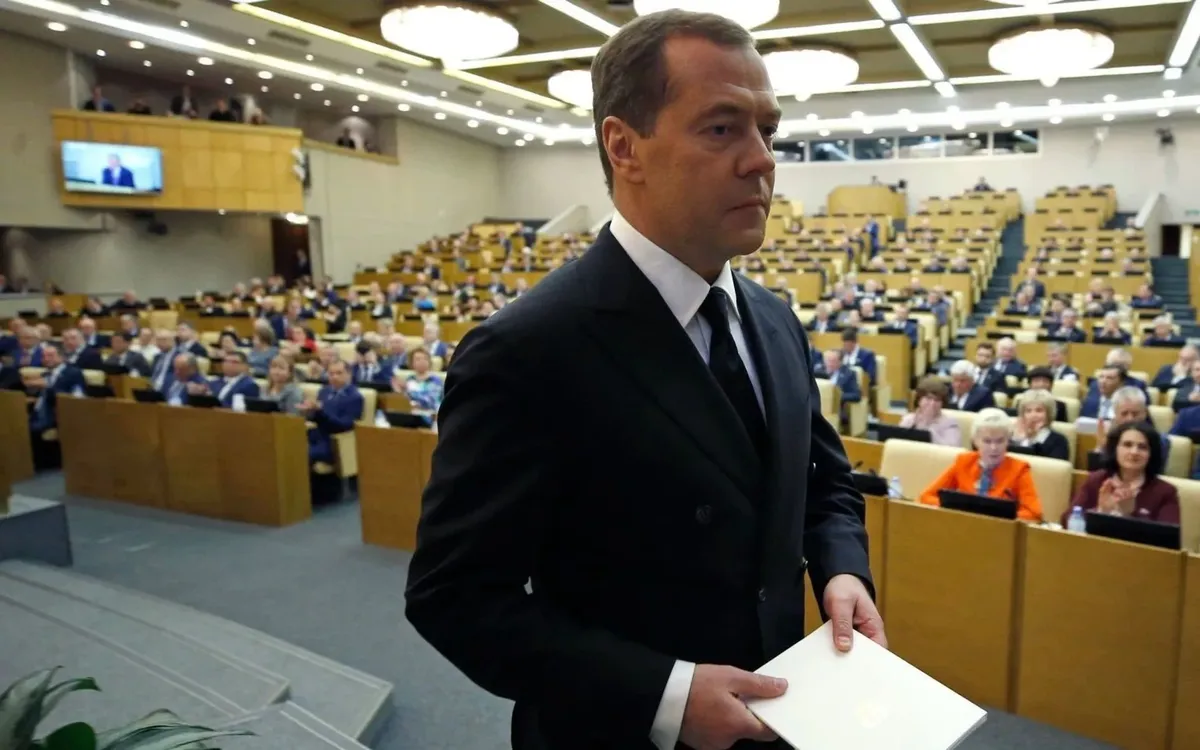
Poverty, low pensions, lack of access to medical care - topics on which Dmitry Medvedev focused on the report on the results of the government in 2018. “Some simply survive (...) almost 19 million people are poor - this means that people live as they should not live,” these words of the prime minister outside the context look like an honest statement of the fact about the situation with the standard of living of the population. However, at the same time, Poverty was an argument for recognizing the urgent need of the country in National Projects, which were approved by Vladimir Putin for 2019-2024. Medvedev was instructed to control these “national projects” personally.
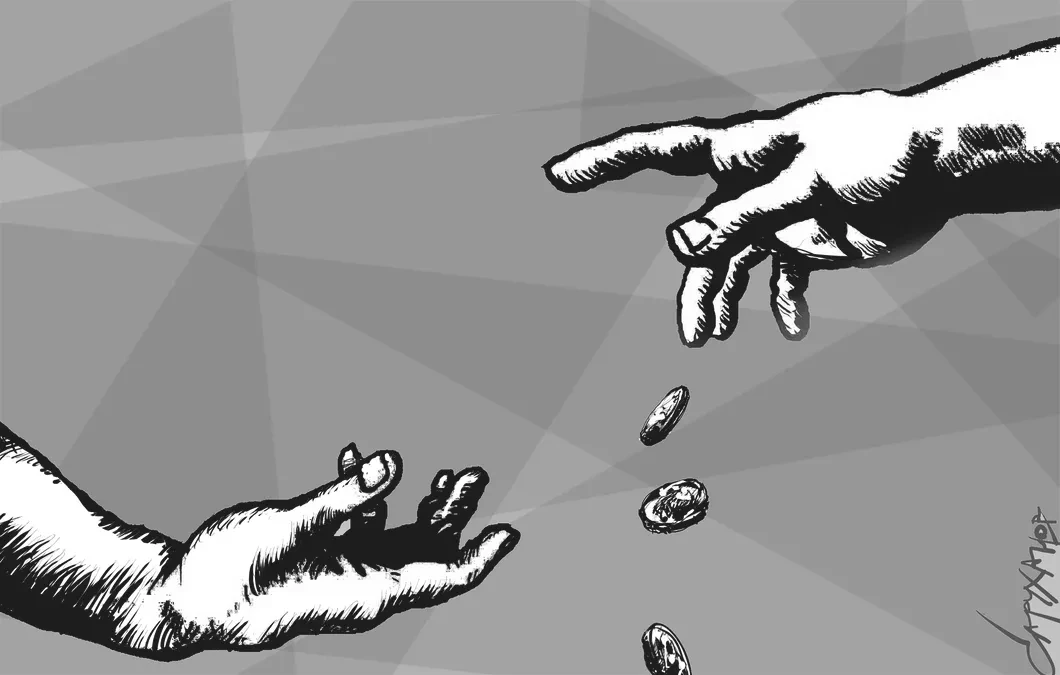
The amounts allocated for national projects sounded very impressive, and 26 trillion rubles will go there in total. “An unprecedented figure,” the prime minister quietly remarked, “they [national projects] in a sense are a drawing of future Russia. The responsibility here is very high. ”
On the eve of the “Vedomosti”, referring to the sources in the Duma, they said that the deputies would not ask Medvedev “unnecessary questions” about raising the retirement age - this is how it turned out: the deputies did not ask the prime minister any uncomfortable question. But this was not surprising either - Medvedev spoke to more than three hundred “United Russia”. But in the process of discussion, the head of the Ministry of Economic Development of Maxim Oreshkin did not pass by the head of the Ministry of Economic Development [On March 6, the State Duma speaker Vyacheslav Volodin interrupted Oreshkin’s report in connection with his “unpreparedness”, the deputies then also criticized the Minister - T.V. ]. Medvedev ironically advised deputies and the ministry to cooperate more with each other:
“Well, you carefully follow the work of the Ministry of Economic Development. And the Ministry of Economic Development [monitors] the work of the State Duma. So you experience mutual sympathy. I hope it will be further. ”
Maxim Oreshkin smiled at this remark in response to this remark, and laughter was heard in the hall.
Read also
Will there be a palace with the colonnade in the elite village of Moscow, Dmitry Medvedev’s declaration?
In the first part of his speech, Medvedev spoke about the achievements of the government for 2018. He relates to them the construction of perinatal centers, the development of an outpatient assistance network, the allocation of money to combat oncological diseases, the construction of sports facilities, the growth of investments, the exit to the surplus budget, the reduction of external debt by more than $ 60 billion - the government’s successes were transferred in numbers. The praise also went to the deputies of the State Duma - for more than 300 laws adopted last year.
Then the prime minister raised the theme of poverty of the population, and mainly these words of the head of government were quoted in the media as the leitmotif of the entire plenary meeting. In fact, the recognition of the presence of poverty in the prime minister’s speech looked logical, given the recent population surveys about the degree of dissatisfaction with the activities of the Cabinet. At the beginning of this year, the Levada Center published the results of a survey about specific claims of Russians against the government. In the first place (57%) was the increase in prices and the drop in incomes of the population, in the second (46%) - the inability to provide people with work, in the third (43%) - the lack of concern for the social protection of citizens.
“None of you need to explain that today life in our country is far from the ideal for which we are all working with you, regardless of fractional affiliation. It is difficult for many people. Some just survive, ”Medvedev said. Then it was said about low pensions: “We will not deceive anyone: a worthy and interesting life is also a matter of money. Improving the living standards of older people is our national goal. Such people are especially vulnerable to poverty. ” And then about the regions: “What to hide-the regions live differently. There are rich, there are not rich at all. Each region must find its own niche. ”
“We will not deceive anyone”, “what to hide” - the prime minister especially focused on the government recognizing the main problem for the population, as well as the fact that reducing the level of poverty is one of the goals of the country's development (according to national projects) set by Vladimir Putin to the next five -year plan.
Problems with access to medical care also, according to the prime minister, are solved with the help of national projects - as Medvedev said, more than 2.6 trillion rubles will allocate to the social sphere in the next three years. In particular, in the next six years it is planned to build 40 children's hospitals and departments: “No manuals will help to get out of poverty, if a person has no health (...) everyone needs treatment of good doctors, preferably not far from the house, inexpensive and high-quality drugs, and not some kind of fakes. Of course, regular medical examination. Regions should organize such a system of medical care where the patient does not go to the doctor, but the doctor comes to the patient. We must help the regions. ”
Medvedev said that, according to the allocated budget for national projects, "in just six years we will invest about one trillion rubles in the fight against oncology." It was also said about the support of families with children, raising the standard of living to 78 years by 2024 (the year when national projects should be implemented). According to the head of government, an increase in the standard of living is especially important in connection with the “demographic Russian cross”, which occurred in the 90s, when a relatively low level of birth rate was recorded-“we need to avoid demographic failure”. “Another national goal is an improvement in housing conditions for at least 5 million families annually,” - this is how the prime minister designated another item of a new decree package.
The advantages of national projects, which in theory should solve the main problems of the population, were listed one after another, Medvedev even emphasized: “For all the years we have not had such a large -scale system of measures.” And later he brought the parallel:
“One of the brightest events of 2018 was the opening of the Crimean bridge. National projects are also a bridge.
He connects Russia today with Russia of the future, with Russia, in which we will live in 5 years. ”
Against the background of today's announcement in the State Duma of a new package of decrees, RBC, with reference to the data of Rosstat, he said that the “May decrees” aimed at raising the salaries of state employees (which the government was supposed to be fulfilled by 2018), were fulfilled only in 16 regions out of 85. The Ministry of Labor, in turn, reported that the goal was achieved by 99%.