
Translated material
The elections smelled of oil
On the eve of the second round, Moscow blocks the supply of oil and oil products to Kyiv. How serious is it?
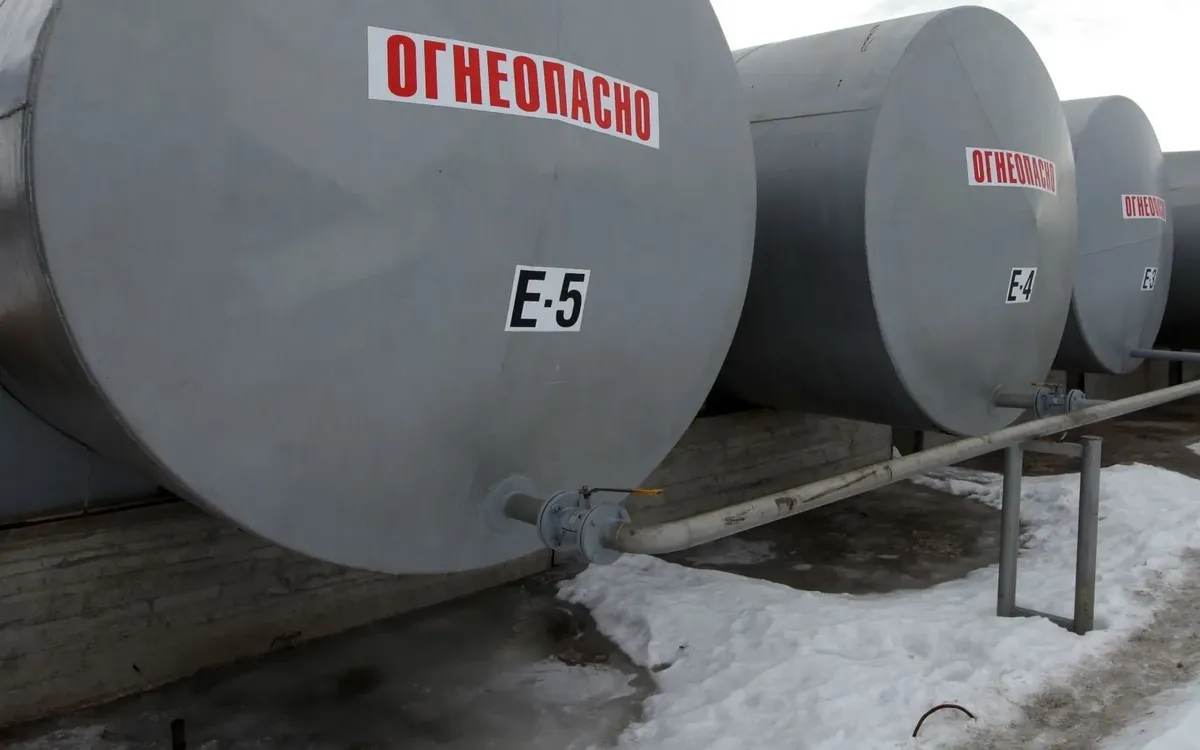
Three days before the second round of the elections of Ukrainian president, Dmitry Medvedev said that Russia was drawing a ban on the export of Russian oil, oil products and coal to Ukraine. This product can be exported exclusively by special permits. Until today, Ukraine has received Russian oil in small volumes, but it depended greatly on Russian oil products and coal.
According to the State Fiscal Service, Ukraine in 2018 imported fuels to $ 5.54 billion, of which over $ 2 billion (37%) from Russia. About the same amount of Ukraine spent on Belarusian oil products, despite the fact that they are also made from Russian raw materials. Moscow has long expressed dissatisfaction with the fact that Minsk resells processed Russian oil purchased with a discount to other countries. According to the estimates of the Russian Energy Minister Alexander Novak, the Union Republic earns at the re -export "billions".
In March, the State Duma at the legislative level limited the possibilities of Belarus to resell Russian oil. "New" asked experts to evaluate the scale of the losses of Ukraine and Russia from new restrictions.
Mikhail Krutikhin
Partner of the Consulting Agency Rusenergy
- For Ukraine, this is very difficult, because it receives almost half of oil and oil products from Russia. In addition, indirectly, about 37% of oil comes to it from Belarus, which also processes Russian oil and exports it to Ukrainian territory. I don’t know if they can prohibit export through Belarus, as they will agree. But through the Russian border, something is unlikely to supply something.
For Russia, this is not scary - they will take Russian oil. There is a demand for it. There are no interruptions in the Russian oil market in the coming years.
As an alternative for Ukraine: it will be able to receive oil exclusively through Odessa. But there are restrictions on pumping - there is Odessa oil pipeline - fords, but now, according to my data, in a non -working state. That is, all this must be carried by rail. They can also receive from Azerbaijan through the Black Sea ports, they can by rail from Latvia, not so long ago received from Hungary. At least in small volumes they can receive from Poland and Lithuania.
Alexander Knobel
Director of the Center for Research of International Trade of the RANEPA
-From Russian-Ukrainian trade, about the same as it was. The ban on exports will not be absolutely definitely not to have fundamental significance, it practically was not there. Moreover, Ukrainian trade with Russia has stabilized, and since 2016, its share has not been reduced.
Ukraine takes 0.2% in our total trade. For example, in 2018, the trade turnover with Ukraine grew about the same as with other countries of the world, and increased more than with the same Belarus. This will almost not affect the trade of Russia and Ukraine, because it affects those goods that they do not trade.
If Russia came to Ukraine, then only through Belarus, but these were still Belarusian oil products, which will continue to arrive.
Sergey Kondratyev
Deputy Head of the Economic Department of the Institute of Energy and Finance
-In fact, Russia has not supplied oil to Ukraine for a long time in any significant volumes ( *unlike oil products.- *Ed. ). I am afraid that even through Belarus there was a very insignificant volume of oil. In Ukraine, there are now two rather large oil refineries - this is the Shebelin GPZ, which processes the gas condensate from the Shebelinsky deposit in the Kharkiv region and belongs to Naftogaz - it processes gas condensation exclusively mined in Ukraine and does not make any purchases in foreign markets. And the second-the Kremenchug refinery, which is still under the control of the Privat group-he purchased oil in Azerbaijan and even in Iran. And of course, Ukrnaft's oil. Russian oil (long before 2014) in Ukraine was not processed in significant volumes. There could be some small volumes within the framework of gray schemes, but still it is not significant even on the scale of the Ukrainian market.
In coal, a rather complicated scheme. Everyone saw that Belarus has become a major exporter of coal to Ukraine. With a very high probability, this is the same Donetsk coal. From 2015 to 2018, Russia was one of the largest coal suppliers to Ukraine. And even the blockade of Donbass stimulated this process. Coal began to be displayed into Russian territory and re -exported. I think that the ban on coal exports will not be a significant problem. Here, the main question for Ukraine is related to coal demand within the country. As long as there is a demand for coal - accordingly, gray schemes will exist. An alternative for suppliers is South Africa, but this is a rather expensive alternative.