
Translated material
Book of memory without names
Why do Krasnoyarsk people ask to remove data on repressed relatives from the site "Memorial"
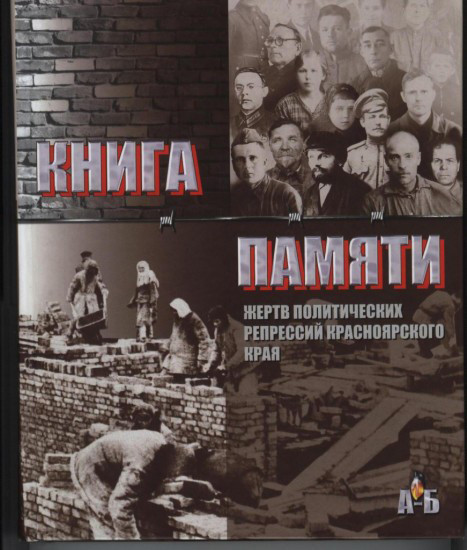
The Krasnoyarsk Society "Memorial" has been collecting information about the repressed for almost 30 years, whose destinies are related to this region. And such people, according to the Krasnoyarsk Memorial, are more than a million. A huge electronic and “paper” archive, 14 of the volumes of the book of memory of the victims of political repressions of the Krasnoyarsk Territory-the result of this 30-year work. And it is not completed: now the chairman of the Krasnoyarsk Memorial Alexei Babi is working on the next volume of the Book of Memory, which will be dedicated to dispossessed.
The inhabitants of the region were always involved in this work of the Krasnoyarsk Memorials: someone sent documents, shared his memories, and only thanks to the Memorial database he found out about the fate of his loved ones and gratefully addressed those who were able to find this information. But recently, Alexei Babiy says, and another trend has been outlined: people are increasingly asking for information about their own about their own repressed relatives from the site "Memorial".
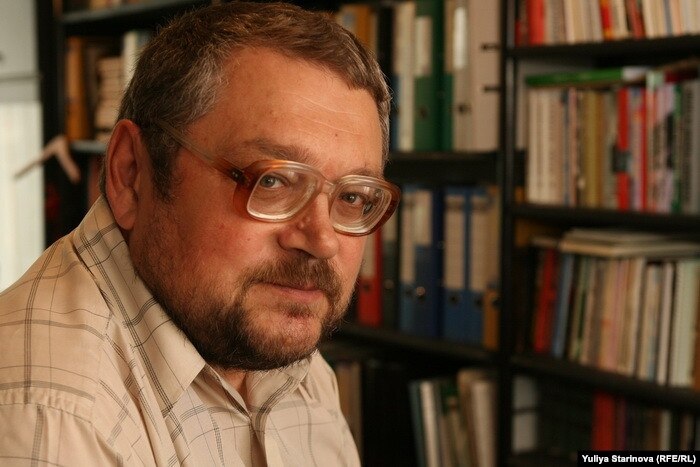
- How do they explain such requests?
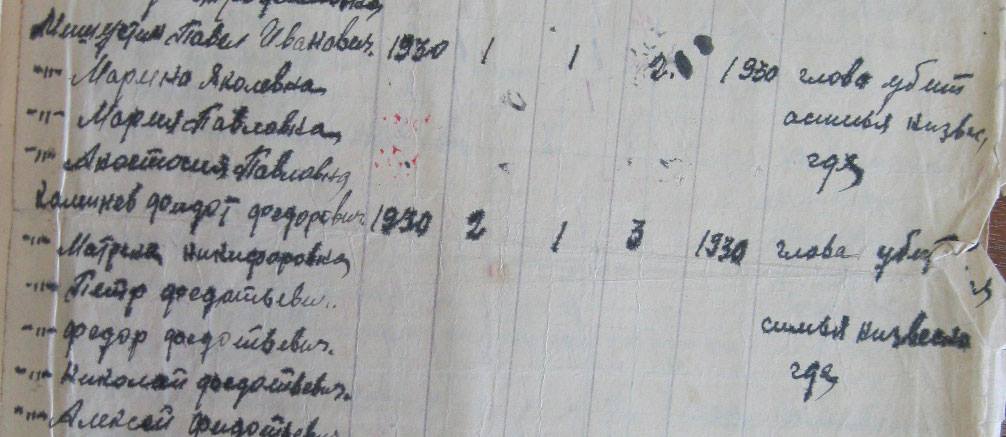
- The explanation is simple: they are afraid. Sometimes they are ashamed. They fear that suddenly something bad will happen to them or with their relatives. And when we interview people on expeditions, they do not want to report such information about themselves or loved ones. Recently, a grandmother in one of the villages flatly refused to tell how she was dispossessed: he says, what if her grandchildren will be something for it? It was this: from abroad people sent memories of relatives from the Krasnoyarsk Territory. Moreover, they live abroad for so long, and this is so far as to fear them is generally incomprehensible. But no, some time after they sent the information, they asked her to remove her from the Internet: “It’s not enough that ...” When I made a book of memory in the Yermakovsky district where this family lived, I had to leave the most general data about it: my husband-50 years old, my wife-10. In this form, they fell into a book of memory-without names. Their foreign descendants later sorry for this, asked to return everything ...
It also happens that one relative for publication, and the other against. Here, of course, they would have to figure it out for starters. And someone is tormented by ideological reasons. I had a friend - a communist completely sincere in beliefs (which, by the way, is rare). In the Stalin years, his grandfather was shot. At first, he himself asked me to post data about him. And a year later he returned and demanded to remove. He had such a sincere nasty, which he allowed, so to speak, in favor of the Communists.
But, I repeat, most often people explain their request to hide information about the repressed relatives with fear, fears. Until recently, they treated the repressed in our country, consider, as the heroes of war. Moreover, all of them are officially rehabilitated. I talk about this, but my arguments do not convince people.
- Do you remove the data when they ask?
- If we ourselves received the information from the archives, for example, the FSB or the Ministry of Internal Affairs, then we will not delete it. If the information was provided by the repressed or their relatives themselves, then we will remove them from the site, that is, from open access. But in the databases of the "memorial" they will remain.
- Have you appeared such requests for a long time?
-"The first bells"-in the mid-2000s. Year 2004, 2005 approximately. Then this was stirred "no matter what happened," and the trend has only intensified since then. Everything, as it were, has shifted a little in our society. Previously, for example, schoolchildren were attracted to the creation of books in memory of those settlements where they live. And now, social activists or historians offer to come to school and talk about repressions, and the director refuses them. And not because he is ideologically against. And "no matter what happened." This principle is constantly hanging over our officials, and now hangs over other people. Yes, what is there - Soviet people were guided by them all their lives, and this did not go anywhere. Something is in the air, and people smell it. The sign is bad.
"Who will survive - wiser"
- Another very bad sign (and already common phenomenon) is the denial of repression, their scale or illegality. The only argument for those who say that they were not: "This cannot be, and therefore everything is a lie." Or: "Why revise the interpretation of our history?" And no documents and certificates cannot be convinced of them ...
If people have cockroaches in their heads, you can’t do anything
- It has not surprised me for a long time. The polemic in this case is useless. Whatever the document you present to them, they will immediately declare it with a falsification. Show a rehabilitation certificate - they will say: we know how these rehabilitation was carried out. The protocol of the “Troika” meeting and the shot sentence, “it means there was something.” You will penetrate (theoretically) into the now closed archives, copy the materials of criminal cases - they will say that this is Photoshop. If people have cockroaches in their heads, you can’t do anything.
-And where did the cockroaches come from? After all, these are relatively young people, whose youth fell on perestroika with publicity, or those who have already been told about Stalinist repressions in schools. And after all, it’s not even a matter of views - not one of them openly calls himself a Stalinist. Where then is this reluctance to objectively evaluate that period?
If the repression is to rationalize, to look at them in terms of the benefits of the state, and a person is like to throw it away, then everything is quite easily justified
- When very young people behave in this way, this is just clear: they simply rest from the spirit of contradiction. Eternal history: they will tell them at school that there is no God - they will go to church, they will impose religion to them - they will be caught by atheists. As for older people, this is also in a certain sense of infantilism: they are sure that the state is always right, no matter what. Well, that is, of course, our state is always right, and not ours - always wrong. Such a simplified picture of the world. Therefore, they are trying to find justifications for repression. And if the repressions are rationalize, to look at them from the point of view of the benefits for the state, and as it were to throw a person, then everything is quite easily justified: yes, they put so many people, but we have it, this is still there, which means that everything is right. If the state is knocked out from under such people, it turns out that they are nothing. And this is scary. Therefore, they always protect the state - in the hope that it will protect them.
- Or maybe those who, out of fear, ask to delete information about relatives, and those who deny repression - they are implicitly, without giving themselves the report, just feel that there are more and more in common between that era?
-These guys have a popular idea that a large terror is the work of the “lower” Chekists, who are guilty of these crimes, and Stalin, when he finally found out about what was happening, barely could stop them. This, in general, is about the same: the state and its great leadership are right, and some people only spoil everything. The same people today believe that our leadership is wise and sinless, and the "pests" are wielding in the field. This is one of the foundations of domestic Stalinism - to assume that if a "solid arm" comes (harsh, but fair), everything will be fine: the order will rest, and who needs it - will disperse. I have not argued with such people for a long time. And when social networks appeared, he began to ban them. I haven’t had much time left: I am 63, and, honestly, we will say - well, let me still work for ten years. I can’t and do not want to waste time on such people. Moreover, the ideological discussion does not smell there: these people are stupid, their actions are predictable, you can always accurately guess what they will say at the next moment. Well, let them live with their cockroaches.
Let Stalin come. Let those who waited for them to the bloods of the muzzle. They will pull out - do you want Stalin? - On you again!
In a word you can’t help here. I have expressed myself more than once about this, and I understand that many will not understand me like that ... but I said the following. Let Stalin come. Let those who waited for them to the bloods of the muzzle. They will pull out - do you want Stalin? - On you again! .. And so on until it reaches people. If after that, of course, someone will survive. Apparently, that lesson did not go for the future. And the 91st year was too easily given to us: except for those three guys who died under the coup, there were no victims. Maybe that's why people do not know the price of freedom and life ... But whoever has not learned the lesson and remained for the second year, he will pass the second time. And whoever survives, maybe wiser.
- In countries that have realized and recognized the existence of terrible and shameful periods in their history, for example, responsibility for the propaganda of fascism, for the denial of the Holocaust, has been introduced. Would the introduction of responsibility for the denial of repression and rehabilitation of Stalinism help?
“ I don’t think that would be a good way out.” Awareness of such things should occur within each person. And for a word or thought you can’t punish anyone. Until these comrades switched to violence - let them live as they want.
Reached the letter "and"
- How many repressed have passed through the Krasnoyarsk Territory, according to your archives?
- More than a million repressed. The specificity of the region is that it was one of the three main regions where people were exiled. In different periods: dispossessed, Mensheviks, Trotskyists, Kirovsky stream, victims of large terror; there were the Germans, Kalmyks, Baltic states; There were "repeaters" - those who were sent to exile in the second circle. After the war - Bandera, "forest brothers". There was an urgent and unlimited link ... In a word, they all sent to us all - only Chechens and Koreans were not sent to the Krasnoyarsk Territory, they were sent to Kazakhstan and Uzbekistan.
In the 1950s, the main array of documents on the dispossessed was destroyed
I often give such a figure. In 1992, a department began to work at the regional police department, which was specifically engaged in rehabilitation of the administratively exiled. So, over 20 years, this department issued 545 thousand certificates of rehabilitation. And these are only those who survived, turned to whom the documents were found. Indeed, in the 1950s, the main array of software documents, for example, was generally destroyed by dispossessed. By the way, the rehabilitation department often issued certificates for the family, and not on its individual members, so many people seemed to remain overboard. But this is not because of the bureaucracy, but because it was impossible to cope with such a volume of work. Moreover, certificates were written mainly by hand - in that department there were not enough printed cars. In general, 545 thousand exiled are the lower documented threshold, and in reality this figure can be multiplied by two and three. I repeat: this is only administratively exiled. But in the Krasnoyarsk Territory there were also Norillag, through which about 300 thousand people passed, both Kraslag and the smaller camps. There were those who were not taken to the camps and places of exile-they were shot somewhere on the outskirts of Kansk ... But we had less arrested than in Moscow, St. Petersburg and even in neighboring Novosibirsk-about 50 thousand people.
- You drive a lot around the edge - collect information about the repressed, You work with rural archives, collect people's memories of that era, about the victims of the dispossessing of relatives. How do a variety of people react to your appearance in the regions of the region?
If these people were taken away from these people, the howl would stand all over Krasnoyarsk
- Now all this is already happening quite routinely. Currently, the next volume of the book of memory of the victims of political repressions of the Krasnoyarsk Territory is being prepared, which contains information about the dispossessed. I come to the district archive, find lists of people deprived of electoral rights (in some areas they are larger, in others) and work them out, I analyze the scribbles from the village council: what happened to people, why did they become deprived? Usually, work in one area takes from two to four weeks. Now, when 20 areas have already been passed, there are no special shocks for me. It was at first that there were discoveries, and the picture of dispossession was not at all the same as we saw it before. You sometimes tell historians - they do not believe. At the same time, people still do not really consider the depression of electoral rights. You have to hear: well, what, they didn’t shoot. And the camp, reference, deprivation of rights, or the fact that the peasant was taken away from the property and let him in the world-what repression it is ... If these people had taken something from these people, the howl would stand all over Krasnoyarsk.
- How long is it still to collect materials on dispossessed?
“I think five years.” Then we will reach the end of the list - to Evenkia, and my last business trip will be on Tura. After all, the reindeer herders were also dispossessed there - several dozen of these will be typed ... Thus, the last volume will end.
- How many volumes are there in the book of memory of the victims of the political repressions of the Krasnoyarsk Territory and how many of them will be?
In each volume-5-6 thousand names. How much more will I do not know
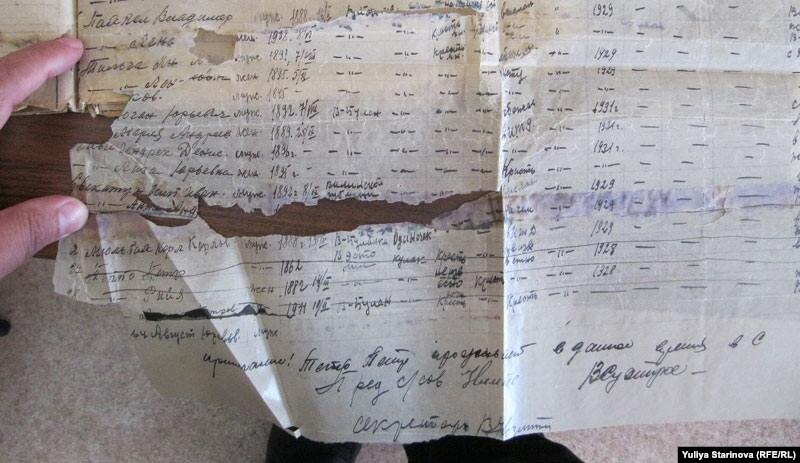
-This year came the 13th and 14th. The dispossessed "is given" by volume from the 11th. How many of them will be, we ourselves do not know yet. At first we thought that the 14th would be the last. After all, when they started working, no one could say exactly how many dispossessed we have - neither historians nor archivists. The difficulty is that the Krasnoyarsk Territory was not then ( it was formed in 1934.-RS ), part of it was part of the West Siberian Territory, part in the East Siberian, so the documents mainly in Novosibirsk and Irkutsk. I can say that now, in the 14th volume (and volumes are formed by dispossession according to the names of the regions of the region in alphabetical order) we reached the letter I. in each volume-5-6 thousand names. I don’t know how much more will be. By the way, about the arrested, about the same situation. We started working on them in 2003, asked in the bodies - how many are there in the region? And they answer us: yes we do not know, somehow we did not count. And for dispossessed information even worse. In general, with regard to obtaining data, now the matter is complicated by the fact that the archives are closed, this is not the 90s, when our guys got thousands of documents ...
- And why, by the way, the archives closed? What is the official wording?
The documents look like this: upstairs - "hat", below - date. And all! It is impossible to find out about the essence of the matter
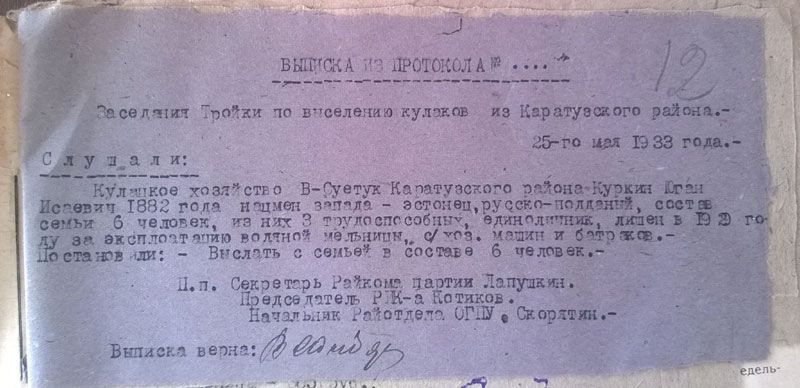
- officially referring to the law on personal data. But really this is not so. We are talking about the 1930-1940s, and it is clear that since then, according to all the laws, the terms have long have expired, during which a personal secret should be stored. So the reason is still different ... Now, after the closure of the archives, we have documents (I specially inserted their photos into the book of memory, for clarity), in which not only the names of investigators or scammers are closed, but all in general, but at the same time many facts. As a result, the documents look like this: upstairs - a "hat", below - a date. And all! It’s impossible to find out about the essence of the matter. But I hope this Mosque will soon subside (it cannot last forever), and we can access documents about our history.
There can be no monument to Stalin
- The feeling that the state was at least self of all from everything related to the memory of political repressions. At best, it does not help social activists ...
- This is still not entirely true. And in the Krasnoyarsk Territory, in this regard, the situation is better than anywhere else. For example, in the 1990s, together with the regional Department of Internal Affairs, we began to draw up a file cabinet of repressed, another thing is that, due to the closure of the archives, this case hung. And the memory book was published, among other things, with the support of the regional administration. I think that the monument to Stalin in the Krasnoyarsk Territory will not be erected in our time. This would be at least strange to do in the region through which a million repressed ones passed, despite the fact that all its population is a little less than three million people. Yes, a couple of years ago some comrades came out with the initiative about the monument. Thank God, the regional and city authorities got the mind and the strength to stop them. Why, in power structures, we have descendants of the repressed. So the Stalinist bust is somewhere in the regional department of the Communist Party, and I hope it will never appear on city streets.
- But there are more and more proposals to perpetuate the memory of the leader, in other regions the local authorities are not that against ...
And how can you figure it out if we have this year, on the one hand, they open the memorial to the victims of repression on Sakharov Avenue. On the other hand, the head of state states that Stalin should not be unnecessarily demonized
- I already talked about this - officials hold their nose in the wind and are waiting for instructions from above. And how can you figure it out if we have this year, on the one hand, they open the memorial to the victims of repression on Sakharov Avenue. On the other hand, the head of state states that Stalin should not be unnecessarily demonized, and the "memorial" is declared a "foreign agent". It’s hard to follow such a “party policy”. There is a desire to please everyone if possible and not harm themselves ...
- This is another thing. The man or his loved ones were repressed, but not that these people do not have hatred for Soviet power - they do not accuse her of anything, or even support ...
- Alexandra Ivanovna Frolova - About the bottom of our main informants in the Kuraginsky district, she is from the family of dispossessed. Her father was sent to the camps, her mother was left alone with four children and without any property: they took everything from them. Александра Ивановна помогла собрать информацию по нескольким тысячам репрессированных в Курагинском и Минусинском районах, была там председателем комиссии по выявлению репрессированных. И при этом по убеждениям – коммунисткой. И такие случаи далеко не редкость. Надо понимать, что мы говорим о людях немолодых, которые выросли в том мире. И они как бы отделяют уродства, с которыми столкнулись в жизни, от, с их точки зрения, той идеальной модели общества, на которую всегда ориентировались. Меня в моем возрасте тоже уже ни в чем не переубедишь и новыми теориями не заманишь, как бы прекрасны они ни были… Эти старики не опасны. Они доживают свой век с теми взглядами, с которыми прожили всю жизнь. Опасны те, кто помоложе, но при этом не может критически мыслить. Именно из-за них и возвращается этот липкий страх в наше общество.