
Translated material
"I was shot three times"
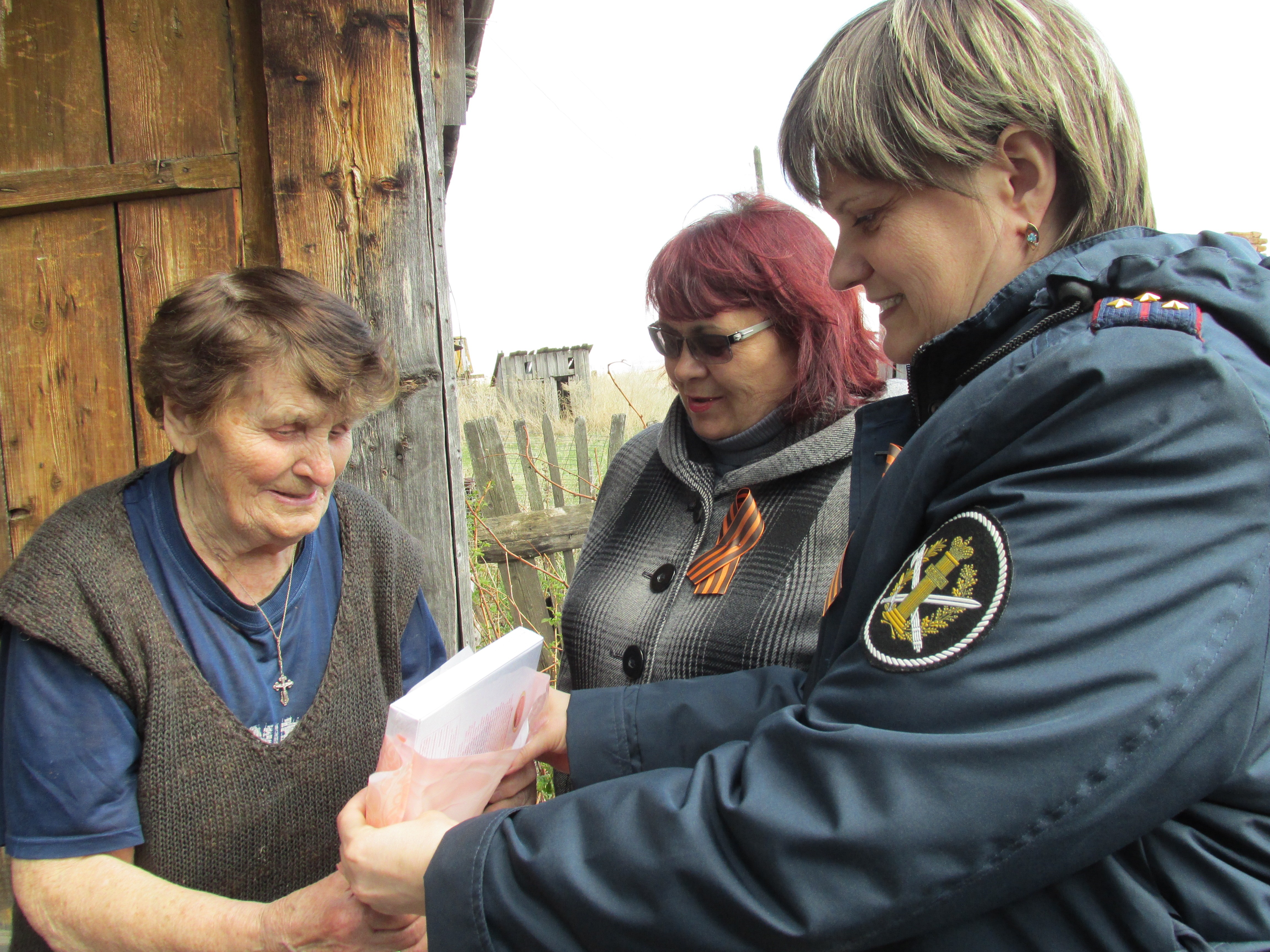
Anna Konyushenko is 91 years old. 72 years ago, she began working as a paramedic in a colony-settlement No. 3 in Kuzbass. Then she was a village paramedic. And still, working at a local hospital, he monitors the health of the few villagers remaining in these places .
"We are all connected with the colony here"
In the Chebulinsky district of Kuzbass, the sights are peculiar. The district is known throughout the country by the remains of dinosaurs found here, parking lots of primitive man, ancient mounds, burial grounds, settlements.
Another “attraction” of the area, or rather, its “city-forming enterprise”-Novoivanovskaya colony-settlement No. 3. In its fourth site with the romantic name "Sunrise" lives and works 91-year-old Anna Fedorovna Konyushenko. The two -story hut in which her apartment is located is surrounded by poplar. Nearby is the Kiya River.
Anna Fedorovna herself drowns a stove, is engaged in a garden. He says this is the secret of her longevity: "You need to move more." However, besides her, there is still no one else on the farm: husband and daughter have long died. A grandson lives in the neighboring village of Berezovsky. He takes his grandmother to him if she gets sick.
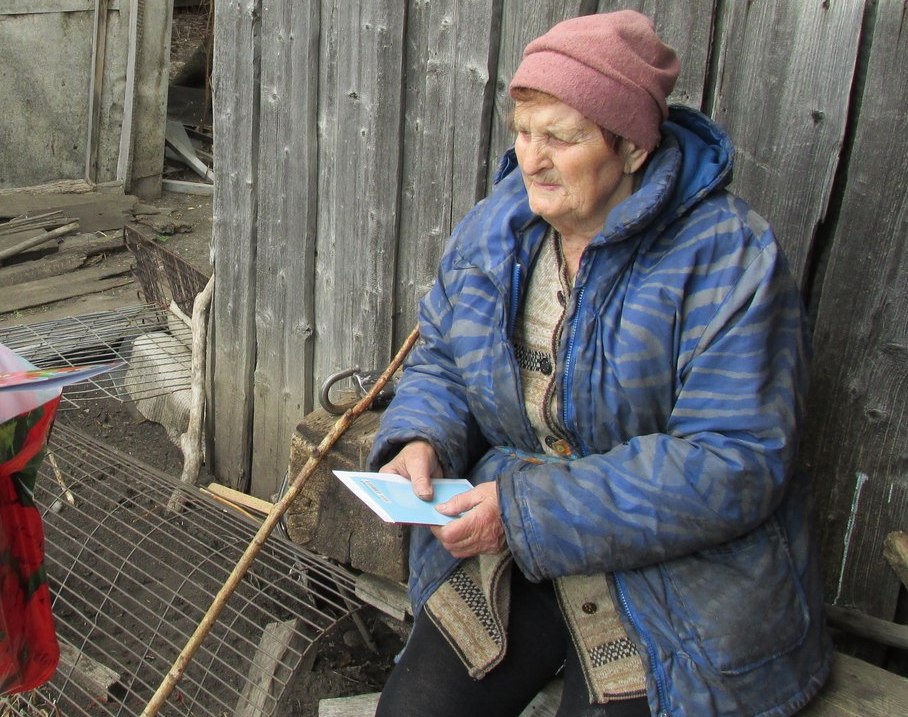
It so happened that the whole adult life of Anna Konyushenko is connected with the local colony. And not only her - everyone who lives here.
“I did not hear that there were once“ independent ”villages,” says Vladimir Pishchelin, deputy chief physician of the Chebulin district hospital. -All local small villages have always been associated with a colony-settlement. Each lived from several dozen to hundreds of civilian people - mainly civilian and service staff of the colonies. Among the civilians were also the settlers who have served the deadline, which were acquired here by families, remained and continued to work in the villages.
The very history of the Chebulinsky district began in 1935, when the first parties of the Politzks brought to these places. At the same time, the huts for convicts and the tribe for cattle were chopped - one of the "specializations" of the colony will soon become livestock. The villages for civilian villages were also built, they opened baths, clubs and paramedic points that took all patients - both prisoners and civilians. Soon after the war, Anna Donets was distributed here.
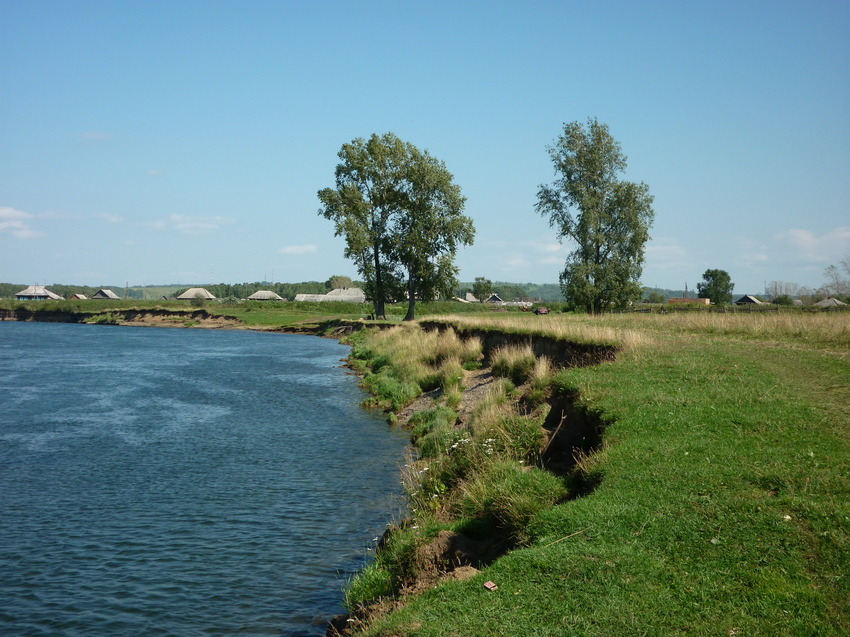
She was born in Ukraine, in the Zaporizhzhya village of Chapaevka. Mother worked at the state farm, father on the railway: from here to evacuation, to Siberia, echelons with factory equipment were sent one after another. And soon the father and brother of Ani went to the front.
Anna Fedorovna remembers how bread burned in the Zaporizhzhya region. The fields, retreating, set fire to Soviet soldiers so that the Germans did not go bread. Hunger began in Chapaevka. Anya was 12 years old, and she weighed only 29 kilograms.
I remember how they collected burning grain and rotten potatoes: they managed to cook from it
He recalls how with other guys she went to collect burning grain five kilometers from the village. We searched for rotten potatoes on former state farm fields.
“They shot me three times,” says Anna Fedorovna. - Once my mother sent for water, and our well was on the other end of the village. I did not know that the curfew began, I just hear something ringing over my head. Thank God, I guessed to fall into the bushes to crawl. And the next day, my mother cut out three bullets with a knife from the log logs.
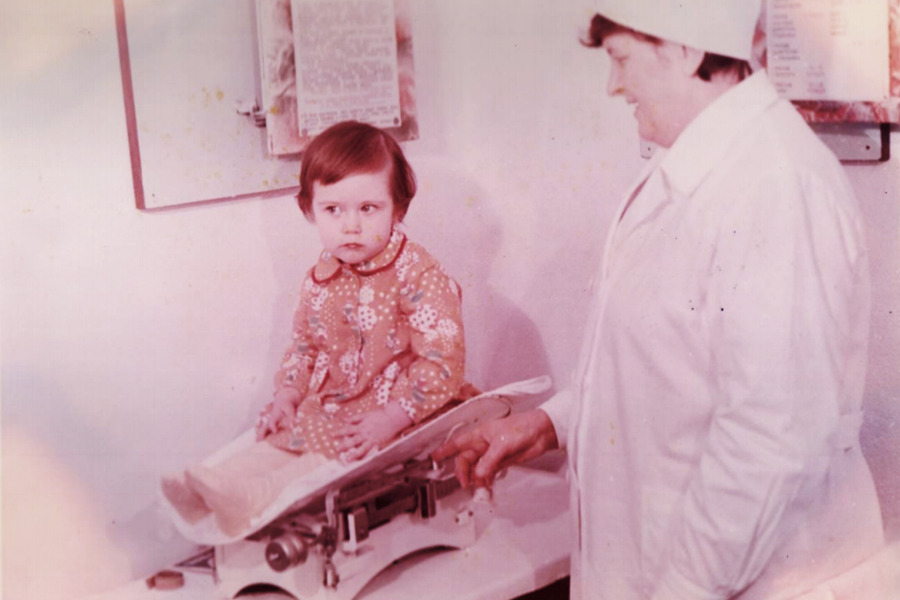
When the occupation was over, 15-year-old Anya entered the railway paramedic school, after which the younger lieutenant Anna Donets was sent to the Mariinsky branch of the Siblag. She became a paramedic in the fourth section "Sunrise" of the Novoivanovskaya colony-settlement. She was just 19 years old. It was 72 years ago.
"The camp cemetery was found only in the 80s"
- There were six thousand convicts in the zone. Soldiers-rings served here, and three hundred people lived in the village, and I treated them all, ”recalls Anna Fedorovna. - Then at sunrise there were three streets built up by barracks, barracks and private houses. We had an elementary school for convicts and a nursery for 350 children under three years old. Then the children were sent to the orphanage or their relatives, if they were ready to take.
Many convicts gave birth right on the street: they did not have time to get to FAP from work
The colony-settlement No. 3 is still stored as a journal of annual production indicators for crop production and livestock of the Siblag NKVD from 1935 to 1960. At that time, the Orlovo-Rozov and Novoivanovskaya colonies in the Chebulinsky district were a separate camp point. Since the mid-30s, he supplied agricultural products, clothes and boots for the Gulag camp. Brick and oil plants worked here. In total, by 1940, the Siblala structure included 15 departments for 38,932 prisoners.
Only fragmentary information has been preserved about the fate of many of them. Mortality among the prisoners of the Novoivanovsky branch of Siblag was very high, but there are no lists of the dead here. However, it is known that at the fourth camp of the colony in 1942, Filaret Sreznevsky died, in 2002, which was reckoned with the Russian Orthodox Church to the Holy of Saints. And in 2007, in the village of Verkh-Chebula on the river bank in memory of him and all the dead in the Siblag, a chapel was built and a cedar park was laid.
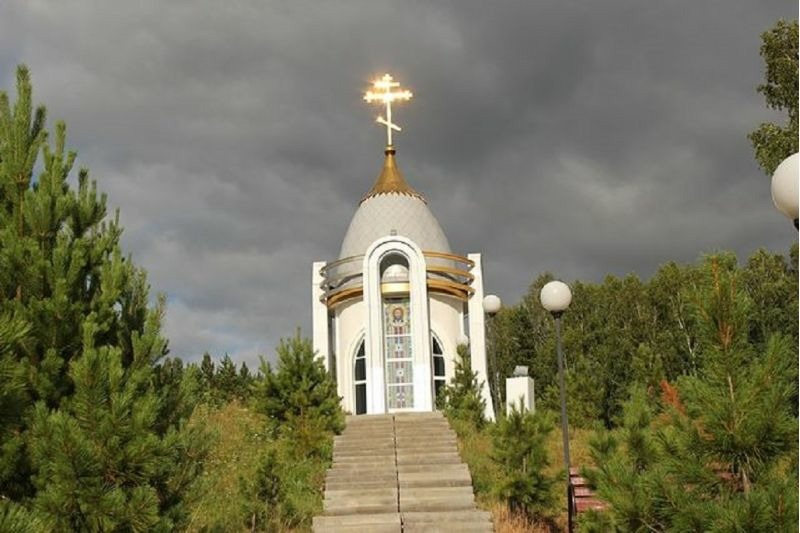
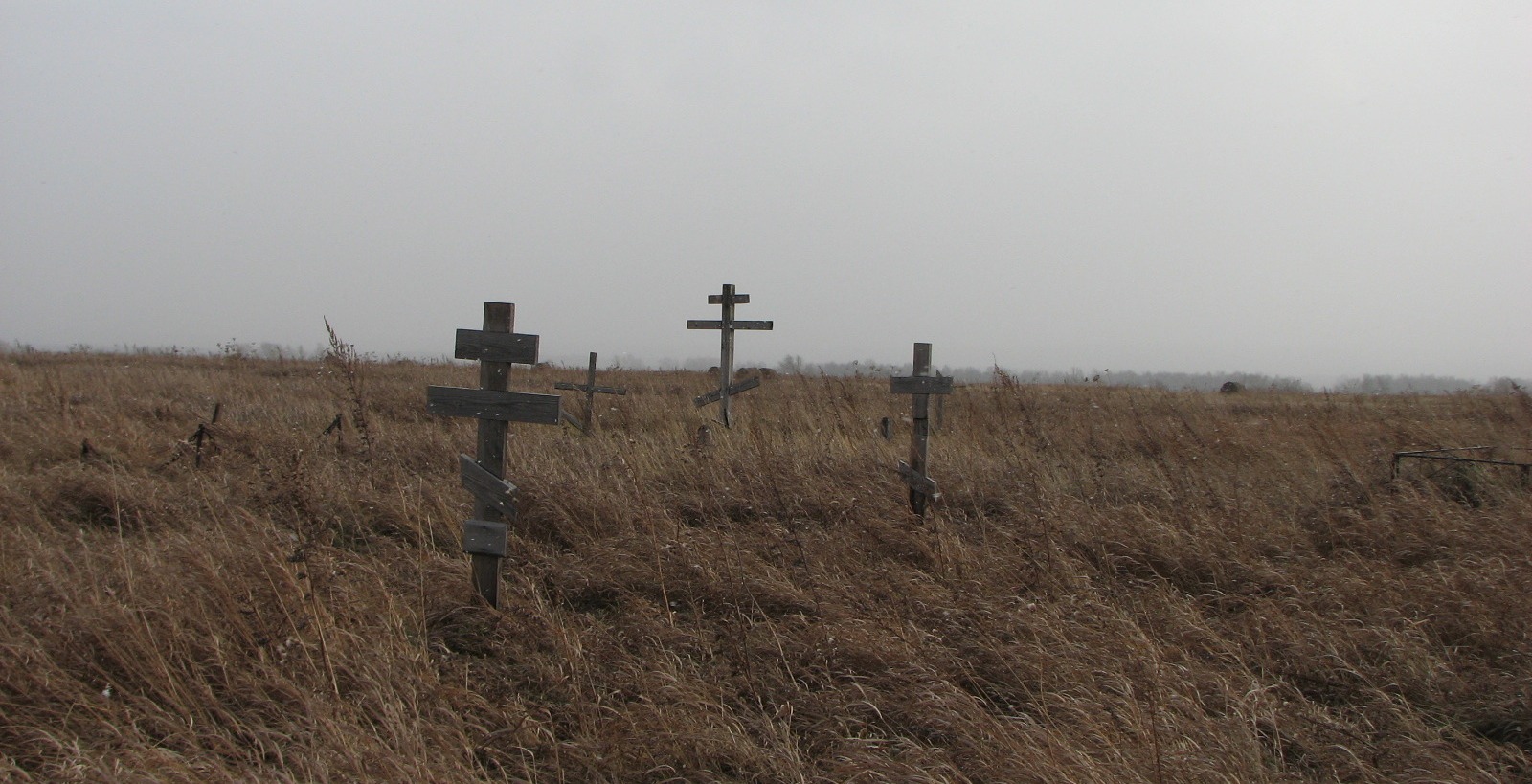
The Novoivanovskoye cemetery of the time of Siblag was discovered only in 1983-1984, when the Kiya River washed the shore and the human remains and boards from the coffins were exposed. Today it is a wasteland overgrown with rare wooden crosses and sagging land in the places of graves.
The then settlers lived in dugouts and barracks. The buildings of the 40s and 50s have been preserved in the KP-3 territory so far. They are still used, although they have to be repaired every year.
The camp cemetery was discovered only in the 1980s: the river Kiya washed the shores, there were human remains
The equipment of the local feldsher-midwife point (FAP) also did not change for decades. It may well become museum exhibits, for example, Rakhmanov’s obstetric bed and instrumental table.
- Many convicts gave birth right on the street or in the car, on the way from working in FAP. Hence the heavy births, complications, women had to cesar. But they coped. I was very lucky with teachers, ”says Anna Fedorovna. -It was here, in a colony-settlement, that I gained an invaluable experience that a young specialist can only dream of. Amazing doctors were serving the deadlines in Novoivanovka: the therapist from Kharkov Efrosinya Nikiforovna Milovskaya, the surgeon from Odessa Arnold Karlovich Vizer - I repeatedly assisted him during operations: cesarean cross -section, trepanation of the skull. Among the convicts was the Kremlin pediatrician Lyubov Mironovna Miller, arrested in the Gorky case ...
After liberation and rehabilitation, doctors returned to their native places and to the profession. And the therapist, who worked in the suburbs, the therapist Efrosinya Milovskaya once helped the feldsher of the settlement, where she was serving her deadline. Anna Fedorovna found a suspicious tumor. Efrosinya Nikiforovna arranged her for an appointment for the country's best specialists at Herzen oncological Institute.
The metropolitan oncologists were surprised how a woman from a distant Siberian village came to them.
“But I did not tell them the whole truth,” says Anna Fedorovna. - Milovskaya, probably, did not need these memories.
"Cut you now or then?"
But, of course, people in the colony were different, not only political, sitting according to the 58th article.
- In the second section where I went to treat the settlers, there were convicts, repeatedly convicted, with huge terms. It was all indifferent to them, they could have killed for nothing, ”recalls Anna Fedorovna. -One drug addict somehow demanded the Theofedrin from me. She came up, shouted: "To cut you right now or then?" I answer her: "Cut now." I thought my death came, but that woman let me go. And in the first section I was attacked by ZEK, I wanted to get a drug. My orderly Viktor Vasilievich Tagankin, a former chef of the restaurant of the Moscow Hotel "National", repel me. And how he fried Free potatoes - I never tried this! ... When there was not enough strength and nerves for everything, took a fishing rod and went to Kiya to fish. The favorite place was behind the spruce, and the noise of water reassured. There she also collected medicinal herbs - thyme, chamomile, bird Highlander, hemorrhage, tansy - and distributed them to patients: they had no opportunity to buy medicine.
Home by household
The colony-settlement No. 3, in which Anna Fedorovna Konyushenko continuously worked since 1947, is still valid. She is designed for 961 convicted people, and her specialization is the same as in Stalin's times: agriculture, mainly livestock. And again, they report about high production indicators ...
In 1971, the position of paramedic in KP-3 was abolished as unnecessary. But Anna Fedorovna remained to live on the Voskhod section and work in her own FAP, only as an employee of the Chebulinsky district hospital.
And two years ago, the faps were abolished. The building of the paramedic point, at which Anna Fedorovna worked for 70 years, was taken by the owner - the colony. As the deputy chief physician of the Chebulinskiy district, Vladimir Pishchelin, explains, the FAPs closed, because, according to official figures, there were no civilians left in the areas.
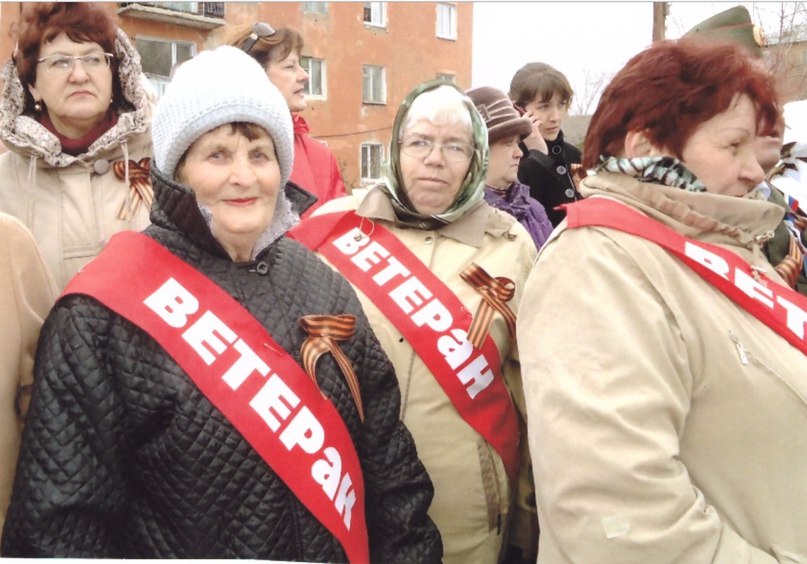
But this is officially. But really people are still here. Mostly old people. For the sake of several elderly people, keep FAP, especially the hospital, no one in the villages will be. For this, the so -called households are being organized now - they choose a responsible, competent person, not necessarily a physician, teach first aid, present a first -aid kit and a phone, so that in case they get through to an ambulance. In total, there are nine in the Chebulinsky district of such house farms. Of one of them, you can contact a doctor only by walkie -talkie.
Those who live next to the Novoivani colony can be said, lucky: after all, they have their own paramedic with great experience. Anna Fedorovna Konyushenko became the dispatcher of the household on her site. Then she was 89 years old.
Until recently, she walked daily around the local courtyards. Someone will measure the pressure, talk to someone, advise something. If necessary, call an ambulance.
Anna Fedorovna received 1000 rubles per month for this work. But now the Chebulinsky district hospital does not have these funds for households. She from municipal submission passed to the regional, so now the issue of continuing the work of households is being decided in the district administration. Perhaps they, like FAPs, will be abolished.