
Translated material
"The time for the meeting is the most suitable"
Estonia President met in Moscow with Vladimir Putin for the first time in ten years
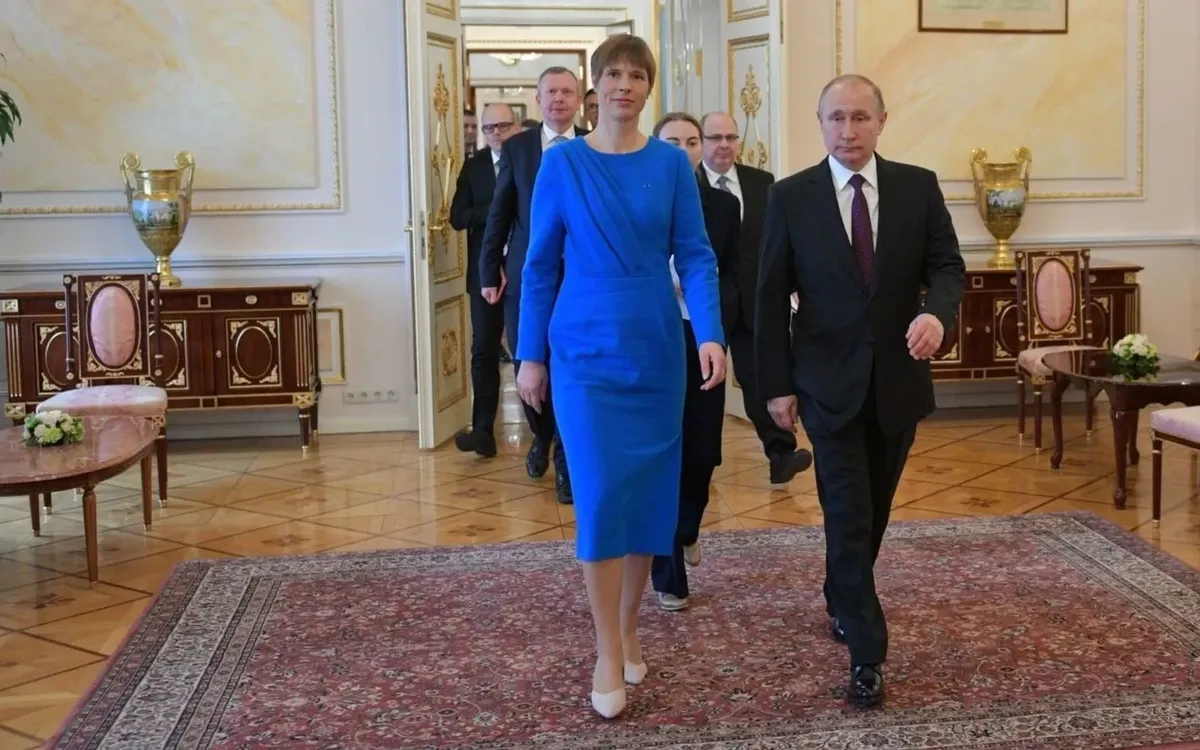
On Thursday, Estonia President Keresti Kaliulaid arrived in Moscow for two days. She participated in the opening ceremony of the updated building of the embassy, laid flowers to the monument to the victims of repression and met with Vladimir Putin. Calylaid called the meeting "very good." According to the head of Estonia, they discussed many topics: economic cooperation, sanctions, security issues, and Russian -language education in Estonia. True, on most points both remained with their opinion.
On the eve of the meeting
In Estonia, the news of the upcoming visit by Calylaid to Moscow and a meeting with Putin caused a mixture of mistrust with perplexity: the previous meeting at the level of heads of states was held in 2008 - then the president of Estonia was Thomas Hendrick Ilves, and Dmitry Medvedev was president of Russia. From a political point of view, this was a completely different era: then the Baltic countries quite purposefully developed both economic, cultural, and even political relations with Moscow.
But after 2014 and the occupation of Crimea, it was the Baltic countries that became the main lobbyists of sanctions against Russia -
For them, who lived for half a century under the Soviet government, the issue of territorial integrity and independence is especially acute, and Russia in the year after year appears among the main threats in the official reports of the state security organs.
Initially, it was stated that Calylaid would go to Moscow to participate in the opening ceremony after the renovation of the building of the Estonian embassy - and only later the news about the meeting with Putin appeared. Former Foreign Minister of Estonia Marina Kalyurand called the opening of the embassy an insufficient reason for a trip to Moscow and the “unworthy” level of the president.
However, then Calyrand explained that she considered it strange only a reason, since the embassy buildings usually opened by the "Chancellor or Vice-Chancellor of the Ministry of Foreign Affairs." “Now we know that Kersty Kaliulaid will also meet with President Putin,” the politician wrote on her Facebook page. - And this is a completely different picture. Of course, our president must go and chat with Putin. We are neighbors. "
Some did not suit the initiator of the meeting by the Estonian side. “Calyid herself asks for a meeting, it looks quite a pity. The president of an independent state should not beg for a meeting. This is the same to do too intrusive guests, ”wrote Yaak Madison, a member of the board of the EKRE nationalist party, on his page. He recalled that earlier Calylaid promised: there can be no visits to Moscow before the ratification of the Treaty on the Russian-Estonian border.
We are talking about a document signed back in 2005, but never ratified in the parliaments of both countries. At first, the main problem was the preamble with reference to the Tartu Treaty on the 1920 border: Russia feared that in this form the agreement allows Estonia to claim the Pechora Territory. In 2014, the Estonians agreed to remove the preamble - but this did not help. The updated contract was ratified by the Estonian parliament in the first reading, but Russian colleagues all the time delayed ratification. In 2017, speaking in Minsk at a press conference, Russian Foreign Minister Sergei Lavrov said that
Estonia “You need to stop being one of the three or four main activists in NATO and the European Union, which are worth the death to drag all these structures in the direction of frenzied Russophobia”
- And then it will be possible to return to the conversation about ratification.
Since then, the parties have not advanced beyond mutual reproaches.
The meeting of the two presidents
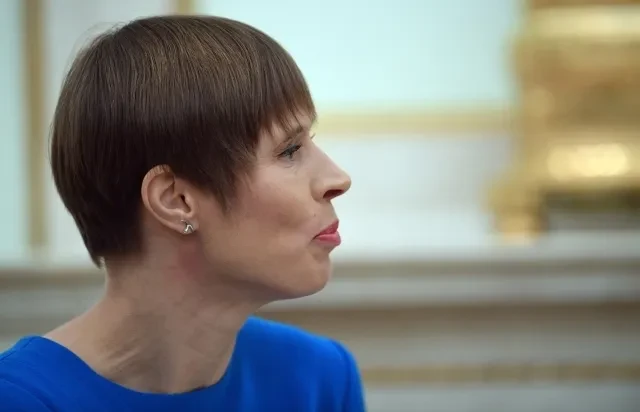
According to Kalyulayd, the issue of ratification of the contract at a meeting with Putin was not discussed. “I said bluntly: I don’t know if our new composition of the Riigikogu (Estonian parliament) is ready to go to a new circle of discussion on the ratification of the border contract,” she told reporters.
Later, in an interview with the Kommersant newspaper, she once again explained: the decision on ratification of the contract is exclusively under the jurisdiction of the parliament, which was re -elected recently, March 3.
But we discussed many other issues. Welcoming Kalyulayd, Putin complained that the contacts at the highest level had long stopped. “The lack of contacts between officials, official bodies, between neighbors is an abnormal situation,” he said. - As a result: in our previous years, the turnover fell by more than 50 percent. True, over the past year it has been a little adjusted - plus 17 percent. We objectively have common interests related to the region of the Baltic Sea: there are safety issues, and environmental issues, and issues related to transport, transit. ”
“You are right, we have important trade relations,” answered Calylaid. - The economy has the opportunity to adapt to the decision of politicians, so there is an opportunity to direct it in a positive direction. Time to update the cooperation program between the European Union and Russia, which is financed by both parties. So the time for meeting is the most suitable. ”
According to Calyud, they began with questions of the economy - they agreed that so far the termination of mutual sanctions is impossible, but "in some areas it can be advanced." We discussed the Nord Stream 2: here it seems to have agreed that the main thing is a free gas market.
Calylaid said that they also discussed Russian -language education in Estonia - a question that Russia traditionally considers the zone of its responsibility - Calyulid herself raised the topic. However, there could be no consent here: although Calyid invariably emphasizes his respect for the Russian -speaking community in Estonia, she advocates a gradual translation of school education to Estonian, as is now planned in neighboring Latvia. And if this happens, then, as in the case in Latvia, the reform will cause angry responses by the Russian Foreign Ministry.
They discussed both Ukraine and the problems of international security as a whole - but, commenting on this part of the meeting, Calyud was laconic. She only noted that the conversation went respectfully, but the interlocutors remained with their own.
The end of the visit of the Estonian President to Moscow was symbolic: on Friday morning, she laid a large wreath with flowers at the “Cry Wall” of the monument to the victims of political repression in the Soviet years. Thus, emphasizing: it is necessary to talk, but Estonia remembers who he is dealing with.