
Translated material
Lev Simkin: Sobibor / afterword
Lev Simkin 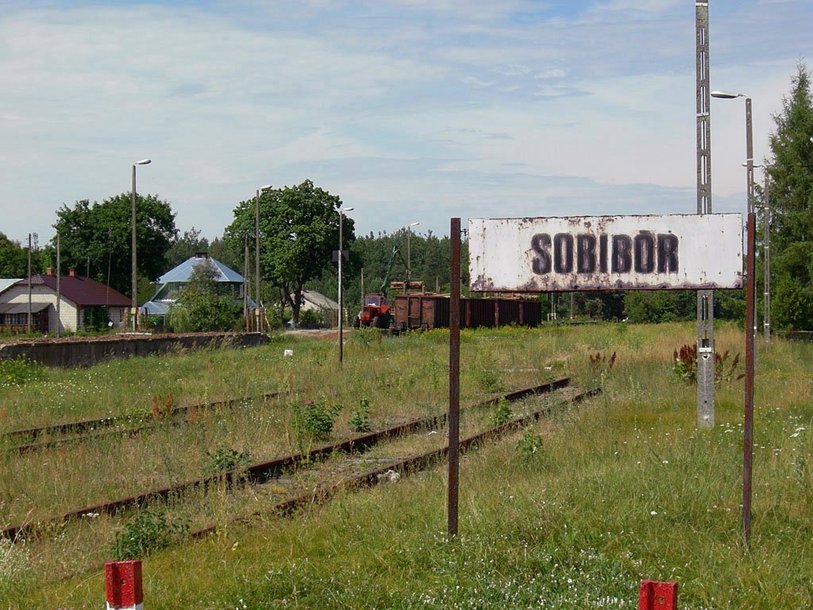 Jacques Lahitte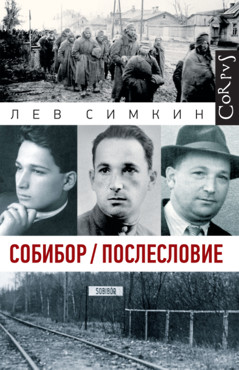
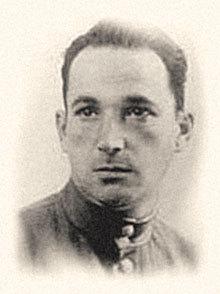 Alexander Pechersky
 Jacques Lahitte
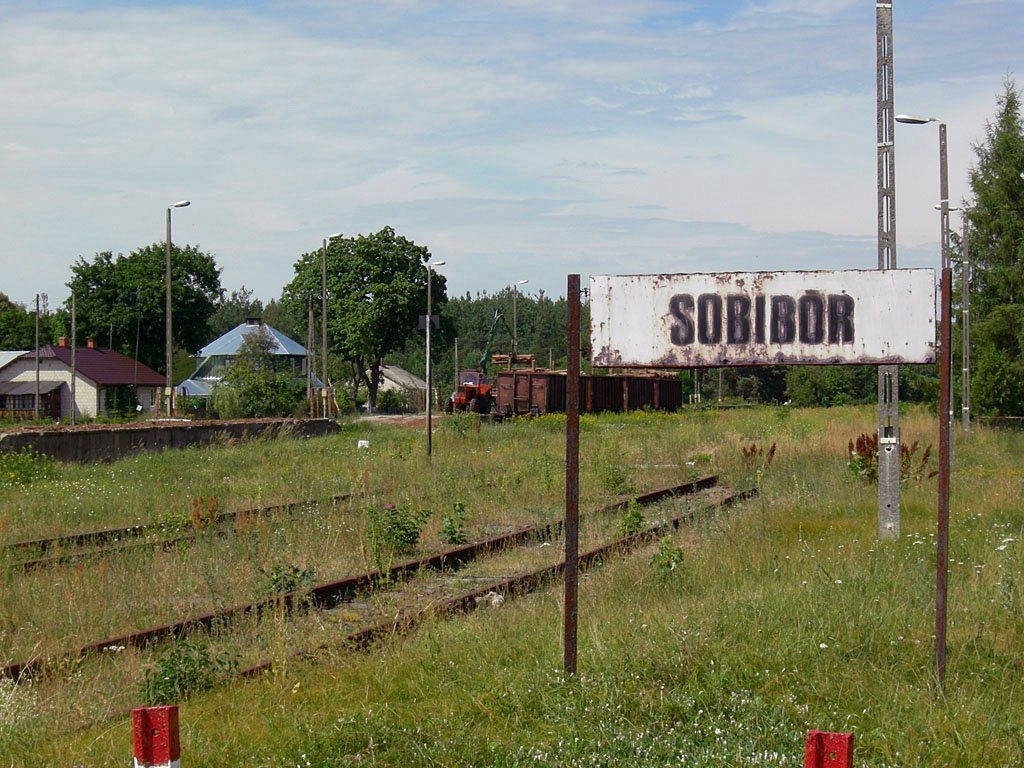
 Corpus publishing house published the book of Lev Simkin “Sobibor / afterword” . It was based on a supplemented and processed book “An hour and a half of retaliation” (2013), which caused a wide resonance. In it, Lev Simokin was first told the biography of Alexander Pechersky, a Soviet officer, who led the uprising in the Nazi camp of the death of Sobibor, intended for the “final solution to the Jewish issue”. The history of the hero is based on the documents collected by the author and the memoirs of friends and relatives. However, much required clarification: over the past five years, new materials from the Central Archive of the Ministry of Defense have been published, moreover, new myths arose about Pechersky.
The feat of the organizer of the uprising in Sobibor is now well known. In the book, the narrative of him is supplemented by the stories based on declassified materials of trials about the “ordinary soldiers of the genocide” - former Soviet citizens who served as guards of the death camp. In addition, the wide context of Soviet reality is deployed, in which the post -war life of the Pechersky took place and the official attitude to the feat of the prisoners of Sobibor was modified.
With the permission of the publisher, we publish a fragment of a new book.
Short -term glory
After one and a half decades of silence, the Rostov newspaper Komsomolets (September 18, 1960) spoke about Sobibor, and a year later with a small - Komsomolskaya Pravda (January 12, 1962). Pechersky began to write letters from different parts of the country, and most importantly - the surviving prisoners of Sobibor responded. The first to know about himself Semyon Rosenfeld, who lived in the city of Gayvoron of the Kirovograd region and did not know anything about the fate of Pechersky.
Alexander Pechersky“Hello, Sasha! Sorry that I am just Sasha. Maybe you forgot me. You had my friends, I had my friends. But for some reason I didn’t forget you. (Then there is a story about what happened to the author of the letter after Sobibor, including participating in Berlin.-L.S.) Be healthy. My son-in-law (so they called me in the camp), and now the Seeds of Moiseevich are now. Rosenfeld ”.
Pechersky came to him in Gayvoron. Together they performed at the local club and met with schoolchildren. Since the beginning of the 1960s, a kind of fashion for public memories of the war has gone. Before, Pechersky could not tell about what he did, and then he was allowed to ride with his memories in schools and libraries. He used every opportunity, rejoiced if something managed to get into the seal. I especially loved to meet with schoolchildren, in the 39th Rostov school at one time there was even a pioneer detachment named after Pechersky.
“I am now a lot, sometimes even twice a day - from a letter to Tomin of April 2, 1961. - he spoke at local radio stations.“ Birobidzhanskaya Pravda ”reprinted completely my book” (We are talking about a brochure published in 1945. - L.S.).
Following Rosenfeld, Efim Litvinovsky, who lived in Kuibyshev, was found. The writer Valentin Tomin (Wald Romanovich Talmant) helped to find him more than once on these pages.
Pechersky felt himself in relation to them as a commander-commander, helped everything he could. Since 1963, every five years the surviving Soboborians gathered at his house. We came with their families. In 1983, they celebrated the 40th anniversary of the escape, only six people remained alive. As I already said, a record has been preserved where they sing, sitting at a festive table covered in a festive table, the very one: “Everything is higher, and higher, and higher ...”
Aliens among their own
For several years, Tomin found out the details of the uprising in Sobibor, conducted an extensive correspondence with him, and in the end in 1962 submitted an application for a book about his feat to the young Guard Publishing House. In collaboration with journalist Alexander Sinelnikov. They understood that a documentary narrative with heroes who have exclusively Jewish names was impossible - it was to change them. But they hardly expected that the publishing house would ask for the permission of the “bodies” to mention the surname of the organizer of the uprising.
“The publishing house intends to release the book of V. Tomina and A. Sinelnikov“ Returning is undesirable ”dedicated to the uprising of prisoners in the Nazi death camp by Sobibor in October 1943,” wrote the editor -in -chief of the publishing house of the Komsomol Central Committee “Young Guard” V. Osipov in a letter addressed to the chairman of the KGB of the KGB of the KGB V.E. Semi -City. “The Soviet officer was led by the Soviet officer Alexander Aronovich, born in 1909, who lives in the city of Rostov-on-Don. The answer signed by Major General Belokonev of November 10, 1962 was concise: “There are no objections.”
Out of curiosity, he walked that this editor -in -chief Osipov was for the person and why he was such a reinsurer. “Born on July 10, 1932 in Moscow in the family of a Soviet diplomat and scout O.Ya. Osipova and doctor L.L. Garkina,” the Wikipedia says about him. The last word was alerted and moved by means of another click to find out that the true name of the editor’s father is Shifman. In those years, nomenclature Jews often tried to hide their nationality. In addition, Osipov - the biographer of Sholokhov and generally Sholokhod, the proximity to the Russian classic obliged to have an unknown origin.
I will be distracted and tell an episode from later times. My kind acquaintance poet Rimma Kazakov answered all the signs of Russian identity that have now been produced: she considered herself Russian, had no other ethnic preferences, felt solidarity with the fate of the Russian people, would probably not against the recognition of Orthodoxy by the basis of Russian spiritual culture. In the late 1970s, she was put on a high post of full -time secretary of the USSR Writers Union. So she got into the company of literary generals who had been the main Russian patriots. Rimma considered herself there, and so it was, with a little exception. Once she complained to me that they never took her with them to Veshenskaya, where they went to the classic from time to time. Only one reason: during the years of the thaw, her poem was published with the defiant name “My grandfather was buried in the Jewish cemetery”, Sholokhov could not like this.
In 1964, the story “The Return is undesirable” was published in the publishing house “Young Guard”. In the Rostov bookstores she was immediately bought up, Pechersky worried that he would not get a copy.
A drop of tar into a barrel of honey of enthusiasm was the letter of the Israeli Moshe Bahira with the question of why the word “Jew” is not mentioned in the book about the camp, created specifically for the destruction of Jews. “The main thing is that in the war, in the fight against the Nazi executioners, different nations and nationality gave their lives, and the great task of the book was to show what international friendship was,” the Pechersky answered. “Two author wrote the book (by the way, one of them was a Jew), and the authors did not consider this feat to highlight this feat only because Jews committed it, their goal is to show the victory of man. Above the beast.
What is this - a sincere excalpt by a “foreign comrade” who “does not understand”? Or just general words to keep up? But if you read the letter with the then eyes, the eyes of a person of that time, it will become clear that this is just self -defense. Pechersky perfectly understood that his correspondence with abroad would be perlust.
A little more than 10 years have passed since the time when the Jews of the Country of Soviets expected deportation or something else terrible, no one knew what was the “Red Pharaoh” in mind. The signal for this terrible was to serve as this. In January 1953, in the midst of the “doctors' affairs”, Stalin instructed to prepare a letter to the editorial office of “Pravda” on behalf of the noble Soviet Jews. It cursed the “Spy Gang of killer doctors”, “these monsters of the human race”, and “the state of Israel is a bridgehead of American aggressors” who want to “turn the Jews deceived by them into spies and enemies of the Russian people.” The further development of this tragic plot was stopped by Ilya Ehrenburg. He sent a note to Stalin with an ideological doubt - the use of the definition of the “Jewish people” in his opinion, in his opinion, could “encourage nationalists and embarrass people who have not yet realized that there was no Jewish nation,” and “slanderers could use it for their low purposes”. Imagine the leader thought and gave the letter to the letter.
Secret and obvious
One of the “myths” exposed by the current official historians, “in the USSR, the feat of the prisoners of Sobibor was silent.” In fact, it was so. But since the Soviet government was different in different years, the years of ideological messages occurred. After 1946, two books were published about Sobibor, published in 1964 and 1989: the first - to the Khrushchev thaw, the second - to the Gorbachev perestroika. Both are not quite documentary, but not that invented. We just talked about the first. The second book - the novel “Long Shadows” - wrote a friend of Pechersky Mikhail Lev. He fled from German captivity, was the chief of staff of the partisan regiment in the occupied Belarus, after the war he worked in the editorial office of the magazine “Soviet Gamland” (“Soviet Homeland”). He was almost ultimately offered to him the Romannic genre in the publishing house “Soviet Writer” - the publication of a documentary book about the Jewish uprising in the concentration camp was impossible.
“I myself would not write“ long shadows ”as a novel, with the addition of fictional heroes, if the editor did not say, it wouldn’t pass otherwise,” the author of a “forced art” work told me after our acquaintance. Nevertheless, all the chapters of the novel related to Pechersky, according to Mikhail Lev, were purely documentary.
Simkin, Lev Semenovich
Sobibor / afterword . - Moscow: AST Publishing House: Corpus, 2019.