
Translated material
Write, Emelya
The state requires scientists more scientific articles. And receives mountains of waste paper for solid money

Russian universities in attempts to receive a little more money from the state try to improve the indicators imposed by officials and stamp hundreds of “scientific” publications that do not meet research standards. The Data-Department of Novaya Gazeta is estimated at half a billion rubles for the damage from such activities for the last six years.
In January, the July 1 club - an informal association of academicians, members and professors of the Russian Academy of Sciences - said: “The task of science is not to produce the maximum number of publications, but to explore the universe and extract benefits from humanity from the knowledge.”
The Russian government seems to be considered differently.
University financing strongly depends on the number of scientific publications of its employees. But the quality of these publications is not evaluated in any way.
The current situation is on the hands of the so -called "predatory" magazines. These are publications that send spam by e -mail and offer to publish any nonsense for money that you can report to the authorities. Until recently, the American librarian Jeffrey Bill led the list of such magazines and publishers. He introduced the term “predatory magazine” for those publications that “swallow indiscriminately” any texts in any quantities and therefore grow to gigantic sizes, publishing several thousand articles a year. The leading databases of Scopus and Web of Science are focused on the Bill list when they decide on the exclusion of dubious magazines from among high -quality scientific publications.
The differences are that in prestigious scientific publications before publishing the article is necessarily reviewed by experts. Sometimes the author can even get a fee for his work. As a rule, a subscription to high -quality magazines costs a lot of money, and their universities and national library systems are ready to pay: the more prestigious the magazine is - the more subscribers have.
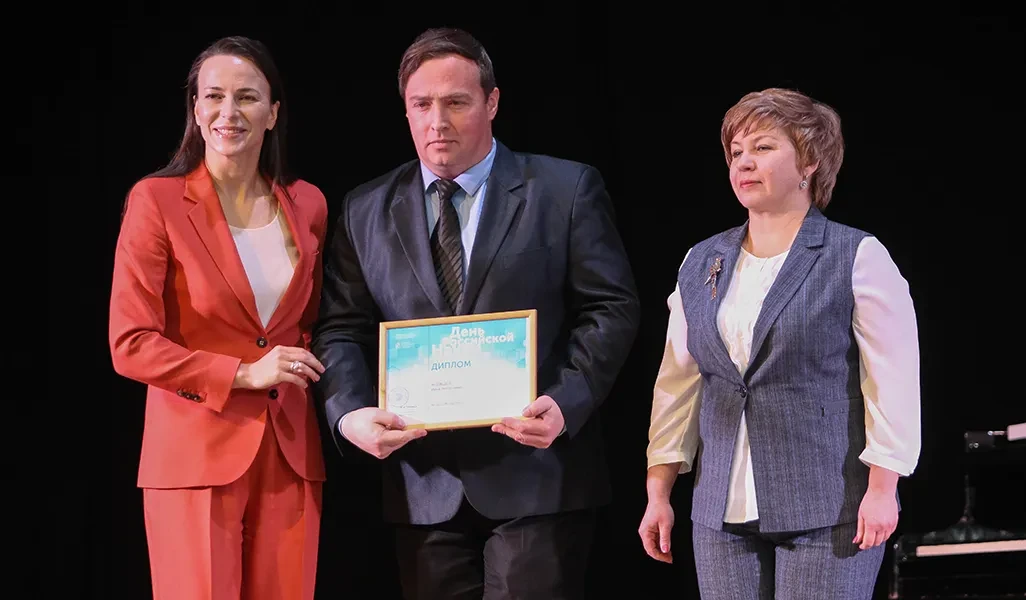
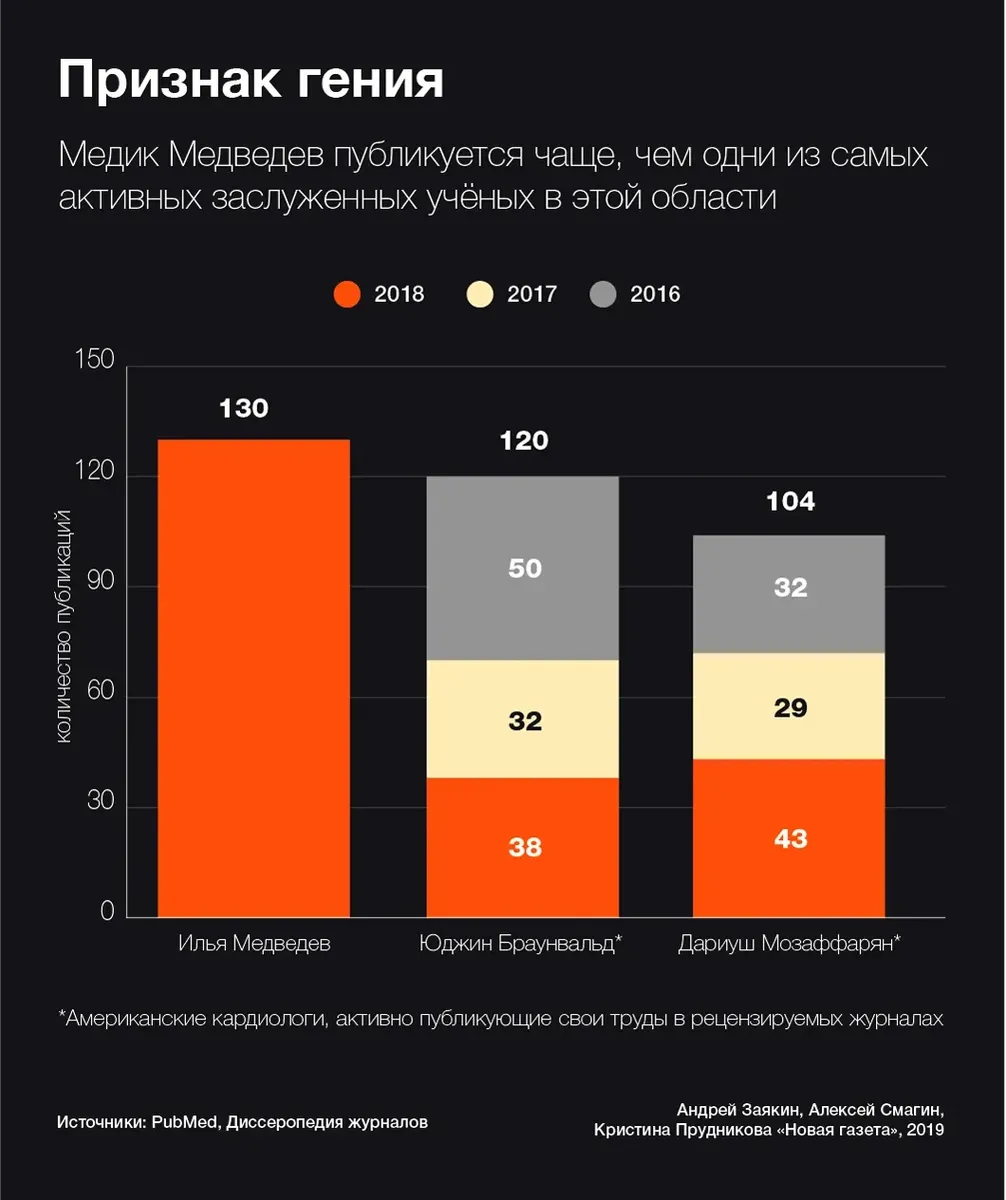
But back to Russian science. Here is a simple example: in February, the head of the Department of Adaptive Physical Culture and Sports of the Kursk Institute of Sports and Education, Ilya Medvedev received a prize of the Russian State Social University (RSSU) (the Kursk Institute is its branch) “For devotion to science” (not to be confused with the prestigious prize of the Ministry of Education and Science “For Fidelity of Science”). Medvedev, according to the dissolution, published more than 130 works in “predatory” magazines only in 2018.
Sometimes the same issue of the Indian magazine Research Journal of Pharmaceutical, Biological and Chemical Sciences (RJPBCS) accounted for about 40 of its articles.
Since Medvedev indicates his belonging to the RSSU, the publications “made the cashier” primarily not Medvedev himself, but to the university. The situation was not commented at the Russian State Service.
Science of builders and shoes
Back in 2015, Dmitry Livanov, at that time, the Minister of Education and Science, said that universities published in magazines without a normal review system would deprive additional financing within the framework of the 5-100 program. His statement remained unfulfilled - universities continue to spend state money on publishing articles in magazines doubtful from the point of view of science.
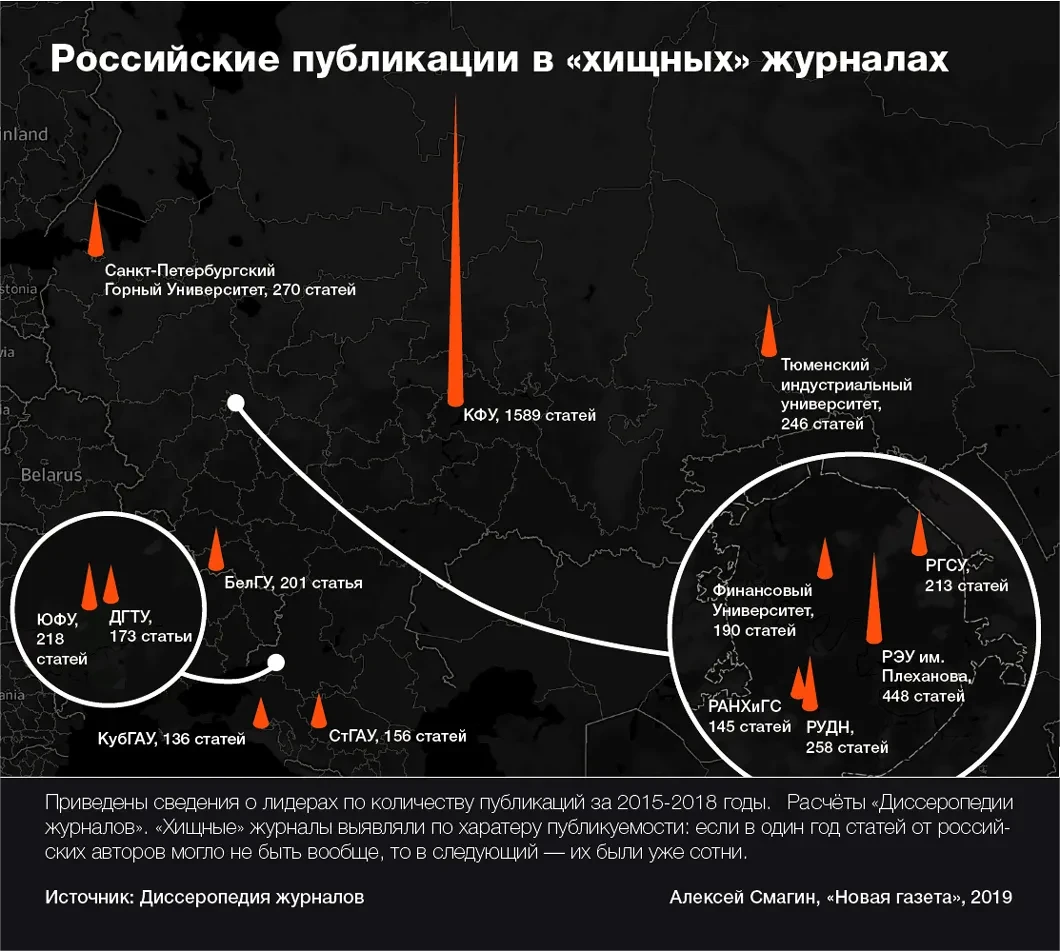
The Date of the Novaya Gazeta department has studied the public procurement of universities over the past five years, which stated: “Buying publications in the journal”, “Publishing a scientific article”, Scopus, Web of Science, and chose from them that were really associated with the publishing of articles in “predatory” journals in the terminology of the librarian Bill.
Russian suppliers of such services received 89 million rubles from the budget, foreign - 70 million. At the same time, almost the entire amount of money for purchases that we managed to find was spent by Kazan Federal University (KFU). Purchases of other universities are extremely insignificant against the background of these expenses.
The most amazing in the purchase of publications of scientific articles in Russia is that contracts are won by people who have not been related to international publishing. They do not even hide that there will be no review of the scientific article - publishers usually know how to hide this circumstance more vaguely.
Among the suppliers to Kazan University of Services for the Publishing of Articles - IP Vladimir Lyakhov from Belgorod, who is engaged in construction, IP Olga Dmitrieva, whose main activity is “retail trade in shoes and leather products”,
as well as the realtor company of Kazan businessman Vasil Mazitov.
As a result, a scandal erupted in the scientific community, the local Kazan press told about this. The university stopped buying “science” from shoes, builders and realtors and turned to the places where they are engaged professionally - to magazines that are clearly similar to “predatory” in Bill terminology. Fresh purchases of KFU - they have. But the procurement does not indicate which articles, which authors and on what topics need to be printed, as in cases where it is about publishing expenses in the reviewed scientific publications. The only value mentioned in the procurement is the number of publications.
Specialists speak like this about these suppliers of KFU. “We are talking about the magazines paid for the author who penetrated the SCOPUS or the younger WEB of Science (ESCI),” comments on the expert of the “dissertation of magazines”, Doctor of Philological Sciences Alexei Kasyan. - The vast majority of them are published in third world countries (India, Colombia, Venezuela). Many appear on the Bill list and are already expelled from the prestigious scientific bases for ethical violations. In addition to the magazines themselves, there are also intermediary firms, for example, E-Scholarly Publishers Association. The company cooperates with low -grade magazines to publish articles there. ”
In KFU they did not respond to the letter "New".
KFU, apparently, is the most honest university, because he pays for the publication of scientific articles through the public procurement system.
We almost did not find the contracts of other universities for publications in “predatory” magazines. But this does not mean that they were not. As sources explain to us in different universities, most often “predatory” magazines conclude an agreement with individuals, and the rector probably finds ways to pay these people somehow.
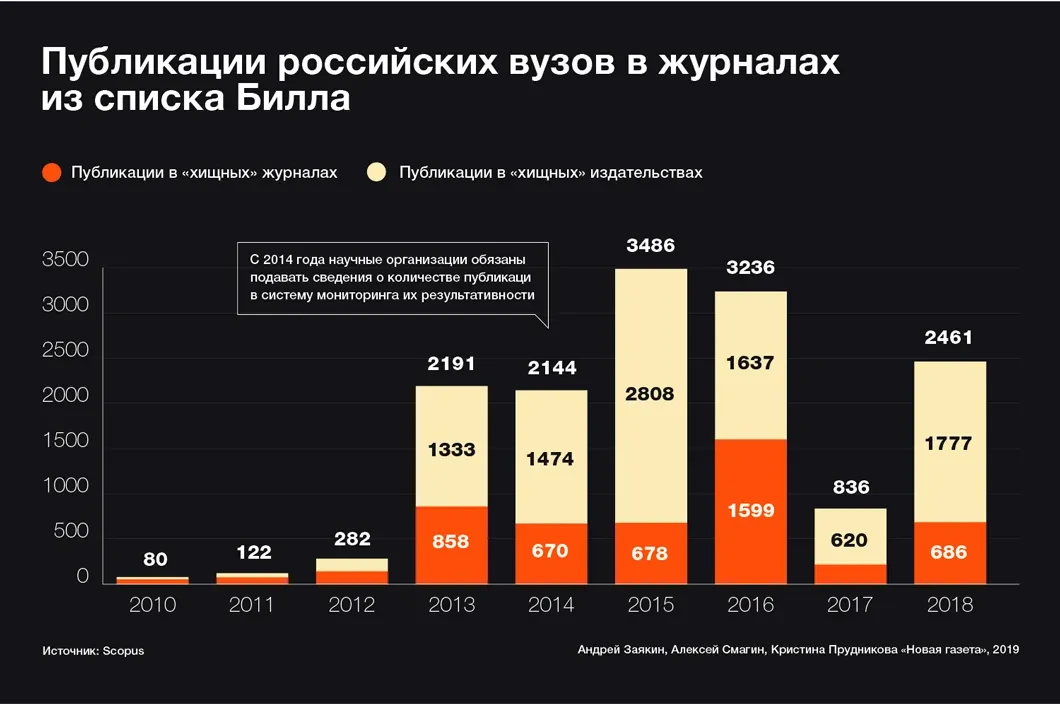
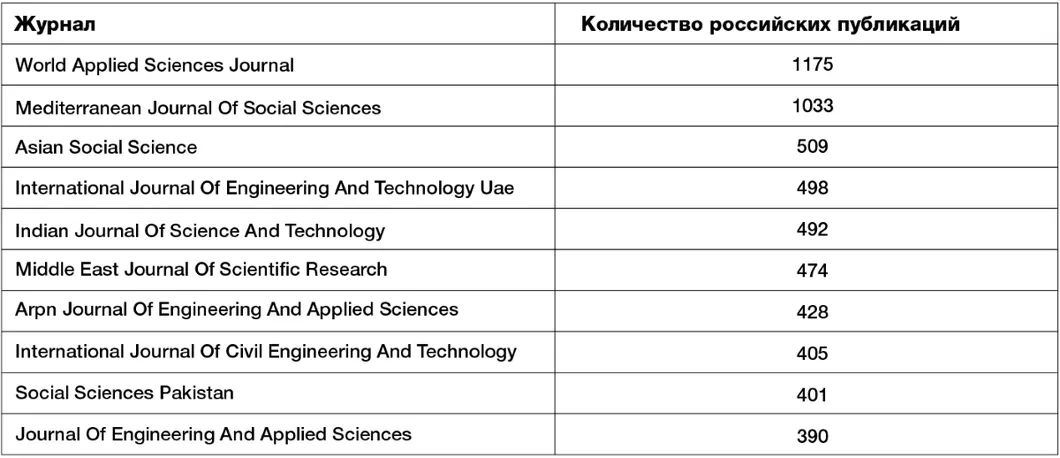
Judging by the last state procurement of KFU, the average cost of publication in magazines with the signs of “predators” can be estimated at 40 thousand rubles. We analyzed SCOPUS data from 2010 to 2018 and searched for articles that Russian universities published in magazines and publishers from the Bill list. There were 15 thousand such articles, and they began to actively publish their universities in 2013.
By our assessment, half a billion rubles sailed past Russian universities and laboratories directly into the pockets of Indian and Pakistani publishers.
But indirect damage is much more. Firstly, such a policy erodes ethical standards: young employees get used to the fact that you can write any nonsense, publish it for 40 thousand rubles and get 100 thousand bonuses. Secondly, the scientific environment is clogged with articles that only take time from the next generations of researchers.
We continue to spend?
“The main problem in modern science is the lack of liability of managers for the results of the decisions and a formalized approach to science,” comments Anna Kuleshova, Chairman of the Ethics of the Association of Scientific Redists and Publishers of the Association. - After the “May decrees” of the President, universities began by hook or by crook to increase the number of publications. The production of scientific articles is a difficult task that requires large time costs. It is necessary not only to conduct a study and prepare the text of the article, but also to wait for several stages of examination. Experts, as a rule, work on a voluntary basis and are strongly loaded, and the waiting time for publication in a prestigious journal can reach a year and a half. But universities are forced to report to the number of articles. There are no texts - no funding. Universities, including this race, spend millionth budgets on imitation of scientific research and publication in magazines “predators”. ”
“The most surprising thing is that for such a“ Potemkin village ”, associated with a waste of state funds, universities receive surcharges and raising the rating.”
Is it possible to go on a different path? Yes.
In the nineties, Chinese universities began to pay scientists for publications, and began with the fact that they paid the same reward for any scientific article. Over the 20 years of such a policy, the Chinese realized that this approach led to an explosion of low -quality and stolen publications, and began to change the size of the fee depending on the average level of citation of articles in the journal, as well as the level of university - employees of weak universities encouraged more.
By 2016, remuneration for a separate article in unique cases increased to 165 thousand dollars: for publishing in super -delayed Nature or Science, a professor can receive a fee 20-30 times higher than his annual salary, and nothing can be obtained for the article in magazines below the average.
Russia is still stubbornly stepping on the rake. In January, Academician of the Russian Academy of Sciences Vadim Brazhkin publicly stated that at the beginning of the year the institutions began to receive a state task from the Ministry of Education and Science, which includes the number of articles in scientific journals. So, the race for the number of publications will only intensify, and universities will still spend money that could go on high-quality scientific developments.
- undefined
We thank the experts of the project “The dissistance of Russian universities” Anna Abalkin, Alexei Kasyan, Larisa Melikhova, Andrei Rostovtseva for the exclusive data presented by Novaya Gazeta.