Translated material
Belgorod organist

 Timur Khaliullin
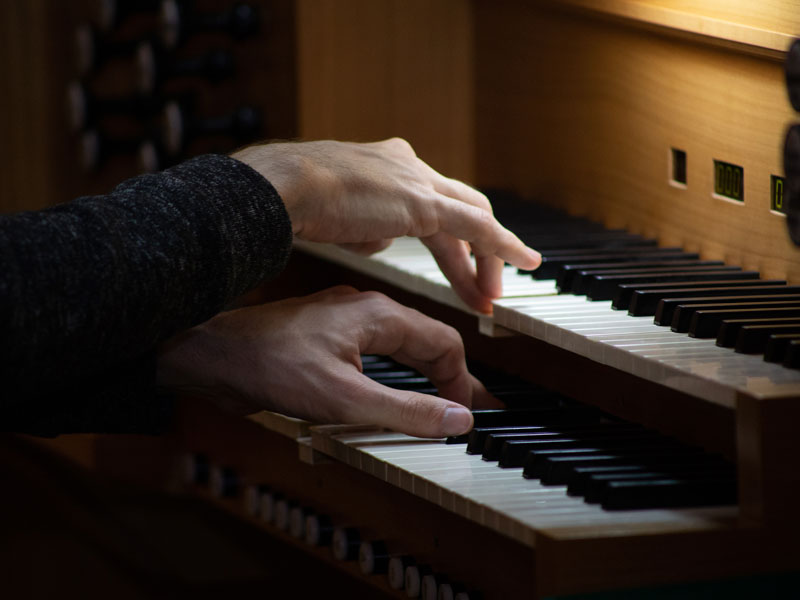
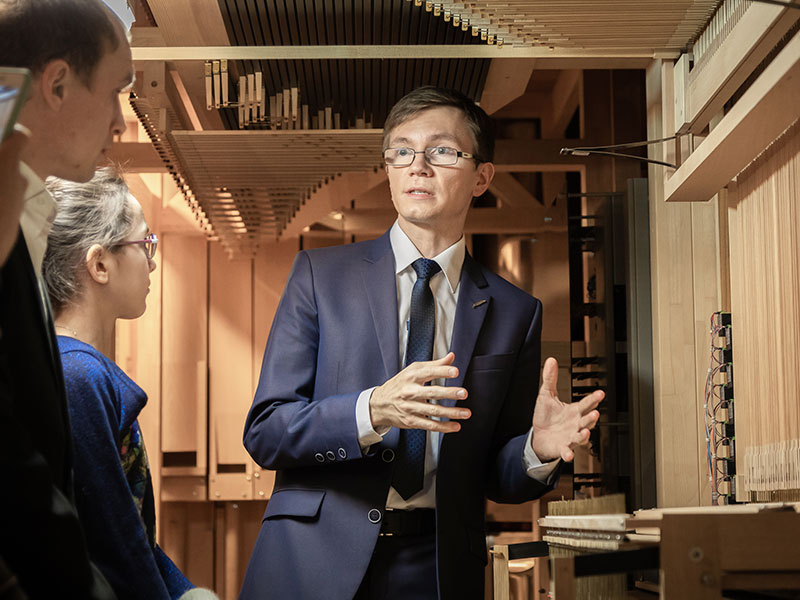
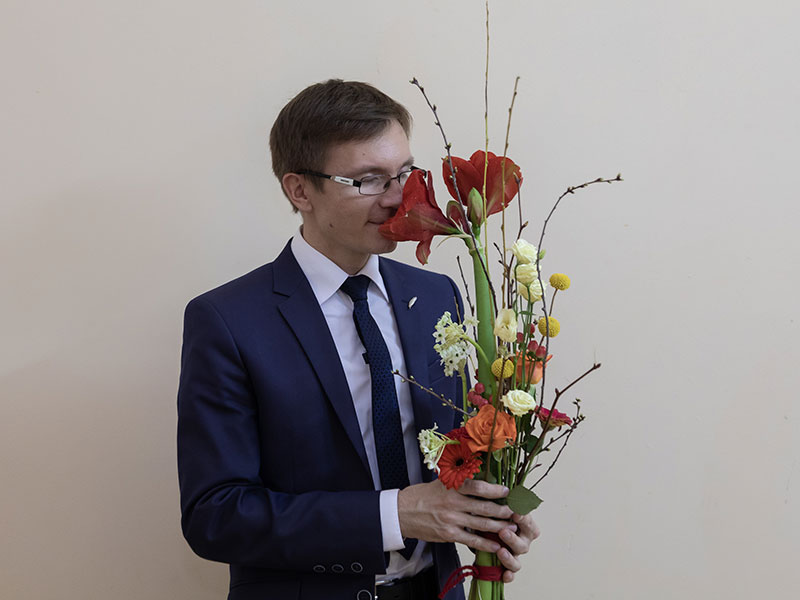
Timur Khaliullin is an organist, soloist of the Belgorod Philharmonic. In addition to the organ, he plays on the harpsichord and on the Carillion. Timur is sure that an organ is a modern tool on which you can play almost any music of different times and styles.
Thanks to Timur Haliullin in the Belgorod organ hall, you can hear Queen and Deep Purple. Fragments of the rock opera, arrangements from films are performed, including Harry Potter, Schindler's List, the Caribbean Pirates. And to promote organ music, Timur actively uses social networks, including his YouTube channel .
- They say that the governor brought you to Belgorod. This is true?
- Yes, true. More precisely, Ivan Grigoryevich Trunov, who built the new building of the Philharmonic and was its director, came in search of an organist in St. Petersburg. We needed a person who would also play in the Carillion and on the harpsichord. I came up. I was not the only one: I studied at the department of the organ, harpsichord and carillone, which prepares specialists at once in three instruments.
- Why did you choose you?
- It so coincided that I was just finishing my studies and was already a laureate of several contests - this was one of the requirements for working in the Philharmonic as a soloist. It helped that my first education is piano: most of my life I am a pianist. The organ is the second tool, and the harpsichord with the carillone is the third diploma. We can master the adjacent part every year and receive a diploma. This, of course, is difficult in Russia, because each next education is already paid. But it was worth it. Now I completely applied all these three diplomas here in Belgorod. I couldn’t do this anywhere else. In Russia, there is no other place where the musician could immediately use all these three instruments.
 Timur Khaliullin, soloist of the Belgorod Philharmonic
“Do you remember the moment when you first approached the organ?”
- Yes, at the conservatory in St. Petersburg. When I found out that there was an option, besides, it was also free, delighted. I tried to play, looked and realized that this is mine, that you can say a lot of new things here.
In Russia, the body is always the second higher education. For a year, I was optionally studied, and then it turned out that you could get the second higher. And since the second year I began to seriously engage in the body. I immediately got a job as a concertmaster. The salary went to study, a scholarship - for competitions. For food - parents helped. It was difficult to have enough money, but I expected everything. I still have the calculated books for five years of the conservatory, where it is painted every day, how much was spent on what. Now I can see and remember what prices were at that time that I ate, what I saved on.
- Tell us, please, what prompted you to devote your life to organ music? Is the organ initially a church instrument?
- The organ went beyond the borders of the church during the time of Bach, when concerts without a mass began to be set up for the first time and people came to just listen to beautiful music.
 Timur Khaliullin, soloist of the Belgorod Philharmonic
We, the Russians, have the inertia of the perception of the organ as some Catholic-Protestant spiritual instrument. This is a stereotype that I try to destroy in every way.
The organ was invented in antiquity. It became an element of festivities and guilies and was used in stadiums for the musical accompaniment of gladiatorial battles and other events.
The body got into the church only in the VI century and resisted for a long time there. But already in the XVII-XVIII century, he began to leave the church. Still being in the church, the organ gradually became a secular instrument: not only liturgical melodies, but also improvisations begin to perform on it.
The organ came to salons, palaces and theaters, and at the beginning of the 19th century - and in concert halls. And like a piano, like any other musical instrument has become suitable for the performance of any music. In Russia there is a jazz organ festival in Chelyabinsk and the modern organ festival in Moscow, where modern music sounds. Composers today write the most different music for the organ. Concerts are held with elements of the show, for example, such as a pedal solo. American organist Cameron Carpenter makes the so -called revolutionary show for the organ in which his legs are soloed. I also have several plays for the solo pedal.
Interesting folk interpretation of the organ. In our Philharmonic, there is a program “Music of the peoples of the world”, in which the organ connects with a barn, a prana flute and other folk instruments. We try an organ with all academic tools. From the harp to some unusual combinations with thrombone, tube, double bass. Everyone has long been accustomed to the violin and cello in the ensemble with the organ, but we went further and connected everything, and even interdisciplinary-organ and dance, organ and ballet, organ and 3D shows, organ and sand show.
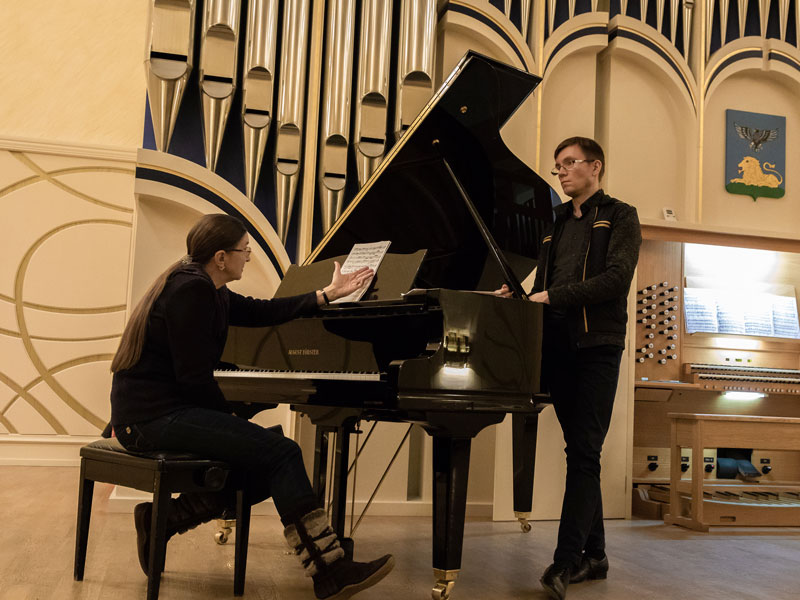
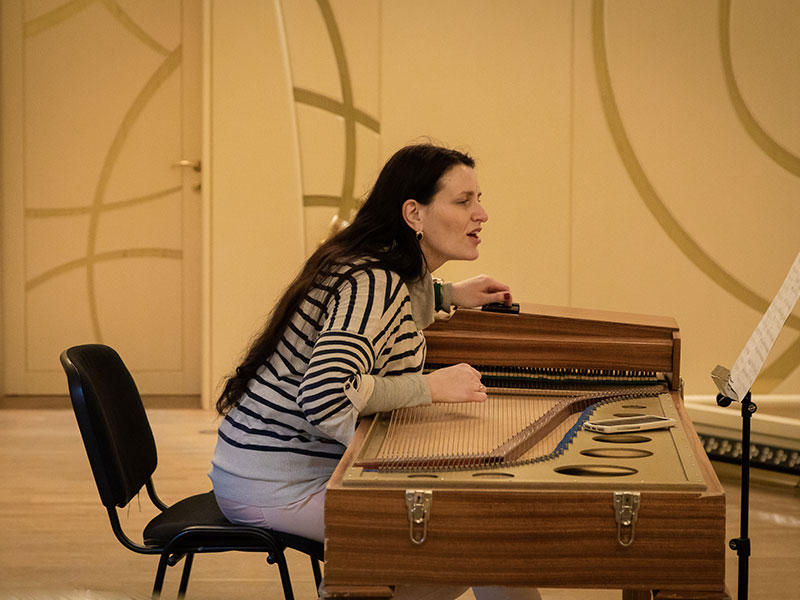
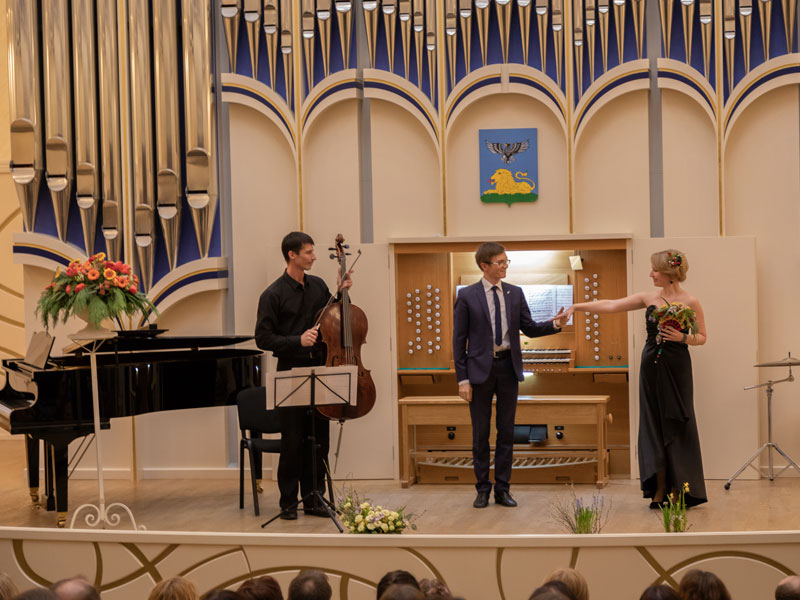
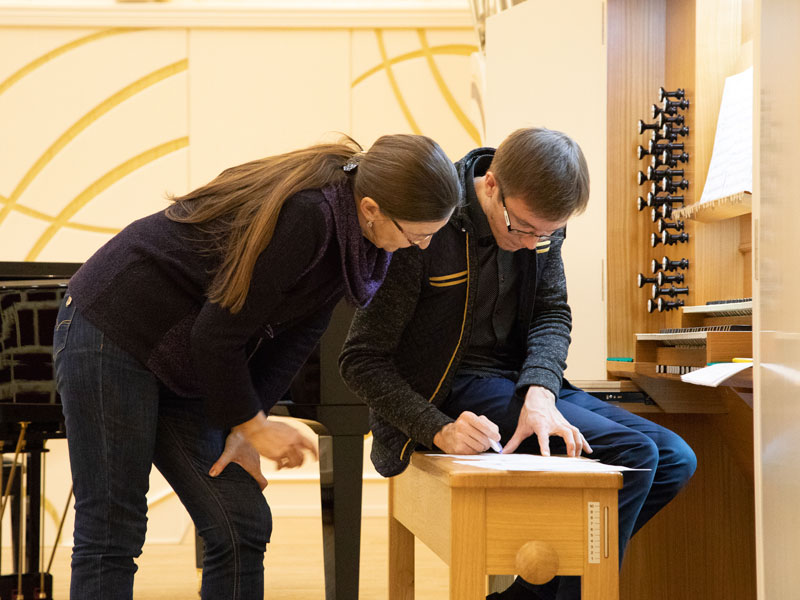 The artists of the Belgorod Philharmonic Lyudmila Belianchikov and Timur Khaliullin.
We want to show that the organ is not a tool stuck in the Baroque era. He is modern. It is arranged in such a way that any music of any time and styles can be played on it. Expressiveness is added by the color equipment of the scene, a technique that can color the organ in different colors, make overflows, strobe, transitions.
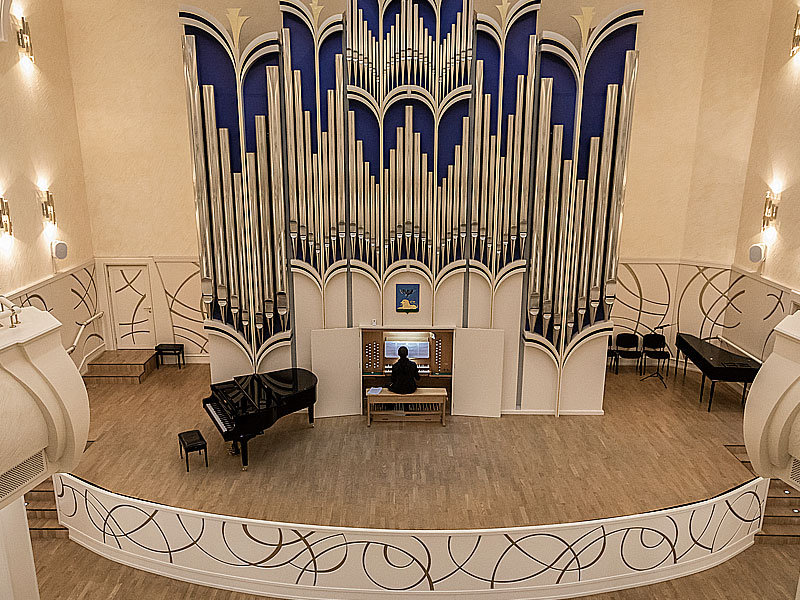
We have rock music. We turn on the smoke-machine and play Deep Purple. We play music from a rock-operator, arrangements from the films Harry Potter, Schindler's List, and Pirates of the Caribbean. Much more - such that you cannot even imagine - perhaps on the organ. There are much more opportunities than on the piano. Because the piano has one timbre, whatever it may be. And on the organ you can operate with power and thin sonority. What quiet colors do the organ have! From this position, we expand the organ repertoire, and Belgorod today comes ahead of many other concert organ halls. We now have a very creative atmosphere. People offer new solutions, new visions of how different tools can sound with the organ. They offer strange, at first glance, experiments.
“But did you all have all?”
- This body starts everyone.
- They say that he was built even for you.
- Well, they are exaggerating. It just coincided. But partly it is true that the body is being built with an organist. And the organist was already known before the organ was built. I did not know where Belgorod was located then. My friends made fun of me a little where I went. In some Belgrade, to Serbia? On the border with Ukraine? Or to where there was a conflict with Chechens in the 90s once in the 90s?
We subsequently dispelled all the stereotypes about Belgorod. Actively sharing news on the Internet, touring throughout Russia from Kaliningrad to Khabarovsk, we spread the news of Belgorod as a kind of “city of Kitege of Music”, where musical culture lives and gains momentum. Such an island of culture is no longer anywhere, perhaps. Where everything would be concentrated in one Philharmonic, where one Philharmonic would have three concert venues inside plus virtual concert halls and exit sites. Plus, a mobile calon, a separate organ hall, a separate small hall for celebrations and ordinary concerts, a separate large hall for symphonic concerts. Separately, the gym in the basement for workers of the Philharmonic. Separately, the hotel built into the Philharmonic.
- When was the building built?
- The Philharmonic was built in 2010. The body appeared in 2011. We have Carillon since 2012. From the first days of the body, I am here. Since December 2011, which has become a turning point in my life.
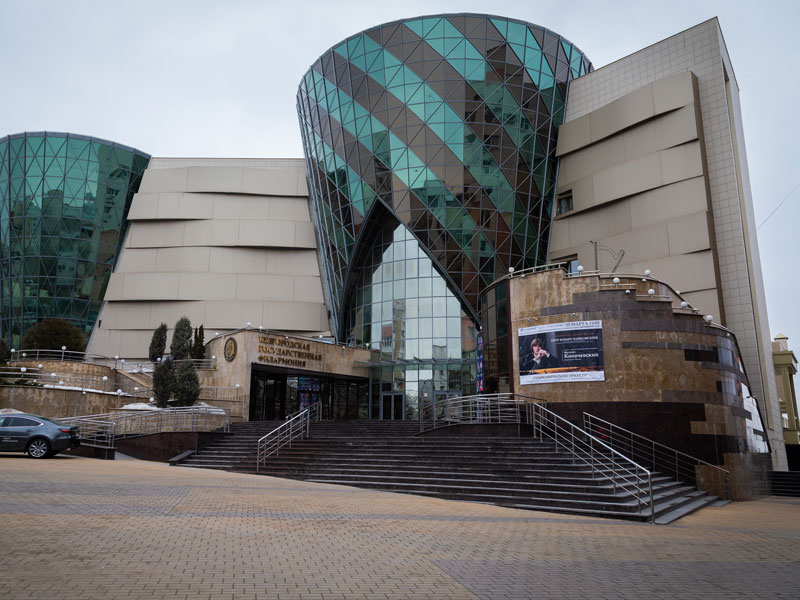 Philharmonic building
“You yourself compose music yourself?”
-Yes, I have several of my own works, for example, the avant-garde "scherz-Tokkatin." This is a pure avant -garde, mysticism. There is a lullaby on my grandmother's songs.
Many works are still in the head, some are forgotten, others are polished.
- Do you shift the compositions written for other tools for the body?
- The tradition of organ transfers has been going on from time immemorial. Even in the time of Bach, the composers shifted their music, the music of other composers, sometimes even giving it to their own, for the organ - in order to give music a new life, to refresh the gaze at it, making it an organ play and giving it the opportunity to sound performed by one person and an orchestra, for example. So Bach made shifts of his works for the solo organ - his concerts, his chamber works, Vivaldi's concerts. He made solo plays from them.
Today, all organists continue to do this. This expands the repertoire, diversifies organ music, gives new colors familiar to music. “Waltz of Flower” or “Fairy Dance” in the sound of the organ acquire completely new, not similar to anything. This is not an original work, and at the same time self -sufficient full -fledged music, recognizable, clear and academic.
I try to do all my transformations myself. I call my ability to automatically convert any notes into a transformation for the organ as a joke of superpower. If you find on my channel, let's say Albenis’s Asturias or “Fairy Dance”, or “Waltz of Flows”, or “Spring” Vivaldi, and ask me notes of this arrangement to play too, I will not be able to give them to you, because I have no notes. I play either on the keyboard or immediately in the score. Immediately transferring the entire texture to two keyboards - that is, to a solo voice, on accompaniment and even to the bass function, adding the pedal. The pedal duplicates the left hand, but often has a self -sufficient full line of the bass function, as in the score of the orchestra. All my transformations are in my head.
- Can't you write down?
- You can write down, but it will take a lot of time. There are a lot of transfers.
-Do you teach, passing your skill to someone?
- Yes, I have students: I lead the organ class at the Belgorod Institute of Arts and Culture. Also, optionally, I started.
On the basis of the Philharmonic, students can immediately try to play seriously on stage. Even we did not have this in St. Petersburg. We only played on the state examination at the largest main organ. And so - how lucky, one, the other concert, happened, will fall. We rehearse on electronic simulators. And our students can afford. Only in Belgorod is possible.
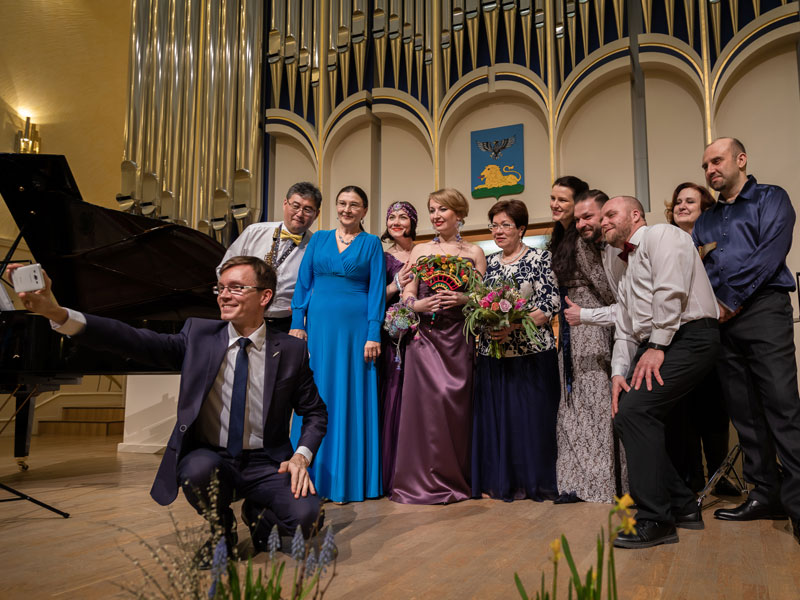
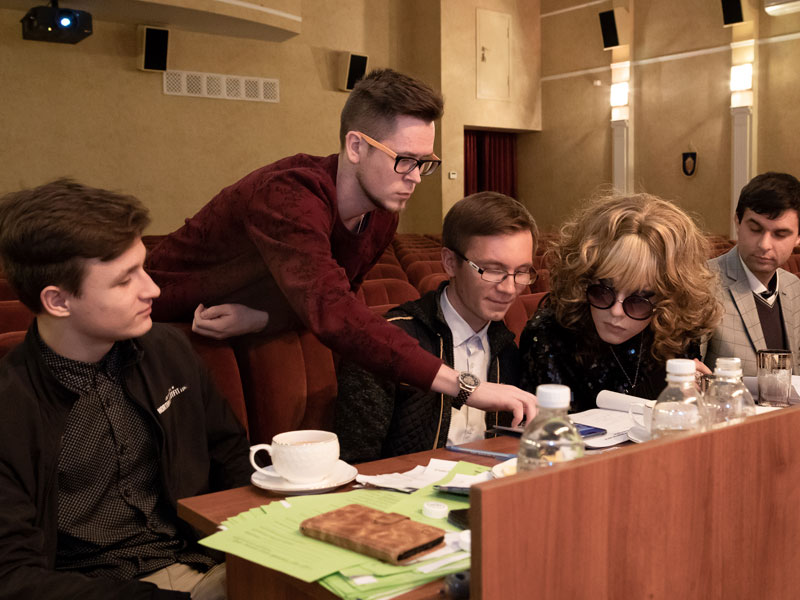 Timur Khaliullin (in the center)
In the St. Petersburg Philharmonic, we were never allowed to the organ, and most of my classmates still have not played there. Never. Because there you need to be at least a laureate of two international competitions, to be a soloist of some other Philharmonic, otherwise you just can’t get there, and here in our Philharmonic all students played at least at least at concerts, and some already three. This is also a pleasant advantage.
Generally speaking, a musical education has not yet been very strongly delivered in Belgorod. But we are working on it.
- Are there music schools?
- There are four. There is also a music college at the institute.
We hold on -site concerts of organ music in a variety of places, up to kindergartens. We bring children here too. All Belgorod schools, I am sure, have already passed through our children's quiz. I tell you how the organ inside is arranged using videos that I specifically mount for this. I show them videos, magic boots in which organists play.
- Do the organ need special boots?
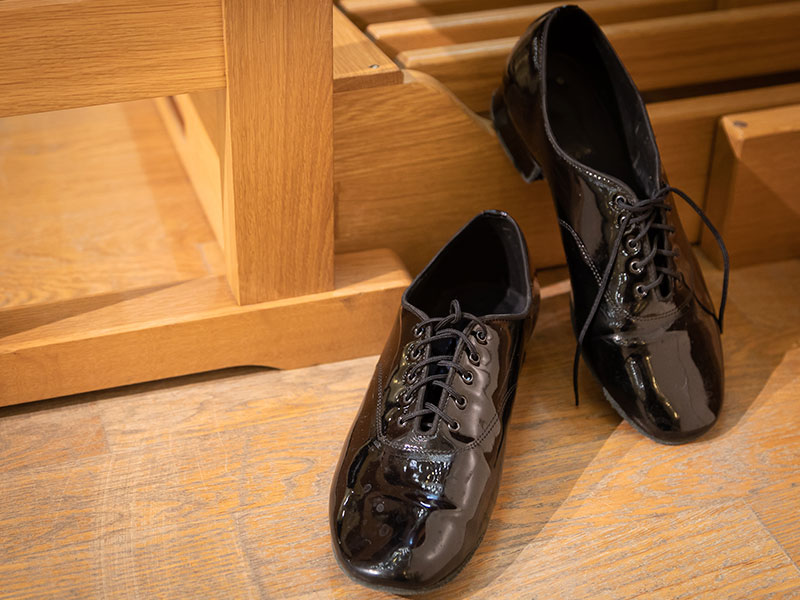
- More precisely, dance shoes. In Germany, such shoes are specially sewn for an organist. In this case, there is a rule: the organist should play in any shoes. Even in sneakers. This also happens. And in winter shoes, if the church does not heat, too.
-And how, in your opinion, to instill in children a love of music? It is impossible to make something to love.
- Maybe. I am from a musical family, my parents are musicians. At first my mother forced me to play, and I resisted. I did not want to study, I was too lazy. Then I won several contests, somewhere praised, and went. Something turned on, and everything turned upside down: I began to play for a day, my mother was no longer happy, the neighbors cursed.
-They say that you come up with any surprise at every concert at the end?
- Yes, always everything is suddenly. Often this is improvisation, or a few days before the concert, some idea is born. This year, we first connected an organ with Russian gusls. We have never done this.
- Is the full hall always gathering at concerts?
- Yes, it often happens that tickets are sold a few weeks before the concert. Our hall, of course, is small, but for the eighth year it has been going on. And all the time a full hall. They told me: for five years a full house will hold, then it will decline. No, thank God, it did not go.
- In fact, today the situation is that the personality determines where the center is not a place. Paris, Moscow, Belgorod - cultural capitals, which are located in one row.
- Yes, this is absolutely true. But you also know what to say right? If we are talking about our narrow organ business, then here is not even a person, but the body determines everything. If we have a smaller organ in size and the worst in quality, I could not do half of what I do. Our body is built in such a way that everything can be done on it. And there are organs that are intended only for French music. Or only for German. Or only for old.
- And what is there in it, what does it all allow?
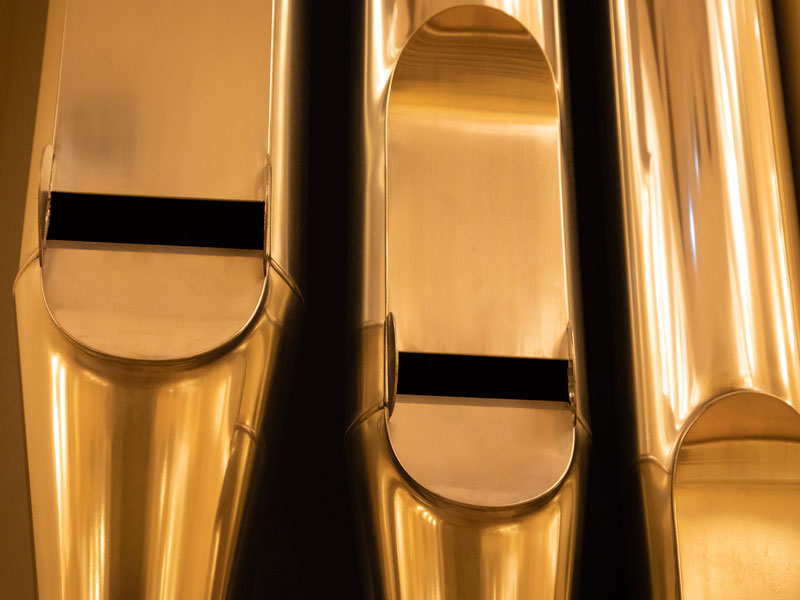
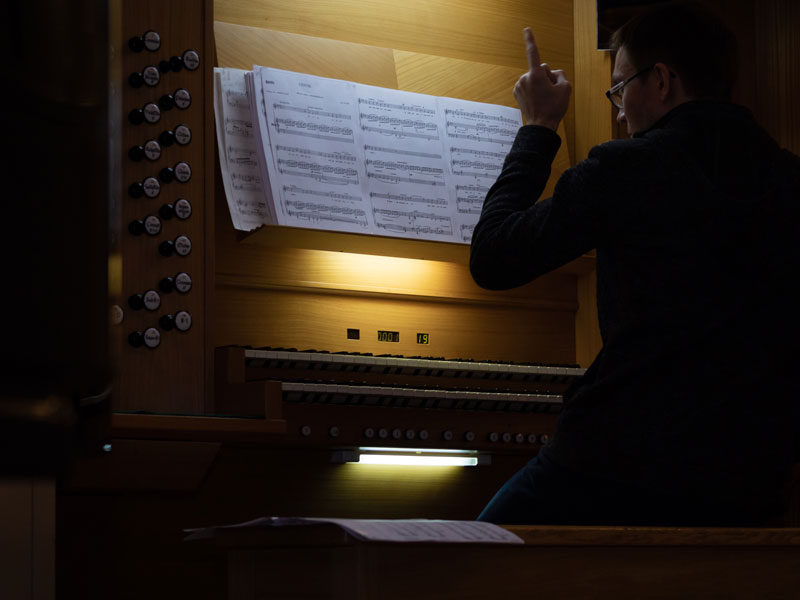
- set of registers, keyboard location, the presence of a computer that helps to cope quickly with switching. The presence of backlight. The presence of an extended keyboard for a more virtuoso game. More pedal keys. More registers. Acoustics are better. The organist is clearly visible. The organist is comfortable, because he can hear everything well. He hears that he plays, and in the cathedral it often happens that you sit inside the organ - and you do not hear any beauty, because everything flies late and not as beautiful as people who came to the concert hear. You do not get pleasures from the game, you just guess how beautiful it is. And here I am in the sound field: I myself enjoy it, and people get it. People see how I play and I see people.
The Moscow Conservatory has a wonderful organ, but it is intended only for French music. And his remote control is arranged so that it seems that the organist is turned to face the public, but he put the notes-and his head is not visible. And how he plays is not visible. It seems to be what you say: you have to listen to music. Well, imagine if an unprepared person comes and sees a wall with pipes in front of him. Well, he listens for some time. But this is not the cathedral where you still think about God and look at the stucco molding. This is a concert hall, I want to see an organist. In addition, this organ no longer has a pedal solo to play it. What is the point in the pedal solo if you can’t see that the legs play? It remains only to adjust the repertoire, invent something else. But French music there is better than here. It is better to imagine how the music of Frank, Vidor or Bölman sounded in the original.
- Tell us, please, how did it happen that Belgorod has its own carillone? Nowhere, but in Belgorod there is.
-Belgorod can be called an island of clavier-performing culture. This is the only place in all of Russia where three keyboards are concentrated in one establishment - an organ, harpsichord and a carillone. All of them are related, have keyboards, this is a hand -keyboard and a keyboard for the legs. But all are different in sound production. The organ is the overall, the harpsichord is the forceps, and the Carillion is a shock.
All three instruments appeared thanks to the director Ivan Trunov, who was the initiator of the construction of the new Philharmonic building, acquired an organ, harpsichord and Carillon. He was very friends and cooperated closely with our governor, a lover of classical music Yevgeny Savchenko, who helped him, supported financially, financially - and made a dream a reality.
The governor loved to travel, as he himself told, in Europe, in countries where organ culture is traditional, where the bells are familiar, where they call on weekends in squares or on the street. He decided to bring an element of European culture to our Belgorod musical atmosphere. Therefore, today we are the only owners of a mobile calon in Russia.
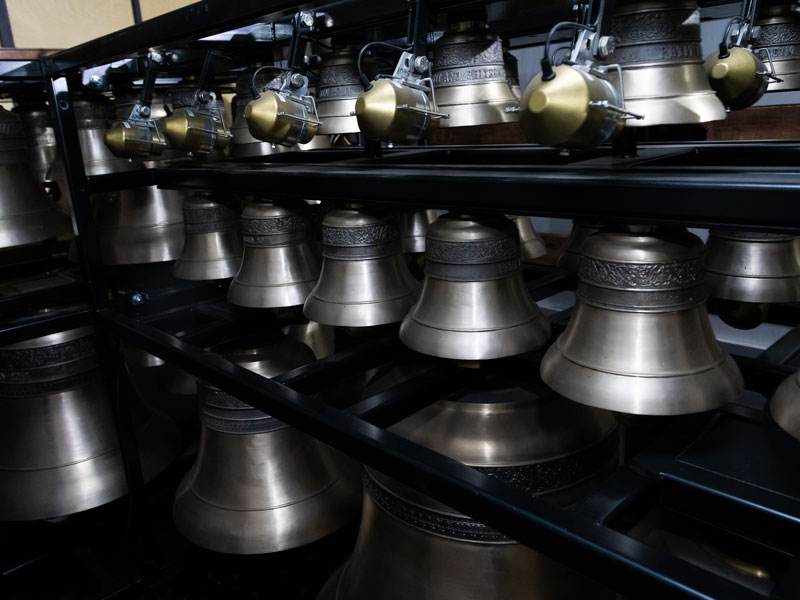
The carillon from the French language translates as a “set of bells”. A set of bells is softly said, because in fact it is not a set, but a set. There are as much as 51! This is a traditional number for concert karillions. There is less. The same number of bells for stationary carialons in St. Petersburg, in the Peter and Paul Cathedral, and in Peterhof, in the tower. In total, there are three Carillons in Russia.
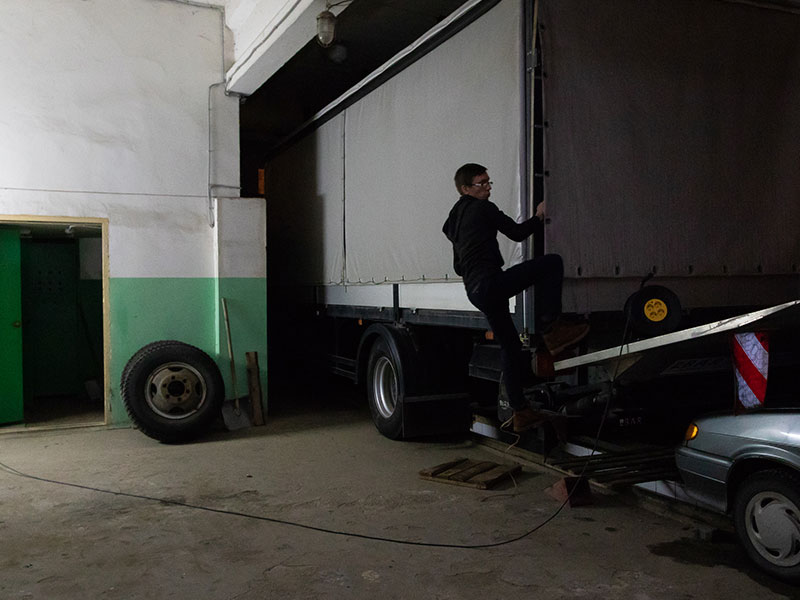
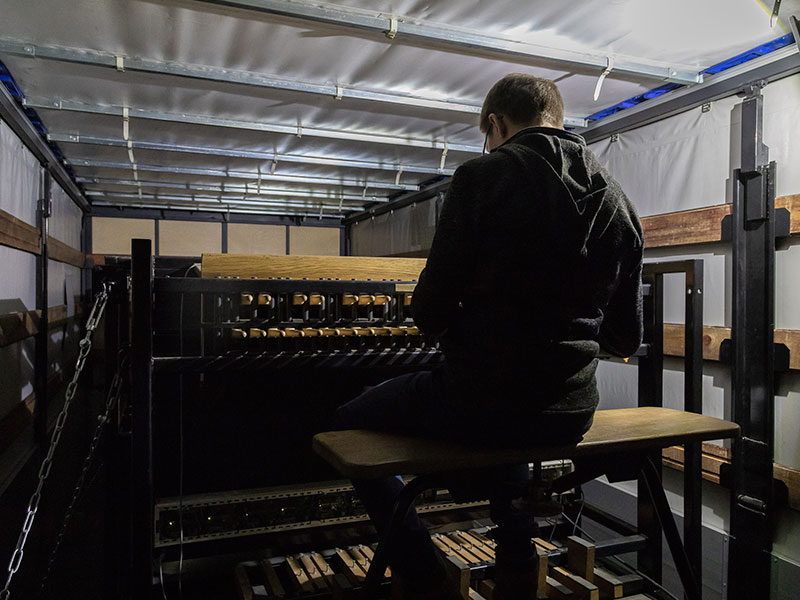
Our Belgorod Carillon is the only one that can not only be transported in the back of the truck, but also sorted out, unloaded and installed on any concert venue indoors. The Carillion as a constructor understands several modules, and it can be carried to any doorway and in any combinations to be assembled on the stage.
We came up with the Belgorod Calling Carillon music festival. This year it will take place a second time. This is the only mobile festival: we, as Bremen musicians with bells, will move from city to city.
The festival collects carillonyists and lovers of carial music from all over Russia and Europe. Концерты фестиваля проходят на разных площадках, а заключительный концерт — в большом зале Белгородской филармонии, где карильон устанавливается прямо на сцене. Специально для этого события заказываются произведения у композиторов, которые впервые в мире звучат в такой версии, именно для нашего карильона. Для карильона и духового оркестра, для карильона и хора, для карильона и солистов, для карильона и симфонического оркестра. Второго такого места пока в нашей России и даже, не побоюсь сказать, в Европе, вы не найдете, потому что не всегда мобильный карильон можно разобрать и установить на сцене, а тем более еще и устроить карильонный праздник в виде сочинения специальной для него музыки и исполнения этой музыки.
Зимой наш карильон стоит в гараже, в автомобиле. Но как только сходит первый снег, я даю свой первый концерт.
— Два слова, из чего состоит ваша повседневная жизнь?
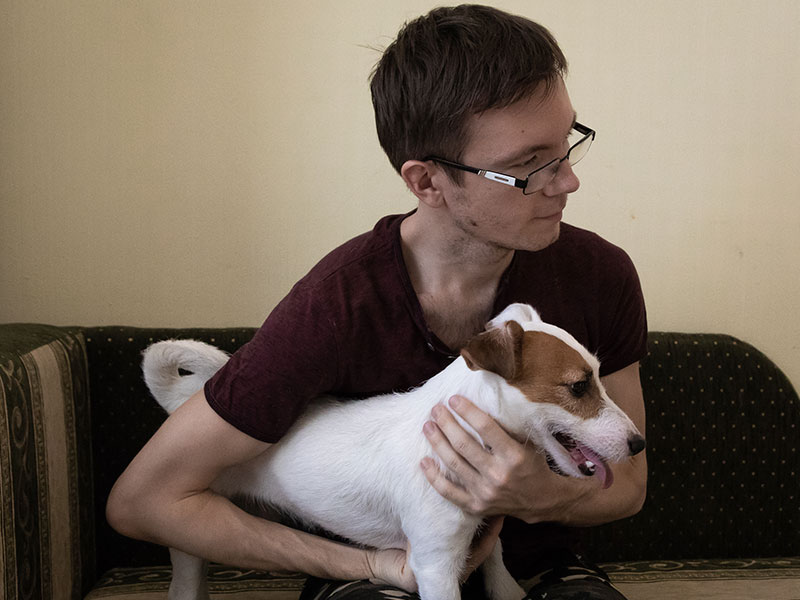
— Приближаются гастроли. Я живу изо дня в день в органном зале, готовлюсь. Монтирую видеоролики, рисую, занимаюсь со студентами, зимой катаюсь на коньках, летом — на роликах. Велосипед очень помогает. Хожу в фитнес-клуб, в бассейн, на йогу иногда. Вожусь с кошкой и собакой.
— Кошка с собакой дружат?
- More. Германа мне подарили, когда у меня уже была собака, я не был уверен, что подружатся. Но они подружились. Вместе спят, едят из одной миски и отлично уживаются вместе. Вольта я брал одно время на репетиции, он под орган засыпал. Если он видел, что я сел за орган, то знал, что это надолго. Долго, монотонно, никаких игр, только спать.
— А дома есть какие-то музыкальные инструменты?
— Дома нет, все здесь. Все здесь, вся жизнь. Дома пусто. Быта у меня как такового нет. В кульминационный момент подготовки к концерту я и обувь не снимаю дома. Просто прихожу, ложусь и засыпаю.
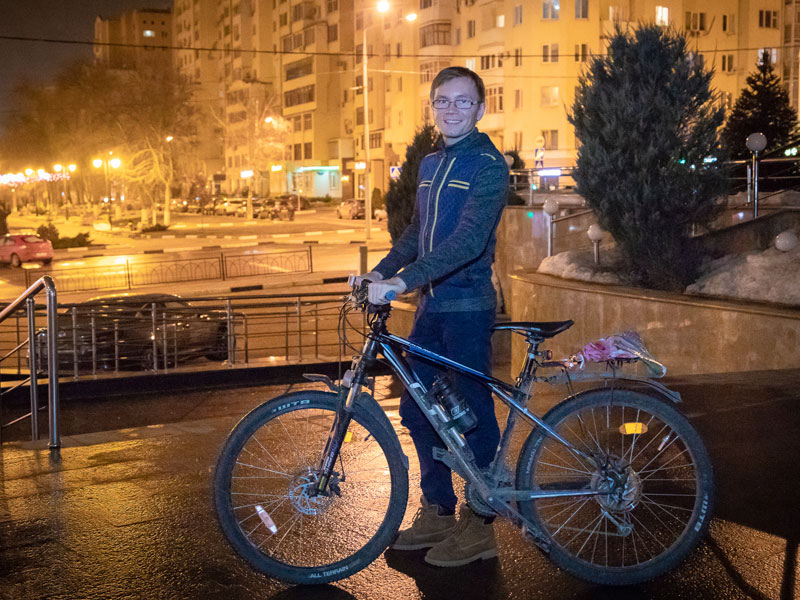
— Вы ездите на работу на велосипеде. В Белгороде довольно оживленное движение, не опасно ли это?
- No, not at all. Я еду вместе с машинами по обочине по правилам дорожного движения. Бывают такие водители, которые выкрикивают из окна: «Ты почему нарушаешь правила?». Тогда я отвечаю: «А почему вы не знаете ПДД?» Если бы у меня была велосипедная дорожка, я должен был бы съехать на нее. Если у меня есть рядом с тротуаром проезжая часть, я должен покинуть тротуар и попасть на обочину проезжей части, стать участником движения. А если бы, допустим, я с дороги перешел бы на тротуар с людьми, это уже было бы нарушение.
— Вы и зимой не расстаетесь с велосипедом?
— Все зависит от того, как расчищены дороги, если не очень много снега, то и зимой. Я европейский человек в этом вопросе: выбираю велосипед. Я живу не очень далеко от филармонии, в шести километрах. Это и пешком-то 40 минут, а на велосипеде — максимум 15. Я еду иногда в три часа ночи, иногда в четыре. Ни одного человека, ни одной машины. The city is sleeping. Белгород — это город жаворонков. Люди рано ложатся спать и рано встают. В шесть утра они уже стоят на остановках.
Вообще говоря, в Белгороде много велосипедистов. Если сделать велодорожки, больше людей перейдут на велосипеды.
Еще я люблю роликовый спорт. У меня был период, когда я занимался слаломом. Это очень помогло мне в развитии органной педальной техники, которая играет в моей работе важную роль. У меня есть магистерская работа, посвященная педальному соло как особому приему фортепианной выразительности, а также несколько своих сочинений — переложений для педали.
— Вы не хотели бы уехать из России?
— Зарплата у музыкантов в Белгороде небольшие, при этом много куда приглашают. For example, to China. Там обеспечивают музыкантов по полной программе, можно стать королем с таким образованием. Но я буду там вечно чужим.
К тому же я не считаю Белгород провинцией. Я полюбил этот город. Он чем-то похож на Европу. На маленький европейский городок.
— Вас можно найти в социальных сетях и на YouTube. Насколько это способствует продвижению органной музыки?
— Очень помогает, но на это уходит сейчас много времени. У меня нет афиш. Люди узнают о том, что я делаю, из интернета. Я постоянно делюсь процессом репетиций, творческими идеями, образом жизни — людей интересует, как все это происходит. Постоянный интернет-шум заставляет людей покупать билеты.
- Are you religious?
— Да, я мусульманин. Но при этом я светский человек. Моя вера не помешала мне приехать на Святое Белогорье и выучить православные молитвы к праздникам, например, «Отче наш», и освоить колокольные звоны. Не уверен, что много православных знают наше «Бисмилляхи Рахмани Рахим».
— В Белгороде есть мечеть?
— На улице Мичурина есть молельная комната. В Харькове есть мечеть, я туда иногда ездил, пока было возможно. В Петербурге я ходил в Большую соборную мечеть. Сейчас там уже вторую мечеть построили. А в Ижевске, откуда я родом, построили уже третью мечеть.
Орган отлично уживается с исламом, несмотря на его религиозную предысторию. Вот смотрите, я татарин. На святом православном Белогорье я играю на католическом или протестантском инструменте, порой свою татарскую же музыку. Представляете, какая смесь? Однажды меня даже пригласили на праздник 500-летия Реформации в Германии — именно как музыканта-татарина, по религии мусульманина, играющего на лютеранском органе, православную музыку Танеева — знаменитую кантату «Иоанн Дамаскин». Они хотели подчеркнуть мультикультурный аспект. В интернете есть запись.
— В чем, по-вашему, смысл жизни?
— Мне важно получать радость от жизни — и я ее получаю, когда вижу что могу своим творчеством сделать счастливыми других людей. Я думаю, что для каждого музыканта это так. Потому что без музыкального инструмента и без концертного музицирования не проживешь.
Даже без денег можно прожить. А без инструмента и без игры музыкант не сможет прожить. Отними у музыканта музыкальное творчество и музыкальную практику — и он перестанет быть полноценным человеком. Поэтому для меня очень важна возможность быть нужным, возможность быть услышанным людьми. Это то, что приносит радость и делает жизнь осмысленной.
- Are you a happy person?
— Конечно, я счастливый человек, прежде всего потому что у меня есть возможность все то, чему я учился, применять на практике — и делать это с удовольствием. Without hesitation. Без приказа. С полным чувством свободы, что для меня самое важное. I am a free person. Я могу ездить на любые гастроли, сочинять и импровизировать, делать любые переложения, любые программы — что может быть важнее для музыканта.
Беседовала и автор фото — Мария Муравьева