Date
Author
Арнольд Хачатуров, Антон Вшивцев
Source

Preserved copy
Translated material
"Friendship" is poisoned
Belarus suspended export of gasoline from Russian oil to Poland, Ukraine and the Baltic countries
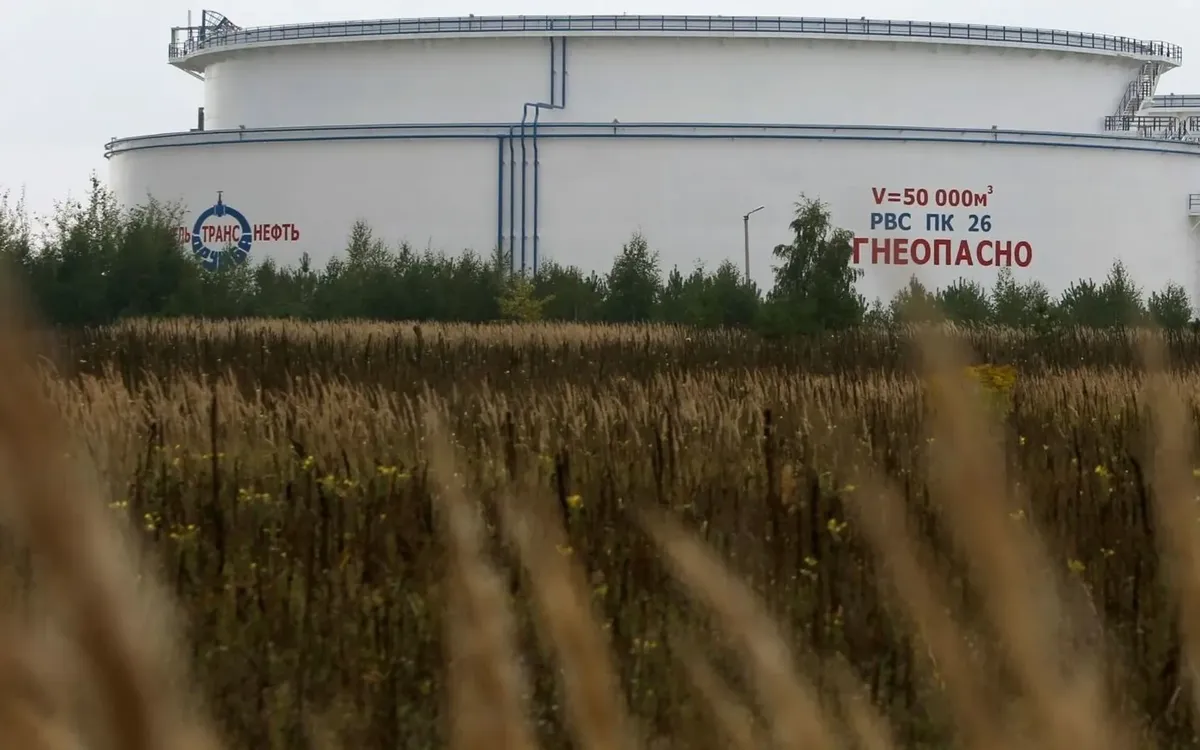
On Tuesday, official representatives of the Belarusian oil company (BNK) reported the suspension of light oil products - gasoline and diesel fuel - to Ukraine, Poland and the Baltic countries. According to the general director of BNK Sergey Grib, this measure is associated with low oil quality, which Russia exports around the section of the GomelTransneft Friendship main oil pipeline. Export volumes are reduced in order to fully meet the needs of the domestic market of Belarus.
Earlier, on April 19, by the pollution of the Russian export mixture Urals, Belneftekhim was announced in the Belarusian concern of the Belorussian concern.
Transneft recognized the existence of a problem and promised to eliminate the source of possible pollution by April 21–22.
Nevertheless, it was not possible to normalize the situation by the established deadline. On April 22, one of the two largest Belarusian oil refineries, the Mozyr refinery, announced the failure of “expensive equipment” due to Russian supplies. In transit, poor -quality oil has already entered Ukraine and the European Union, today said the deputy chairman of the Belneftekhim concern, Vladimir Sizov. Minsk announced the creation of a national fuel reserve for the period of the sowing campaign, and by the end of the year the republic expects to find an alternative to the supply of Russian oil through the ports of the Baltic countries or Ukraine.
In the Russian Ministry of Energy, the situation was explained by technical problems that are not related to relations between Moscow and Minsk. However, the political version of the conflict still remains one of the main ones.
Recently, the Belarusian side has made a number of critical statements regarding the Kremlin. In particular, the country's President Alexander Lukashenko repeatedly expressed discontent due to tax maneuver in the Russian oil industry. As a result of a decrease in export duties on oil and a parallel increase in the tax on mining, the value of Russian oil for Belarusian processors will increase. Due to the maneuver, Belarusia lost almost $ 4.5 billion over the past three years, and by 2025 he will lose another $ 10.6 billion, Lukashenko said. As compensation, Minsk proposed raising the tariff for oil transit by 23%in its territory, but the Russian side refused to support this offer, after which Lukashenko promised to close the Druzhba oil pipeline for repairs.
In addition, last week Russia limited the export of oil and oil products to Ukraine. After some time, BNK announced the “growth of supplies by Belarus” in order to compensate Ukraine with Russian oil. At the same time, Moscow has long been opposed to the fact that Minsk will resell oil products from Russian oil, depriving the Russian budget and helping Kyiv bypassing Russian sanctions.
Mikhail Krutikhin
Partner of Rusenergy
-This incident occurred due to the fault of the Russian side-“Transneft” admitted that her oil pollution occurred in some place, they eliminate problems. In Belarus, several consumers stopped exporting oil products abroad and announced that this oil caused damage to one of two oil refineries. The amount of damage is unclear, and it is generally not clear whether they will somehow demand compensation from the Russian side ( *previously stated that the amount of damage could be “tens of millions of dollars”.- *Ed. ). This is a dispute between business entities.
So far, these are insignificant volumes and nothing serious happens-all consumers of Belarusian oil can receive it through some alternative routes. The Ukrainian side can suffer most - fuel from these refineries is also on Ukraine. It is still very difficult to build assumptions about whether it is related to politics. But neither the technical nor the political side has yet been traced.
Sergey Kondratyev
Deputy Head of the Economic Department of the Institute of Energy and Finance
- BNK made a very foggy statement. It states that in connection with the problems with the supply of oil for “friendship” and the high content of chloroscope compounds, it was decided to stop the export of only light oil products to Poland, the Baltic states and to Ukraine. It is said that maximum attention will be paid to the supply of the domestic market. It is worth noting that Belarus exports light oil products not only to these countries, but also to the countries of the far abroad, to the same Western Europe. Therefore, it seems to me that there is some kind of uncertainty.
If we talk about Ukraine, then Belarus, along with Russia, is its largest supplier of light oil products, primarily gasoline and diesel fuel. The Ukrainian market diesel is very large - more than 90% they import from other countries. Given the recent sanctions ban on the supply of petroleum products from Russia, for the Ukrainian market this may mean very serious problems: it will be necessary to find a fairly large amount of fuel. If we are talking about diesel, then this is more than 400 thousand tons per month - so much on average is import. More than 70% falls on Russia and Belarus. These deliveries will have to somehow compensate. You may have to turn to Romania, Hungary, Poland. It will not be so simple to close such volumes directly. There will also be logistics problems, because imports from Russia and Belarus have very good logistics - deliveries from Belarus are carried out mainly from the Mozyr refinery, which is located several tens of kilometers from the Ukrainian border. In this regard, in addition to the search for suppliers, it will also be necessary to think about how to deliver, transportation.
If we talk about Poland and the Baltic states, then there are a significantly smaller role there: Poland can increase processing at their own capacities, the Baltic states also have the Mazheikyskoye refinery. Poland and the Baltic states have the opportunity to purchase oil products in the same Western Europe and exceed them in the Baltic ports to supply the local market. The dependence is significantly less than that of the same Ukraine from supplies from Russia and Belarus, from which such a double blow occurred.
I don’t know if there is some kind of political background in this situation. We do not have much information now. In addition to statements from the Russian Ministry of Energy and Belneftekhim yesterday there was a statement from Ukrtransnafta, which is responsible for the operation of the Ukrainian section of Friendship. She says that she also carefully analyzes the situation and does not refute the fact that, according to analyzes on their site, there is no problem. There is no talk about exceeding the permissible norms for chlorological compounds ten times. The statement "Ukrtransnafta" is quite restrained, but it suggests that they are closely monitoring this situation.
I do not think that this problem will drag on for a long time. But I do not exclude that Belarus leads some kind of independent game. Prior to this, Minsk made a number of high -profile and not very pleasant statements against Russia regarding oil supplies, expressed dissatisfaction with the Russian “tax maneuver”. Lukashenko said that they should think about their interests and that the partners should not go towards. Then the announcement of the poor quality of oil in Friendship followed.