
Translated material
Cosmonautics Day: Docks and inconsistencies

On April 12, we celebrated the 58th anniversary of the first flight of a person into space. Every year, more and more often on this holiday, we read the words "Yura, forgive." But, without denying the difficult situation in which the Russian astronautics found himself, it would be right in honor of the Cosmonautics Day to look carefully at the positive news of the last days.
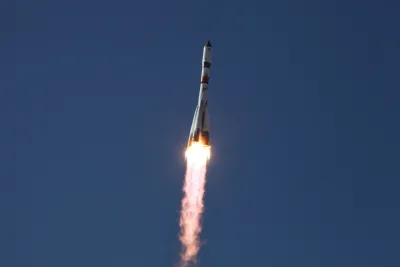
On April 4, the Baikonur cosmodrome launched the Soyuz 2.1a launch vehicle with the Progress MS-11 cargo ship. After 3 hours 22 minutes, the ship completed the docking with the Pierce module, setting a new flight time for the flight to the International Space Station. The development of a “fast” docking scheme on cargo ships will promptly deliver people to the station at the Soyuz man -made ships. But it is important to note: this does not mean that now at any moment you can quickly deliver cargo or people to the ISS, since the “fast” docking scheme has a more limited starting window.
Interestingly, the question of reducing the flight time of Russian ships began to be worked out in connection with “space tourism”. One of the leading ballistics of the RSC “Energia” Rafail Farvazovich Murtazin proposed to docking before the onset of acute adaptation to zero gravity among astronauts and space flight participants, as officially called space tourists [ 1 ].
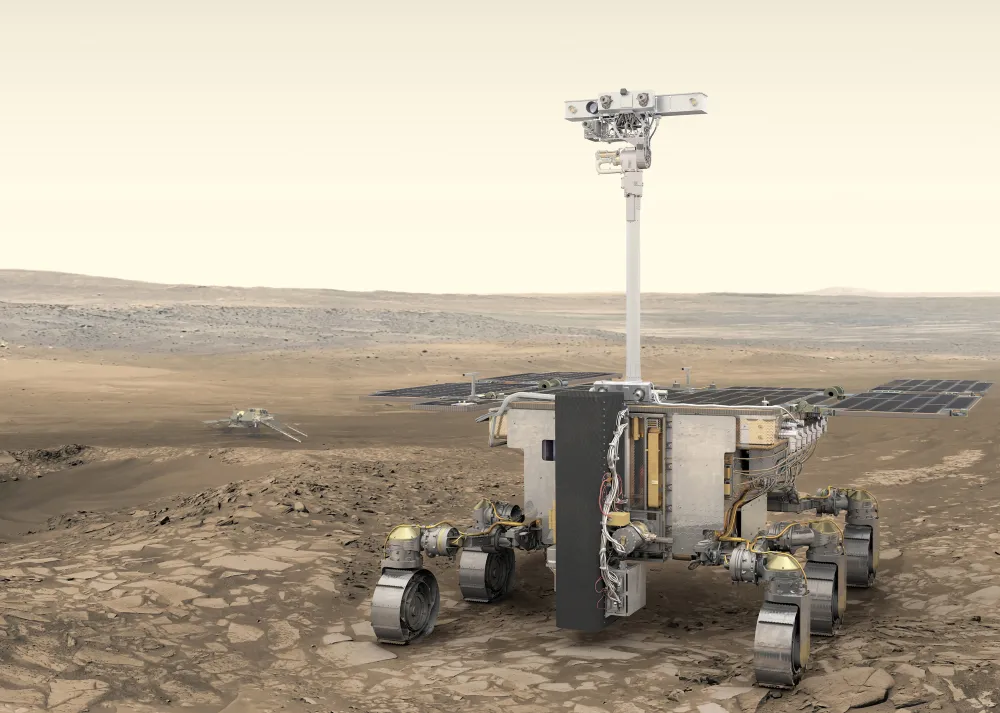
In March to Italy from NGO to them. S. A. Lavochkin was sent an almost ready-made landing platform of the Russian-European mission "Exomars-2020" [ 2 ]. The company Tasini conducts the final assembly of the landing module (in particular, the on -board computer should be installed on it). After the assembly is completed, the device will go to pass the test complex to France, and then at the Baikonur spaceport.
The launch of the Exomars-2020 on the Proton-M Rocket Rocket was scheduled for July 25, 2020. If successful, this will be the first planting on another celestial body in the history of the Russian astronautics after the descent devices of the Soviet automatic interplanetary stations “Vega-1” and “Vega-2”, which in 1984 made a soft landing on Venus.
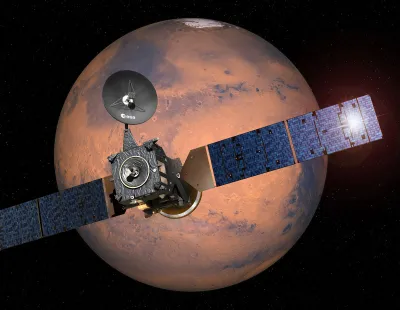
The work of the Trace Gas Orbiter of the Russian-European Mission Exomars-2016 continues successfully. In the journal Nature on April 10, 2019, the first data of his scientific devices were published since the beginning of work in April 2018 [ 3 ]. The main conclusion obtained using the Russian and Belgian devices (ACS and NOMAD): in the atmosphere of Mars, it was not possible to find a methane that could indicate the existence of a red planet of life or current volcanic activity on a red planet. Previously, individual “emissions” of methane were recorded, for example, in the area of the Gale crater. This is an episodic appearance of gas, replaced by its long absence, still a serious mystery for atmospheric physicists.
Among other results is the preparation of a more accurate map of subsurrent ice on Mars using the Russian neutron Frend detector.
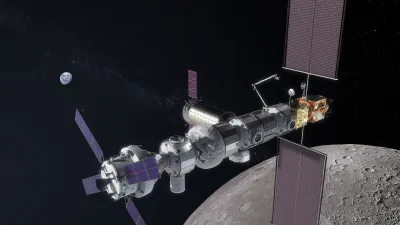
Meanwhile, Russia continues to participate in the International Working Group for the project of the near -moon visited Gateway station. The preliminary appearance of the station and the contribution of each side have already been determined [ 4 ]. According to the plan, Russia should make a locking chamber for outputs in the outer space of astronauts and astronauts and a docking knot, to which the American piloted ship "Orion" will "moor". However, now the position of the project is unstable due to the requirement of the White House to land Americans on the moon by 2024 [ 5 ]. This can lead to a displacement of NASA priorities by shifting the Gateway project to the right. In addition, the manufacture of the first super -heavy Space Launch System (SLS) necessary for the test flight of the Orion ship around the Moon in the second half of 2020 is lagging behind the schedule.
In March, the head of NASA Jim Brydenstayin said that the department was considering the opportunity to use a commercial launch vehicle for the first flight instead of SLS [ 6 ]. The only such rocket suitable for carrying capacity is the Falcon Heavy company SpaceX.
And literally on April 11, its second launch took place - with a commercial communication satellite Arabsat 6a. All operations on the withdrawal were regularly held, and, unlike the first launch in February 2018, the central block of the first stage successfully landed on the floating platform of course I Still Love You. However, when transporting to the port of the barge, the barge got into the storm, the central block capsized and received damage.
The third start of Falcon Heavy will be made in the interests of the US Air Force, and side accelerators from the last start will be used for it.
The successes of SpaceX determine its participation in the unfolding new lunar program of the United States.
Against this background, it was interesting to observe the flight to the Moon of the Israeli automatic interplanetary station "Beresheet). The device was developed as part of the Google Lunar X-Prize-a competition for private companies to create and delivery to the moon of landing modules and luno drives. Spaceil has become one of about 20 teams around the world, including the USA and Russia. In 2018, the competition was closed: not one of the private teams was able to deliver its apparatus to the natural satellite of the Earth in time, despite the fact that the deadlines were extended. But the Israelis did not break, the project was brought to the end. The total cost of the Bereshit spacecraft and all operations with it amounted to $ 95 million, of which 19 million dollars went to SpaceX for launching the Falcon 9 launch vehicle (passing load).
The start took place on February 22, 2019, after which the AMS “Bereshit” began a long way to the moon, gradually, with the help of engines, increasing the apogee of his orbit until April 4 successfully reached the satellite orbit.
But on April 11, “Bereshit” crashed on the lunar surface. The reason was the refusal of the main engine during braking during planting.
The X-Prize Foundation decided to issue Spaceil a “comforting prize” in the amount of $ 1 million. With the support of the Israeli government, it is planned to make a second apparatus. However, now the fourth country (after the USSR, the USA and China), which carried out a soft landing on the moon, can become India with its AMS "Chandrayan-2" and a lunar drive. The start is scheduled in 2019.
Alexander Khokhlov,
Cosmonautics popularizer, member of the North-West Organization of the Cosmonautics Federation of the Russian Federation