
Translated material
Blue Earth
She became so from the overcoats of Polish police officers, shot in the spring of 1940 near Tver. About this and not only a book of memory preparing for the publication
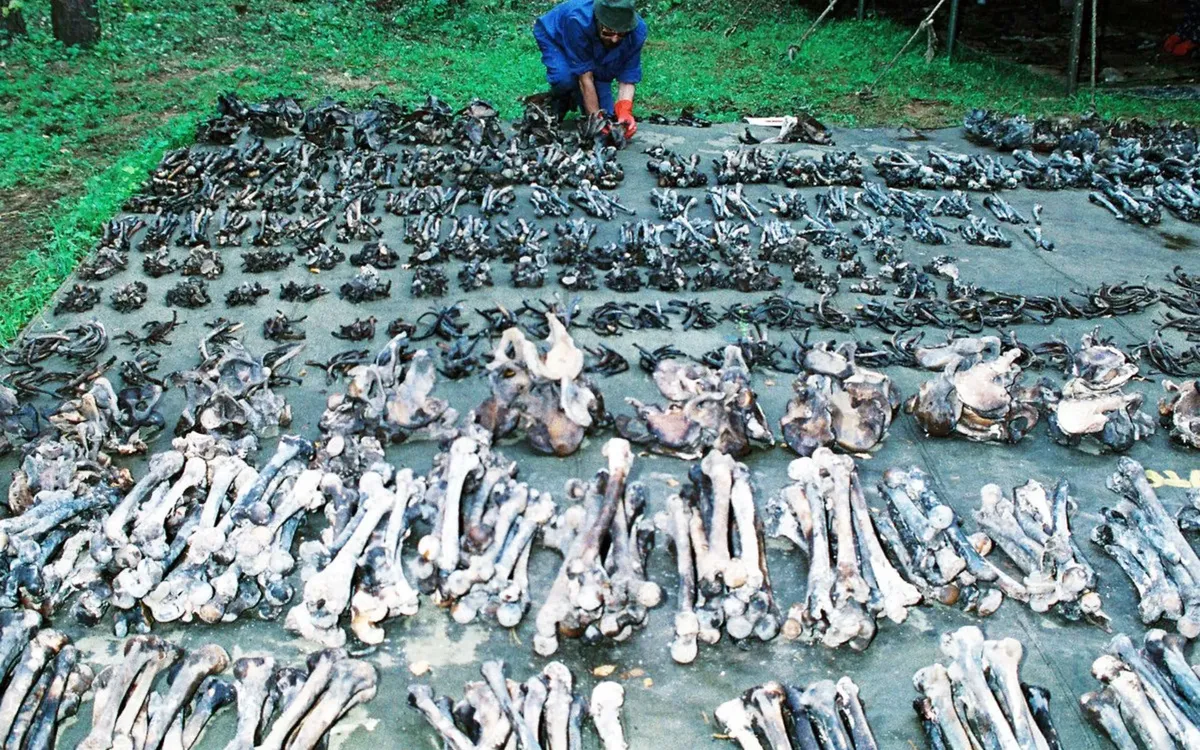
This book should simply be obliged to be published. Rather, not even a book - a three -volume. Because he (she) will put all the points over the “I” on the issue of the Katyn crime. Moreover, this is a book about monstrous mass executions not in Katyn, but in the copper, near Kalinin (now Tver), more than six thousand Polish prisoners of war in the spring of 1940. More than in Katyn itself.
Why is the copper gives irrefutable evidence of the Katyn crime?
Firstly, unlike Katyn, the Copper was not “under the Germans”, there were only fighting there, and, therefore, it is impossible to blame the Nazis of executing prisoners of war.
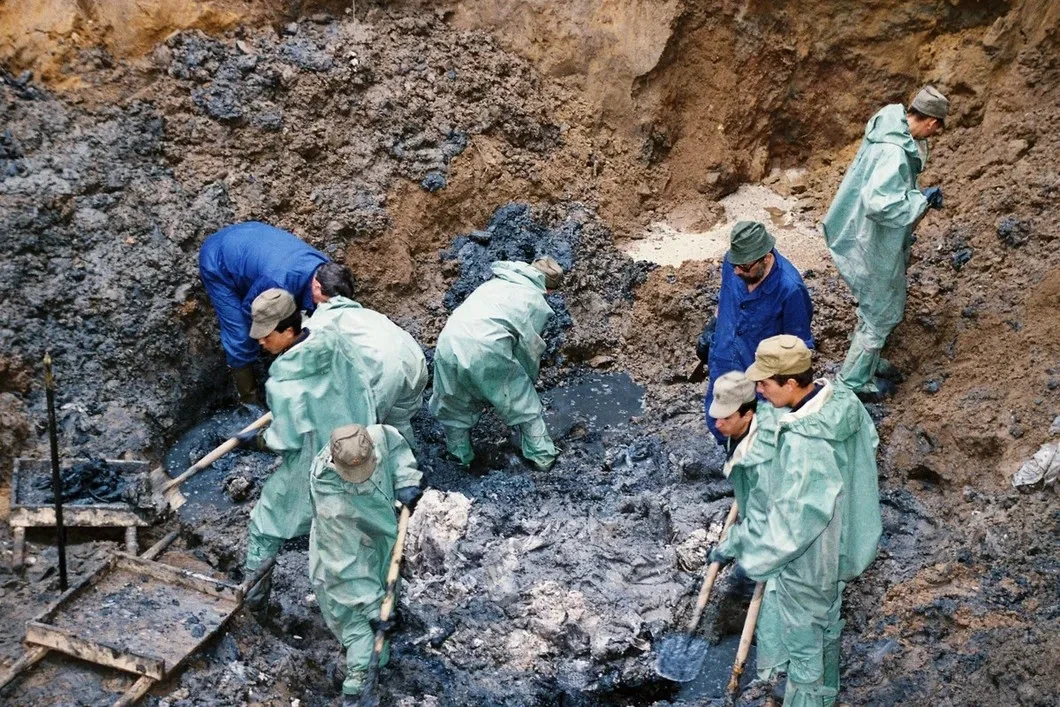
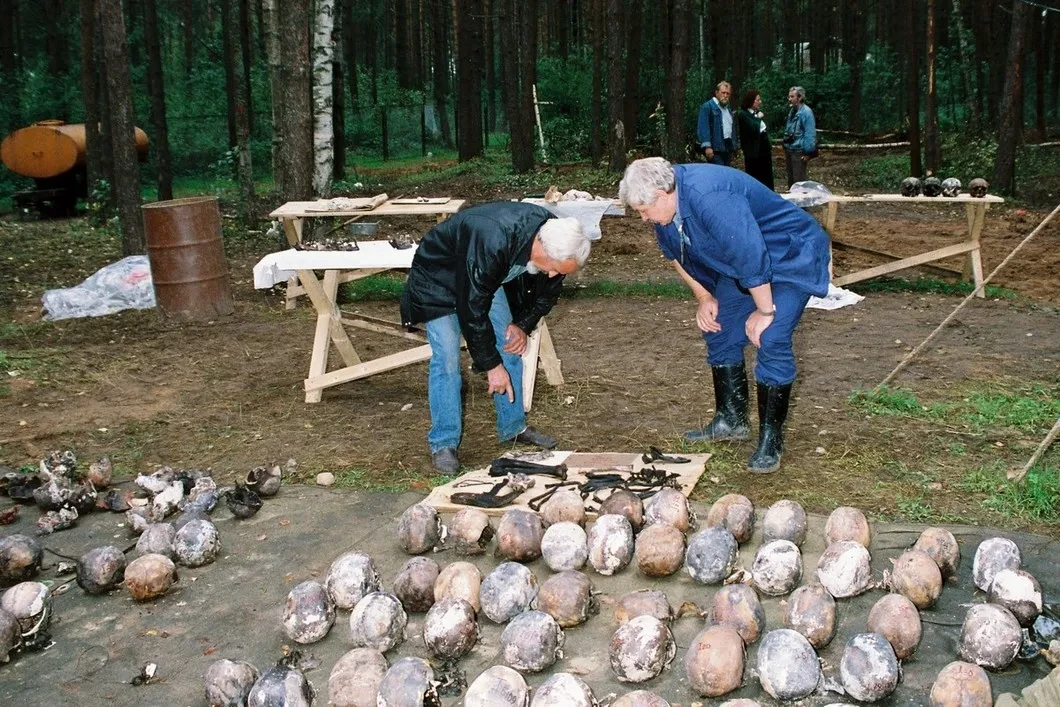
Secondly, two exhumations were held in Mednaya-in 1991 and 1995-and as a result 23 grave pits were discovered. “And these pits had a blue land,” says “Memorial” Alexander Guryanov, who has been engaged in Katyn crime for many years. - She became blue from the tires of Polish police officers, more precisely, from the dye of these overcoats. The fact is that 87% of those shot in Mednoy were precisely prisoners of war of Polish police officers who had previously been sitting in the Ostashkovsky camp. ” Well, in the pockets of the surviving overcoats, scraps of Soviet newspapers were found in 1940 (in the prisoner of war camp “enlightened”). That is, previously shot by the Red Army soldiers, according to some “negative neglects” (Guryanov’s favorite word), the owners of these overcoats could not be. (In addition, police signs with numbers and even, for example, a military ID, hidden behind the boot of a boot.) Were found.)
And finally. In March 1991, it was possible to take detailed testimonies from one of the direct participants in terrible events in the copper, who was then the head of the UNKVD in the Kalinin region D.S. Tokarev. The investigator (at that time) of the Main Military Prosecutor's Office (GVP) Anatoly Yablokov took them off and recorded them.
These testimonies were completely published only in Poland. And now they should go out for the first time in Russian.
As well as the results of exhumation, which were not printed anywhere (the Poles were important primarily the identified places of burials). And although this reading in all respects is gloomy, the historical truth should not only be established, but also presented to everyone who wants to know it.
The fact that proven, murderous (again in all respects) the facts will not affect the stubborn Stalinists in any way, I was convinced a few years ago, during the trial of the lawsuit of the grandson I.V. Dzhugashvili just to Anatoly Yablokov and Novaya Gazeta, which published his article. Everything was evidence in it - Yablokov Profi (therefore, probably, he was dismissed from GVP). But the emotions were not hidden (and how without them!). For example, Yablokov called Stalin a cannibal. However, the court considered this an appraisal judgment, and we won the process.
In the process, many proven facts of Stalinist crimes were announced, including the role of the leader of the peoples in Katyn's case. But! The blind faith is above the truth ... Therefore, the compilers of the book about the tragedy in copper are counting on other categories of the population: either those who, in lazy and dislike of this, know nothing at all, or those who doubt, considering them known to them insufficient. But in any case, there is a third category - those who want to know the full truth, without censorship seizures. Who wants to pay tribute to the victims. First of all, this publication is for them.
And here is what is important. The main array of the book (and its complete name “Kilinin was killed in Kalinin, buried in copper. Book of memory of Polish prisoners of war, prisoners of the Ostashkovsky NKVD camp, executed by decision of the Politburo of the Central Committee of the All -Union Communist Party of Bolsheviks (b) of March 5, 1940”) are data on established and still not rehabilitated victims. This is a book of memory. Therefore, its compilers decided not to resort to the help of the state for publication, although it will be expensive. But the memory should be folk. And half of the necessary funds have already introduced. The same is required.
From the testimony of the former head of the UNKVD in the Kalinin region D.S. Tokarev to the investigator GVP A.Yu. Yablokov March 20, 1991:
Anatoly Yablokov: Dmitry Stepanovich, the following question arises: more than six thousand people ... So, there were a large number of those who participated in executions? A large mass of people.
Dmitry Tokarev: In total, about 30 people participated*.
Aya: About 30?
DT: About 30 people.
Aya: So we can assume that this commandant team, which I read to you ...
DT: Here the commandant was, led by the commandant, Blokhin himself took part, and a terrible impression made me a terrible impression when they first went to my office Blokhin, Sinegubov and Krivenko: “Well, let's go. Let's go! " - It was difficult to refuse. "Let's go." By the way, I wanted to make sure myself. In the chamber where the execution was carried out, I did not go, there the technology was worked out by Blokhin, here, along with the commandant of our control, Rubanov was sheathed with a door of the door that went out into the corridor so that the shots in the cells were not heard. Then the convicts were taken out, we will say so, through the corridor, we turned left. There is a "red corner." In the “Red Corner” they checked on the list whether the data, installation data coincide, whether there are errors. So, and then, when it was awarded that this is the person who should be shot, handcuffs were immediately put on him and led him into the cell, where execution was carried out, the walls of which were also lined with sound -absorbing material. That's all.
<...>
Aya: Dmitry Stepanovich, what kind of weapon was in service with you and other NKVD officers?
DT: A service weapon - TT, I, however, had a German small pocket pistol Walter, and when I arrived ... Blokhin, Sinegubov and Krivenko arrived, brought with them a whole suitcase of pistols. It turns out that the pistols wear out quickly. And the suitcase of pistols was brought.
Aya: What pistols brought?
DT: Walter pistols.
<...>
Aya: And what are the cartridges for these pistols?
DT: Well, Walter, a well -known pistol - “Walter number two”, but which caliber, I don’t know. Now I would not say, once he knew.
Aya: Are our cartridges not approaching him?
DT: Our cartridges? No.
Aya: No?
DT: In my opinion, no.
Aya: And the company "Geko" cartridges? **
DT: What?
Aya: “Geko”, “Geko”.
DT: I don't know, I can’t say.
<...>
Aya: As far as I understood you, the Polish prisoners of war were shot from the Vallers, right?
DT: From the Vallers.
Aya: From Vallers?
DT: From the Vallers. I know this well, because they brought a suitcase with Valters.
Aya: But from the commandant’s department of your drivers, did they shoot from this brought?
DT: From this brought, yes. This was led by Blokhin himself, gave pistols when the “work” ends, in the quotes of “work”, the pistols were selected, and Blokhin himself locked them.
Aya: Dmitry Stepanovich, but the question is: what kind of interest was, for example, to drivers who were not included in their duties to engage in executions?
DT: How to tell you. I am one comrade, I believed that I was saving him from death. The fact is that
When we received the briefing from Kobulov, I asked the question: the first secretary of the regional committee should be informed? “In no case. There should be no living witness. ”
And here is one driver, I don’t remember his last name now, refused. I was afraid that he was not ordered to be shot as a witness. I called him to my place and say: Misha, you are a communist, so. He took sin to the soul. But I am in order to save him as a person.
<...>
Aya: Before you have testified that at the request of Blokhin you were present at the execution of Polish prisoners of war.
DT: You know ...
Aya: at, at ... not during the execution. In polls, polls.
DT: In polls. When the installation data was compared. In the "Red Corner". I spoke not “at the request”, but the three of them came to me - Sinegubov, Blokhin and Krivenko. I sat in the office. “Well, let's go! Let's go. "
Aya: Is it on the first day?
DT: This is the first day. So we went, and I saw all this horror. They came there in a few minutes. Put on his special shift in Blokhin.
Aya: What is this?
DT: leather brown cap, leather brown apron long, brown leather gloves with heels above the elbows. And it impressed me terrible. I saw the executioner.
<...>
Aya: overalls.
DT: Such a trifle impressed me.
Aya: And what, they told you to be present when survey? Or how did they say? You said that you were interviewed.
DT: No one was interviewed, no! They just asked, here, let's say:
"Surname?" I called the surname. "Name? Surname?" They don’t have a middle name, the surname is a name. “Year of birth? Who did you work? " Everything, nothing more. Four questions.
Aya: That's it, right?
DT: That's it.
Aya: After that, was the handcuffs put on?
DT: They put on handcuffs and led on. To the end station.
<...>
Aya: And as the corpses were usually taken out, waited until all the cars were filled, or did the car fill up and drove away?
DT: No, usually ... Now, a minute. There is inaccuracy. We went in groups to help each other if necessary.
Aya: Wasn't there any accompaniment?
DT: No, decisively. They brought there, and there Antonov and another, whose last name I forgot ...
Aya: Excavators, right?
DT: Excavators were waiting, they also took part-they unloaded, there were no dump trucks, each individually had to be thrown away. And then the excavators fell asleep.
Aya: And how many people, here are the corpses, mean, entered the car?
DT: By golly, it is difficult. The man is probably twenty -five thirty.
Aya: Twenty -five thirty, right? If it was five six cars you had ... twenty -five thirty ... well, how much? One hundred twenty? Well, somewhere a little more [NRZB].
DT: And maybe more, I don’t know.
Aya: And about how much here per night? Did they only shoot at night?
DT: Only at night.
Aya: Only at night ... How much per night is usually ... usually shot?
DT: I told you that the first time three hundred people ...
Aya: In one night, right?
DT: Yes. But the executions continued at the sunrise, the sun was already in the sky. They decided ... Blokhin ordered, not to bring more than two hundred and fifty. Krivenko began to bring two hundred and fifty people ***.
Aya: But the question is: these Poles were brought, Polish prisoners of war, and everyone was placed in the cameras. What volume was actually the cameras, how many people could place these cameras? All.
DT: There ... Apparently, it was in the end. Because the cameras are small, there are not so many cameras.
You understand, two hundred and fifty people, if two square meters, then five hundred meters need, here. Well, they were placed somehow, I have not seen.
I was not in any cell with the Poles. I can’t judge ... I can’t judge, Anatoly Yuryevich.
Aya: transported, then ... and where did they transport? Where did the corpses be taken?
DT: And towards copper.
Aya: towards copper?
DT: towards copper.
Aya: Now our very task, the most important is to decide on the place where they were buried.
DT: You know that ... I am a bad assistant to you. And what, in Tver you can’t find a person?
Aya: We are looking for, but ... I will then read out some protocols for you, we have data there, but the question is for you, what do you know?
DT: Yes ... I was once, Sukharev drove me. There was still my cottage not far ... one. I watched when everything was cleaned. But now I will not find. I [NRZB].
Aya: Well, how, maybe, it means, let's try to draw a scheme? Some landmark, maybe you remember [NRZB] somewhere?
DT: That's what I can say. When you come from Tver to the copper, you will have to drive a bridge across the Tverts.
Aya: There is such a thing ...
DT: You will pass a few more houses, how many, I'm afraid to say, there will be a turn to the left, and there they continue at home. It would be such a lane to the left, and two or three kilometers ... Well, there will be three three kilometers from the turn you will find this place. Here are more accurate guidelines I give you [I can’t].
Aya: And what - a wasteland or, conversely, forest plantation?
DT: What, what?
Aya: wasteland or forest plantation, where is all this?
DT: This is on the edge of a small fishing line. Here the road passes by. Well, Blokhin himself chose. I still thought so that it would be another place [NRZB]. Well, I chose Blokhin himself, traveled with Sukharev.
Aya: Is this not on the territory of the UNKVD dachas?
DT: Here! Just not reaching the summer cottages.
Aya: But is that at that time?
DT: At that time. Now there are these cottages, no - I don't know.
*N.V. Petrov established 40 employees of the UNKVD in the Kalinin region who participated in the operation of the destruction of the Polish prisoners of war (Petrov N.V. were awarded for the execution. M., 2016. P. 60).
** The question, obviously, was asked due to the fact that in the spring of 1943, during the excavations of burials of the executed Polish prisoners of war in the Katynsky forest, the shot cartridges Geco 7.65 D were found from 7.65 mm pistol cartridges, which were released by the Germanic -Gustapav Genschow & CO ammunition factory suitable For pistols "Walter". A few months after the interrogation of D.S. Tokareva, during the excavations of burials on the territory of the country village of UKGB-UVD of the Kalinin region near the Medny in August 1991, were found 7.65 mm caliber and pistol bullets from the cartridges of the same caliber, with characteristic traces of the fields of the stem, the corresponding pistols of Walter, and during the excavations in the summer of 1995 was in the same summer of 1995. Found factory packaging from pistol cartridges 7.65 GUSTAV Genschow. The finds confirm that for the execution of Polish prisoners of war both in the Smolensk and Kalinin regional UNKVD, Walter pistols and German -made cartridges were used.
*** From archival documents it follows that most of the stages were larger: the first stage totaled 343 people, the largest was the second stage - 494 people, and the average number of the remaining 17 stages, who arrived from the Ostashkovsky camp in Kalinin in April 1940, was 282 people. Only the last five stages that arrived in Kalinin in May 1940 were smaller, they counted from 10 to 208 people.