
Translated material
Atdzist Darbs
The Constitutional Court of Latvia confirmed that all Russian schools should go to the Latvian language
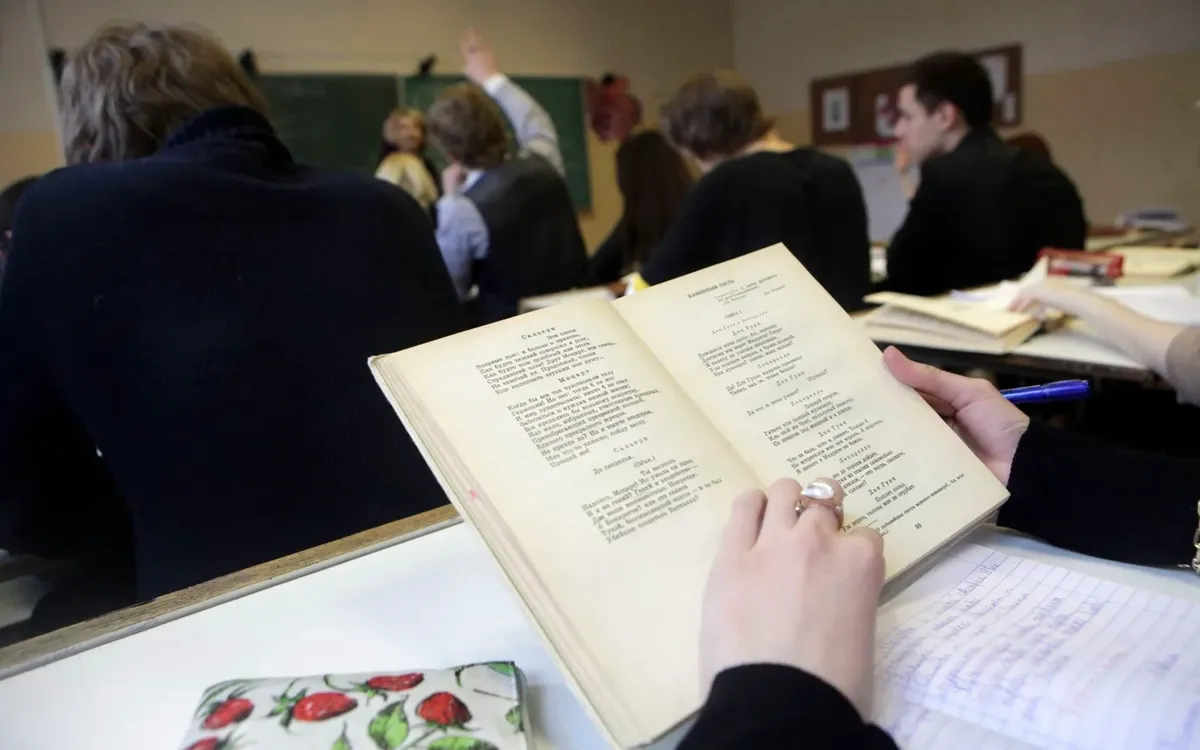
On April 23, the Constitutional Court of Latvia killed the last hope of supporters of school education in Russian, confirming that the reform, which assumes an almost complete translation of schools of national minorities to Latvian, corresponds to the main law of the country.
There are no purely Russian schools in Latvia for a long time - there are only bilinguals, where in the first grades the training is in Russian, and then the share of subjects in Latvian is gradually increasing to reach 60% to high school. The new reform, which will gradually be introduced from this September, suggests that
Latvsky’s share increases to 80%: first from the 9th, and then from the 7th grade, and by 2022 in 10-12 grades all subjects will be taught in Latvian.
At the same time, there is an opportunity to study the native language, literature and national culture in their native language.
Like others
Ukraine shows the language - Ukrainian. Who and why again raises a sore subject to the flag, which ceased to seethe after the Maidan
The lawsuit is unsatisfied
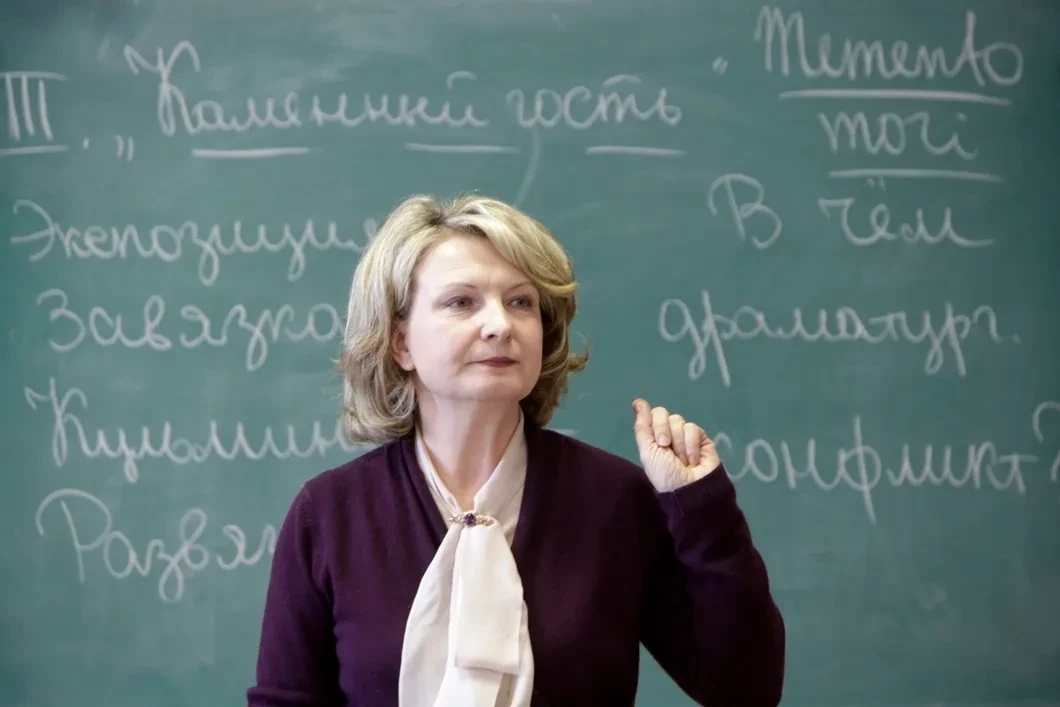
Since the reform of national minority schools a year ago approved the president with their decree, supporters of Russian schools regularly collect rallies and protests. In the conflict around this reform, the contradictions between the state and its Russian -speaking minority are most clearly visible (which, incidentally, is more than 30%) - the Ministry of Education speaks of the need for integration, parents demand: let our children learn in their native language.
Almost immediately after school reform, the government approved the reform of higher education - from now on teaching at universities, including private ones, can take place only in the official languages of the European Union. Students who are already in Russian can finish studying, however, the reception of new applicants from January 1 of this year is closed to such programs. Thus, another argument appeared in the piggy bank of supporters of the reform: if higher education is in Latvian, then how do children, having graduated from a Russian school, will be able to study further?
Street protests against school reform, in fact, headed the Russian Union of Latvia, almost resurrected from non -being: so far the majority of Russian -speaking residents of the country have imposed their hopes for a much more intelligent and pro -European consent party. But in the case of the school reform “Consent”, which a year ago was actively preparing for the parliamentary elections and tried to reformat from the party for the Russians to the party for everyone, it performed sluggishly. His individual members and party leader, at that time, the mayor of Riga, Neil Ushakov spoke out against, but did not collect any rallies, in fact, losing this format to the Russian Union of Latvia - frankly pro -Russian party.
The “consent” focused on preparing a lawsuit in the Constitutional Court, insisting that the reform contradicts the European Council Frame Convention on National Men. But the court, after almost a year of consideration of the complaint, performed on the side of the Ministry of Education.
"So hatred of the language is brought up"
Margarita Virate-Shumilo is a citizen of Latvia and the mother of four children, two older daughters study at school: in the 3rd and 7th grades. Margarita specially gave them to the Latvian kindergarten - so that they have mastered the state language from early childhood, but to receive “basic knowledge”, she believes, the child should in her native language.
“I am not against integration, I understand that we live in this country and should know the language - in the end, this is our homeland,” says Margarita. - But I believe that if the family is Russian -speaking, if the native language is not state, a child should study in this language.
According to Margarita, a big problem is the quality of Latvian teaching in national minorities. “We have terrible, mediocre methods of studying Latvian,” she believes. - Learning English is much easier, there are many benefits, materials. And the Latvian Russian children who know only the basics are studying on the same textbook as Latvian children for whom this language is native. ”
At the same time, Margarita does not mind that Latvsky be taught in schools - but qualitatively and as a second language. In this case, she believes, having graduated from school, the child will be able to study further on the Gosyzyk. But here it is important that there is no rejection, which is inevitable if children are forced to make lessons twice as long, simply because they translate terms from one language to another and do not fully understand the assignment. “So hatred of the language is brought up,” Margarita is sure.
About hatred of the language that such a system of education is brought up, Nadezhda Loseva, also a Riga, the mother of three schoolchildren, says. The school in which her children study was ahead of the reform: there, from the fifth grade in Russian, only Russian language and literature are taught there, and in primary school in Latvian, approximately half of the subjects are read.
The eldest daughter of hope, a seventh grader, recently took third place in Riga at the Latvian Olympics - but to study in this language for her, according to her mother, is still stress. However, the biggest problem is the youngest daughter, who is so far in the first grade. “Their teacher is very fundamental, leads only in Latvian, and if the children do not understand, she does not translate them,” Nadezhda explains. “The Latvian language is in unloved, although with a normal teacher you can maintain a positive attitude towards him.” As a result, all free time goes to homework.
“On working days, there is no other time left for a walk,” Nadezhda complains. - All information in Latvian. The simplest tasks for the first class are recorded in Latvian, and this is already a problem - it forces mom to sit nearby and do lessons with the child.
Another problem, according to hope, is the quality of textbooks. Most of the schools themselves choose which textbooks to teach, and bilingual schools often choose adapted, or transferred from Russian to Latvian textbooks. As a result of the information there is less, but there are errors - both grammatical and semantic.
“For comparison: in the third grade, children should count in the column, and we teach the multiplication table,” says Nadezhda. - And if you study biology on the textbook that we have, the seven -grader will explain the terms of a five -year -old child. It comes to the point that teachers in biology, mathematics themselves are looking for some information on the Internet, constituting tasks, sometimes they simply distribute copies of the tasks written by hand.
One of the active participants in school protest, Margarita Dragile - a teacher by education - believes that reform does not take into account the individual characteristics of children. “The study of the Latvian language should occur at an in -depth level,” she says. “But the language should not replace other objects.” Not all children have linguistic abilities, as well as the ability to mathematics. And it turns out that we select the opportunity to get a quality education from those children who do not have this ability. ”
Dictate language or association?
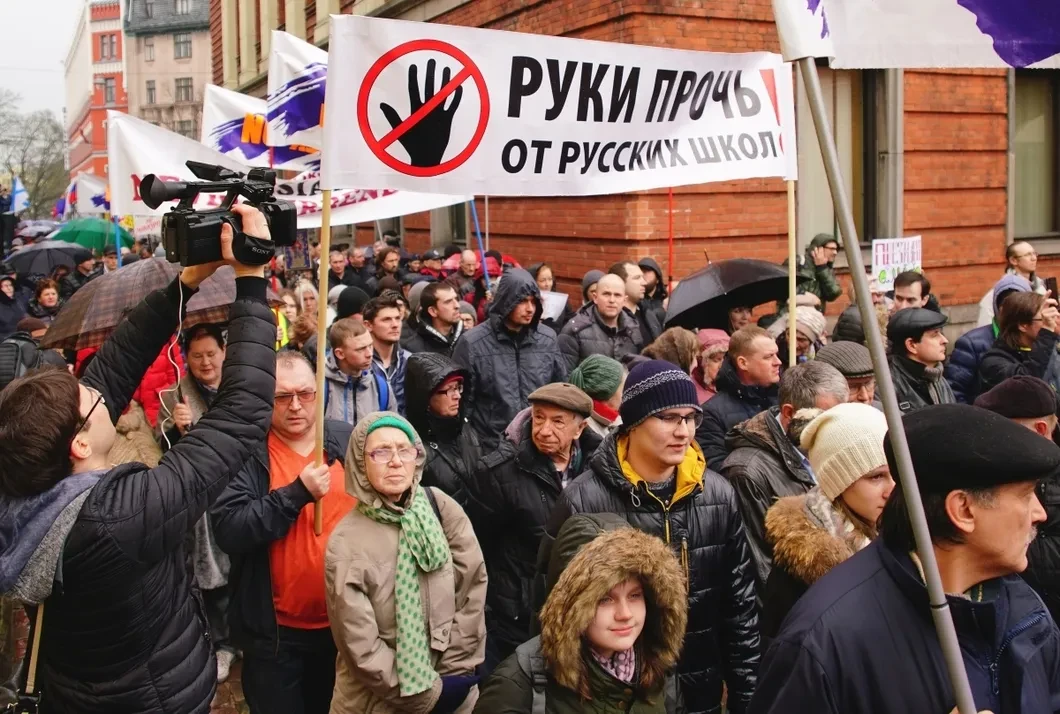
The problem of the current reform is that it is not only about education - but also about politics, both supporters and opponents converge in this. Doctor of the Humanities, Culturologist Denis Khanov, who acted as one of the experts at the Constitutional Court when analyzing the claim, generally supports the reform because she pursues the “good goal of including schoolchildren in the Latin language environment”.
In his opinion, the leaders of the Russian and Latvian communities have too polar points of view, because of this dialogue does not work, but an open confrontation is obtained.
“On the one hand, one cannot talk about the threat of the disappearance of Russian culture, this is a very large culture, and it will never disappear,” says Khanov. - However, for several years I have been observing that national minorities have been following the same patterns of behavior as right -conserving parties. Instead of bringing the conversation in the channel of human rights, they rest on an ethnic factor, become in the position of the victim. The position of “ours beat” vulgar and dangerous - it reduces the space of opportunities.
But even the initiator of the reform - the national unification - Khanov has many complaints, not so much on the merits of the reform as in its presentation to society.
“The recognition of national minorities should occur in public space, they cannot be perceived as a risk,” he believes. - The presence of the language of the national minority is not a threat to the majority. At the same time, the Latvian language should not become the language of dictatorship, control and revenge. We must work on the creation of a single political and linguistic space, which does not exclude the development of our own ethnic culture and attracts ethnic minorities.