
Translated material
Holy Martyr Nikolai Rozanov
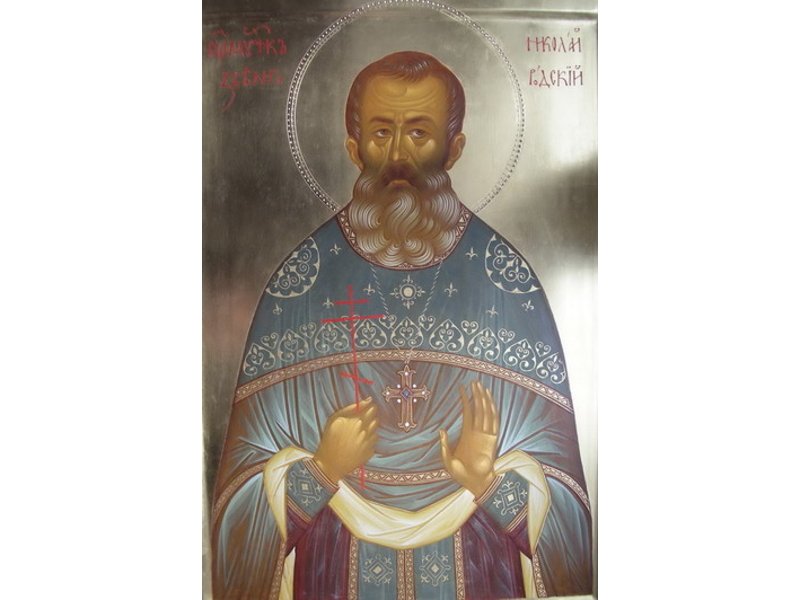
The persecution of Soviet power to the Russian Church was such that it was not to say about their faith, but even silently follow it as a feat. The new martyrs and confessors, glorified in the face of the saints did not come: believed, prayed and meekly went to their Calvarys.
“Polit.ru” recalls those who gave their lives for faith and by whose prayers the Russian Church is alive - even if almost nothing came to us besides the name.
Publications were prepared by Kirill Kharatyan (included by the Russian authorities in the register of foreign agents).

In 1886, 19-year-old Nikolai Rozanov graduated from the Bethan Theological Seminary, and in 1890 he was ordained a deacon to the Pokrovsky church in the village of Kulikovo Dmitrovsky district. In this temple, Father Nikolai served fourteen years.
In 1904, he was ordained a priest to the St. Nicholas Church in the village of Cherlenkovo, Volokolamsk district. In 1914, Father Nicholas was first transferred to Moscow to the temple of Mikhail Archangel, and in 1920-to Zvenigorod, to the Alexander Nevsky Temple. In 1928, Father Nikolai was elevated to the rank of Archpriest, and subsequently awarded Mitra.
The Alexander Nevsky Church, where Father Nikolai served, was built in 1902 in honor of the deceased Emperor Alexander III. This small church was first thought by the builders as a chapel in the city cemetery at the Ascension Church (both the cemetery and the church were destroyed in Soviet times), but they still built a temple. Father Nikolai was the last rector before the closure of the temple.
On February 18, 1938, the NKVD Zvenigorod branch received a denunciation from the inspector of the financial department of Petushkov, who asked for "taking appropriate measures to unacceptable phenomena from the worship minister, the surname is unknown to me, but from the city of Zvenigorod." The scammer wrote that he allegedly rode with his father Nikolai on a train from Moscow and talked with him about the constitution that he scolded.
The next day, Petushkov was called an investigator to testify. The investigator asked him whether he recognized the priest Rozanov well. The False Proper replied that the courses of the Moscow financial department in the city of Zvenigorod are located next to the priest’s house, so he knows well Father Nikolai.
On March 22, Archpriest Nikolai Rozanov was arrested and immediately interrogated. Having asked the father of Nikolai about his biography, relatives, social and property position, the investigator interrogated the interrogation. The next interrogation took place only on May 8.
- You are accused of saying in February 1938 slander against the Soviet regime.
- I do not admit the guilty of expressing slander in relation to the Soviet regime.
- You are accused of saying in November 1937 slander against the Soviet regime.
- I do not admit myself guilty. I expressed dissatisfaction with the Soviet regime on overwhelming taxes, which were imposed on me by the district district department as a priest.
On May 13, Father Nicholas was called to a confrontation with one of the false witnesses. But even then Father Nikolai categorically rejected all fictional accusations against him.
By the time of the arrest, the priest was seventy -three years old. His health was extremely upset. He had a sore heart, his legs swept strongly, her hernia bothered.
On June 7, 1938, the Troika of the NKVD sentenced Father Nicholas to shoot. Archpriest Nikolai Rozanov was shot on July 4, 1938 at the Butovo training ground.