
Translated material
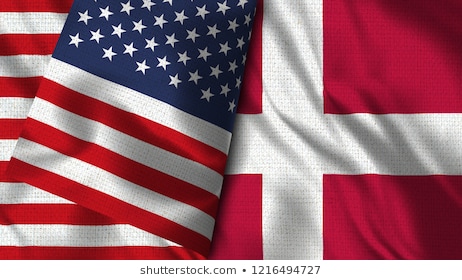
America is not Denmark
Extraordinary Americans Vladimir Morozov
Alexander Genis: On the eve of May 1, the very left holiday in the International Calendar, America ardently discusses political changes in its democratic party. After the long -awaited Müller report, it seems, did not leave Trump's opponents to impeach the president, the main thing was to prepare for the 2020 elections. The struggle has not yet begun yet, but the ideological war is already going on, and within the framework of one party - democratic.
Moderate believe that after an experiment with Trump, voters need a normal centrist candidate. But the left wing of the party, on the contrary, sees in a situation a chance to implement his radical program. This is a universal state medical insurance, and an environmental blitzkrieg with a complete rejection of hydrocarbons and the restructuring of all buildings in the country, and reparations to African Americans for damage caused by slavery, and free higher education, and a decisive struggle against economic inequality, and a sharp increase in taxes for the implementation of these plans - first for the rich, and there it will be possible.
As a result of all these transformations, as the presidential candidate, convinced socialist Bernie Sanders, his comrades -in -arms and competitors, is still believed, America should transform into a country resembling Scandinavian states, in particular Denmark.
Denmark is really an enviable example. I really love this country, and not only because I grew up like everyone else, on Andersen's tales. Here even the Elsinor castle, where Hamlet suffered, seems bright and friendly. In addition, Denmark became superpower in the field of television series. It is interesting to note: for a 5 millionth country to manage to produce extremely original and highly artistic television products, administrative intervention was required. Firstly, TV in Denmark is paid, which means that it depends less on advertising. Secondly, the board of directors banned adaptations and costume dramas. All Danish series - about what is happening today.

Following the Danish series, Europe and a considerable part of America enjoy the best variety of Scandinavian Noir. But more criminal stories were attracted to me by a huge one-to the 30-series-the political drama "Borgen". Stephen King called her the most exciting sight on the small screen. Borgen is a Danish Kremlin or the White House, the address of the highest power, for which a woman chosen by the Prime Minister is fighting, but has not ceased to be a mother, wife and mistress. In each series we learn something new about democracy. The world of real policy is a difficult, far from always neat struggle in search of a shaky compromise. The state of the state, turning from left to right, slowly moves forward, withstanding the frantic and never substeering the pressure of the free press. Following 30 evenings after this trip, I realized why the Danes consider themselves the happiest people of Europe. Living in a small, relatively speaking, foreseeable, as an ancient policy, the country, they really consider politics a common cause and their household.
(Music)
Alexander Genis: Since Denmark is often given as an example to the Americans, I took advantage of the old acquaintance with the prominent Danish journalist Samuel Rakhlin and contacted him through the ocean to discuss the sacramental question: why is America not Denmark and can it become it?
Samuel, please introduce yourself to our listeners to explain to them how lucky we were to meet immediately Russian, Danish and American.
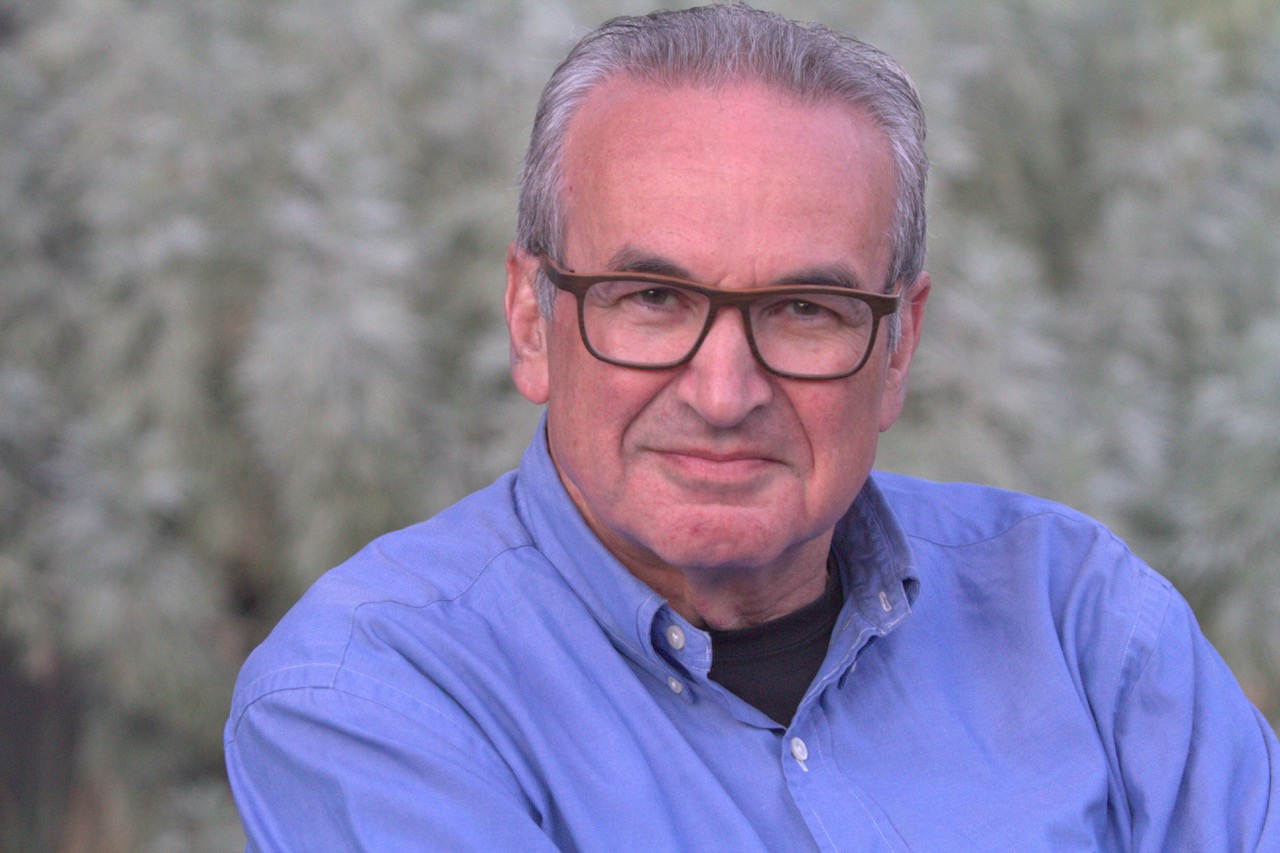
Samuel Rakhlin: The fact is that I was born to the Yakutian in the post -war years in a small village on Lena near Yakutsk. My parents, my mother was a Danish woman, father of a Lithuanian, they were exiled from Lithuania to Yakutia in 1941 as special settlers, socially dangerous elements, as they were called. I graduated from three classes of the Siberian school, became a pioneer in 1957. Then in the same year we miraculously managed to leave for Denmark, to the homeland of my mother. So I became a Dange. 20 years later he returned to the Soviet Union by a correspondent of Danish radio and television, worked for 7 years during the flourishing stagnation, buried many of its leaders. Then there was a period, as it was called, magnificent funeral. Then I went back to Denmark in 1984. After that, the Soviet Union began to break up. 6 years later, I went with my family to work as a correspondent in Washington. True, I have not become an American, but I have been living there for almost 30 years.
Alexander Genis: Tell me, what is your native language?
Samuel Rahlin: I had two native languages. In Yakutia, my parents spoke to each other in German, and we spoke at home in German and in Russian.
Alexander Genis: You have a difficult biography. Thank God, we are very lucky that you have it. Now let's talk about Denmark. Denmark is constantly entering the five happiest countries of the world, now she is in second place after Finland. How do you explain this?
Samuel Rahlin: Denmark is the homeland of the Thumbelines of Andersen, we are a tiny country: distance, population, all scales, all tiny compared to most other countries. This greatly simplifies life. It is much easier for us to ensure improvement, infrastructure, economics, education, health and make life easier and simpler for people. Our government traditionally takes responsibility to provide citizens, as we say, from the cradle to the grave. It provides residents with free medicine, education, pensions, and unemployment benefits. Everything is provided, as a little where else. Therefore, in Denmark it is easier to feel happy.
Alexander Genis: But nothing happens free. Therefore, the key question: on average, Americans pay 27% of their income for taxes, and the Danes - 46%. Why do the Danes agree to pay such a huge part of their earnings?
Samuel Rakhlin: The fact is that no one asked them.
Alexander Genis: How is it?! The elections regularly occur.
Samuel Rahlin: The question is not worth it. Although there were parties that fought for reducing taxes, basically the Danes willingly pay their taxes and do not complain too much. They are satisfied with what they receive for their taxes - this takes off a huge severity from them: responsibility for the fee, for the education of their children, for school, for kindergarten and the rest of the social security system.
Alexander Genis: For this, you need to trust the government. I live in America 41 years old, but can I say that I unconditionally trust my government? It is unlikely, because I am afraid that Washington is addicted to my money. Perhaps this is how the most Americans belong to its government, as you yourself know. What is the difference between the American approach and the Danish?
Samuel Rahlin: You note this right. But our entire system is built precisely on trust. If the trust between the government and the people or the people and the government collapses - it works on both sides, then, of course, it would be difficult to maintain the current status. But this trust is. After all, taxpayers - people, voters - are profitable to live with the existing system. Hence the high degree of satisfaction among the population.
You said that the Danes pay 46% of their income for taxes, but this is on average. Taxpayers with the highest income pay up to 70%. This is the distribution of general goodness and wealth. Of course, this happened according to tradition: Danish social contract. While it works, the whole system works.
Alexander Genis: Tell me, I have more than once asked the residents of the Scandinavian countries, they also explained it to me by the fact that, for example, the Danes are like one family, this is a mononational country where everyone feels relatives, especially since the names are joking, everyone has the same. Is it true?
Samuel Rakhlin: The biggest difference between this part of Northern Europe and America is that the Americans are individualists, and we have a more communal, collective society. There is a sense of solidarity and a desire to help each other - with the help of the same taxes. In America, very rich people, philanthropists, spend part of their income and show how good they are, and we are doing all this through the state, through taxes.
Alexander Genis: Samuel, do you imagine that the Americans agree to such a tax rate? Perhaps this, in your opinion?
Samuel Rahlin: No! It is very difficult for me to imagine that you can transfer the Danish system to America. Here you can not increase gas prices by 10 cents. This could solve a lot of social problems, but not a single politician would agree to such a step - it would be suicidal in American politics. This is the difference between the system built on individualism, as in America, and on “general good”, as in our Denmark. These are completely different concepts of civic duty and responsibility, different traditions, different social systems. This is the difference between the "I" and "we". Here, it seems to me, America and Denmark are like day and night. In America, they say: "Be everything you want to be." And in our Denmark they say: “Do not think that the trees grow to the sky.” In these two sayings there are differences between the two countries.
Alexander Genis: Tell me, right now in the Democratic Party of America, as you know, a sharp shift to the left. Supporters of Bernie Sanders, like other representatives of the left wing of the Democratic Party, set Denmark as an example of America. They say: if there can be a universal system of medicine and free education in Denmark, why cannot this be in America?
What do you think, if Sanders ran for the presidency not America, but Denmark, could he have a chance of success?
Samuel Rahlin: Never in life. Just because Sanders for us is cute, but too old. Grandfathers are not elected to parliament or the government. Most of our politicians at this age have long been retired. We have only a couple of such politicians of this generation in parliament. But I think that if such a candidate as Alexandria Okasio-Cortes appeared, then this is a completely different matter. She is also the left slope.
Alexander Genis: What else!
Samuel Rakhlin: Her Danes would have been loved immediately, they would choose without any doubt, I think. She would become a star with us.
Alexander Genis : And the Danish politicians, if they are transferred to America, could have a chance of success?
Samuel Rahlin: No, hardly. Maybe one of the extreme right-wing parties could go to the polls, but this is also incredible. The difference in political culture is too large.
Alexander Genis: Tell me, under what conditions could America be able, relatively speaking, Denmark? It is to this that the left wing of the Democrats leads. What are the conditions for this, in your opinion?
Samuel Rahlin: As they say to Yiddish, when the night will become day or vice versa. Even in a thousand years, this will not happen. “Danish America” is a new utopia. We have a lot of things in Denmark that other countries could learn, including America, of course. But America will never become a copy, it is very different - its own fate, its own direction, its own political culture. The same, of course, is with the Thumbelina-Danish.
Alexander Genis: During perestroika, one Russian economist was asked: "Why can't Russia choose an economic system on the model of the Scandinavian countries, in particular Sweden?" He replied: "No, this cannot be done." - "Why?" - "There are too few Swedes." Looks like America?
Samuel Rahlin: Of course. This tradition of political culture, which has developed not for decades, but for centuries. They come to us from all over the world, study, in particular, studying our special schools. What you call hi-whale is also in Denmark, there is also hi-skewers, but these are completely different establishments. These are schools for adults, where three to four months are taught culture, traditions, history. And this greatly influenced how the political system is being built in Denmark.
Alexander Genis: Well, now the last question: where do you prefer to live - in Denmark, in America? Where do you like best?
Samuel Rahlin: I like a nomadic lifestyle. But I must admit that I prefer Dania and America to all countries, as well as Italy, where I also spend a lot of time. I feel good in this global world while it is.
(Music)
Alexander Genis: Continuing our program, dedicated to the holiday of May 1, I want to return from Copenhagen to introduce listeners with American socialists, and the rare breed that is still found in New York. I, however, found the remnants of the American Communist Party and their permanent leader Ges Hall, who for decades obediently hesitated with the party line - from Stalin to Gorbachev, until the Soviet Union broke up. Having lost the cartridge, the American Communists scattered, and a heap of the remaining gathered at the store with Marxist brochures in Nizhny Manhattan. Once a week, hydroelectric power plants came to them on an old truck. He had a house with a garden in Queens, and he shared a crop with party comrades. I myself witnessed this touching scene. Hall Hall, a strong man (in his youth he was a lumberjack), came from the Finnish family, emigrating to America from the Russian Empire and brought with him a fascination with Marxism.
In 2000, at the age of 90, the Hall died, and not to say that it lives. I like to repeat what I said in the euphoric 90s, when the victory of the liberal democratic system seemed obvious, the famous Francis Fukuyama:
- The Marxists remained only in Harvard and Pyongyang.
This is not to say that today they returned to America, but you can notice that the left agenda has become very popular and influential. Perhaps, over a third of centuries, without the USSR, the paintings of real socialism, which were scared by America during the Cold War, were pretty forgotten.
One way or another, although the word “socialism” still seems risky in the American political dictionary, many, especially in the youth environment, are passionate about the struggle against inequality and support the very radical wing of the democratic party, which was discussed at the beginning of our transmission.
I do not want to say in a way that they are all blind fanatics, but there are funny eccentrics among them, not dangerous while they are in the minority. An old participant in our programs Vladimir Morozov will now introduce us to one of them.
A reinstalling him to the listeners of our reformatted program, I want to admit that I am extremely appreciated by his contribution precisely because we are sharply dispersed in political views. A faithful supporter of the Republican Party, a convinced hunter, a lover of rural life and a parishioner of the local church, Volodya has a unique talent not an interviewer, but a confessor. People willingly reveal his soul to him and do not leave the most acute issues.
Today, Morozov will present us with the New York Marxist-Leninist Jim Dragas.
Vladimir Morozov: As you know, many immigrants from the former Soviet Union are nostalgic for socialism. You can return there, for a short time, by visiting a bookstore with the catchy name Unopressive non-imperialism bargain Books, which can be translated as "Inexpensive books that are against imperialism and oppression."
His address is New York, Karmin Street, house 34.
I am a Marxist-Leninist, tells me its owner Jim Dragas. True, immediately smiling explains that his Marxism comes from the behalf of the once famous American comedian named Graucho Marx. Well, Leninism, or rather Lennonism, on behalf of John Lennon.
But, as you know, in every joke there is a share of a joke. And from the walls of the store, the serious faces of the Cuban revolutionary Che Guevara, and the American socialists Bernie Sanders, the noma of Chomsky and our Russian, and then the world famous anarchist Prince Peter Kropotkin look at us.
However, in the area of New York Bohemia Grinvich-villij, such a company is not uncommon. Jim Dragas is an old -timer here.
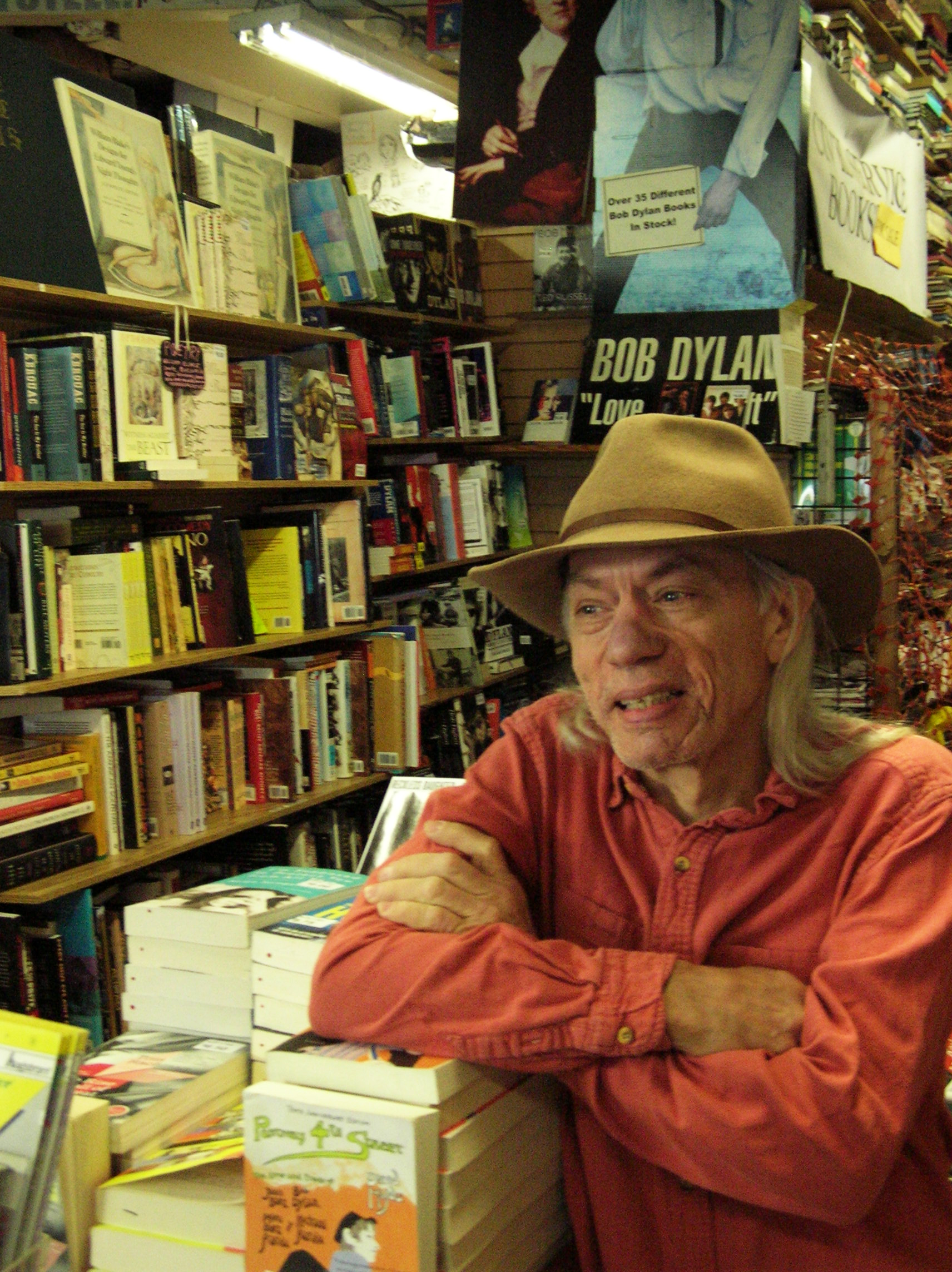
Jim Dragas: I have been selling books since I remember myself. He began the child. Although I tried to study in college, I wanted to teach in elementary grades. But then he returned to the sale of books. And my wife teaches children, she is from Nicaragua. My wife is much younger than me. I entered the college just the year when she was born.
Vladimir Morozov: You said that you own this store for 27 years. How did he manage to survive when most small book shops closed for a long time? Instead, now there are huge shops with cafes in several floors, with spacious gaming rooms for children. There, as in Disneyland, you can spend the whole day and not get bored.
Jim Dragas: Yes, it’s not easy for us to survive. To some extent, this is a miracle. When the time comes to pay for the rental of the premises, we think that everything is, now we are ending. But every time something saves us. So, 5 years ago we found a way out that we rented part of our premises to another shop. I had to squeeze.
Vladimir Morozov: How much do you pay per month for renting the premises?
Jim Dragas: (Laughter.) Well, I can't tell you that. Because around is full of people who would like to shove us from here and take our place with their store.
Vladimir Morozov: And competitors - here they are, nearby. In front of Jim Dragas’s book shop is also a small shop for Prodigy Cafe (cafe for the child prodigy). Near the cafe of blue stone, a guitar shop, a bench of ancient gramplasts, a store of souvenirs from Nepal with the magical name "Karma". There are many books about this karma in the Jim store. Near the shelves-"wisdom of the Buddhists", "Fundamentals of the teachings of the Dalai Lama", "Zen Buddhism for beginners." Immediately on a large poster, the famous writer and artist John Waters shares his wisdom. "I think that for the books presented for Christmas, you must reward people with sex." Delicate proposal. This is Greenwich Villidge. Probably, it is sometimes worth going here in order to feel younger at least for a while. How younger than his 60 with a tail looks like Jim Dragas himself. When he smiles, it looks like Mikhail Boyarsky, and his hat is almost the same.
Jim, which of your books are you reading now?
Jim Dragas: So I just finished this - "the heyday and fall of the great powers." Yes, it sounds like a history manual. But this is a novel. Interestingly, one of the heroes, like you, is from Russia. This is what is said about him on page 61st.
(Jim reads.)
(My brief translation.) A hero with a non-Russian name Humphrey enters Washington Square, which is near the New York University, plays chess with a group of regulars, then goes along Karmin Street and discovers a bookstore UNOPRESISIVE NON-IMPERIALISM BOOKS, where it interprets the policy.
“He was still not sure about the results of the Cold War. It is believed that capitalism defeated this war, but Humphrey thought that the matter was ending at best. He believed that capitalism would not last long, because what is the meaning in the system that arouses the worst in man and erects selfishness to virtue. He proclaims himself a Marxist on convictions, although not according to the effects.
But, Jim, I can’t hold on to, in the Cold War, even kvass patriots and communists have long recognized the defeat itself in the Cold War.
Jim Dragas: I am not a Stalinist, I understand the mistakes of the Soviet Union. But recently, my son and I spent a week in Cuba. There are so friendly, optimistic people. Decisive and revolutionaryly configured. They are happy because they participate in a great experiment. And do not forget that for many years they have been living in the conditions of the blockade, which was introduced by the US imperialists. In Cuba, I handed out small stickers with the name of my store. People asked what to do with these stickers. I replied that when a revolution will occur in America, you will come to visit us and go to my store.
Vladimir Morozov: For reference, according to the Cuban National Bureau of Statistics and Information, a salary on the island is about $ 40 a month. They say that almost everyone also has their own private underground business, because you will not only not only become a communist or optimist for $ 40 a month, but you just stretch your legs.
What revolution does Jim Dragas have in mind. Who will lead her?
Jim Dragas: Well, Senator Bernie Sanders, the young congresswoman Okasio-Cortes ... Young people in America are now much more open for new ideas. My children grew up like that. Young people are far from Maoism, they do not advocate a violent revolution. We need nationalization, the redistribution of wealth ... Yes, difficulties are possible along this path. But worse than now, it will not be.
Vladimir Morozov: Jim Dragas Dreamer and Optimist. And this was done not only by the book on the shelves of the store, but also by life itself.
Jim Dragas: Here, I'm sitting without money. I just read the book that I was talking about. And suddenly people surged and began to buy her. Although I did not give any advertising. Maybe I have any magical abilities? By the way, my daughter, who is studying at the film faculty at St. Lorence University, recently made a short film where she brought me out of some sorcerer. And I had to play the role of myself.
Vladimir Morozov: Another, already shot here, is already a full -length film, which, however, has not brought large fees, is called "an obvious child."
Jim Dragas: There is a poster of this film in the corner. In it, the heroine of the comedy actress Ginny Slein works in my store. I am not there, the role of the nameless owner is played by a professional actor. There is a scene when these actors say that the store will close soon, because the rental of the premises becomes too expensive. And the heroine exclaims in despair: no, they cannot close the store, what should I do then! But in the film the store is closed.
Vladimir Morozov: The director of the film is the name of Julian, and her name is Robespierre. As if there are few revolutionaries without her! It’s a pity, I did not remember the name of one of them. He wrote a book put up here-"New York. How the Great City has lost his soul." Personally, I am not sure if I lost, but I see that they are looking for the lost here-in Greenwich Willij. As in that old joke - it is brighter here.